
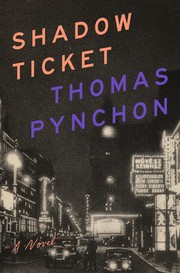
Shadow Ticket
2,348-word summary 10 min read 304 pages in the book
- First published
- 2025
- Publisher
- Penguin Press
- Pages
- 304
- ISBN
- 9781594206108
Reading options
What's inside (9 sections)
I came to this one with a strange kind of anticipation. It is Pynchon's tenth novel, his first in twelve years, and it arrived from Penguin Press in October 2025 at just over three hundred pages. I had heard the arguments already, that this was either a return to form or proof that a great writer had finally run out of things to say. What I found is a book that is very much Pynchon and also, at times, almost a parody of the things people expect from him. It is set in 1932, it has a private detective at its center, and it treats the rise of Nazism as one more absurd obstacle in a story that keeps refusing to be a normal mystery. I finished it amused, puzzled, and a little irritated, often on the same page. That combination, I suspect, is exactly what it was built to produce.
A detective, a cheese fortune, and a missing heiress
The book opens with Hicks McTaggart, a private detective working for a Milwaukee agency with the wonderfully flat name Unamalgamated Ops. He is hired to find Daphne Airmont. Daphne is the daughter of Bruno Airmont, a recluse known locally as the "Al Capone of Cheese," and she has run off with her lover Hop Wingdale, a clarinetist who plays with a swing band called The Klezmopolitans.
On paper this is the setup for a hardboiled missing-persons story. A rich father wants his daughter back, and a detective takes the job. There is even a personal reason for Hicks to care, because years earlier he helped Daphne escape from a mad therapist by motorboat, so the case carries an old debt and a bit of genuine affection. That detail matters because it is the one place where the book's emotions feel unguarded. Hicks is not simply chasing a fee. He remembers a girl he once helped, and that memory pulls him into trouble he would have been smart to avoid.
What follows is not a tidy investigation. The trail runs out of Milwaukee and into a series of encounters that grow stranger the farther Hicks travels. Pynchon is interested in the chase as a way of collecting eccentrics, and he introduces them at a pace that leaves little room to catch your breath. The cheese fortune, the swing band, the therapist with the motorboat, all of it arrives in a few pages, and then the book is off. The detective genre gives him a convenient frame. Once a reader accepts that a case is open, almost anything can walk through the door, and Pynchon takes full advantage of that permission.
I should say that the 1932 setting is not decoration. Cheese, swing music, and the looming shadow of Europe all feed the story, and the book is careful about the small textures of the period even while it is being ridiculous. That combination of exact detail and wild invention is familiar territory for this author, and it is the main reason I kept reading when the plot started to feel slippery.
Elves with a gift-wrapped bomb
Before Hicks can leave town, his private life catches up with him. He is having an affair with a singer named April Randazzo, and that affair angers Don Peppino, the local boss of the 'Ndrangheta. This is the point where the book starts to feel less like a detective story and more like a cartoon that has swallowed a detective story. Two men disguised as elves deliver a gift-wrapped bomb to make the point. A federal agent named T. P. O'Grizbee adds official pressure, which is a polite way of saying that everyone now wants something from Hicks at once.
I liked this section, though I can see why it might annoy a reader looking for gravity. The elves are funny, and the bomb is treated with the same flat matter-of-factness as everything else. No narrator steps in to explain how this fits into a realistic 1932 Milwaukee. It does not, really. The point is that Hicks is a man who keeps finding himself in other people's plots, and the more powerful the people, the more ridiculous the traps they set. The 'Ndrangheta boss is dangerous, but he is also a man who sends men in elf costumes to deliver explosives, and the book refuses to let him be only one of those things.
Hicks eventually leaves Milwaukee, but not by his own choice. He is drugged and put aboard a ship called the Stupendica, bound for Europe. That is the novel's great hinge. From here on, the missing heiress becomes a thread in a much larger and messier knot, and Hicks spends the rest of the book being passed from one faction to another. It is a neat trick, because it lets the story change genre without announcing that it has done so. A missing-person case in Milwaukee becomes a chase across a continent, and Hicks is never quite the one steering.
Belgrade, Budapest, and a lamp of poor taste
In Belgrade, Hicks is recruited by Egon Praedinger, an Interpol officer with an appetite for cocaine that the book treats as a personality trait rather than a problem. Praedinger wants Hicks to hunt down Ace Lomax, Bruno Airmont's right-hand man, and sends him to Budapest. This is where the novel introduces one of its best inventions: Dr Zoltan von Kiss, an "apportist" who can make objects disappear and reappear. If you know your Pynchon, you will recognize the kind of joke this is, a pseudo-science that behaves like magic while insisting on its own technical seriousness. The book never winks at you about it. Von Kiss is introduced as though he were a respected professional with an unusual specialty, and the seriousness of the tone is what makes the joke land.
Hicks also meets Terike, a woman who rides a motorcycle and serves as a courier. She is one of the few people in the book who seems to act on her own motives rather than as a representative of some creed or syndicate. The two of them, along with von Kiss, recover a lamp of especially poor taste that collectors prize. The lamp is a small thing, but in this book small things carry the plot. Objects get stolen, handed over, and fought about as though they were the crown jewels. A less confident writer would have to explain why anyone cares so much about a lamp. Pynchon simply assumes that collectors are strange and moves on, which is funnier than any explanation would be.
Hicks does catch up with Lomax, and he catches him at gunpoint. Then he lets him go. That moment says something about the kind of detective Hicks is. He is competent enough to corner a man and soft enough, or weary enough, to lose him again. It is a small failure that the book does not make a meal of, and it is more characteristic of Hicks than any triumph would be. I kept waiting for the story to punish him for it. It never does, and that refusal is part of the book's quiet decency toward its own hero.
The Tropikus club and the Czech golem
The search for Daphne picks up when an informer named "Slide" Gearheart reports that she is at a club called the Tropikus. Hicks finds her there, and the two are reunited. From this point the plot turns into a rescue operation. Daphne, Hicks, and a Czech golem named Zdenek set out to free Hop and Lomax from a Hungaro-Croatian terrorist training camp, which sits in the territory of a group the book calls the Vladboys, who are openly antisemitic.
The golem is the sort of detail that makes Pynchon's 1932 feel like no historical 1932 ever recorded. A Czech golem walking through a story about swing bands and cheese magnates should not work, and yet it fits the book's habit of treating every strange thing as perfectly ordinary. The rescue itself is played for adventure rather than dread. There are camps and villains whose politics are as ugly as their names, and Hicks muddles through in the way of a man who is braver than he looks. The scene has the energy of an old serial, with people escaping by the skin of their teeth and villains who are almost too vile to be believed.
This is also where the novel's 1932 setting starts to press harder on the story. Nazism is spreading, and the people Hicks has been chasing turn out to be connected to something much larger than a family dispute. The book never announces a theme and then illustrates it. It simply keeps moving the pieces closer together until the private case and the public catastrophe occupy the same room. I found that gradual tightening effective. By the time the training camp appears, the joke about the cheese fortune has acquired a darker edge, because the fortune is what everyone is really fighting over while the world burns.
Fiume, and everything falls apart
Everyone converges on Fiume. Hop reveals that he was an undercover operative, which rewrites everything Hicks thought he knew about the clarinetist and the missing heiress. Bruno Airmont hands Daphne the family fortune and tries to leave on a U-boat, a plan that is as doomed and as faintly ridiculous as everything else he does. Back home, strikes destroy the American dairy industry, which is the novel's way of reminding us that the cheese fortune was never scenery.
Then the book takes its biggest swing. It ends with a military coup in which General MacArthur ousts Roosevelt. Hicks, for his part, stays in Hungary with Terike. There is also a letter from someone named Skeet, which arrives without much explanation and leaves the reader to decide what it means. I finished the last pages unsure whether I had read a thriller that turned into a fantasy or a fantasy that had been pretending to be a thriller all along.
That uncertainty is not a defect the book is trying to hide. It is the point. Pynchon has always been drawn to the idea that history is a set of stories told by people with power, and a coup that never happened is the natural extension of a novel full of people inventing reasons for what they do. Still, I want to be honest. The ending can feel like it is pulling a rug out from under a story that never fully committed to being a story in the first place. Readers who want their alternate history argued through will find only a few brisk pages, and then the book is over.
The arguments the reviews started
The critics split hard, and it is worth knowing that before you start. Kathryn Schulz, writing in the New Yorker, found the book's meaning "sufficiently cryptic" that it blurred into none. Dwight Garner called it Pynchon's least notable book. Megan Nolan, in the Telegraph, called it a masterpiece. Three readers, three verdicts, and all of them defensible.
I understand Schulz's frustration. There are stretches where the plot's energy is real but its direction is unclear, and the book seems content to keep adding peculiarities rather than resolving any of them. If you want a mystery that explains itself, this will not satisfy you. Daphne is found and Hop is rescued, but Lomax is caught and released, and the central questions keep sliding away. Garner's verdict makes sense from that angle, especially if you measure the book against the Pynchon of forty years ago, when the puzzles felt as though they might eventually close.
I also understand Nolan, because the comedy works. The elves, the lamp, the apportist, the golem, the U-boat, all of it is delivered with a deadpan that I found genuinely funny, and the book has a shape even when it refuses to spell one out. The chase across 1932 Europe gives it a spine, and Hicks's decency gives it a heart, however reluctant he is to show it. The line between a masterpiece and a minor book may just be how much you are willing to let a writer play with you. I fall on the side of enjoying the play, though I would not call the result one of his essential books.
What I would tell a friend before handing it over
I would tell them what it is first. This is Pynchon's tenth novel, his first in twelve years, published by Penguin Press in October 2025, set in 1932, and about three hundred pages long. I would tell them it is not really a mystery, even though it has a detective and a missing person. I would tell them that the cheese business is a joke that keeps turning serious, and that the strangest characters are often the ones with the most power.
Then I would warn them about the ending because it changes the rules. A book that has been playing with historical absurdity suddenly produces a coup that never happened, and the reader has to decide what that means. Some will call it audacious. Some will call it a cheat. I think it is both, and I think Pynchon would be amused that anyone expects him to choose.
What I keep thinking about is Hicks. He is a competent man who is always slightly out of his depth, who lets a suspect go because he cannot quite bring himself to finish the job, and who ends up staying in Hungary rather than returning to the Milwaukee he started in. The mystery resolves into a life, not an answer. That is a modest thing to ask of a novel this strange, but it is the thing I carried out of it. If you have patience for a writer who would rather surprise you than satisfy you, there is a good deal of fun here. If you do not, this may be the Pynchon book that finally sends you back to the ones you already loved.
FAQ
Is Shadow Ticket part of a series?
No. It is a standalone novel, Pynchon's tenth, and it shares no series with his other books.
Do I need to have read Pynchon before starting this one?
It tells a complete story on its own, though its dense comic style and deliberately buried meaning reward readers who already know Pynchon's habits.
What is the setting and the central mystery?
It is set in 1932, and private detective Hicks McTaggart is hired to find Daphne Airmont, daughter of a cheese magnate known as the "Al Capone of Cheese," and her lover Hop Wingdale.
Similar books
Feet of Clay
A clay golem goes mad and a Patrician is poisoned as Vimes and the Watch untangle a murder plot in the nineteenth Discworld novel.
2,308-word summary · 10 min read

The Crying of Lot 49
A California woman named executor of her ex-lover's estate follows a muted post horn into a possible centuries-old postal conspiracy, and Pynchon refuses to…
2,003-word summary · 9 min read

There Will Be Bodies
Digging out a villa buried by Vesuvius, Flavia Albia finds chained corpses and a death someone tried to hide for ten years.
2,152-word summary · 10 min read
The Hangman's Daughter
In 1659 Bavaria, a hangman ordered to torture an innocent midwife instead investigates the deaths of children marked with a strange tattoo.
2,523-word summary · 11 min read
The Atlantis Gene
A geneticist and an intelligence operative chase two kidnapped boys through a global conspiracy about human evolution and a weapon built to cull humanity.
2,369-word summary · 11 min read
State of Terror
A new secretary of state and her team unpick a web of attacks across Pakistan, Afghanistan, and Iran in this 2021 political thriller.
2,307-word summary · 10 min read
Zero Day
Army investigator John Puller is sent alone to a West Virginia coal town to solve a colonel's murder, and finds a much larger secret buried nearby.
3,434-word summary · 15 min read

When the Moon Hits Your Eye
The Moon turns into cheese, and a loose collection of stories follows how institutions, billionaires, pastors and ordinary people respond to the impossible.
2,002-word summary · 9 min read

Visions of Sugar Plums
A strange man named Diesel appears in Stephanie Plum's kitchen days before Christmas and pulls her into hunting a bail-jumping toy maker. A short, silly, warm…
2,193-word summary · 10 min read
The Secret of Secrets
Robert Langdon travels to Prague with Katherine Solomon, a scientist whose work on consciousness has made her a target. A dream, a bomb and a killer called the…
2,251-word summary · 10 min read
The Paying Guests
A widowed mother and her unmarried daughter take in lodgers in 1922 south London, and a secret affair between Frances and Lilian pulls them into a murder case.
2,661-word summary · 12 min read
The Paris Express
Emma Donoghue turns the real 1895 Montparnasse rail disaster into a crowded historical thriller, following a bomb-carrying anarchist and a carriage of…
2,785-word summary · 12 min read
The Luminaries
Eleanor Catton's Booker-winning novel drops a young prospector into an 1866 New Zealand gold town where twelve men untangle a web of hidden gold, murder and…
2,949-word summary · 13 min read
The Impossible Fortune
Osman gathers the Coopers Chase pensioners for a fifth mystery that opens on a quiet year, a wedding, a vanishing guest and a code worth a fortune in Bitcoin.
2,685-word summary · 12 min read
The Distant Hours
A letter posted in 1941 reaches Edith Burchill in 1992 and draws her to Milderhurst Castle, where three elderly sisters still guard the secret of a stormy…
2,261-word summary · 10 min read
The Beekeeper's Apprentice
In 1915 a bookish fifteen-year-old American girl stumbles across a retired Sherlock Holmes keeping bees on the Sussex Downs, and talks him into taking her on…
2,215-word summary · 10 min read
Still Life with Woodpecker
An environmentalist princess and an outlaw bomber fall in love, then argue about freedom, sacrifice, and a pack of Camel cigarettes.
2,061-word summary · 9 min read
Soul Music
A harpist from Llamedos brings rock music to Ankh-Morpork, and a primordial force takes hold of the city, pulling Susan Sto Helit and Death into a fight over…
2,406-word summary · 11 min read
Smokin' Seventeen
Stephanie's bonds office is a motor home on a construction site where dead bodies keep turning up, and the killer seems to know her name.
2,342-word summary · 10 min read
Sizzling Sixteen
Stephanie Plum has five days to raise nearly $800,000 when her cousin Vinnie is kidnapped over a gambling debt, and the only plan involves an alligator and two…
2,533-word summary · 11 min read
Possession: A Romance
A London Library discovery sends two scholars chasing a secret Victorian love affair, in a Booker-winning novel of invented letters, poetry and the race to own…
2,394-word summary · 11 min read
Not Quite Dead Yet
A drifting twenty-seven-year-old is told she will die within a week and decides to solve her own attempted murder instead of taking surgery with a ten percent…
2,010-word summary · 9 min read
Mother-Daughter Murder Night
A grandmother with cancer moves in with her estranged daughter and granddaughter, then turns detective when a body turns up on the family's kayak tours near…
2,762-word summary · 12 min read
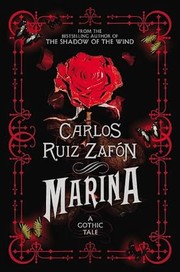
Marina
A fifteen-year-old boarder in 1979 Barcelona follows a singing voice into a ruined mansion and finds a girl, a watch, and a mystery the city has kept buried…
2,352-word summary · 10 min read
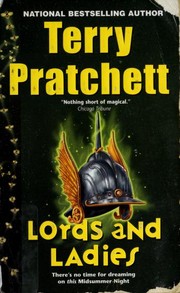
Lords and Ladies
The elves are coming and Lancre is not ready. Pratchett's 1992 novel sends Granny, Nanny and Magrat into a cruel, glittering invasion that spoofs A Midsummer…
2,476-word summary · 11 min read

I Am America (And So Can You!)
Stephen Colbert's 2007 debut extends his Colbert Report pundit into print, a mock-conservative tour of American life with margin notes, stickers and Fun Zones.
2,635-word summary · 12 min read
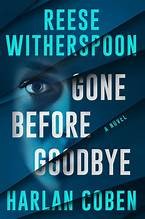
Gone Before Goodbye
Reese Witherspoon's first novel, written with Harlan Coben, follows a bereaved surgeon whose griefbot guides her into a medical conspiracy stretching from…
2,648-word summary · 12 min read
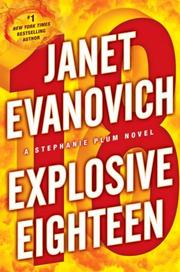
Explosive Eighteen
Stephanie Plum flies home from a ruined Hawaii trip to find her seatmate murdered and a photograph that has the FBI, fake agents and a killer on her trail.
2,393-word summary · 11 min read
Everyone Worth Knowing
A young woman quits her banking job after a friend's engagement and lands in a New York PR firm where everyone is paid to know everyone.
2,360-word summary · 10 min read

Endling
A Ukrainian scientist breeds endangered snails from her van and funds the work by posing as a mail-order bride, until a kidnapping plot meets the outbreak of…
3,041-word summary · 14 min read