
Reading options
What's inside (9 sections)
- A city held together by guilds and one very patient man
- Twelve golems decide they want a king
- A poisoned Patrician and a very bad idea about kings
- Cheery Littlebottom and the science of clues
- Dorfl's confession and the golems' terrible choice
- The candle factory and the words in the heart
- Burning the records and the price of justice
- Key takeaways
- FAQ
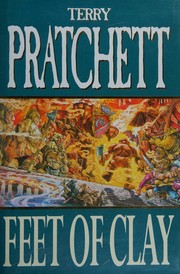
I came to Feet of Clay through the Watch books, after Guards! Guards! made me care about a city that runs on paperwork and fear. This is the nineteenth Discworld novel, published in 1996 by Victor Gollancz, and it is the third book that puts Sam Vimes and his Night Watch at the center. The first edition hardcover runs 288 pages. What surprised me is how much of it is a proper murder mystery, with clues you can follow, alongside the jokes. It is also, quietly, a book about slavery and about what a person is when other people write the instructions they must obey.
A city held together by guilds and one very patient man
Ankh-Morpork works because Lord Vetinari makes it work. The Patrician is thin, still, and unnervingly good at paperwork. He keeps the guilds in balance by letting each one fear him slightly more than it fears its rivals. The Thieves Guild steals within agreed limits. The Assassins Guild kills politely and charges properly. Nothing is legal exactly, but everything is regulated, and the city functions. Vetinari's gift is knowing things. He knows what his enemies are planning long before they think he does.
The Night Watch is the exception to this order. It is supposed to police the streets at night, but it has only a handful of officers, a leaky watch house, and a reputation as a joke. Vimes, the commander, drinks too much and still turns up every night because nobody else will. He knows the alleys, the pawn shops, and the corners where a body can wait for morning without causing comment. Under the drink there is a stubborn belief that law ought to mean something. It nags at him, which is why he keeps getting into trouble.
Carrot Ironfoundersson is the recruit who changed the Watch. He is six foot six, raised by dwarfs, and honest to a fault. He believes the city's laws are real and meant to be followed, which makes him dangerous to anyone who relies on them being ignored. By this book he is a captain and Vimes's right hand. Nobby Nobbs and Fred Colon provide the daily comedy. Nobby is short, dubious, and always smoking something cheap. Colon is old, tired, and fond of routine. Angua, the werewolf, rounds out the team, and her presence matters to the plot in a way I did not expect.
Twelve golems decide they want a king
The golems of Ankh-Morpork are clay creatures built to obey the written instructions placed inside their heads. They are property. They work in factories, they never complain, and they are treated as things rather than people. The book opens on a warm spring night with a fist pounding on a door hard enough to bend its hinges, and from there it moves into a quiet meeting of twelve golems who have decided to make something of their own.
They build a king. They take clay from their own bodies and shape a new golem, then ask a priest and a dwarf baker and museum curator to write the sacred words and bake the clay. The instructions they give him are grand and simple: bring peace to the world, treat everyone fairly, and so on. The golems call him Meshugah, and they send him to work in a candle factory, which seems harmless enough. They have made a being who wants only good things. That turns out to be the problem.
The golems' reasoning is worth sitting with. They are not stupid. They understand that their condition is wrong and that the people who own them would never give them freedom voluntarily, so they build a champion who can want things on their behalf. They give him the gentlest orders they can think of, because kindness is the only lever they have. The plan fails not because they are malicious but because they ask a clay body to carry a contradiction: absolute orders written by frightened workers and baked by an overworked baker. It is a sad little scheme, and Pratchett treats it with respect even while the jokes are flying.
Pratchett is playing with the old story of the golem, the clay servant from Jewish folklore, and the book's invented script for the clay's instructions looks like Hebrew. The title itself comes from a phrase in the Book of Daniel about feet of clay, an image of something strong built on weak foundations. The joke is sharp because the golems are strong and the instructions inside them are fragile. A clay creature can be told to do anything. Deciding what to tell it is the dangerous part.
A poisoned Patrician and a very bad idea about kings
While the golems are busy, a group of nobles and guild leaders is plotting. They want Vetinari gone and a puppet on the throne. The city has not had a king for a long time, and these plotters think the people would welcome one. Their excuse arrives through a piece of paperwork. Vimes visits the Royal College of Arms and learns that the Vimes family coat of arms was declared extinct because an ancestor killed a king. He also learns that Nobby Nobbs might be the heir to the Earldom of Ankh, the family of the last king, Lorenzo the Kind.
Nobby, it hardly needs saying, is not king material. He is a scruffy watchman with a certificate proving he is human. The cabal does not care. They can dress him up, wave a signet ring, and let the crowd do the rest. To make their move safe, they need the Patrician out of the way. They order Meshugah, still working at the candle factory, to make candles laced with arsenic and have them delivered to the palace. Vetinari becomes gravely ill. On the surface this looks like the perfect crime.
It is here that the two plots lock together. The men who made Meshugah broke their own rules by overloading him with grand instructions and baking him badly. He does not simply obey. He overworks, runs through his materials, and then rampages through the city. He murders the priest and the baker who helped create him, which horrifies the other golems because murder is the one thing their kind is built not to do. The story Vimes has to untangle now involves a poisoned ruler, two dead craftsmen, a clay monster, and a group of aristocrats who think a watchman can be crowned by mistake.
Cheery Littlebottom and the science of clues
Vimes gets help from an unexpected place. The Watch takes on a dwarf forensic expert named Cheery Littlebottom, who brings a new habit of looking closely at the small things criminals leave behind. Cheery measures, tests, and takes seriously the traces that everyone else steps over. It is a refreshing addition because the book's mystery is built from physical evidence: white clay, poisoned candle stubs, the chemistry of arsenic. Pratchett lets the investigation proceed the way a good police story should, with observations that mean one thing at first and something else later.
Cheery's other storyline is quieter but matters. Over the course of the novel, Cheery gradually stops hiding who she is and begins living as a woman. Dwarf culture in these books treats gender in ways that make the other dwarfs uncomfortable, and Cheery starts wearing things and making choices that signal a change. Pratchett handles it with his usual lightness, but it gives the book a second layer about identity and the freedom to decide what you are. It is one of the reasons the novel is still talked about.
The investigation also shows Vimes at his best and worst. He notices what others miss and he cares about the dead, including two victims from Cockbill Street, the poor neighborhood where he grew up. An elderly woman and a baby die after using poisoned candle stubs taken from the palace. That detail is easy to skim past, and I nearly did. It is the book's moral center: the plotters treat ordinary lives as acceptable cost, and Vimes does not forget them even when the powerful people in the story would prefer he did.
Dorfl's confession and the golems' terrible choice
The golems send one of their own, Dorfl, to confess to the murders. It is a sacrifice meant to protect the rest. The remaining eleven then destroy themselves, because a golem that has killed cannot live with what it has done and because they believe they have failed. This is the moment the book stops being only a comedy. The golems are not mindless machines. They have a code, they feel the weight of breaking it, and they choose a fatal response. Vimes has to recognize that the creature in front of him is a person making a terrible decision.
Dorfl becomes the most interesting character in the book for me. He was built to serve, but he keeps finding small ways to exercise judgment. He is given a receipt for himself at one point, which means he technically owns himself and has no master. That piece of bureaucratic cleverness is very Pratchett, and it is also genuinely moving. A being made of clay uses a scrap of paperwork to claim freedom. The gesture is funny and serious at the same time, and it sets up the final confrontation.
I had a mild complaint here. The middle of the book carries a lot of procedural detail, and the cabal's plotting repeats a few times before it moves. A couple of the meetings between the conspirators felt longer than they needed to be. The A.V. Club praised the book's intelligence and lack of cheap punning, and I agree with that, but the pace does sag in places. The mystery is fair, though. Publishers Weekly called it fantasy with a twist of Monty Python, and Steven H Silver at SF Site noted that the puzzles can be solved from the clues provided. That is a real compliment, and it is deserved.
The candle factory and the words in the heart
The climax takes place at the candle factory, where Carrot and Dorfl confront Meshugah. The giant clay king is strong and almost impossible to stop, because he was made from the golems' own bodies and driven by too many commands at once. He has become a creature of pure instruction with no judgment left. Beating him takes more than force. It takes Dorfl, who has learned something the instructions cannot explain.
When the words inside Dorfl are removed, he still speaks. He says that words in the heart cannot be taken, and then he dies. It is one of the clearest statements in the book about what makes someone a person. You can script a golem, own it, and order it around, but there is a part of it that no instruction reaches. Pratchett then has Dorfl rebaked with a voice, which is the closest thing to a resurrection the story offers. By the end, Dorfl is sworn in as a Watchman, to the irritation of the city's religious authorities, who are not comfortable with a clay creature holding a badge.
The confrontation also resolves the kingly plot in a very Pratchett way. The cabal planned to crown Nobby, but Nobby refuses. He has no interest in a job that sounds like work, and he is genuinely afraid of what Vimes would do to him if he accepted. The plan collapses because the plotters picked a man who would rather not be king. It is funny, and it is a neat bit of logic: the whole scheme depended on someone wanting power, and the person they chose did not.
Burning the records and the price of justice
The person behind the plot turns out to be the Dragon King of Arms, the vampire who runs the College of Arms. Vimes confronts him and works out that the signet ring proving Nobby's claim could have been stolen, and that Carrot was the true heir. Carrot, it turns out, was too honest for the plotters to control. There is also a suggestion that the Dragon wanted to stop Carrot from starting a part-werewolf line with Angua, which tells you how much of this was about prejudice dressed up as tradition.
Vimes's response is not gentle. He burns down the Royal College of Arms and all its heraldic records. It is an act of revenge against people who treated common lives as disposable, and it is deliberately over the top. I found it thrilling and also a little uncomfortable, which I think is the point. Vimes is a man who believes in law, and here he destroys an institution because the law was being used as a costume for power. It is the sort of moment that makes you argue with the book afterward.
Vetinari, it emerges, knew about the plot all along and pretended to be poisoned. He let Vimes charge ahead because Vimes's rage scared the elite more than Vetinari's careful rules ever could. That reveal reframes the whole poison story, and it is classic Vetinari: calm, manipulative, and one step ahead of everyone. Vimes gets a raise and the Watch gets a new dartboard. Nobby quietly keeps other heirlooms that might prove his claim, or might simply be stolen. The ending is warm without being soft.
Feet of Clay is a strong Watch novel and a solid entry point to the series. It asks what a person is when society calls them property, and it trusts the reader to sit with the answer. If you want nonstop jokes, some of the political machinery will slow you down. If you want a mystery with real clues, a city that feels alive, and a clay golem who earns his badge, this one delivers.
FAQ
Where does Feet of Clay sit in the Discworld and City Watch series?
It is the nineteenth Discworld novel, published in 1996, and the third book centered on the Ankh-Morpork City Watch. You can read it on its own; the earlier Watch books give background but are not required.
Do I need to have read other Discworld books to understand it?
No. It works as a standalone police story with its own mystery, though readers who know Vimes, Carrot, Vetinari, and the guild system will catch more of the jokes.
Is Feet of Clay funny or is it a serious mystery?
Both. Publishers Weekly called it fantasy with a twist of Monty Python, but the golem slavery plot and the deaths of ordinary citizens give it real weight.
Similar books
More from Discworld first, then related titles.
The Color of Magic
A failed wizard guides a tourist across a flat world on a turtle, with comic fantasy chaos.
2,032-word summary · 9 min read
The Light Fantastic
Rincewind and Twoflower fall off the world while wizards race a red star.
1,974-word summary · 9 min read
Equal Rites
A dying wizard passes his staff to a baby girl, and Granny Weatherwax escorts Esk to Unseen University in Pratchett's third Discworld book.
2,871-word summary · 13 min read
Mort
Death hires apprentice Mort in this 1987 Discworld comedy, where a spared princess splits reality and duty bends for love, with no Rincewind.
2,386-word summary · 11 min read
Sourcery
A dying wizard hides his soul in a staff, his eighth son becomes a sourcerer strong enough to break the world, and Rincewind is sent to stop him with a sock.…
2,404-word summary · 11 min read
Wyrd Sisters
Three Lancre witches rescue a murdered king's baby, hide Lancre's future, and trap a guilty duke with a play in Ankh-Morpork.
3,085-word summary · 14 min read
Pyramids
A prince raised by assassins comes home to a desert kingdom where the high priest rules and a spitefully huge pyramid starts bending time.
2,441-word summary · 11 min read
Guards! Guards!
A drunk captain, his last two guards, and an earnest recruit face a summoned dragon in Ankh-Morpork in Pratchett's funny eighth Discworld book.
2,307-word summary · 10 min read
Moving Pictures
When the alchemists invent the movies, a dropout and a waitress chase stardom in Holy Wood while a talking dog watches belief tear open the fabric of Discworld.
2,370-word summary · 11 min read
Reaper Man
Death gets fired and farms while Windle Poons refuses to die.
2,579-word summary · 11 min read
Witches Abroad
Three Lancre witches fly to Genua to stop a fairy godmother from forcing a servant girl into a storybook marriage, and find a city arranged around a happy…
2,651-word summary · 12 min read
Small Gods
God Om trapped as a tortoise must convince novice Brutha to save Omnia from its own church.
2,063-word summary · 9 min read
Lords and Ladies
The elves are coming and Lancre is not ready. Pratchett's 1992 novel sends Granny, Nanny and Magrat into a cruel, glittering invasion that spoofs A Midsummer…
2,476-word summary · 11 min read
Men at Arms
The City Watch gets new recruits and a murder case when the Disc's only handgun turns up in Ankh-Morpork, in the fifteenth Discworld novel.
2,216-word summary · 10 min read
Soul Music
A harpist from Llamedos brings rock music to Ankh-Morpork, and a primordial force takes hold of the city, pulling Susan Sto Helit and Death into a fight over…
2,406-word summary · 11 min read
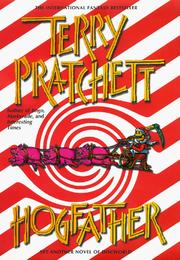
Hogfather
Death fills in for a missing Father Christmas, Susan Sto Helit hunts the Hogfather, and the twentieth Discworld novel turns Santa into a management problem.
2,871-word summary · 13 min read
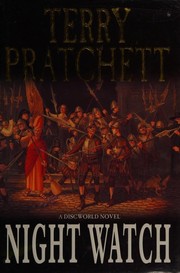
Night Watch
Vimes is thrown back in time and must train his young self through a revolution.
2,003-word summary · 9 min read
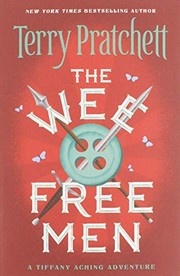
The Wee Free Men
Nine-year-old Tiffany Aching teams with the Nac Mac Feegle to rescue her brother from the Fairy Queen.
2,600-word summary · 12 min read
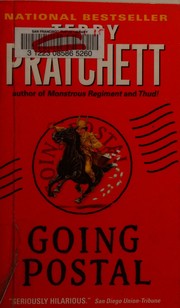
Going Postal
A hanged con artist must revive Ankh-Morpork's dead Post Office and outwit a murderous rival in Pratchett's 33rd Discworld novel.
2,228-word summary · 10 min read
Visions of Sugar Plums
A strange man named Diesel appears in Stephanie Plum's kitchen days before Christmas and pulls her into hunting a bail-jumping toy maker. A short, silly, warm…
2,193-word summary · 10 min read
Smokin' Seventeen
Stephanie's bonds office is a motor home on a construction site where dead bodies keep turning up, and the killer seems to know her name.
2,342-word summary · 10 min read
Sizzling Sixteen
Stephanie Plum has five days to raise nearly $800,000 when her cousin Vinnie is kidnapped over a gambling debt, and the only plan involves an alligator and two…
2,533-word summary · 11 min read
Shadow Ticket
Pynchon's tenth novel, his first in twelve years, sends a Milwaukee detective across 1932 Europe after a cheese heiress, a clarinetist, and a very strange lamp.
2,348-word summary · 10 min read
I Am America (And So Can You!)
Stephen Colbert's 2007 debut extends his Colbert Report pundit into print, a mock-conservative tour of American life with margin notes, stickers and Fun Zones.
2,635-word summary · 12 min read
Explosive Eighteen
Stephanie Plum flies home from a ruined Hawaii trip to find her seatmate murdered and a photograph that has the FBI, fake agents and a killer on her trail.
2,393-word summary · 11 min read
The Long Dark Tea-Time of the Soul
Dirk Gently links a burning Heathrow counter, a dead songwriter, and Odin's unpaid power bill to the old gods living rough at St Pancras.
2,244-word summary · 10 min read
Redshirts
Ensigns realize they die to serve a bad TV show's narrative.
2,152-word summary · 10 min read
Eleven on Top
Stephanie quits bounty hunting for normal jobs, but a killer and a wedding keep pulling her back.
2,508-word summary · 11 min read
A Dirty Job
Grieving San Francisco secondhand shopkeeper Charlie Asher inherits the Death job, collecting souls into vessels while raising little baby Sophie as Minty…
2,454-word summary · 11 min read
The Eyre Affair
Literary detective Thursday Next chases a villain who kidnaps Jane Eyre from her own novel in an alternate 1985 England.
1,929-word summary · 9 min read