
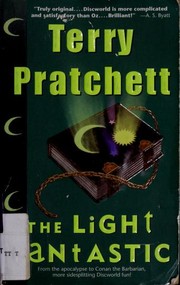
Reading options
What's inside (6 sections)
I read The Colour of Magic years ago and liked it without loving it, so I came to The Light Fantastic, first published in 1986, with modest hopes. It is the second Discworld novel, continuing directly after the first, and it is much better. I used the HarperTorch paperback, 241 pages, ISBN 9780061020704, though the first edition was Colin Smythe in 1986. Rincewind the failed wizard and Twoflower the tourist fall off the edge of the world at the end of book one. Book two picks them up mid fall and does not slow down. It is funny, fast, and surprisingly thoughtful about what stories are for.
Rincewind is a wizard who cannot do magic. One spell lodged in his head years ago when he opened a forbidden book, and it scares off all other spells. He survives by running. Twoflower is an insurance clerk from the Agatean Empire on holiday, with a walking luggage made of sapient pearwood that follows him and eats anyone who threatens him. At the end of the last book they went over the Rim. At the start of this one they are caught by a sea troll, rescued, separated, chased, and reunited across a world that is about to end if eight spells are not said together at Hogswatch.
Falling and the forest
The opening is pure Pratchett. Rincewind and Twoflower are saved from falling by the Circumfence, then washed up in a forest where dryads and trolls argue about belief. Pratchett uses the forest to set his theme. Gods need belief the way people need food. On the Disc, a flat world carried by four elephants on a turtle, belief shapes reality fast. If enough people stop believing in something, it fades. If enough believe, even briefly, it appears.
Rincewind does not want to be a hero. He wants breakfast and no trouble. Twoflower wants adventure and photographs, taken with a picture box that contains a small demon who paints quickly. Their dynamic, coward and tourist, carries the early chapters. Twoflower looks at a burning village and sees local color. Rincewind looks at a rainbow and sees exposure. I laughed a lot here, especially at Twoflower trying to tip people during a rescue and at Rincewind explaining insurance to barbarians who think it is a kind of gambling with gods.
Cohen the Barbarian appears in these woods, old, toothless, still legendary, now with dentures and lumbago. He steals scenes by being kind in a barbarian way. He saves Rincewind, complains about heroes today, and asks about Twoflower's false teeth with professional interest. If you only know Cohen from later books where he leads the Silver Horde, this younger older version is a treat. He is still funny, but you see the tiredness underneath the jokes about pillaging.
The forest also introduces the idea that the spell in Rincewind's head is waking up. It talks to him, or through him, in italics and headaches. He does not want it. The Unseen University wizards, led by Galder Weatherwax at first and then Trymon, want it because the world needs all eight to avert a red star that is approaching. The star, which may be the universe's way of rebalancing magic, grows in the sky while wizards argue about procedure. Bureaucracy versus apocalypse is very Pratchett, and very funny until you realize he means it.
Death, the Luggage, and the city
Death appears early and often, as he does in early Discworld. He speaks in small caps, likes cats, plays chess badly, and is annoyed that Rincewind keeps not dying on schedule. One scene where Death tries to collect Rincewind during a fall and misses because Rincewind is saved by accident had me laughing out loud. It also sets up a odd tenderness. Death is not cruel. He is overworked and curious about why this one wizard keeps slipping.
The Luggage gets more to do here than in book one. It runs on hundreds of little legs, follows Twoflower across continents, eats monsters, guards Rincewind when he sleeps, and shows something like loyalty. A scene where it waits outside a wizard's door, creaking anxiously, is funnier than it should be because you realize you care about a box. Pratchett never explains how sapient pearwood thinks. He just shows what it does. That restraint makes the joke last across books.
Ankh Morpork, the big city, appears in glimpses. The Unseen University is full of wizards murdering each other for promotion. Trymon, ambitious and thin lipped, wants the spells for power rather than saving. Older wizards like Galder want to study the problem to death. Younger ones want to run. The satire of academia, committees to decide whether the world is ending while it ends, felt familiar in a way that has not aged. I work near a university and I recognized three people in one meeting scene.
Twoflower's role shifts here. In book one he was mostly a joke about tourism. Here he gets scared, sick, separated from his money, forced to see that his guidebooks lied. A chapter where he is captured and tries to buy his way out with traveler's cheques that no one honors is both funny and sad. He learns that being an outsider does not protect you. Rincewind, for once, has to comfort rather than just flee. Their friendship, unequal and bickering, becomes real in those pages.
Spells, stars, and Trymon
The middle quest is to get Rincewind to the University before the star arrives. That means crossing mountains, meeting druids who do computer like calculations with stones, encountering trolls who turn to stone in daylight, and bargaining with a shop that sells weapons that are too clever. The druid sequence, where ancient stones are used to boost the sun in a kind of magical engineering project, is classic Pratchett reversal. Primitive does not mean stupid. The druids are engineers with different tools.
Trymon's plot to collect the spells for himself drives the tension. He kills, lies, and convinces other wizards that Rincewind is the problem. He wants to say the eight and control the new order. Rincewind, who has spent the book trying to get rid of the one spell in his head, becomes the only person who does not want power and therefore the only one who can be trusted with it briefly. That irony is the moral without preaching. Wanting to save the world by ruling it is still wanting to rule.
The red star grows. Fishermen see it at noon. Priests announce ends. The gods play dice in Dunmanifestin, their home, and cheat. Pratchett's gods are petty bureaucrats with lightning, and their scenes, arguing over Rincewind like a pawn, are hilarious until you see the parallel with wizards and with tourists. Everyone powerful treats small people as pieces. Rincewind's refusal to play, by running, becomes a kind of resistance. He will not be a hero on their board.
For pacing, the travel middle can blur. Forest to mountain to cave to city to mountain again. I lost track of how many nights passed. Two chases in a row use the same trick, Rincewind falls, Luggage saves. I skimmed one troll fight because I knew the outcome. Then a quiet scene, Rincewind trying to teach Twoflower how to hide, would bring me back. Pratchett is best when he pauses the chase for talk.
The end on the edge and what it says
The climax returns to the edge of the world and to the eight spells. Without giving the exact mechanics, Rincewind finally says his spell because he has to, not because he wants power. The world does not end. The turtle moves on. The wizards take credit. Twoflower goes home with stories and a changed view of heroism. Rincewind stays, still cowardly, still alive, a little less alone.
What I liked most is how Pratchett treats stories as physics. On the Disc, narrative causality pulls events into familiar shapes. Heroes arrive in time, villains monologue, sidekicks die to motivate. Rincewind survives by refusing his assigned role. He will not be the brave wizard, so the story cannot use him cleanly. Twoflower survives by believing a different story, where people help. Their friendship bends the narrative field just enough.
For criticism, the book is still early Pratchett. Jokes sometimes explain themselves. Puns pile up. A few female characters, like Herrena the barbarian for hire, get less interior than Cohen or even the Luggage. Later Discworld gives women like Granny Weatherwax and Susan full centers. Here they support. Also, the science of the star wobbles. Is it magic or astronomy. Pratchett does not decide, which is fine for comedy but may annoy if you want rules.
Still, at 241 pages in this edition it flies. Short chapters, cliffhangers, dialogue that snaps. I read it in two evenings and immediately wanted Equal Rites, book three, to see how Pratchett builds on what he learned. The Light Fantastic is where Discworld finds its voice, less a parody of fantasy and more a way to talk about belief, tourism, and university politics through jokes about wizards who cannot do paperwork without murder.
For who this is for. If you tried Colour of Magic and bounced, try this before quitting. It is tighter, kinder, funnier. If you love later Discworld like Guards Guards, you will see seeds here, Death's curiosity, the Luggage's loyalty, Cohen's age. If you want deep worldbuilding bibles, look later. This is a chase with ideas tucked in luggage. I closed it thinking about my own guidebooks, the ones I bring to new places, and how often Rincewind is right. Running is sometimes the only sane response, and staying to say one necessary spell is enough heroism for anyone.
One more thread that grew on me is how Pratchett writes wizards as academics who weaponize procedure. The Unseen University scenes, with votes about whether to vote, with senior wizards citing precedent while the star gets bigger, felt painfully familiar from faculty meetings I have sat through. Trymon wins for a while not because he is strongest but because he calls a meeting at the right time with the right memo. Galder, older and tired, knows Trymon is dangerous and still loses because he plays fair in a rigged room. Rincewind, who has no standing, no tenure, no publications except survival, cuts through by refusing to attend. He just runs toward where the spell needs saying. That contrast, talk versus doing, gives the comedy bite.
I also liked the small economics tucked in. Twoflower's traveler's cheques, his ideas about insurance, his belief that money means safety everywhere, all fail on the Disc in instructive ways. Shopkeepers want coins they recognize. Guards want bribes in kind. A tourist who assumes credit works gets hungry fast. Rincewind, poor and practical, knows how to trade work for food, how to sleep in barns without being robbed, how to read a city's mood by its gutters. Their partnership works because each knows a different economy. Tourist money opens doors until it does not. Street sense keeps you alive after the money stops.
Death deserves one more paragraph because his scenes here set up decades of books. He is not yet the gentle philosopher of later volumes who loves cats and curry. He is still mostly a jobsworth with a scythe, annoyed at paperwork when Rincewind lives. But small kindnesses leak through. He waits a moment longer than required before collecting a minor character. He admires the Luggage's persistence in a way that sounds almost like respect for a fellow worker. He plays chess with Fate and loses because he cannot bluff. Those seeds matter if you read forward. Pratchett had not fully decided who Death was, but he knew he liked writing him enough to bring him back until he became the series soul.
FAQ
Where does The Light Fantastic sit in Discworld?
Yes. It is Discworld book 2, continuing directly after The Colour of Magic, followed by Equal Rites. Rincewind, Twoflower and the Luggage return.
When was The Light Fantastic published?
It was first published in 1986 by Colin Smythe. The edition cited is HarperTorch, 241 pages, ISBN 9780061020704.
Who is Rincewind?
A failed wizard with one lodged spell that scares off all others. He survives by running and becomes the only one who does not want power.
Similar books
More from Discworld first, then related titles.
The Color of Magic
A failed wizard guides a tourist across a flat world on a turtle, with comic fantasy chaos.
2,032-word summary · 9 min read
Equal Rites
A dying wizard passes his staff to a baby girl, and Granny Weatherwax escorts Esk to Unseen University in Pratchett's third Discworld book.
2,871-word summary · 13 min read
Mort
Death hires apprentice Mort in this 1987 Discworld comedy, where a spared princess splits reality and duty bends for love, with no Rincewind.
2,386-word summary · 11 min read
Sourcery
A dying wizard hides his soul in a staff, his eighth son becomes a sourcerer strong enough to break the world, and Rincewind is sent to stop him with a sock.…
2,404-word summary · 11 min read
Wyrd Sisters
Three Lancre witches rescue a murdered king's baby, hide Lancre's future, and trap a guilty duke with a play in Ankh-Morpork.
3,085-word summary · 14 min read
Guards! Guards!
A drunk captain, his last two guards, and an earnest recruit face a summoned dragon in Ankh-Morpork in Pratchett's funny eighth Discworld book.
2,307-word summary · 10 min read
Reaper Man
Death gets fired and farms while Windle Poons refuses to die.
2,579-word summary · 11 min read
Witches Abroad
Three Lancre witches fly to Genua to stop a fairy godmother from forcing a servant girl into a storybook marriage, and find a city arranged around a happy…
2,651-word summary · 12 min read
Small Gods
God Om trapped as a tortoise must convince novice Brutha to save Omnia from its own church.
2,063-word summary · 9 min read
Men at Arms
The City Watch gets new recruits and a murder case when the Disc's only handgun turns up in Ankh-Morpork, in the fifteenth Discworld novel.
2,216-word summary · 10 min read
Hogfather
Death fills in for a missing Father Christmas, Susan Sto Helit hunts the Hogfather, and the twentieth Discworld novel turns Santa into a management problem.
2,871-word summary · 13 min read
Night Watch
Vimes is thrown back in time and must train his young self through a revolution.
2,003-word summary · 9 min read
The Wee Free Men
Nine-year-old Tiffany Aching teams with the Nac Mac Feegle to rescue her brother from the Fairy Queen.
2,600-word summary · 12 min read
Going Postal
A hanged con artist must revive Ankh-Morpork's dead Post Office and outwit a murderous rival in Pratchett's 33rd Discworld novel.
2,228-word summary · 10 min read

The Blinding Knife
Kip trains to join the Blackguard while the Prism hides his true identity, loses his colors, and fights a war against a rogue drafter who wants to birth a god.
2,049-word summary · 9 min read

Inkdeath
The final Inkworld novel sends Mo into the land of the dead, leaves Meggie choosing between two boys, and ends the Adderhead's immortality with three written…
2,062-word summary · 9 min read
Dawnshard
Rysn sails toward forbidden Akinah to save her dying larkin and finds a Dawnshard guarded by the Sleepless.
3,229-word summary · 14 min read
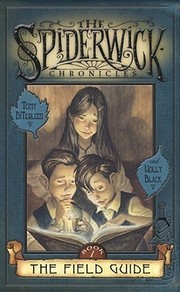
The Field Guide
Three siblings move into a creepy Maine estate, anger a brownie, and find a forbidden guide to the fairy world in the first Spiderwick book.
2,033-word summary · 9 min read
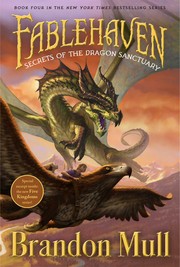
Secrets of the Dragon Sanctuary
Kendra is replaced by a plant copy and held by the Society, while Seth steals a unicorn horn so the family can enter a dragon sanctuary.
2,590-word summary · 12 min read

Lioness Rampant
Alanna searches for the Dominion Jewel with the Shang Dragon, then returns to Tortall to face Duke Roger at Jonathan's coronation.
2,478-word summary · 11 min read
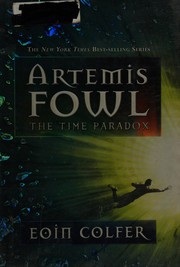
The Time Paradox
When his mother falls ill with a fairy disease, Artemis Fowl travels back in time to find the extinct lemur that can cure her and confronts his younger self.
2,601-word summary · 12 min read
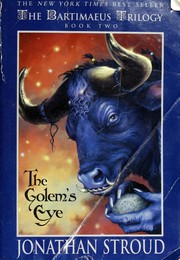
The Golem's Eye
Two years after The Amulet of Samarkand, Nathaniel is a rising bureaucrat, Bartimaeus is his unwilling servant again, and something made of clay is tearing…
2,299-word summary · 10 min read
Magician's Gambit
Garion and his companions cross haunted Maragor and the caves beneath Rak Cthol to recover the Orb of Aldur.
2,391-word summary · 11 min read
Homeland
Drizzt Do'Urden is born into the cruel drow city of Menzoberranzan, where his father teaches him to fight and to doubt everything his family believes.
2,303-word summary · 10 min read
Enchanters' End Game
Garion marches toward Torak while Ce'Nedra leads the West's army in the final Belgariad volume, where prophecy and war meet.
2,557-word summary · 11 min read
Nettle & Bone
Marra, a princess in a convent, leaves to save her abused sister, but first she must finish three impossible tasks: a bone dog, a nettle cloak, moonlight in a…
2,061-word summary · 9 min read
Grip of the Shadow Plague
A plague turns Fablehaven's creatures of light into shadows while Kendra hunts an artifact in Arizona and Seth races to find the cause.
2,131-word summary · 9 min read

The Rose & the Dagger
Shahrzad is pulled from her Caliph husband and left in a desert camp of rebels, needing to break his curse and end a war before it ends her.
2,520-word summary · 11 min read

The Queen of the Tearling
Nineteen-year-old Kelsea leaves the woods to take her throne, ends a shipment of human captives, and draws the Red Queen's revenge.
2,357-word summary · 10 min read
Fool's Errand
FitzChivalry Farseer has lived in exile for fifteen years. When Prince Dutiful vanishes before his betrothal, Fitz returns to Buckkeep to find him, with a wolf…
2,606-word summary · 12 min read