
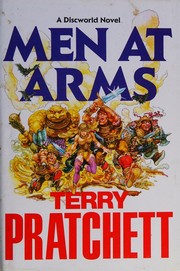
Reading options
What's inside (9 sections)
I came to Men at Arms right after Guards! Guards!, which is the sensible order if you want the City Watch books straight, even though Pratchett designed Discworld so you can start almost anywhere. What I did not expect was that the second Watch novel would be less about a dragon and more about one object. A gun. The first book is a comedy about a city that learned to live with crime by taxing it. This one is about what happens when a single small piece of metal turns up in a place that has spent centuries without it. It is also, quietly, the book where the Watch stops being a joke.
The facts, since they place it. Victor Gollancz published the first hardcover in 1993, 288 pages, ISBN 0-575-05503-0, which becomes 9780575055032 in the longer form. It is the fifteenth Discworld novel by publication order and the second City Watch novel. Carrot Ironfoundersson is back, so are Vimes, Colon and Nobby, and the Librarian appears as well. You can read it cold, but Guards! Guards! sets up Vimes and Carrot in a way this book leans on.
The Watch gets recruits it did not ask for
Ankh-Morpork is the same damp machine it always is. The guilds run crime like a business. The Thieves Guild sells permits to steal. The Assassins Guild takes commissions on prominent deaths and prides itself on style. The Patrician, Lord Vetinari, balances them against each other and keeps the city from tearing itself apart through paperwork and a talent for making people nervous. The City Watch, meanwhile, is small and underfunded. It is expected to look official and stay out of the way.
Captain Sam Vimes is about to retire and marry Lady Sybil Ramkin, the richest woman in the city. That sentence tells you what the book is doing with him. A Vimes with a future is a Vimes who has something to lose. He is trying to leave the Watch clean, or at least tidier than he found it. He is also about to get a problem he cannot hand to anyone else.
Vetinari, partly to annoy the guilds and partly because he likes the shape of the idea, orders the Watch to hire for diversity. That is the word the book uses, and it lets Pratchett do one of his favorite tricks: take a modern argument, drop it into a fantasy city, and let the friction do the comedy and the thinking at once. Three new recruits arrive. None of them fit the mold of a watchman, and all three turn out to matter.
The recruits are Cuddy, a dwarf, Detritus, a troll, and Angua, a woman. Vimes notices she is a woman because that is the box most people would tick, but the truth is stranger and the book takes its time getting there. Carrot, now a corporal, is the only one of the old guard who takes all of them seriously, and that is not a small thing.
A dwarf, a troll, and a werewolf walk a beat
Cuddy and Detritus are the joke at first. Dwarfs and trolls have hated each other for ages. A troll's brain cools slowly and a dwarf lives underground and is stubborn; the two species are structured by the setting to clash. Vimes pairs them because someone has to walk the night and no one else will pair with either. What follows is the warmest part of the book. The two of them bicker, get lost, share food, save each other, and become friends in a way neither expects. Pratchett handles it without a speech about tolerance. They simply learn each other, and the reader watches a prejudice dissolve at street level.
Angua is the piece with the secret. She is a werewolf, settled in the city under an unspoken arrangement, and she spends the book keeping it hidden. Carrot does not know. He assumes she was hired because she is female, which is both funny and a little sad given how much he misses. The two of them fall into a slow, awkward courtship, and Pratchett gives it real tenderness before he complicates it.
The book also introduces Gaspode, a talking dog. He is scruffy, cynical, and one of the best minor characters in the series. He is not a noble animal. He is a survivor with a voice and a bad smell and a habit of saying the thing everyone else is too polite to say. He attaches himself to Angua's investigation and provides the street-level commentary the Watch itself is too busy to provide.
A gun in a city that never had one
The central object is the gonne. It is a hand cannon, the Disc's first and only handheld firearm, kept locked away in the Assassins Guild as a relic. It has a presence the rest of the book cannot match. Everyone who holds it wants to keep holding it. It whispers, or something like whispers. Pratchett writes it as an idea that has found a shape, and that is scarier than a monster because you can understand the wanting.
Edward d'Eath steals it. He is an assassin from a noble family that has fallen on hard times, and he has decided the reason for his decline is the world changing around him. His fix is to turn the clock back. He wants a king again. He researches the old royal line and concludes that Carrot Ironfoundersson is the rightful heir, an inheritance Carrot knows nothing about and would probably greet with a polite letter home.
I should slow down here, because d'Eath is the engine of the plot and also one of the weaker parts of it. His plan is to use the gonne to murder leading guild figures, discredit Vetinari, and blame the chaos on the Patrician until the city begs for a monarch. It is a coherent plan. But d'Eath himself is thin. He gets a family backstory and a grievance and not much else. The gonne does the real characterization, warping whoever holds it, and d'Eath is mostly a pair of hands for it early on.
The murders, and a Patrician who says stop
The killings begin. Guild leaders die in ways the city cannot explain, and the Watch is pulled in. Vimes, who has been counting down to his wedding and retirement, finds himself in the middle of a case he cannot walk away from. Then Vetinari does something clever. He forbids Vimes to investigate. He is not confused about whether Vimes will obey. He wants him to disobey. Heads of stubborn men work that way, and Vetinari has spent thirty years learning how.
So Vimes investigates anyway, with Carrot and the recruits, and the case widens. Clues point at the Assassins Guild, at the gonne, and at a conspiracy hiding behind a respectable front. The best scenes here are the quiet ones. Vimes and Carrot trading observations. Angua working angles no one else can. Cuddy and Detritus covering each other on a beat that turns dangerous. The mystery resolves less through a single clever deduction than through the Watch grinding at it while the city gets more dangerous.
There is also a strange, funny subplot about the dead. Ankh-Morpork has a fresh problem with the recently deceased, tied to the Disc's habit of recycling souls, and it keeps intruding on the murder case at odd angles. It is one of the looser threads in the book, but it gives Pratchett room to write about death as a nuisance rather than a tragedy, which is his specialty.
The gonne changes hands
d'Eath takes his plan to Doctor Cruces, the head of the Assassins Guild. That meeting goes the way these meetings go. Cruces listens, decides he wants the power for himself, kills d'Eath, and picks up the plan and the gonne. This is the turn the book needed, because Cruces is a better villain than d'Eath: older, colder, and genuinely dangerous with the weapon. He wants the same restoration, or at least he wants the throne's shadow to fall his way, and he is willing to kill his way there.
The gonne passes through more hands than that, and each hand changes. That is the point. Pratchett is not writing about a weapon so much as about what a weapon does to the person who holds it, and he repeats the beat on purpose. By the time the pieces come together, the murders are not random and the target is clear. The Watch has to stop Cruces before the plan reaches Vetinari and the throne.
What works about the gonne is that it is never given an explanation that shrinks it. It is not a cursed sword with a backstory you can file away. It is a device from the Disc's own past, and the men who want it keep telling themselves they will be the one to use it wisely. None of them can. The book is honest that the wanting is the whole problem.
Blood on the cobbles
The climax costs the Watch more than any previous book. Cuddy and Detritus face the worst of it, and Cuddy does not survive. Angua, fighting as a werewolf, is shot and appears to die; only later, when the moon rises, does the reader understand that a werewolf can only be killed with silver, and the shot that stopped her was not. She comes back. Cuddy does not, and the book does not soften it. He is a dwarf who joined the Watch by accident and became a watchman on purpose, and his death lands hard because we watched him earn the job.
Carrot carries the ending. He confronts Cruces, and the gonne tries to work on him the way it worked on everyone else. It does not take. Carrot, who believes in rules and thinks in plain lines, is the one person the thing cannot tempt, because he does not want power. He takes the evidence that he is the heir, and he buries it with the dismantled gonne in Cuddy's grave. He chooses the Watch over the throne and never tells the city what he could have claimed. It is the cleanest statement the series makes about who Carrot is.
Vimes gets his ending too. He and Sybil marry. The Watch's profile rises, and Vetinari, who now owes the men who saved him, reshapes the force. Carrot is made captain. Vimes is promoted to commander and knighted, and the two of them, with Vetinari, quietly file away the knowledge of the heir and agree not to need it. Vimes does not stop being Vimes. He just has rank and a wife and a reason to keep building something bigger than a watch house with three drunks in it.
What works and what does not
The comedy is different from Guards! Guards!. It is less a stream of gags and more a set of running ideas: affirmative action, racial hatred, the seduction of a weapon, the difference between a king and a policeman. That makes Men at Arms feel more grown up and slightly less consistently funny. Publishers Weekly said as much at the time, calling it not as funny as the earlier novels while praising the dialogue, and that is fair. Some of the dialogue is superb. Some of the plotting is loose.
The middle drags in places. The conspiracy moves in fits, and a few scenes repeat their point about the gonne before the story moves on. The book also leans on coincidence to get its pieces into the right room at the right time. I noticed it, and I did not much mind, because the characters carry the slack. Angua, Gaspode, Cuddy and Detritus are good company, and Detritus in particular is a small comic machine that keeps paying out.
If the book has a fault worth naming, it is that it bites off several themes and finishes only some of them. The racial tension between dwarfs and trolls is set up beautifully and then partly dropped once the plot takes over. The monarchy question builds to a fine resolution but leaves Vetinari doing very little except being clever. And readers who come to Discworld for pure farce, the Rincewind kind, may find this one slower and more serious than they want.
Who it is for. If you liked Guards! Guards!, read this next; it is the direct continuation and the better character book. If you like police stories, city politics, and fantasy that uses its own rules to think about real ones, this is the sweet spot of the early Watch run. If you want fast jokes and no weight, start elsewhere. This one puts weight on the jokes, and the jokes hold.
What stayed with me was not the gunfight or the mystery. It was Carrot at a grave, burying a crown he never asked for, and Vimes choosing a wedding over a bottle. Men at Arms is the book where the Watch becomes a real institution and its people become people, and Pratchett does it by letting a dwarf and a troll learn to like each other while a city argues about whether it should have a king.
FAQ
Is Men at Arms part of a series and where does it fit?
Yes. It is the fifteenth Discworld novel and the second City Watch book, after Guards! Guards!. It was first published in 1993 by Victor Gollancz in a 288 page hardcover.
Do I need to read Guards! Guards! before Men at Arms?
It helps but is not required. Men at Arms follows directly from the first Watch book and assumes you know Vimes and Carrot, yet Pratchett wrote the Discworld novels so they can be read in almost any order.
Who are the new recruits in Men at Arms?
Cuddy the dwarf, Detritus the troll, and Angua, a werewolf posing as a woman watchman. Carrot does not learn Angua's secret until late in the book.
Similar books
More from Discworld first, then related titles.
The Color of Magic
A failed wizard guides a tourist across a flat world on a turtle, with comic fantasy chaos.
2,032-word summary · 9 min read
The Light Fantastic
Rincewind and Twoflower fall off the world while wizards race a red star.
1,974-word summary · 9 min read
Equal Rites
A dying wizard passes his staff to a baby girl, and Granny Weatherwax escorts Esk to Unseen University in Pratchett's third Discworld book.
2,871-word summary · 13 min read
Mort
Death hires apprentice Mort in this 1987 Discworld comedy, where a spared princess splits reality and duty bends for love, with no Rincewind.
2,386-word summary · 11 min read
Sourcery
A dying wizard hides his soul in a staff, his eighth son becomes a sourcerer strong enough to break the world, and Rincewind is sent to stop him with a sock.…
2,404-word summary · 11 min read
Wyrd Sisters
Three Lancre witches rescue a murdered king's baby, hide Lancre's future, and trap a guilty duke with a play in Ankh-Morpork.
3,085-word summary · 14 min read
Guards! Guards!
A drunk captain, his last two guards, and an earnest recruit face a summoned dragon in Ankh-Morpork in Pratchett's funny eighth Discworld book.
2,307-word summary · 10 min read
Reaper Man
Death gets fired and farms while Windle Poons refuses to die.
2,579-word summary · 11 min read
Witches Abroad
Three Lancre witches fly to Genua to stop a fairy godmother from forcing a servant girl into a storybook marriage, and find a city arranged around a happy…
2,651-word summary · 12 min read
Small Gods
God Om trapped as a tortoise must convince novice Brutha to save Omnia from its own church.
2,063-word summary · 9 min read
Hogfather
Death fills in for a missing Father Christmas, Susan Sto Helit hunts the Hogfather, and the twentieth Discworld novel turns Santa into a management problem.
2,871-word summary · 13 min read
Night Watch
Vimes is thrown back in time and must train his young self through a revolution.
2,003-word summary · 9 min read
The Wee Free Men
Nine-year-old Tiffany Aching teams with the Nac Mac Feegle to rescue her brother from the Fairy Queen.
2,600-word summary · 12 min read
Going Postal
A hanged con artist must revive Ankh-Morpork's dead Post Office and outwit a murderous rival in Pratchett's 33rd Discworld novel.
2,228-word summary · 10 min read

How the Light Gets In
Gamache investigates the murder of the last Ouellet quintuplet while the Sûreté he served is dismantled from inside by the man who took his protégé.
2,279-word summary · 10 min read

Bury Your Dead
Recovering from a failed raid that killed his officers, Gamache investigates a murder in a Quebec City library while Beauvoir reopens a case in Three Pines.
2,022-word summary · 9 min read

The Trespasser
A Dublin Murder Squad detective investigates a staged dinner-party killing and finds a cover-up that reaches into her own department.
2,051-word summary · 9 min read

Rules of Prey
Minneapolis detective Lucas Davenport hunts a killer who leaves a new rule at every scene and treats murder as a game of wits.
1,914-word summary · 9 min read

The Late Show
Exiled to the LAPD night shift after accusing her supervisor, Renée Ballard keeps two cases that were meant to be handed off at dawn: a brutal assault and a…
2,563-word summary · 11 min read
The Last Mile
Melvin Mars is hours from execution for his parents' murder when another man confesses, and FBI cold case detective Amos Decker goes looking for the trap.
2,746-word summary · 12 min read
A Rule Against Murder
Gamache's anniversary at a remote lodge turns into a closed-circle murder when the family statue kills Julia, and everyone at the Manoir had a reason.
2,201-word summary · 10 min read

Ten Big Ones
Stephanie witnesses a gang robbery dressed as a devil, and the Comstock Street Slayers put her on a list of people to kill.
2,062-word summary · 9 min read
Triptych
A GBI agent with dyslexia hunts a rapist while two Atlanta cops hide pasts.
2,576-word summary · 11 min read
Eleven on Top
Stephanie quits bounty hunting for normal jobs, but a killer and a wedding keep pulling her back.
2,508-word summary · 11 min read
The Bat
Oslo detective Harry Hole aids Sydney police after a young Norwegian woman is murdered and finds a wider pattern. Grief, drink, and a lost partner shape the…
2,766-word summary · 12 min read
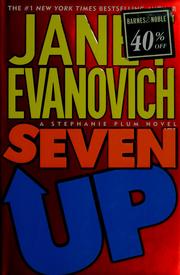
Seven Up
Stephanie hunts old mobster Eddie DeChooch, finds a body, a missing heart, and trouble from Morelli to Ranger.
2,798-word summary · 12 min read
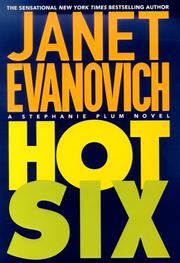
Hot Six
Stephanie Plum hunts a missing bail jumper tied to Ranger's mentor while Morelli, Lula, and Grandma Mazur stir Trenton chaos.
2,035-word summary · 9 min read
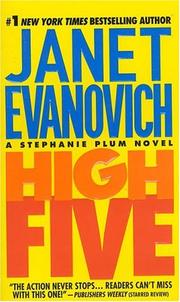
High Five
Stephanie hunts missing Fred with Ranger's help while Morelli sulks and Grandma shops for funerals and husbands.
2,228-word summary · 10 min read
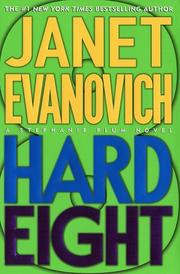
Hard Eight
Janet Evanovich's Hard Eight fully retold: a missing mother and child, Abruzzi's medal hunt, Valerie's rescue, and Ranger crossing a line.
2,961-word summary · 13 min read
Memory Man
Amos Decker, a detective who cannot forget, hunts the link between his family murder and a school shooting.
2,931-word summary · 13 min read