
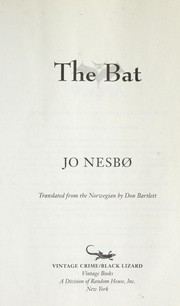
The Bat
2,766-word summary 12 min read 369 pages in the book
- First published
- 1997
- Publisher
- Vintage Books
- Pages
- 369
- ISBN
- 9780345807090
- Original title
- Flaggermusmannen
- Series
- Harry Hole (#1)
Reading options
What's inside (9 sections)
I found The Bat in a used shop, spine cracked, with a note inside that said start here if you want to see where Harry Hole began. I had already read two later Harry books, where he is sharper and sadder, so going back felt like meeting someone in old photos. First published in Norwegian in 1997 as Flaggermusmannen, it came to English in a translation by Don Bartlett, with the Vintage Books edition running 369 pages. It is the first book in the Harry Hole series, and it sends Harry, an Oslo detective, to Sydney to help with the murder of a young Norwegian woman.
I read it over four evenings, sometimes impatient, sometimes fond. You can feel a writer learning his detective in real time. The Sydney heat, the bars, the long drives, the hangovers. The case itself is dark, with a pattern that only shows late. If you come expecting the tight machine of the later novels, this one will feel loose. If you like watching a character get built from spare parts, it has a rough charm.
Harry arrives damaged and tries to hide it. He drinks too much. He jokes to deflect. He is far from home and out of his depth in a city that treats him as a guest with a badge. His local partner keeps him upright for a while. A Swedish witness keeps him human for a while. Then both supports crack, and Harry has to work the case with a clearer head than he wants.
A Norwegian death in Sydney
The case that pulls Harry to Australia is brutal and political. A young Norwegian woman has been found dead in Sydney, strangled and assaulted, her body left near the water after a night out. She was in her early twenties, a small-time actress and TV face back home who had come to Australia chasing work and sun. Because she was Norwegian, Oslo is notified. Because Australia wants no diplomatic mess, Sydney police agree to take an observer from Norway. That observer is Harry Hole.
Harry is not anyone's first choice for diplomacy. He is in his early thirties, tall, fair, with a bad knee from old football days and a drinking problem he minimizes. In Oslo he has a reputation as smart and stubborn, good at seeing links other people miss, bad at playing office games. His bosses send him partly because he is capable and partly because distance might dry him out. He lands in summer heat, jet-lagged, with a suitcase, a file, and instructions to watch and help but not to lead.
Sydney in the book feels bright and hard. Kings Cross with its neon and touts. Beaches packed on weekends. Harbor ferries cutting white lines. Backpacker bars, strip clubs, late-night food stalls. Nesbo piles on local color, sometimes to the point of tour guide. Harry gawks a little, sweats a lot, learns to order cold beer and to keep cash close. The city shapes the case because the killer uses distance and anonymity, moving between scenes that do not look connected at first.
Harry is told the victim was last seen around bars and parties, mixing with expats, actors, dealers, and men who offer work that never quite arrives. He starts with the simple theory, a date that turned violent. He learns fast that simple will not hold.
Andrew Kensington keeps Harry upright
On arrival Harry is paired with Andrew Kensington, a Sydney detective with Aboriginal heritage, boxer's hands, and an easy manner that Harry envies. Andrew knows the streets, the clubs, the fixers, the way a witness will talk over food but not in a station. He drives. He introduces. He warns Harry which doors to knock softly on and which to skip until later.
The two men like each other quickly, in the way tired cops do. They trade stories about fathers and football, about why they stayed in the job. Andrew has his own history with drink and violence, and he watches Harry with the eye of someone who has steadied himself and knows the signs. He tells Harry where to find black coffee at 3 a.m. He covers when Harry shows up shaky. He sets a pace that keeps Harry from sliding in the first week.
Their method is old school. Walk the last night step by step. Who poured drinks. Who offered a ride. Who left with whom. They visit bars where the victim drank, talk to bartenders who remember a laugh more than a face, pull CCTV where it exists, lean on petty dealers for gossip. Andrew translates the city for Harry, explaining slang and the codes beneath it. Who owes whom. Which club pays police to look away. Which alley cameras are fake.
I liked these early chapters best for the partnership. Andrew is warm without being simple. He jokes about Harry's pale legs and Norwegian wool habits, then turns serious about how cases like this go cold when everyone assumes the girl asked for it by partying. He pushes back when other officers shrug. Harry, to his credit, listens here more than he does later. He takes notes. He learns names. For a stretch, it feels like a book about two men doing careful work in heat.
Birgitta and the expat bars
Harry also meets Birgitta, a Swedish woman working behind a bar and living in the loose circle of Scandinavians in Sydney. She knew the victim slightly, enough to place faces and nights, enough to be scared when she realizes how close she came to the same rooms. She is direct, funny, and tired of men who treat bar staff as scenery. Harry likes her at once, and she likes him enough to help while keeping clear boundaries.
Birgitta becomes Harry's window into the victim's world. Through her, Harry maps the round of house parties, casual jobs, surf mornings, and late shifts that made up life for young Nordics far from home. He learns the victim was bright, restless, liked attention, trusted too fast when drunk, fought hard when cornered. Friends describe her last weeks as up and down, money tight, a phone full of new numbers, a plan to go home that kept slipping.
A few scenes in Birgitta's bar carry the book's human weight. Harry nurses a soda while she works, asking questions between orders. Regulars drift in, a surfer, a comic, a dealer with a smile that does not reach his eyes. Birgitta tells Harry who to trust and who to watch, then tells him to go to bed when he looks rough. Their friendship stays mostly chaste, which I appreciated. Harry needs someone who is kind without wanting to save him, and Birgitta needs someone to take her fear seriously without turning her into a lead.
There is also a soft thread where Harry, lonely and drunk, almost ruins this goodwill. He shows up late, talks too much about Oslo, asks for one more drink after closing. Birgitta calls him on it without cruelty. Those small corrections matter because they show Harry can still hear shame. Later, when danger moves closer to her, his protectiveness feels deeply personal.
Drinking, boxing, and history lessons
Between interviews, Nesbo fills pages with Sydney excursions that have little to do with the murder. Harry visits the harbor, takes a ferry, watches boxing with Andrew, listens to stories about Aboriginal history, about English settlement, about racism past and present. He meets Andrew's family and friends, eats, drinks, hears about land and loss. He reads about old cases. He walks.
Some of this works. Andrew's background is not decoration. It shapes how he reads police power and why he trusts certain witnesses over official files. A long talk about how Aboriginal men were boxed for white entertainment lands hard and reframes Andrew's calm. Harry's respect grows because he sees what Andrew carries without speechifying. The boxing scenes also show Harry's body failing him, his knee, his breath, his need for a drink to steady hands before a spar that he should have skipped.
A lot of it drags, though, and honesty requires saying so. Chapters on harbor history, on circus life, on snakes and bats and harbor sharks read like notes from a research trip Nesbo did not want to waste. Harry plays tourist while a killer walks free, and the tension leaks. I skimmed two beach passages and a museum talk that could have been cut to twenty lines. Fans who love travel writing may enjoy the detours. I wanted the file back on the table.
Harry's drinking fills the gaps. He hides bottles, lies about breakfast beers, misses morning calls, shows up sweating. Andrew covers once, then warns him. Birgitta sees through him. Harry tells himself he drinks because of jet lag, because of heat, because the case is ugly. The truth is older, tied to Oslo, to a past operation that went wrong and to a guilt he has not named in this book. Nesbo does not spell it all out here, which is wise. You see enough to worry. A detective who needs a drink to interview a grieving friend is a risk to everyone around him.
Andrew is killed and the pattern shows
About halfway through, the book turns hard. Andrew is found dead, killed in a way that looks at first like night violence but soon reads as aimed. For Harry, the floor drops. His guide is gone. His cover is gone. The police family that tolerated a visitor now watches him with grief and suspicion. Harry blames himself, with reason and without, for nights he drank instead of backing Andrew, for leads they joked about instead of chasing.
Grief sobers Harry for a stretch, which gives the investigation its sharpest section. Working with new Sydney officers who do not coddle him, Harry spreads photos and timelines across a table and stops chasing single suspects. He looks for shape. Blonde women. Nights near clubs and harbor parties. Hands, not weapons. A man who talks his way close, who offers fun and safety, who turns when refused. Old reports surface, a near miss months earlier, a complaint withdrawn, a girl who left town fast and did not say why. The victim stops looking like a one-off and starts looking like part of a line.
Harry also replays Andrew's last days. Who did Andrew meet alone. What did he hold back to protect Harry or to protect a source. A notebook, a phone log, a name repeated twice in different contexts. Harry follows that thread into Sydney's underworld of pimps, small dealers, and club fixers who trade girls and pills and silence. He gets threatened, takes a beating he half earns by pushing drunk into the wrong bar, then gets back up and pushes smarter.
Birgitta is pulled deeper here. She remembers seeing the kind of man Harry describes, charming in a group, cold one to one. She agrees to help with introductions while scared in a way she tries to hide. Harry wants to keep her out of it and needs her in it, a bind he handles badly at first by ordering her around. She tells him she is not his constable. He apologizes and asks properly. That small shift, from command to request, is one of the few clean signs of growth Harry shows in this book.
Chasing a fixer through clubs and parties
The last third is a hunt through party Sydney. Harry, now mostly sober because fear beats craving for a while, works with Sydney police to pin down a local operator who lives off nightlife. He is not a kingpin in a suit. He is the man who always knows where the afterparty is, who can get pills and girls and a quiet room, who smiles for photos and squeezes arms hard out of frame. Witnesses describe him in pieces. Big laugh. Quick hands. A van. A flat near the water. A story about circus work or sideshow jobs that may be true or may be patter.
Nesbo stages this well when he stays close to procedure. Harry and the team compare descriptions, run photos past bar staff, check alibis that crumble on times, sit outside clubs in hot cars watching who walks out with whom. One stakeout scene in Kings Cross has real sweat on it. Neon, bad coffee, Birgitta on the phone feeding memory, Harry trying not to drink the minibar beer in his head while he watches a door.
There is a strong, queasy sequence where Harry lets himself be led to an afterparty to draw the man out, playing the loose tourist with cash. It nearly goes wrong because Harry underestimates how fast charm turns to grip. He gets out with help and with a clearer face in mind, but the scare costs him. A superior tells him to fly home before he causes a diplomatic incident. Harry refuses, which in later books becomes a habit. Here it still feels like a choice with weight, not a catchphrase.
I will keep the final identity and mechanics light, since this is a mystery and the reveal still bites, but the shape is this. Harry realizes the murders link through strangling during or after sex, with a ritual edge tied to performance and control. The man he wants has hidden inside nightlife work, using access and drugs to isolate women who will not be missed fast. The showdown comes away from crowds, near water and empty rooms, where Harry arrives underprepared and half sick, with no Andrew to watch his back. He survives more by stubbornness than skill, which fits the Harry of this book. He is not yet the brilliant wreck of later fame. He is a young cop who wants to live enough to tell Birgitta he is sorry.
A rough start that still points forward
Reading The Bat after the later Harry Hole books is strange in a good way. The bones are here. The insomnia, the guilt, the need to drink after seeing dead girls, the refusal to let a case go when bosses say stop, the tenderness toward women witnesses that sometimes blurs into need. Nesbo had his man from the start, even if the hand was unsteady.
What is missing is control. The plot wobbles between travelogue and thriller. The research shows too much. Long passages on Australian animals, on colonial violence, on circus clowns and outback myths stall momentum. Some are interesting on their own. Few earn their length inside a murder hunt. A tighter edit that cut fifty pages of sightseeing would have left a leaner, darker book. As it stands in the 369 page Vintage edition, you feel the debut bloat.
Harry himself can grate here. He is more tourist than detective for long stretches, more drinker than thinker. He ogles, he sulks, he needs Andrew to explain basics he should pick up faster. Later Harry is self-lacerating but competent. Early Harry is often just lost. I missed the sharper procedural mind that makes the series sing. When it flashes, in the timeline scene, in the photo spread, in a quiet read of a liar's hands, you see the future books coming. I wanted more of those flashes and fewer ferry rides.
The handling of race and sex also feels dated in spots, though not cruel in intent. Andrew's story is told with respect, but sometimes through Harry's wide eyes in a way that turns a man into a lesson. The victim and other young women are described with a focus on looks and party habits that can sound like judgment, even when Nesbo means to indict the men who hunt them. Readers sensitive to that framing should know it is present, though the book's anger lands on the killer, not the women.
Even so, I am glad I read it. The Andrew chapters have real warmth. Birgitta is one of the better civilian helpers in early Nesbo, smart and unwilling to be used. The serial pattern, once it locks, is grim and memorable without tipping into gore for its own sake. And the final image of Harry on a plane, sober for now, carrying names he will not forget, sets up the longer fall to come. If you love the series, read this as origin, not peak. If you are new, know the next books tighten fast. Either way, at 369 pages in Don Bartlett's clear English rendering of the 1997 Flaggermusmannen, it is a flawed first step with a pulse you can feel.
FAQ
Is The Bat the first Harry Hole book?
Yes, it is Harry Hole book one, first published in Norwegian in 1997 as Flaggermusmannen.
Who helps Harry in Sydney?
Detective Andrew Kensington partners him, and Swedish bar worker Birgitta aids with witness context.
How long is the Vintage Books edition?
The Don Bartlett translation in the Vintage Books edition runs 369 pages.
Similar books
More from Harry Hole first, then related titles.

The Redbreast
Harry Hole chases an ageing sniper through modern Oslo while two Norwegian volunteers on the Eastern Front carry a fifty-year-old betrayal toward a royal…
2,453-word summary · 11 min read
The Snowman
After the first snow, a mother vanishes and Harry Hole links her pink scarf to eleven missing women.
2,750-word summary · 12 min read

The Trespasser
A Dublin Murder Squad detective investigates a staged dinner-party killing and finds a cover-up that reaches into her own department.
2,051-word summary · 9 min read

Rules of Prey
Minneapolis detective Lucas Davenport hunts a killer who leaves a new rule at every scene and treats murder as a game of wits.
1,914-word summary · 9 min read

The Late Show
Exiled to the LAPD night shift after accusing her supervisor, Renée Ballard keeps two cases that were meant to be handed off at dawn: a brutal assault and a…
2,563-word summary · 11 min read

How the Light Gets In
Gamache investigates the murder of the last Ouellet quintuplet while the Sûreté he served is dismantled from inside by the man who took his protégé.
2,279-word summary · 10 min read

Bury Your Dead
Recovering from a failed raid that killed his officers, Gamache investigates a murder in a Quebec City library while Beauvoir reopens a case in Three Pines.
2,022-word summary · 9 min read
The Last Mile
Melvin Mars is hours from execution for his parents' murder when another man confesses, and FBI cold case detective Amos Decker goes looking for the trap.
2,746-word summary · 12 min read

3rd Degree
The third Women's Murder Club novel follows a San Francisco terror cell and a three-day killing schedule, and it costs the club a member.
2,685-word summary · 12 min read
Broken Harbor
A family is found slaughtered in a half-built Dublin estate where no one broke in, and star detective Scorcher Kennedy must explain the holes in the walls.
2,308-word summary · 10 min read
Triptych
A GBI agent with dyslexia hunts a rapist while two Atlanta cops hide pasts.
2,576-word summary · 11 min read
Cruel & Unusual
Scarpetta links an execution to a boy's murder while someone steals bodies.
2,533-word summary · 11 min read
The Man in the Brown Suit
Anne Beddingfeld sees a Tube death in London and chases a paper clue to South Africa, diamonds, and the hidden Colonel.
2,292-word summary · 10 min read

2nd Chance
Lindsay Boxer and the Women's Murder Club hunt the Chimera killer after a church shooting in San Francisco.
2,572-word summary · 11 min read
Troubled Blood
Strike and Robin take a year long cold case: doctor Margot Bamborough vanished in 1974, with a nurse hiding more.
2,211-word summary · 10 min read
Holly
Grieving detective Holly Gibney takes a missing-girl case in 2021 and traces it to two polite retired professors with a basement secret.
2,607-word summary · 12 min read
Faithful Place
Undercover Frank Mackey returns to Faithful Place when lost love Rosie suitcase is found.
2,161-word summary · 10 min read
Memory Man
Amos Decker, a detective who cannot forget, hunts the link between his family murder and a school shooting.
2,931-word summary · 13 min read
End of Watch
A dying Bill Hodges and Holly Gibney face Brady Hartsfield again, as rigged game consoles push hurt teens toward suicide.
2,923-word summary · 13 min read
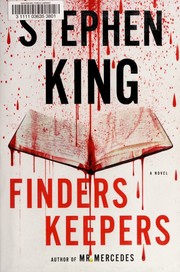
Finders Keepers
A boy finds a murdered writer's notebooks while the killer leaves prison hunting them and Hodges closes in.
2,157-word summary · 10 min read
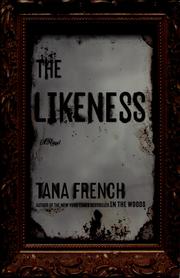
The Likeness
A detective poses as her murdered double and moves in with four graduate students to find the killer.
2,751-word summary · 12 min read
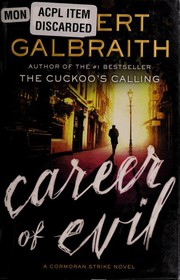
Career of Evil
A severed leg delivered to Robin forces Strike to face four men from his past as a London killer stalks, testing the agency and her wedding plans ahead.
2,887-word summary · 13 min read
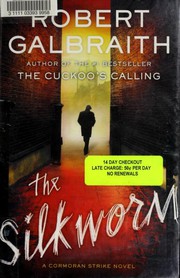
The Silkworm
A missing novelist and a cruel manuscript pull Strike and Robin into London publishing.
3,583-word summary · 16 min read
Mr. Mercedes
Retired Hodges hunts Mercedes killer Brady Hartsfield concert plot.
2,281-word summary · 10 min read
Kiss the Girls
Cross hunts Casanova kidnapping women including niece Naomi.
2,397-word summary · 11 min read
1st to Die
Lindsay, Claire, Cindy and Jill hunt a honeymoon killer terrorizing San Francisco.
2,536-word summary · 11 min read
In the Woods
A detective investigates a girl's murder in the woods where his own friends vanished twenty years earlier.
2,773-word summary · 12 min read
Along Came a Spider
Detective Alex Cross hunts Gary Soneji after two children vanish from a Washington school and a Lindbergh echo grows.
2,523-word summary · 11 min read
The Cuckoo's Calling
Broke detective Strike and temp Robin investigate a supermodel's fatal fall in London.
2,006-word summary · 9 min read
Wolf Hour
In Minneapolis, suspended detective Bob Oz hunts sniper Tomas Gomez in 2016 while a Norwegian writer revisits the case in 2022 with secrets.
2,202-word summary · 10 min read