
Reading options
What's inside (8 sections)
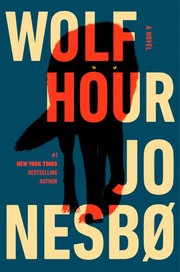
I picked this one up because I had never seen Nesbo leave Norway for a whole book. His Harry Hole novels live in Oslo snow and bad apartments and police corridors. This time the jacket said Minneapolis. That threw me. Wolf Hour was first published in January 2025 in Norwegian as Minnesota by Aschehoug, then in English in a translation by Robert Ferguson for Knopf on February 3 2026, 400 pages, ISBN 9780593803653, by author Jo Nesbo. I went in expecting a tourist version of America. What I got felt more lived in than that, cold in a different way, flat light, strip malls, lakes, guns everywhere, and a police force that does not trust itself.
The setup is split. That is the whole engine. One thread runs in Minneapolis in 2016. One runs in the same city in 2022. A detective works the first. A writer works the second. They circle the same killings six years apart.
The shooting in 2016
The 2016 thread starts with a street shooting. A small time criminal who deals guns is gunned down in the open. It looks professional. Not a fight that got out of hand. A hit.
Police land on a name fast. Tomas Gomez. Quiet man. Thin history on paper. Talk on the street says he has ties to a notorious gang and a past no one can quite pin down. Then he is gone. Vanished.
More bodies follow. The method changes a little but the feeling stays. Someone patient is working through a list. Someone who knows weapons and knows how to wait.
This is where the publisher description and the early reviews line up. Gomez is described as a former hit man carrying a family tragedy. The book keeps him half off page for long stretches. You hear about him from cops, from neighbors, from people who claim they saw him years ago. When he does appear, in memory or in glimpsed scenes, he is not loud. That restraint makes him harder to dismiss as a stock sniper.
I liked how Nesbo handles the gun world here. Dealers, straw buyers, stolen pistols moving from car trunks to closets. Minneapolis is not shown as a war zone. It is shown as a normal city where getting a gun illegally takes a few phone calls. That ordinariness sits behind every later murder. The book keeps returning to gun control without turning into a speech. Cops bag shell casings and argue about where the rifle came from. Parents lock doors that never needed locking before.
Bob Oz and the case no one wants
Bob Oz is the center of the 2016 thread. He is a Minneapolis detective, suspended, with a record that makes his own department keep him at arm length. Divorced in the way that still costs him sleep. Drinking more than he admits. He has done things on the job that follow him.
Oz gets pulled toward the Gomez case because no one else will stay with it. Officially he should keep away. Unofficially he starts reading files, visiting scenes, knocking on doors that have already been knocked on.
What makes him stick is recognition. Oz sees something of himself in Gomez. Both men carry old loss. Both served systems that used them and then dropped them. Oz tells himself he is the only one who can think like the killer. That is grand thinking, and the book knows it. Other cops roll their eyes. A supervisor warns him off. He keeps going anyway, partly from pride, partly because he has little else holding his days together.
Nesbo gives Oz a working method rather than flashes of genius. He rewalks routes. He checks who called in sick the day of a shooting. He asks about sight lines, rooftops, parking lots, which window gives a clear view at dusk. He leans on a few contacts who still answer his phone calls.
One contact matters more than the rest. Mike Lunde, an overworked taxidermist, ends up feeding Oz details that move the case. Lunde knows guns from the hunting side, knows scopes and loads and how cold air changes a shot. He also knows what it means to live with grief that never quite lifts. The parallel between Lunde and Gomez is deliberate. Both lost family. One folded the loss into quiet work with dead animals and customers. The other, if the theory holds, folded it into killing. Oz sits between them, trying to decide which kind of damaged man he is himself.
There are passages from the killer point of view slipped between the police chapters. They are calm and reasoned in a way that made my skin crawl more than any gore. The voice explains choices about distance, timing, who deserves it. It sounds logical until you step back and see the hole in the logic. Nesbo has always been good at this, letting a sick mind sound orderly for a page at a time.
By the end of the 2016 run, the case has grown from one dealer shooting into a serial investigation. Oz has a theory, partial proof, and a department that does not want to hear it from him. That frustration drives him to push too far. He bends rules about evidence and interviews. A couple of scenes near the middle, one in a garage, one on a frozen lake road, show how willing he is to trade safety for an answer.
The Norwegian in 2022
The 2022 thread follows Holger Ruch. He is Norwegian, a crime novelist, in Minneapolis to research the Gomez case for a book about a Midwestern policeman of Norwegian descent. He interviews cops, lawyers, reporters, relatives. He takes notes. He says he wants texture.
Ruch presents himself as an outsider. Friendly. Curious. A little lost in American procedure. People talk to him because he is not police. A retired officer shows him photos. A widow corrects his timeline. A librarian pulls old news clips.
Slowly the neutral researcher act frays. Ruch knows too much about certain nights. He asks questions that sound like he already knows the answers. He steers conversations away from some names and toward others. Other characters start to notice. So does the reader.
I will not spell out the exact turn here beyond what the jacket promises, that his position is more tangled than it first looks. But the effect is strong because Nesbo plays fair. Clues are planted early. A detail about a flight. A detail about language, what a Norwegian would notice in Minnesota that an American would miss. A gap in Ruch notes where you expect a full page. On a second pass through the early Ruch chapters, several lines read differently.
The two timelines do not just alternate for suspense. They comment on each other. Oz in 2016 thinks he is hunting a man. Ruch in 2022 thinks he is hunting a story. Both are wrong in useful ways. The book asks who gets to turn real deaths into narrative, and what that costs.
How the investigations overlap
Without giving away the final sequence, the shape is this. Oz builds a case around Gomez as a sniper with a motive rooted in family loss and gang history. He collects ballistics, witness fragments, money traces. He fights police politics. Minneapolis policing in the book is tired and defensive, still marked by scandal, short staffed, quick to close ranks. Oz, already marked as trouble, finds doors shut.
Ruch in 2022 rewalks much of the same ground. He finds people willing to talk now that time has passed. He finds files that were sealed or ignored. He also finds that memory has hardened. Witnesses now tell cleaner stories than they told in 2016. That cleanliness worries him. He starts to test versions against each other.
Mike Lunde keeps appearing in both threads, older in 2022, still working with his hands, still tired. His shop scenes give the book air. The smell of chemicals, the mounted deer heads, the customer small talk about hunting season. Lunde is not a detective. He notices practical things. How a man carries a rifle case without drawing looks. How long you can sit still in Minnesota cold before your hands stop working. Those details end up mattering more than any lab report.
The middle of the book has a long stretch where Oz closes in and Ruch, six years later, reads Oz own notes and sees the misses. That layering is the best part. You watch a good cop make a reasonable mistake, then watch a writer spot it, then wonder if the writer is making his own mistake on purpose. Nesbo keeps the procedural logic tight enough that you can follow the reasoning without a chart.
Gun politics, police corruption, trauma. Those three concerns run under everything. Reviews flagged them and they are really there. Guns are easy to get and hard to trace. A few cops protect their own instead of the public. Almost every major man in the book lost someone and never got help for it. Nesbo does not preach. He shows a taxidermist drinking coffee alone at night, a detective sleeping on a couch, a suspect sitting in a car watching a house for hours. The sadness piles up without announcements.
Tone in translation
Robert Ferguson translation reads plain and fast. Short sentences when shots are fired. Longer, looping sentences when Oz drinks and replays old calls. Dialogue sounds American without trying too hard for slang. A few Norwegian touches slip through in the Ruch chapters, place names, food, a joke about winter that only a Norwegian in Minnesota would make. Those small bits help sell Ruch as real.
Humor shows up in dark places. Cops joke at scenes because that is how they cope. Ruch misunderstands an American football reference. Lunde deals with a customer who wants a fish mounted in a heroic pose. None of this lightens the murders. It makes the people around them feel less like pieces on a board.
Pacing is steady rather than frantic for the first third, then tightens. The short killer interludes keep tension up while Oz does slow police work. The last hundred pages move fast, with two long set pieces, one in an industrial area outside town, one in a residential street that had felt safe until then. I read the last sixty pages in one sitting.
Minneapolis itself is drawn with care. Not the postcard lakes in summer, but highways, parking ramps, duplexes, bars with neon, snow that turns to gray slush. The Norwegian connection is real history, many residents with Scandinavian roots, and Nesbo uses it without turning it into a gimmick. Church basements, last names, a recipe mentioned in passing. It gives Ruch a reason to feel both at home and foreign.
What drags and who should try it
Fair criticism first. The cast is wide. Cops, ex cops, reporters, lawyers, gang contacts, relatives, hunters. A few minor officers blur together, especially in the 2016 precinct scenes. I had to flip back twice to sort two sergeants with similar attitudes. The 2022 thread also repeats some interviews. Ruch hears the same story from three people with small changes. That repetition is the point, memory shifting, but it can feel slow around page 250.
Oz can wear you down. He broods, he drinks, he pushes people away, then wonders why he is alone. If you have no patience for damaged detective types, parts of his arc will test you. I stayed with him because the book lets other characters call him out. Lunde tells him he is using the case to avoid his own life. A former partner says it more bluntly. Those confrontations keep Oz from turning into a martyr.
The final reveal about Ruch will split readers. Some will feel it reframes everything in a satisfying click. Some will feel it relies on withheld facts. I landed in the middle. The mechanics hold if you accept one big choice Ruch made years earlier. The emotion holds better than the mechanics. What he wanted from the story made sense to me even when the plan itself felt thin in one spot.
Who is this for. Readers who like slow procedural detail mixed with a literary game about storytelling. Fans of Harry Hole will find the same interest in guilt and addiction, but Oz is not Hole. He is less brilliant, more stubborn. Readers who want nonstop action may find the first half too patient. Readers who like Nordic noir but want a change from Oslo and Bergen will get a lot from the Minnesota winter, which feels like a cousin to Tromso cold.
I closed the book thinking about Lunde more than anyone. A man who stuffs dead things for a living and tries to stay decent. A man who knows how to wait in the cold. In a novel full of hunters, he is the one who best understands what waiting does to you. That image stayed with me longer than the ballistics.
If you read it, pay attention to dates on reports and to what Ruch does not write down. The truth is often in the missing paragraph.
FAQ
When was Wolf Hour published?
It was first published in January 2025 in Norwegian as Minnesota by Aschehoug. The English translation by Robert Ferguson was published by Knopf on February 3 2026.
Is Wolf Hour part of a series?
No. It is a stand alone thriller. It follows suspended detective Bob Oz in 2016 and crime writer Holger Ruch in 2022 as they circle the same Minneapolis murders.
Who will enjoy Wolf Hour most?
Readers who like slow procedural work with a story about storytelling should try it. Fans of Nordic noir who want an American setting will feel at home.
Similar books

The Redbreast
Harry Hole chases an ageing sniper through modern Oslo while two Norwegian volunteers on the Eastern Front carry a fifty-year-old betrayal toward a royal…
2,453-word summary · 11 min read
The Bat
Oslo detective Harry Hole aids Sydney police after a young Norwegian woman is murdered and finds a wider pattern. Grief, drink, and a lost partner shape the…
2,766-word summary · 12 min read
The Snowman
After the first snow, a mother vanishes and Harry Hole links her pink scarf to eleven missing women.
2,750-word summary · 12 min read

What She Knew
Rachel lets her eight-year-old son run ahead in a Bristol park, and the nine-day search turns her into a suspect in the public eye.
2,952-word summary · 13 min read

The Beach House
A young valet is beaten to death at a Hamptons party, and his law-student brother spends a year building a case against the family that covered it up.
2,049-word summary · 9 min read

Six Years
A professor who promised to forget the woman he loved sees her husband's obituary and discovers that the wedding, the marriage, and the woman herself may never…
2,076-word summary · 9 min read

The Trespasser
A Dublin Murder Squad detective investigates a staged dinner-party killing and finds a cover-up that reaches into her own department.
2,051-word summary · 9 min read

Rules of Prey
Minneapolis detective Lucas Davenport hunts a killer who leaves a new rule at every scene and treats murder as a game of wits.
1,914-word summary · 9 min read

The Late Show
Exiled to the LAPD night shift after accusing her supervisor, Renée Ballard keeps two cases that were meant to be handed off at dawn: a brutal assault and a…
2,563-word summary · 11 min read

4th of July
Lindsay Boxer shoots two armed teenagers in self-defense, faces a wrongful-death trial, and spends her leave chasing a string of throat-slashing murders in…
2,192-word summary · 10 min read

The Camel Club
Four Washington misfits witness a murder on Roosevelt Island and stumble into a conspiracy that reaches the Oval Office, with a hostage president and a nuclear…
2,354-word summary · 10 min read

61 Hours
A bus crash strands Jack Reacher in a snowbound South Dakota town where a drug gang, a corrupt police force, and a single witness are on a collision course.
2,227-word summary · 10 min read
The Last Mile
Melvin Mars is hours from execution for his parents' murder when another man confesses, and FBI cold case detective Amos Decker goes looking for the trap.
2,746-word summary · 12 min read

Still Missing
A realtor is abducted at a Vancouver Island open house and held for more than a year. Told through therapy sessions, the novel follows her escape and the hunt…
2,466-word summary · 11 min read

Bad Luck and Trouble
A deposit of $1,030 summons Jack Reacher back to his old army unit, which is being picked off one name at a time.
2,366-word summary · 11 min read

3rd Degree
The third Women's Murder Club novel follows a San Francisco terror cell and a three-day killing schedule, and it costs the club a member.
2,685-word summary · 12 min read

Worth Dying For
Reacher stops for one night in rural Nebraska and finds a family that runs the county, a missing girl and a shipment worth killing for.
2,021-word summary · 9 min read

Say You're Sorry
A widowed prosecutor defends the teenager accused of killing her babysitter, uncovering a small town's secrets and a killer hiding in plain sight.
2,116-word summary · 9 min read
Finlay Donovan Knocks 'Em Dead
Someone has put a contract on Finlay Donovan's ex-husband, and the novelist and her nanny have to find the hitman before the school pickup.
1,990-word summary · 9 min read

Echo Burning
Reacher hitches a ride with a Texas woman who wants her abusive husband killed, then has to prove she did not murder him when he comes home.
2,209-word summary · 10 min read
The Survivors
Kieran Elliott returns to Evelyn Bay twelve years after a storm killed his brother, and a young woman's murder forces the town to face what it has concealed.
2,571-word summary · 11 min read

Girl, Forgotten
A rookie US marshal guards a judge with a stalker and ends up reopening the 1982 prom-night murder of the judge's pregnant daughter.
2,111-word summary · 9 min read

The Woods
Twenty years after two teenagers were murdered and two vanished at summer camp, prosecutor Paul Copeland identifies a fresh corpse as one of the missing.
2,490-word summary · 11 min read
The Poet
A crime reporter investigates his twin brother's apparent suicide and uncovers a killer who leaves Edgar Allan Poe quotes behind, in the novel that took…
2,020-word summary · 9 min read

The Boy from the Woods
Wilde, found feral in a New Jersey forest in 1986, hunts for a missing teenager while a senator's secrets tear a wealthy town apart.
2,270-word summary · 10 min read
Razorblade Tears
Two ex-con fathers, one Black and one white, hunt their murdered sons' killers in a Richmond that never gave the boys a fair shake.
2,880-word summary · 13 min read
Broken Harbor
A family is found slaughtered in a half-built Dublin estate where no one broke in, and star detective Scorcher Kennedy must explain the holes in the walls.
2,308-word summary · 10 min read

Without Fail
Reacher is asked to test vice presidential security by planning to kill.
2,084-word summary · 9 min read
Triptych
A GBI agent with dyslexia hunts a rapist while two Atlanta cops hide pasts.
2,576-word summary · 11 min read

Things We Do in the Dark
A comedian kills her husband, then a podcaster digs up her teen murder past.
2,427-word summary · 11 min read