
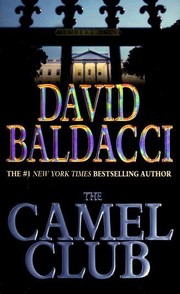
The Camel Club
2,354-word summary 10 min read 606 pages in the book
- First published
- 2005
- Publisher
- Warner Books
- Pages
- 606
- ISBN
- 9780446615624
- Series
- Camel Club (#1)
Reading options
What's inside (8 sections)
I bought this book at an airport because it was six hundred pages long and I had a four-hour flight, and a six-hundred-page thriller is a particular kind of purchase: you are not buying art, you are buying a guarantee that the next several hours will pass. What surprised me is that the guarantee held. Baldacci is not a stylist, and I will get to that, but he knows how to make a page turn, and he knows how to make a deadline feel like a physical object sitting in the room.
The premise is a good one. Four men meet regularly in Washington, DC to talk about conspiracies. They are not operatives or geniuses in the usual thriller sense. They are a retired guy who lives under a false name and keeps a protest tent in Lafayette Park, a former Army officer turned war protester, a rare books librarian who dresses like the nineteenth century, and a man with severe obsessive-compulsive disorder who once worked for a federal health institute. They call themselves the Camel Club, and their meetings are half detective work and half social club for people who do not fit anywhere else.
Oliver Stone is the leader. The name is not his. He was born John Carr, served in Army Special Forces, and spent part of his career as an assassin for a CIA unit called Triple Six. He is a legend in certain rooms and a nobody in most others, which is exactly how he wants it. Reuben Rhodes went to West Point, served in Vietnam, worked for the Defense Intelligence Agency, and then became a war protester. Caleb Shaw works in the rare book wing of the Library of Congress and has the manner of a man who would prefer the 1850s. Milton Farb was a child prodigy, worked at the National Health Institute, and lives with compulsions and paranoia that make him both the most vulnerable and the most useful member of the group.
The murder on Roosevelt Island
The inciting incident is almost casual. The club rows over to Theodore Roosevelt Island for a meeting, and while they are there two men arrive by boat with a captive. The men are Tyler Reinke and Warren Peters. They force the victim's hand around a revolver and shoot him, staging a suicide. Then they plant a note and a plastic baggie to suggest the man swam to the island on his own.
The victim is Patrick Johnson. After the killers leave, Stone finds a Secret Service lapel pin on the body. Milton, being Milton, touches the note, which is the kind of detail that later matters because the killers come back. They come back because Johnson's shoes are clean, which contradicts the swimming story, and because the note has been disturbed. They spot the club, chase them by boat, and wound Stone and Reuben before a police boat drives them off.
That sequence tells you what kind of book this is. It is not a procedural that lingers on evidence bags. It is a book where the heroes are in the water and someone is shooting at them within thirty pages, and the plot moves because people make fast decisions under pressure. Baldacci is very good at this. The chase is legible, the geography is clear, and the violence has consequences.
A suicide that is not a suicide
Secret Service agent Alex Ford catches the Johnson case. He is paired with a rookie named Jackie Simpson, a former homicide detective from Alabama, and the pairing is one of the better things in the novel. Alex is competent and tired and inclined to follow the evidence where it goes. Jackie is new to the Service but not new to death, and she has a detective's instinct for the thing that does not fit.
The official story is suicide. Alex does not buy it, and the book gives him reasons rather than intuition. The pin, the shoes, the note, the fact that Johnson worked at the National Intelligence Center. Meanwhile the club is investigating on its own, partly because they do not trust the government and partly because they are afraid of being framed for a murder they witnessed.
There is a bar in this section, and a woman named Kate Adams, a Justice Department lawyer who tends bar at night. Alex knows her. Through her he meets Tom Hemingway, a senior operative at the NIC. The scene is doing a lot of quiet work: it puts the intelligence apparatus in the same room as the people investigating it, and it gives the reader a character to be suspicious of before there is any proof. Baldacci is not subtle about this. He is efficient, which is different.
Caleb turns up the fact that Johnson worked at the NIC, and that is the hinge. The club's paranoia stops being a hobby. They are now investigating the agency that employs the man who was murdered, and the agency is not going to be helpful.
The hometown dedication
The middle of the book moves to Brennan, Pennsylvania, a town recently renamed after the President, James H. Brennan, who is coming home for a dedication. This is where Baldacci does his best structural work. He cuts between the town, the plotters, and Washington, and the reader knows more than most of the characters, which generates the particular dread of watching a trap close.
The plot is elaborate. A terrorist group led by an American mercenary called Captain Jack is preparing an operation. The supposedly dead Adnan al-Rimi is part of the team, working as a security guard at Mercy Hospital. There are local people involved, a network of them, and one of them is a nanny whose role I did not see coming. Hemingway is in the middle of it, either betraying the group or being betrayed by it, and the book keeps that ambiguity running longer than I expected.
At the dedication, a former National Guardsman with a prosthetic hand shakes the President's hand and administers a fast-acting drug. Terrorists in the crowd fire tranquilizer darts at the security detail. Others self-immolate to disable vehicles, including the ambulance. It is a horrifying set piece, and it works because Baldacci keeps it procedural: each element has a purpose, and the purpose is to strip away the President's protection one layer at a time.
The President appears to have a heart attack. Alex gets him into the limousine and drives to Mercy Hospital while snipers fire on them. At the hospital a security guard helps him, and the guard is al-Rimi, playing his part. Alex provides covering fire while the guard carries the President inside, and then the trap closes. Brennan is put in an ambulance, moved to a hidden compartment in a van, and driven away.
I want to be fair to how well this is staged. The abduction is not a magic trick. It is a sequence of small, plausible corruptions of a security plan, and the reader can trace each one. That is harder to do than it looks, and it is the reason the middle of the book does not sag despite its length.
Eight hours
The kidnappers announce that Brennan is being held in Medina, Saudi Arabia. They demand a policy change and promise to release him in a week. Captain Jack then betrays Hemingway and frames the Sharia Group, which implies Syria is behind the kidnapping. The acting president, Ben Hamilton, responds with a threat: if Brennan is not returned within eight hours, the United States will strike Damascus with a nuclear weapon.
That is the engine of the last third. Eight hours is a beautiful device for a thriller because it converts everything into logistics. Briefings, launch protocols, chain of command, the question of who can order what and who can countermand it. Baldacci makes the nuclear deadline feel procedural rather than abstract, and that is the book's biggest technical achievement. You are not watching a mushroom cloud in the imagination. You are watching a checklist.
It is also, of course, insane as policy, and the book knows it. Hamilton is not a cartoon. He is a man in an impossible position, surrounded by advisers who are managing him, and the escalation has its own momentum. Decker, one of those advisers, eventually argues for moving the launch earlier rather than later, which is the moment the novel's clock stops being a metaphor and becomes a character.
Meanwhile the Camel Club, Kate, and Jackie gather at Alex's house and watch Milton's surveillance footage. Alex identifies Reinke and Peters. He recognizes the masked man's hand as Hemingway's. Stone puts the pieces together and realizes where the President is being held: Murder Mountain, a former CIA training facility in Virginia, a place he knows from his own past.
Murder Mountain
Stone, Alex, Reuben, and Jackie go to Murder Mountain. What they find is Hemingway, Captain Jack, and a team of North Korean mercenaries. A firefight follows, and Stone reverts to the thing he used to be. He kills several of the mercenaries, and the book does not pretend this is heroic in any simple way. It is a man doing the only thing he was ever trained to do, and the prose gets colder around him.
Captain Jack takes Jackie hostage. Stone distracts him by revealing his identity as John Carr, which lands with the force of a gunshot in a conversation. Then Carter Gray arrives with six armed men. Gray runs the National Intelligence Center, and his plan is the real conspiracy: he wants Brennan dead and the strike on Damascus to proceed. His wife and daughter died on 9/11, and he has convinced himself that the country needs a permanent war. It is a broad motive, and Baldacci does not do much to complicate it. Gray is a villain with a thesis, and the thesis is stated plainly.
Captain Jack fires at Brennan. Jackie dives in front of the President and is killed. Stone holds her and sees a crescent scar on her palm, and the book reveals what it has been holding back: Jackie was his daughter Beth, a child he lost long ago. It is a coincidence of the generous sort, the kind that makes a thriller work emotionally and makes a careful reader wince. Both reactions are correct.
Stone forces Gray to cooperate by offering him the thing he wants: credit. The plan is to release Brennan from Medina, Ohio, a nearby town, not Saudi Arabia, and let Gray be the hero who found him. Hemingway escapes into the woods. With fifty-two minutes left, Decker convinces Hamilton to move the launch ahead. The secure phone rings. Brennan has been recovered. Hamilton orders the launch aborted, and atmospheric interference disrupts communications. Contact is reestablished and the launch is aborted with one second to spare.
One second. Baldacci earns that second, mostly. After three hundred pages of procedure, the margin is the point: the system nearly destroyed a country by accident, and the thing that stopped it was a phone call getting through.
What the book is good at
Brennan is recovered in Medina, Ohio. Gray is publicly hailed as a hero. Jackie's death is ruled a carjacking, which is the kind of bureaucratic obscenity the book is genuinely angry about. Brennan returns with an 86 percent approval rating, learns that Syria was not involved, and rebukes his advisers before turning to Secretary of State Mayes, signaling a foreign policy shift. It is a tidy resolution to an untidy event, and the novel seems to know it.
At Jackie's funeral Stone watches from hiding, then kneels by the coffin for twenty minutes, leaves a daisy, and says goodbye to Beth. It is the best scene in the book. No speech, no explanation, just an old man at a coffin. Baldacci is not usually a writer of restraint, but he is here.
The club inducts Alex and Kate as new members. Alex stays behind and reveals that he knows Jackie was Stone's daughter, having pieced it together from a whisper, a discrepancy in her file about her Atlanta birthplace, and her physical dissimilarity to the parents who raised her. Stone meets Gray at John Carr's grave in Arlington and demands his resignation. Gray scoffs. Stone plays a recording of Gray's treasonous confession from Murder Mountain, and Gray accepts. The next day the resignation is major news. Alex, on perimeter duty, looks toward Lafayette Park and thinks the country will be all right as long as Stone is there. Stone sits on a bench with a companion, watching the White House.
The prose is functional. That is the fair criticism and it is not a small one. Baldacci writes sentences that do their job and no more, and after six hundred pages the flatness becomes a texture of its own. The villains are broad, the coincidences are generous, and the book is long. Some of the middle chapters could be cut without losing much. If you want a thriller with style, this is not it.
What it has instead is momentum and a likable ensemble. The Camel Club works because the members are not superhuman. Milton's compulsions make him hard to be around and also make him the person who notices the thing everyone else missed. Caleb is fussy and brave in ways that surprise him. Reuben is a walking argument with his own past. Stone is the myth at the center, and the book is smart enough to let the others be ordinary around him.
I finished it on the plane and then sat with the ending for a while. The nuclear deadline is the part that stayed. Not because it was exciting, but because the book makes clear how much of the process is people deciding, under pressure, what a country is willing to do. One second is not a lot of margin. Baldacci seems to think we should notice that, and for a six-hundred-page airport novel, noticing is worth something.
FAQ
Is The Camel Club the first book in a series?
Yes. It introduces Oliver Stone and the Camel Club, and later novels continue with the same group of characters.
Who is Oliver Stone?
Oliver Stone is the club's leader and a false name. He was born John Carr and worked as an assassin for a CIA unit called Triple Six.
How does The Camel Club end?
The President is rescued from a facility in Virginia, the nuclear strike is aborted with one second left, and Stone forces Carter Gray to resign using a recording of his confession.
Similar books
More from Camel Club first, then related titles.
Absolute Power
A thief watches the president kill, then runs with a lawyer who believes him.
2,401-word summary · 11 min read

Six Years
A professor who promised to forget the woman he loved sees her husband's obituary and discovers that the wedding, the marriage, and the woman herself may never…
2,076-word summary · 9 min read
The Last Mile
Melvin Mars is hours from execution for his parents' murder when another man confesses, and FBI cold case detective Amos Decker goes looking for the trap.
2,746-word summary · 12 min read
The Innocent
A government hitman refuses one kill and must protect a teenage girl at the center of a cover-up.
2,403-word summary · 11 min read
Memory Man
Amos Decker, a detective who cannot forget, hunts the link between his family murder and a school shooting.
2,931-word summary · 13 min read

What She Knew
Rachel lets her eight-year-old son run ahead in a Bristol park, and the nine-day search turns her into a suspect in the public eye.
2,952-word summary · 13 min read

The Beach House
A young valet is beaten to death at a Hamptons party, and his law-student brother spends a year building a case against the family that covered it up.
2,049-word summary · 9 min read

The Trespasser
A Dublin Murder Squad detective investigates a staged dinner-party killing and finds a cover-up that reaches into her own department.
2,051-word summary · 9 min read

Rules of Prey
Minneapolis detective Lucas Davenport hunts a killer who leaves a new rule at every scene and treats murder as a game of wits.
1,914-word summary · 9 min read

The Late Show
Exiled to the LAPD night shift after accusing her supervisor, Renée Ballard keeps two cases that were meant to be handed off at dawn: a brutal assault and a…
2,563-word summary · 11 min read

4th of July
Lindsay Boxer shoots two armed teenagers in self-defense, faces a wrongful-death trial, and spends her leave chasing a string of throat-slashing murders in…
2,192-word summary · 10 min read

Sleeping Giants
A girl falls into a field and lands in a giant metal hand. Years later a secret team assembles the rest of the machine, and it chooses its own pilots.
2,466-word summary · 11 min read

61 Hours
A bus crash strands Jack Reacher in a snowbound South Dakota town where a drug gang, a corrupt police force, and a single witness are on a collision course.
2,227-word summary · 10 min read

Still Missing
A realtor is abducted at a Vancouver Island open house and held for more than a year. Told through therapy sessions, the novel follows her escape and the hunt…
2,466-word summary · 11 min read

Bad Luck and Trouble
A deposit of $1,030 summons Jack Reacher back to his old army unit, which is being picked off one name at a time.
2,366-word summary · 11 min read

3rd Degree
The third Women's Murder Club novel follows a San Francisco terror cell and a three-day killing schedule, and it costs the club a member.
2,685-word summary · 12 min read

Worth Dying For
Reacher stops for one night in rural Nebraska and finds a family that runs the county, a missing girl and a shipment worth killing for.
2,021-word summary · 9 min read
Tinker, Tailor, Soldier, Spy
Retired spymaster George Smiley is brought back to find a Soviet mole inside British intelligence, and the trail leads through old friends, old betrayals, and…
2,092-word summary · 9 min read

The Broker
A disgraced Washington lobbyist is pardoned and hidden in Bologna, where the CIA uses him as bait to find out who wants a stolen satellite.
2,211-word summary · 10 min read
The Brethren
Three disgraced judges run a blackmail scam from a federal prison and accidentally trap a presidential candidate, pulling the CIA into their scheme.
1,967-word summary · 9 min read

Say You're Sorry
A widowed prosecutor defends the teenager accused of killing her babysitter, uncovering a small town's secrets and a killer hiding in plain sight.
2,116-word summary · 9 min read
Finlay Donovan Knocks 'Em Dead
Someone has put a contract on Finlay Donovan's ex-husband, and the novelist and her nanny have to find the hitman before the school pickup.
1,990-word summary · 9 min read

Echo Burning
Reacher hitches a ride with a Texas woman who wants her abusive husband killed, then has to prove she did not murder him when he comes home.
2,209-word summary · 10 min read
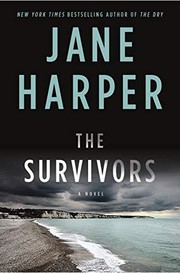
The Survivors
Kieran Elliott returns to Evelyn Bay twelve years after a storm killed his brother, and a young woman's murder forces the town to face what it has concealed.
2,571-word summary · 11 min read

Girl, Forgotten
A rookie US marshal guards a judge with a stalker and ends up reopening the 1982 prom-night murder of the judge's pregnant daughter.
2,111-word summary · 9 min read
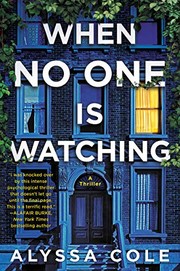
When No One Is Watching
Sydney Green watches her Brooklyn block's Black residents vanish one by one in Cole's Edgar-winning thriller about gentrification as a crime scene.
2,165-word summary · 10 min read

The Woods
Twenty years after two teenagers were murdered and two vanished at summer camp, prosecutor Paul Copeland identifies a fresh corpse as one of the missing.
2,490-word summary · 11 min read

The Redbreast
Harry Hole chases an ageing sniper through modern Oslo while two Norwegian volunteers on the Eastern Front carry a fifty-year-old betrayal toward a royal…
2,453-word summary · 11 min read
The Poet
A crime reporter investigates his twin brother's apparent suicide and uncovers a killer who leaves Edgar Allan Poe quotes behind, in the novel that took…
2,020-word summary · 9 min read

The Boy from the Woods
Wilde, found feral in a New Jersey forest in 1986, hunts for a missing teenager while a senator's secrets tear a wealthy town apart.
2,270-word summary · 10 min read