
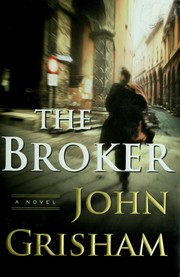
The Broker
2,211-word summary 10 min read 357 pages in the book
- First published
- 2005
- Publisher
- Doubleday
- Pages
- 357
- ISBN
- 9780385510455
Reading options
What's inside (9 sections)
The Broker begins with a man being released from prison for reasons he does not understand. That is a good premise for a thriller, and John Grisham uses it to write one of his strangest books. Joel Backman is not a lawyer, at least not in the way most Grisham heroes are lawyers. He is a lobbyist, a power broker, a man who made a career out of knowing which senator needed which favor. He is also a convicted felon who tried to sell a satellite surveillance system to the highest bidder. When the novel opens, he has been in prison for six years and has no idea that the CIA is about to make him a free man and a piece of bait.
Grisham published The Broker in 2005. Doubleday brought it out on January 11, and it went straight to the top of the New York Times bestseller list. The first edition runs 357 pages and carries the ISBN 9780385510455. It is a standalone novel, not part of the Jake Brigance or Camino Island series. It is also a departure in setting. Most of the book takes place in Bologna, Italy, and Grisham spends a lot of time on the city's streets, food, architecture, and language. Readers who wanted another courtroom drama were disappointed. Readers who wanted a travelogue with a spy plot attached were happier.
The pardon
Joel Backman was one of the most powerful lobbyists in Washington. He knew how to raise money, how to place a well-timed phone call, and how to make a problem disappear. His downfall began with a deal involving a hacked spy satellite. The satellite was built with stolen American technology, and Backman tried to broker its sale. The deal collapsed, and Backman went to prison. Six years later, the political winds have changed. An outgoing president, described in the novel as an idiot but a clean one, grants Backman a full pardon at the request of the CIA.
The CIA does not pardon people out of kindness. The agency wants to know who built the satellite and who is still using it. Backman is the only person who might know. Instead of interrogating him, the CIA decides to release him and watch what happens. They give him a new identity, fly him out of the country on a military cargo plane, and settle him in Bologna. They teach him Italian. They give him an apartment, a cover story, and a routine. They also surround him with surveillance. Backman is not a free man. He is a mouse in a very comfortable cage.
The plan is simple and cruel. The CIA believes that several foreign intelligence services want Backman dead, either because he knows too much or because they want to punish him for the deal. If the agency lets him live openly in Italy, someone will eventually try to kill him. The attempt will reveal which country has the satellite technology. The CIA is willing to sacrifice Backman to solve the mystery. Backman figures this out slowly, and the novel's tension comes from watching him realize that his new life is a trap.
Bologna and the art of disappearing
The middle of the book is not a chase. It is a portrait of a man learning to live in a foreign city. Backman takes Italian lessons from a patient teacher named Ermanno. He walks the streets. He learns to order coffee, to shop at the market, to avoid standing out. He grows a beard. He practices his accent. He tries to become someone else.
Luigi, his handler, is a retired Italian intelligence officer who knows more about Backman's situation than he admits. Luigi is charming, cynical, and fond of food. He becomes something like a friend, which makes his role in the surveillance more painful. The novel is good at showing how ordinary life can be a cover. Backman's walks, his meals, his conversations with his teacher are all watched and recorded. The reader knows this. Backman suspects it. The gap between suspicion and proof is where the suspense lives.
Grisham has always been good at procedure, and The Broker is full of it. The CIA's arrangements, the surveillance setup, the fake identity, the careful movement of a protected witness. The details are interesting even when the plot is slow. The problem is that the plot is often slow. Backman spends a long time doing very little. He learns Italian. He worries. He waits. Grisham is trying to build tension through ordinary life, and sometimes it works. Sometimes it feels like a travel guide with a shadow over it.
The Bologna setting is the book's best feature. Grisham clearly likes the city. He writes about the porticoes, the food, the university, the politics, and the way the old streets fold into each other. The novel is full of small observations about Italian life, and they are more vivid than most of the thriller machinery. The city becomes a character, and Backman's attempts to blend in become a kind of love story with a place he is not allowed to keep.
The hunters
The hunters are introduced gradually. There is a Chinese agent, a Russian, an Israeli, and a Saudi, or at least there are people who represent those interests. The novel does not give them much individual personality. They are functions in a game. The CIA watches them watch Backman. The reader waits for one of them to make a move.
The first assassination attempt comes when Backman is out walking. He survives, but the attack changes the rhythm of the book. The CIA's plan is working, which means Backman's life is now in immediate danger. He goes into hiding, then comes back out. The agency tightens security. The hunters adjust. The novel becomes a cat-and-mouse game with too many cats and a mouse who is not as helpless as he looks.
Backman's son, Neal, is the emotional anchor. Backman has not been a good father. He was too busy being powerful, and his imprisonment did not make him better. Neal is wary of him, and their conversations are awkward and sad. The relationship gives Backman something to lose beyond his own life. It also gives the novel a reason for him to want to survive, which is more than the plot alone provides.
The satellite mystery is resolved in a way that is politically pointed. The technology was stolen by China, which used it to build a surveillance system despite having limited satellite capability of its own. The CIA wants to know how far the system has spread and who else has access. Backman's knowledge is valuable, but the agency's willingness to use him as bait is more valuable to them than his safety. The novel is cynical about institutions, and that cynicism is one of its strengths.
The escape and the deal
Backman eventually escapes the surveillance. He makes contact with Neal. He returns to the United States and negotiates with the federal government. He offers them the information about the satellite and the program in exchange for protection and a way out. The government agrees to do what it can to get the foreign services to back off, though it warns him that some of them will not listen. Backman then covers his escape by pretending to resume his old life, and quietly disappears.
The ending is ambiguous. Backman is presumed to return to Italy, but the novel does not show him arriving. He has outmaneuvered the CIA, the hunters, and the legal system that put him in prison. He has also lost his old life, his reputation, and most of his relationship with his son. The book does not pretend that he has won anything more than survival. He is a man who was used by powerful people and managed to use them back. That is the closest thing to a moral victory the novel offers.
The deal with the government is not a courtroom scene, but it is a Grisham scene. The negotiation is about advantage, information, and the careful exchange of favors. Backman is good at this. He was a lobbyist, after all. The novel's best irony is that the skills that made him corrupt are the skills that save him. He knows how to read people, how to wait, and how to make a deal. The system that punished him is the system he knows how to work.
What the book is about
The Broker is about surveillance, power, and the way institutions treat people as instruments. The CIA does not care whether Backman lives. It cares what his death would reveal. The hunters do not care about Backman as a person. They care about what he knows. The president who pardons him does not care about justice. He cares about a favor. Backman is surrounded by people who want something from him, and his only way out is to want something back.
It is also about second chances. Backman gets a new identity, a new language, and a new city. He could become a different person. For a while, he tries. He learns to live quietly. He takes pleasure in small things. But the old habits come back. He cannot resist the game. He cannot stop being the Broker. The novel is not sure whether that is a tragedy or a survival skill. It leaves the question open.
The book's weakness is that it is too relaxed for its own good. The middle section is slow, and the hunters are not memorable. The satellite plot is complicated without being compelling, and the ending is more of a fade-out than a climax. Grisham's fans who wanted a legal thriller found the legal material thin, and the Italian material, however well observed, does not generate the kind of pressure a thriller needs.
The critical reception was mixed. Some reviewers called it a return to form, and it was a commercial success. Others described it as a superficial trip to Italy put into fiction form. The New York Times review by Alan Dershowitz focused on the political parallels, especially the outgoing president and the pardon controversy. The book also contains a few factual errors about Bologna, including the claim that the church of San Petronio is a cathedral, which it is not. Grisham's fans have argued about those errors for years.
The Grisham departure
The Broker came out after a run of novels that had made Grisham one of the most reliable bestseller writers in America. His readers expected a southern courtroom, a young lawyer, and a case that exposed a flaw in the legal system. The Broker has a legal system in the background, but it is not a courtroom novel. It is an espionage novel with a legal coat, and the coat does not always fit. The CIA's operation is described in detail, but the agency's internal logic is vague. The foreign agents are shadows. The satellite is a MacGuffin. The book is held together by Backman's voice and by Bologna.
That departure is also why the novel has aged better than some of Grisham's more formulaic books. It is not trying to deliver the same satisfaction as The Firm or A Time to Kill. It is trying to write about a man who has lost his place in the world and is given a chance to live without power. The fact that he cannot resist the game is the tragedy. The fact that he survives is the joke. Grisham does not underline either one, and the restraint is welcome.
The Italian material is not just decoration. It gives the novel a texture that most thrillers lack. Backman's language lessons, his meals, his walks, his conversations with Luigi and Ermanno are all part of the book's argument about identity. A new language is a new self, but only if you can stop being the person you were. Backman cannot. He learns the words, but he keeps the habits. By the time he returns to the United States, he is the same man in a better disguise. That is a more interesting ending than a shootout, even if it leaves the reader wanting more.
Why read it
I like The Broker more than most Grisham readers seem to. The Bologna sections are warm and specific, and Backman is a more interesting protagonist than the usual noble lawyer. He is not a good man, and the novel does not ask us to pretend otherwise. He is clever, selfish, and tired, and his attempts to become someone else are moving because they are so half-hearted. The book is a thriller about a man who is not sure he wants to be saved.
It is not a great thriller. The pacing is uneven, the villains are thin, and the ending is quiet. But it is a good novel about a particular kind of power, the kind that operates through favors, information, and the willingness to let someone else take the fall. Grisham knows that world, and the book is at its best when it stays close to it. The satellite is almost beside the point. The real subject is the machine that uses people and calls it policy.
FAQ
Is The Broker part of a series?
No. It is a standalone novel, separate from Grisham's Jake Brigance, Camino Island, and Whistler books.
Why is the book called The Broker?
Joel Backman's nickname is the Broker because he built his career by brokering deals between powerful people in Washington.
Is The Broker based on a true story?
No. It is a fictional thriller, though it draws on real concerns about surveillance technology and political pardons.
Similar books
The Rooster Bar
Three law students buried in debt discover their for-profit law school is a scam, and decide the only way out is to con their way into practicing law before…
2,837-word summary · 13 min read
The Brethren
Three disgraced judges run a blackmail scam from a federal prison and accidentally trap a presidential candidate, pulling the CIA into their scheme.
1,967-word summary · 9 min read

The Partner
A Biloxi lawyer fakes his death, steals $90 million, and hides in Brazil until hired muscle drags him home to trial.
2,221-word summary · 10 min read
The Pelican Brief
Law student Darby Shaw writes a brief on murdered justices and becomes a target, fleeing with a reporter.
2,994-word summary · 13 min read
The Firm
Young lawyer Mitch joins a Memphis firm with great pay, then learns clients die and the FBI watches.
2,079-word summary · 9 min read
The Camel Club
Four Washington misfits witness a murder on Roosevelt Island and stumble into a conspiracy that reaches the Oval Office, with a hostage president and a nuclear…
2,354-word summary · 10 min read
American Assassin
Before he became the CIA's most feared counterterrorist, Mitch Rapp was a Syracuse student mourning his girlfriend, killed on Pan Am Flight 103. Then came…
2,114-word summary · 9 min read
Tinker, Tailor, Soldier, Spy
Retired spymaster George Smiley is brought back to find a Soviet mole inside British intelligence, and the trail leads through old friends, old betrayals, and…
2,092-word summary · 9 min read
Absolute Power
A thief watches the president kill, then runs with a lawyer who believes him.
2,401-word summary · 11 min read
The President Is Missing
President Jonathan Duncan faces impeachment over a secret call while a virus called Dark Ages threatens to erase American data in this 2018 Clinton and…
2,324-word summary · 10 min read
Deception Point
A meteorite in Arctic ice may prove alien life, and analyst Rachel Sexton must verify it as killers close in.
1,923-word summary · 9 min read
Gray Mountain
A Manhattan associate furloughed after the financial crash takes a year of unpaid legal aid work in Appalachian coal country, and finds the case of her life…
2,026-word summary · 9 min read
The Racketeer
A jailed lawyer trades a judge murder secret for freedom and revenge.
2,434-word summary · 11 min read
The Judge's List
Lacy Stoltz hunts a sitting judge who murders off his list.
2,513-word summary · 11 min read
The Guardians
A innocence lawyer reopens a prison murder where the wrong man waits on death row.
2,564-word summary · 11 min read
The Testament
John Grisham's The Testament sends washed-up lawyer Nate O'Riley to the Brazil Pantanal to find missionary heir Rachel Lane and settle her…
2,731-word summary · 12 min read
The Street Lawyer
Michael Brock survives a hostage morning at his rich D.C. firm, then quits for a street clinic after learning a buried eviction file cost a mother and kids…
2,745-word summary · 12 min read
The Whistler
A Florida judicial investigator takes a bribery tip that leads to a crooked judge, a tribal casino, and murder.
2,935-word summary · 13 min read
The Rainmaker
Broke rookie Rudy Baylor sues an insurer over a denied transplant and faces Leo Drummond at trial.
3,040-word summary · 14 min read

The Beach House
A young valet is beaten to death at a Hamptons party, and his law-student brother spends a year building a case against the family that covered it up.
2,049-word summary · 9 min read

Six Years
A professor who promised to forget the woman he loved sees her husband's obituary and discovers that the wedding, the marriage, and the woman herself may never…
2,076-word summary · 9 min read

4th of July
Lindsay Boxer shoots two armed teenagers in self-defense, faces a wrongful-death trial, and spends her leave chasing a string of throat-slashing murders in…
2,192-word summary · 10 min read
Sleeping Giants
A girl falls into a field and lands in a giant metal hand. Years later a secret team assembles the rest of the machine, and it chooses its own pilots.
2,466-word summary · 11 min read

The Chemist
A former government interrogator on the run takes one last job, then learns the case she was handed was built to pit her against him.
2,249-word summary · 10 min read
When No One Is Watching
Sydney Green watches her Brooklyn block's Black residents vanish one by one in Cole's Edgar-winning thriller about gentrification as a crime scene.
2,165-word summary · 10 min read
Nemesis Games
The Rocinante crew scatters across the solar system just as Marco Inaros and the Free Navy bombard Earth. The Expanse reaches its turning point.
2,506-word summary · 11 min read
Stormbreaker
A fourteen-year-old boy loses his uncle, then his ordinary life, when MI6 sends him undercover to a Cornish computer plant where the giveaway machines hide a…
2,822-word summary · 13 min read
Gone Tomorrow
Reacher stops a suicide bomber on the subway, then hunts her handlers.
2,308-word summary · 10 min read
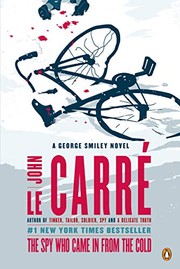
The Spy Who Came In from the Cold
A burnt-out Berlin agent takes one last mission that requires him to look like a traitor.
2,578-word summary · 11 min read
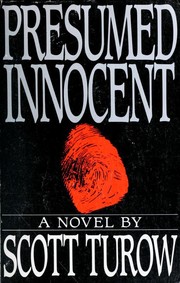
Presumed Innocent
Rusty Sabich must solve coworker Carolyn Polhemus's murder while hiding his affair with her, then stands accused himself in Turow's 1987 Kindle County debut.
2,726-word summary · 12 min read