
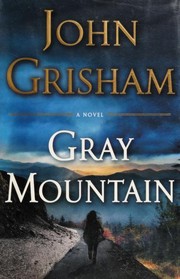
Gray Mountain
2,026-word summary 9 min read 368 pages in the book
- First published
- 2014
- Publisher
- Doubleday
- Pages
- 368
- ISBN
- 9780385537148
Reading options
What's inside (8 sections)
John Grisham has written two kinds of books for most of his career: the legal thriller that runs on a clock, and the ones where he is angry about something and the plot is the vehicle for the anger. Gray Mountain, published in October 2014, is firmly the second kind, and whether you enjoy it depends on whether you are on board with that. I was. It is set in Appalachian coal country in the aftermath of the 2008 crash, and the parts of it that read like a documentary about strip mining are, for me, the reason to pick it up.
It arrived at number one on bestseller lists, as his books do, and it also drew the kind of reviews that say the author is more interested in the cause than the story. Both things are true. Grisham clearly researched mountaintop removal and the health crisis it leaves behind, and he clearly cared more about putting that on the page than about writing another Pelican Brief. The result is uneven, and it is also the most useful thing he has written about the working poor since The Rainmaker.
The furlough
Samantha Kofer is a third-year associate at a big Manhattan law firm, and the book opens in the wreckage of 2008. Lehman is gone, the firm is hemorrhaging clients, and the partners have decided that a round of layoffs is on the table. Samantha is not fired. She is offered a deal: take a year of unpaid furlough to do charitable legal work, and the firm will keep a spot for her when the dust settles. It is not generosity. It is a way to park an associate without paying her, and both sides know it.
She takes the deal because she has no better options, and she ends up in Brady, a small town in the mountains of Virginia, working at a legal aid office run by a woman named Mattie Wyatt and staffed by a small crew of lawyers and paralegals who do the work nobody else will. Samantha arrives as a corporate lawyer, which in this setting is close to useless. She does not know the first thing about the courts that matter here, or the clients, or the lives they are living, and the book is honest about how far out of her depth she starts.
The culture shock chapters are some of the best in the novel, because Grisham is good at the machinery of small-town law. A legal aid office in coal country handles evictions, disability claims, custody fights, and black lung cases, and the caseload arrives faster than anyone can carry it. Mattie is the moral center, a local woman who has been fighting the coal companies and the poverty they leave behind for years, and she is written without a drop of sentimentality. She is tired, she is competent, and she has no patience for a New Yorker's shock at how things work here. Samantha slowly earns her respect, and the book makes you feel every inch of that process.
The mountain
The other half of the story is the coal itself. The practice of strip mining in these mountains means blasting the tops off, hauling out the coal, and pushing the waste into the valleys below, and the results are everywhere in this book: bare gray slopes, creeks that run orange with runoff, drinking water that people have stopped trusting, and a population with lungs full of dust. Samantha meets clients whose husbands and fathers worked themselves sick and then got laid off before the company could be held responsible, and she meets families whose wells are poisoned and whose complaints go nowhere.
Mattie's nephew, Donovan Gray, is the local lawyer who has taken the fight further than anyone. He is suing the mining companies, and he has the kind of swagger that suggests he enjoys it. His brother, Jeff, has documents showing that the companies knew what their sludge was doing to the rivers and let it happen anyway, which turns a negligence case into something closer to a deliberate crime. It is the strongest material in the book, and Grisham lays it out with the flat clarity of an indictment.
Then Donovan dies. His small plane goes down, and Jeff is convinced it was sabotaged to keep the documents from becoming public. From here the novel becomes a quieter kind of thriller, one where the danger is not a chase scene but the slow grind of a company that has more lawyers, more money, and more patience than the people suing it. The mystery of the plane crash is real, and the answer matters, but the book never treats it as the main event. The main event is that a town is being poisoned and the law is barely slowing it down.
Two books in one
This is where Gray Mountain divides its readers. The thriller half wants the crash solved and the villains caught; the advocacy half wants you to understand that the crash is a symptom and the villains are a system. Grisham keeps both running, but he is clearly more invested in the second, and the seams show. Several of the coal executives are painted in single shades, and the mechanics of the conspiracy are not as rigorous as the ones in his best courtroom novels. If you come to Grisham for the locked-room precision of The Firm, this will feel loose and, in stretches, like a lecture with characters.
I would argue the lecture is the good part. The book has a specific, unglamorous expertise about how poverty is administered: the disability hearing that takes years, the settlement that pays medical bills and nothing else, the company town where the only jobs are the ones killing you. Samantha's casework gives all of that a human face, and the novel's anger is earned rather than performed.
What Samantha chooses
The arc of the book is Samantha's slow conversion. She is not a bad person at the start, just a well-trained one, and the year in Brady reorders what she thinks a legal career is for. Her old firm keeps its promise and keeps its door open, and the final stretch of the novel is about whether a person who has seen the mountain goes back to the corner office. I will not pretend the answer is in doubt, but the book earns the choice, because it has shown you exactly what she is choosing between.
It also ends more quietly than a thriller usually does. There is no verdict, no applause, no clean win, just the work continuing and a woman deciding who she wants to be while doing it. That is a deliberate refusal, and it is the right one for a book whose thesis is that these fights take decades.
What holds up
Gray Mountain is not top-tier Grisham. The plot is thinner than usual, the bad guys are drawn with a blunt pen, and the novel sometimes reads like research notes with a story attached. But it is one of the few books by a writer of his commercial scale to take strip mining seriously at all, and the picture it paints of coal country has only become more relevant since 2014. It was also, notably, one of the first big thrillers to center the aftermath of the financial crash on people who never worked in finance.
Read it for the casework, the mountain, and Mattie Wyatt, who deserved a whole series. Skip it if you need your legal thrillers tight and twisty; the twists here are not the point. The point is a gray mountain, a poisoned creek, and a young lawyer learning that the law is a tool and that most people never get to hold it. That is a sentence Grisham has spent a career making you feel, and in this book he makes you feel it on almost every page.
A Grisham crusade, and coal country
It helps to know that Grisham alternates between two modes, and has for decades. The first is the clockwork thriller: The Firm, The Pelican Brief, The Client, books where a person runs and the plot chases. The second is the issue novel, where he picks a wrong in the legal system and writes a story around it: The Chamber on the death penalty, The Rainmaker on insurance companies, The Appeal on elected judges, The Confession on wrongful convictions, A Time to Kill on race and vigilantism in a small town, Sycamore Row on inheritance and old money. Gray Mountain belongs on the second shelf, and it arrives with the strengths and weaknesses of that whole line: research on its side, patience with victims, and an impatience with villains that sometimes turns them into posters.
What is new here is the territory. Grisham's usual country is the small-town South, and Appalachia is close enough to visit but far enough to be foreign, which is exactly the distance the book needs. Samantha is not just a corporate lawyer learning poverty. She is a flatlander learning a specific place, with its own speech and its own grudges, and the novel is at its most convincing in the ordinary scenes where she is being taught the local rules by people who have no reason to trust her yet. Mattie Wyatt, in particular, belongs with the best characters Grisham has written: a woman running a legal aid office on stubbornness and coffee, who has made peace with losing cases and has not made peace with the reasons.
The book also arrived at a moment when Appalachia was about to become a national conversation again, and the shelf around it has grown since. Barbara Kingsolver's Demon Copperhead, which won the Pulitzer in 2022, covers some of the same mountains through the opioid crisis and the foster system. Older readers might pair this novel with Harry Caudill's Night Comes to the Cumberlands, the 1963 book that first explained strip mining and absentee ownership to a mass audience, and which Grisham's novel is essentially dramatizing. Gray Mountain is the least subtle book on that shelf and also the most widely read, and there is something to be said for a page-turner that carries a documentary inside it.
Grisham kept moving the year after this book, alternating his Camino Island capers and courtroom novels with more crusades, and Gray Mountain remains a useful marker of which Grisham he is when the news gets under his skin. It is a flawed book with a specific gravity. The flaws are pacing, villains, and an ending that refuses the catharsis it builds toward. The gravity is a mountain with its top blown off, a creek full of poison, and a lawyer who stops pretending those are somebody else's problems. On balance I will take that trade every time.
What stays with me, months after the last page, is not the sabotage plot or the documents or the showdown the book wisely declines to stage. It is the town. Brady and its caseload feel lived in: the woman fighting an eviction she will probably lose, the miner whose lungs are a countdown, the paralegal who knows everyone's business and uses the knowledge kindly. Grisham has never been a stylist, and he is not one here, but he is a great noticer of how institutions grind people down, and in this book he points that eye at a place and a people most of his readers have never driven through. That is worth more than a twist. It is worth a shelf.
One practical note for new readers: this is not the Grisham novel to start with. Begin with The Firm for the pure thriller or A Time to Kill for the moral one, and come to Gray Mountain once you know how he works and are willing to follow him somewhere Angier. What you will find is a book that wears its research openly and still manages, in its best scenes, to make a county seat and a legal aid office feel like the center of the world.
FAQ
Is Gray Mountain based on real events?
It is fiction, but the mining practices and health effects at its center, including mountaintop removal, black lung disease, and contaminated water, are drawn from real controversies in Appalachia.
Do I need to read other Grisham novels to follow Gray Mountain?
No. It is a stand-alone novel with no returning characters, though it shares Grisham's interest in lawyers who work outside the big firms.
Why is the book called Gray Mountain?
The title refers to the stripped mountains of Appalachian coal country, gray with blasted rock and mine runoff, which the novel treats as both its setting and the visible damage at the heart of its story.
Similar books
The Racketeer
A jailed lawyer trades a judge murder secret for freedom and revenge.
2,434-word summary · 11 min read
The Judge's List
Lacy Stoltz hunts a sitting judge who murders off his list.
2,513-word summary · 11 min read
The Testament
John Grisham's The Testament sends washed-up lawyer Nate O'Riley to the Brazil Pantanal to find missionary heir Rachel Lane and settle her…
2,731-word summary · 12 min read
The Street Lawyer
Michael Brock survives a hostage morning at his rich D.C. firm, then quits for a street clinic after learning a buried eviction file cost a mother and kids…
2,745-word summary · 12 min read

The Partner
A Biloxi lawyer fakes his death, steals $90 million, and hides in Brazil until hired muscle drags him home to trial.
2,221-word summary · 10 min read

The Rainmaker
Broke rookie Rudy Baylor sues an insurer over a denied transplant and faces Leo Drummond at trial.
3,040-word summary · 14 min read
The Pelican Brief
Law student Darby Shaw writes a brief on murdered justices and becomes a target, fleeing with a reporter.
2,994-word summary · 13 min read

The Client
Eleven-year-old Mark Sway learns a mob secret in Memphis and hires lawyer Reggie Love for one dollar.
2,536-word summary · 11 min read

The Beach House
A young valet is beaten to death at a Hamptons party, and his law-student brother spends a year building a case against the family that covered it up.
2,049-word summary · 9 min read

4th of July
Lindsay Boxer shoots two armed teenagers in self-defense, faces a wrongful-death trial, and spends her leave chasing a string of throat-slashing murders in…
2,192-word summary · 10 min read
Presumed Innocent
Rusty Sabich must solve coworker Carolyn Polhemus's murder while hiding his affair with her, then stands accused himself in Turow's 1987 Kindle County debut.
2,726-word summary · 12 min read
The Rooster Bar
Three law students buried in debt discover their for-profit law school is a scam, and decide the only way out is to con their way into practicing law before…
2,837-word summary · 13 min read
The Brethren
Three disgraced judges run a blackmail scam from a federal prison and accidentally trap a presidential candidate, pulling the CIA into their scheme.
1,967-word summary · 9 min read
The Guardians
A innocence lawyer reopens a prison murder where the wrong man waits on death row.
2,564-word summary · 11 min read
Sycamore Row
Jake Brigance returns to defend a contested will that leaves a fortune to a Black housekeeper in racially tense Clanton.
2,017-word summary · 9 min read
The Whistler
A Florida judicial investigator takes a bribery tip that leads to a crooked judge, a tribal casino, and murder.
2,935-word summary · 13 min read
The Runaway Jury
A tobacco trial in Biloxi is quietly rigged from inside the jury box and by a woman offering to sell the verdict.
2,920-word summary · 13 min read
The Firm
Young lawyer Mitch joins a Memphis firm with great pay, then learns clients die and the FBI watches.
2,079-word summary · 9 min read
A Time to Kill
Lawyer Jake Brigance defends a father who killed his daughter's attackers.
2,064-word summary · 9 min read

What She Knew
Rachel lets her eight-year-old son run ahead in a Bristol park, and the nine-day search turns her into a suspect in the public eye.
2,952-word summary · 13 min read

Six Years
A professor who promised to forget the woman he loved sees her husband's obituary and discovers that the wedding, the marriage, and the woman herself may never…
2,076-word summary · 9 min read

Rules of Prey
Minneapolis detective Lucas Davenport hunts a killer who leaves a new rule at every scene and treats murder as a game of wits.
1,914-word summary · 9 min read
Persuader
Reacher goes undercover in a Maine crime family to find a missing DEA agent and the man he once failed to kill, and Lee Child keeps the whole thing tight,…
2,278-word summary · 10 min read

61 Hours
A bus crash strands Jack Reacher in a snowbound South Dakota town where a drug gang, a corrupt police force, and a single witness are on a collision course.
2,227-word summary · 10 min read

Still Missing
A realtor is abducted at a Vancouver Island open house and held for more than a year. Told through therapy sessions, the novel follows her escape and the hunt…
2,466-word summary · 11 min read

Bad Luck and Trouble
A deposit of $1,030 summons Jack Reacher back to his old army unit, which is being picked off one name at a time.
2,366-word summary · 11 min read

3rd Degree
The third Women's Murder Club novel follows a San Francisco terror cell and a three-day killing schedule, and it costs the club a member.
2,685-word summary · 12 min read

Worth Dying For
Reacher stops for one night in rural Nebraska and finds a family that runs the county, a missing girl and a shipment worth killing for.
2,021-word summary · 9 min read

The Ex
Cassie thinks her new boyfriend's ex is the woman harassing her, but Freida McFadden's thriller keeps rearranging who the ex actually is.
2,103-word summary · 9 min read

Say You're Sorry
A widowed prosecutor defends the teenager accused of killing her babysitter, uncovering a small town's secrets and a killer hiding in plain sight.
2,116-word summary · 9 min read