
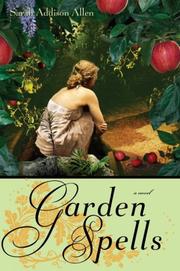
Garden Spells
2,030-word summary 9 min read 304 pages in the book
- First published
- 2007
- Publisher
- Bantam Books
- Pages
- 304
- ISBN
- 9780553805482
- Series
- Waverley Family (#1)
Reading options
What's inside (8 sections)
Garden Spells is the kind of book that gets described as charming, and it is, but that word undersells how much craft is in it. Sarah Addison Allen's debut takes the Southern small-town novel and adds a light touch of magic, and the result reads like a warm afternoon that occasionally turns bittersweet in the best way. I finished it in two sittings and immediately understood why it became a word-of-mouth favorite.
The setup is simple and carefully planted. Set in Bascom, North Carolina, the novel follows two sisters, Claire and Sydney Waverley, who grew up in a house with a garden that is not quite ordinary. The Waverley women have always been a little strange by local standards, and the town has spent generations deciding how to feel about them. Allen uses that premise to write about family inheritance of the emotional kind, the things passed down that have nothing to do with money.
The Waverley house and the tree
Claire Waverley lives alone, runs a successful catering business built around edible flowers, and keeps people at arm's length on purpose. The only person she is close to is Evanelle, an elderly relative whose gift is stranger and more useful than people appreciate. Evanelle gives people exactly what they need before they need it. A flashlight before a power outage. A jar of cherries before someone decides to make sundaes. The recipients do not always understand the gift at the time, and the book treats the whole thing with a completely straight face, which is why it works.
Part of what makes the setup hold up is that Allen treats the gifts as chores as much as wonders. Claire's plants know things she would rather not know, and her talent ties her to the house when she might otherwise have left. Evanelle's compulsion to deliver things sends her across town at inconvenient hours, and she has made peace with being the woman whose gifts never get thanked at the time. The rules of this magic matter less than its price, and the price is attention, which is the kind of metaphor magical realism was invented for.
In the garden behind the house stands an apple tree with a single power, and it is the best idea in the novel. Anyone who eats an apple from that tree sees the biggest event of their life, the one moment that will define everything. Half of Bascom would climb the fence for a bite. The other half avoids the house entirely. Claire's response is to bury every apple that falls, because she believes some futures should stay where they are, and because she knows what seeing the future can do to a person.
Tyler Hughes, the neighbor, is a college professor who has decided he is interested in Claire and refuses to be discouraged by her coldness. He is one of those characters who could easily be a prop, and Allen gives him enough patience and humor to make him a real person. His courtship is not a conquest. It is a long, respectful siege of a woman who is terrified of being left.
Sydney comes home
The plot arrives in the form of a car pulling up in front of the house. Sydney, Claire's younger sister, ran away from Bascom the summer after graduation and has not been back in ten years. She returns with a five-year-old daughter named Bay, and the reason is not a happy one. She is fleeing David, her abusive boyfriend, who is Bay's father. The novel takes that situation seriously while keeping the book's tone gentle, which is a difficult trick and Allen mostly pulls it off.
Bay is the reader's way into the magic. Before she ever sees the garden, she dreams about being inside it, and the book lets the dreams sit there without explaining them. She is a child written without sentimentality, and her growing relationship with the garden and with Claire is the quiet heart of the story.
Claire hires Sydney to help with the catering, which is an act of forgiveness disguised as practicality. Sydney left without saying goodbye, and the ten years between them have not been yawning empty space. Claire's resentment has had time to settle into something complicated, and the novel is patient about thawing it.
The town decides to be cruel
Sydney's first assignment is a party thrown by Hunter John Matteson, her boyfriend through high school, and his wife, Emma. Claire accepts the booking without knowing Emma's mother, Ariel Clark, arranged the whole thing to publicly humiliate Sydney and remind her she is not welcome. Ariel and her friends are the town's gossip engine, and Allen writes them as petty rather than evil, which is somehow worse in the way it needs to be.
On the night of the party, Sydney runs out, and Claire does what the Waverley women do. She changes the food, and the food changes the guests. Everyone at the party feels remorse for how they treated Sydney, and the phone calls that follow, all those people apologizing, are satisfying in a quiet way that fairy-tale justice always is. It is also the first clear statement of the novel's rules. In this book, flowers and food can change how people feel, and the moral question is whether that is healing or meddling.
Sydney's next problem is ordinary in the best sense. She went to beauty school before her life went sideways, and she rents a booth at the local salon, and no one comes. It takes Claire cutting her hair, and the shock of seeing a beautiful woman emerge from the town's caution, before anyone trusts her. That small scene of transformation is a good example of how the magic in the book is often emotional rather than supernatural.
Henry and Tyler
The two romances in Garden Spells are built on different kinds of history. Sydney's is with Henry, a dairy farmer and a friend from grade school whom she shunned in high school when she decided he was not cool enough. He invites her and Bay out to the farm, and the visit stretches into hours, and when they get home, Claire is so used to being abandoned that she panic-attacks. Allen writes that panic with real precision. Claire's control over her life is revealed as the same thing as her loneliness, and the book does not let her off the hook.
Tyler, meanwhile, gets the thankless job of being the book's engine rather than its mystery. He likes Claire, he cooks, he respects the garden, and he waits. In a lesser novel he would be a reward, the kindly man who teaches the prickly woman a lesson about opening up. Here he is mostly a question, and the book is more interested in why Claire cannot answer it than in why he keeps asking. That reframing is a small, smart choice that keeps the romance from feeling like a tutorial. It also keeps him funny, which matters more than it sounds.
Tyler's campaign is the comic thread and the serious one at once. On the Fourth of July, Claire sets up a booth on the town green and gives away her honeysuckle wine to the whole town, using her gifts for other people as usual. Tyler catches her alone, and they kiss, and Claire breaks away and drives home in a panic. Then she does what she does. She cooks him several casseroles intended to make him lose interest in her, and the spice work fails completely. He gets more interested. An old girlfriend comes to stay with him for a stretch, and Claire discovers that jealousy is not an emotion she can bury along with the apples.
They end up together in her garden, and the scene has a strange beauty to it, because Claire is not choosing to trust safely. She is choosing to want a person who could leave. That is a real grown-up romance in a book that could have settled for a fantasy.
The party and the man at the door
The novel assembles its whole cast for a dinner party in the back half, and the evening turns into the book's climax. Evanelle arrives early and tells Claire and Sydney the story of their mother, who ate an apple from the tree years before she died. Evanelle believes she saw the car accident that killed her, and that knowing changed her behavior for the rest of her life. It is a chilling explanation for the sisters' childhood, and it reframes their fear of the tree as inherited rather than invented.
Then David arrives at the door with a gun. He shoots Henry in the shoulder and comes after Sydney, and Bay runs behind the tree as the family scatters. An apple flies out and lands at David's feet, and he does the one thing no one in the family expected. He picks it up and bites it. Whatever he sees sends him running into the night, and the threat leaves with him. Tyler, who does not know about the tree's power, watches the whole thing with the confusion of a man whose romantic evening has become a crime scene, and the explanation he gets afterward, that Claire's family tree shows people the biggest event of their lives, is delivered with the matter-of-factness of people describing the weather.
The detail that lands hardest is Tyler's own confession. He ate an apple years ago. He did not run away terrified. All he saw was Claire in her garden. It is the kind of line that could be saccharine in a lesser book, and Allen earns it, because we have watched Claire assume all along that the tree shows disasters.
The novel closes with Bay lying under the apple tree, recreating a dream she had before she ever arrived, and the image ties the whole book together. The garden that has been a source of fear and inheritance is finally a place where a child can rest.
What works and what does not
The strengths of Garden Spells are its tone, its characters, and its understanding that magic works best as a metaphor with teeth. The edible-flower catering is charming and specific, the Waverley gifts are strange without being twee, and Evanelle is one of the more inventive supporting characters in recent Southern fiction. The sister relationship is the spine of the book, and it is handled with real tenderness and real awkwardness, which is the correct ratio.
The weaknesses are the ones that come with the subgenre. The plot is gentle to a fault, and the middle third drifts on atmosphere when it could use more propulsion. The climax with David arrives quickly and resolves even more quickly, and a story about escaping an abusive partner probably deserves more pages than it gets here. Ariel Clark and the social set are fun but thin, and the resolution of Sydney's old humiliation is tidier than life tends to be. The magical rules are also forgiving in ways that more demanding fantasy readers will notice, since the flowers do whatever the scene needs them to do.
None of that stops the book from doing what it set out to do. Garden Spells is a story about two women learning that the family gifts are not curses if you use them on purpose, and about the difference between being safe and being loved. It goes down easy, and when you finish it, you will want to plant something, which is the highest compliment I can pay a book with this much soil in it. A sequel, First Frost, arrived years later and found the sisters again, which is its own kind of compliment. The book has had nearly two decades to age, and it has aged into exactly what it wanted to be: a comfort read with teeth. Fans of Practical Magic should start here, and readers who think they do not like magic in their fiction should give this one a chance specifically because it is so light on its feet.
FAQ
Is Garden Spells part of a series?
It is the first Waverley family novel, followed by First Frost, which revisits the sisters years later. Several of Sarah Addison Allen's other novels share the same Southern setting and light magical style.
What does the apple tree do in Garden Spells?
Anyone who eats an apple from the Waverley tree sees the biggest event of their life. Claire buries the fruit to prevent people from seeing futures they cannot handle.
When was Garden Spells published?
Bantam Books published it in 2007. The novel runs 304 pages with ISBN 9780553805482 and was Sarah Addison Allen's debut.
Similar books
More from Waverley Family first, then related titles.

The Shadow Sister
Star D'Apliese steps out of her sister's shadow and follows a bookshop clue into the Edwardian life of Flora MacNichol, a woman who gave up love for duty.
2,260-word summary · 10 min read
The Unmaking of June Farrow
A woman in a North Carolina flower-farming family walks through a red door into 1951, where she must solve her mother's disappearance and decide whether to…
2,701-word summary · 12 min read

Act Your Age, Eve Brown
Eve Brown crashes into a Lake District bed and breakfast, breaks the owner's arm, and talks her way into his kitchen. A grumpy-sunshine romance about work,…
2,474-word summary · 11 min read
Between Sisters
Estranged sisters Meghann and Claire reunite in Washington when Claire announces a rushed wedding, then face their mother's desertion and a medical crisis.
2,467-word summary · 11 min read

At First Sight
Jeremy and Lexie are married and expecting a baby when anonymous emails tell him the child may not be his.
2,317-word summary · 10 min read

Delilah Green Doesn't Care
Delilah returns to Bright Falls to photograph her stepsister's wedding and falls for Claire, a bookstore owner and single mother, while a cruel bet threatens…
2,315-word summary · 10 min read
The Storm Sister
Ally D'Aplièse loses her father and her lover within weeks, then follows a brass frog and a Norwegian biography into Anna Landvik's music and the world of…
2,376-word summary · 11 min read
True Colors
Three Grey sisters split over love and duty after their father judges them.
2,596-word summary · 12 min read
The Identicals
Twin sisters swap Nantucket and Martha Vineyard lives for a summer.
2,556-word summary · 11 min read
Chocolat
A single mother opens a chocolate shop opposite the church during Lent, and a divided French village must choose between pleasure and piety.
2,272-word summary · 10 min read
When in Rome
A burnt-out pop star hides out in small-town Kentucky and falls for the grumpy pie-shop owner hiding her.
2,495-word summary · 11 min read
The Wish
A dying photographer recalls 1996 Ocracoke first love and an adoption choice.
2,176-word summary · 10 min read
The Switch
A burned-out consultant and her 79-year-old grandmother swap London and Yorkshire homes for two months, facing grief, dating apps, and village politics.
2,782-word summary · 12 min read

The Starter Ex
A retired bad-girlfriend-for-hire takes one last job and falls for the mark.
2,092-word summary · 9 min read

The Seven Sisters
Maia follows Pa Salt clue from Geneva to Rio and Christ the Redeemer.
2,210-word summary · 10 min read
The Longest Ride
A stranded widower relives his marriage while a Wake Forest student and a bull rider test new love in North Carolina.
2,488-word summary · 11 min read
Practical Magic
Orphaned sisters Sally and Gillian Owens flee magic and love, until Gillian returns with a dead boyfriend and Sally must face the family curse.
2,974-word summary · 13 min read
Major Pettigrew's Last Stand
A 68-year-old widower and a Pakistani shopkeeper widow fall for each other in a Sussex village that watches their every step.
2,957-word summary · 13 min read
Practice Makes Perfect
A people pleaser takes dating lessons from a bodyguard learning to stay.
1,999-word summary · 9 min read
Magic Hour
A disgraced psychiatrist and her chief sister take in a feral girl.
1,970-word summary · 9 min read
The Choice
A settled Beaufort veterinarian falls for his taken neighbor, then faces an impossible hospital decision eleven years later.
2,150-word summary · 10 min read
In Her Shoes
Philadelphia lawyer Rose takes in her wayward sister Maggie until a betrayal splits them, sending both toward their long-lost grandmother in Florida.
2,781-word summary · 12 min read

Final Offer
Cal Kane must spend the summer at Lake Wisteria to inherit, but his childhood ex Lana, now a mother, says the house belongs to her family.
2,379-word summary · 11 min read
Things We Left Behind
Lucian Rollins returns to Knockemout to bury his father's past and collides with librarian Sloane Walton.
2,777-word summary · 12 min read
Safe Haven
Katie hides in Southport from a violent husband and falls for widower Alex.
2,480-word summary · 11 min read
Like Water for Chocolate
Tita expresses forbidden love for Pedro through meals in revolutionary Mexico.
2,590-word summary · 12 min read

Part of Your World
ER doctor Alexis Montgomery falls for carpenter Daniel Grant in Wakan while her surgeon family presses duty.
3,078-word summary · 14 min read
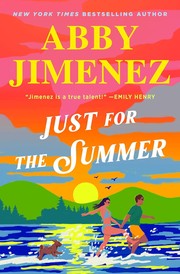
Just for the Summer
Emma and Justin date to break a matching curse, then face sudden guardianship and illness on Lake Minnetonka.
3,090-word summary · 14 min read
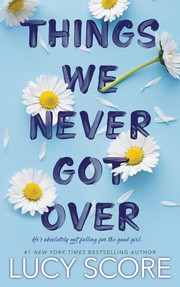
Things We Never Got Over
Naomi runs from her wedding to help her twin in Knockemout and clashes with Knox Morgan.
3,358-word summary · 15 min read

Book Lovers
Sharp literary agent Nora Stephens gets dragged to small-town Sunshine Falls with her sister and keeps colliding with brooding editor Charlie Lastra.
1,952-word summary · 9 min read