
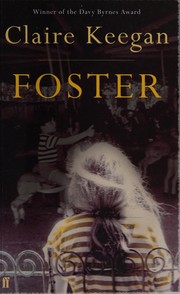
Foster
2,043-word summary 9 min read 89 pages in the book
- First published
- 2010
- Publisher
- Faber & Faber
- Pages
- 89
- ISBN
- 9780571255658
Reading options
What's inside (9 sections)
A girl is driven across Ireland by her father to stay with relatives she has never met, because her mother is about to have another baby and there are already too many children at home. That is the whole premise of Foster, and it is enough, because Claire Keegan keeps the story down to the things a child would actually notice.
What I keep coming back to is the bag. Or rather, the absence of one. Dan, her father, leaves his daughter at the Kinsellas' farm with no clothes, no proper goodbye, and a promise that is really a shrug. He drives off, and the reader is left standing in the yard with her. Everything after that is quiet, and almost all of it matters.
The arrival
The girl is one of a crowd at home. Not neglected exactly, but not counted either. At the farm near the coast in County Wexford, the counting is different. Edna Kinsella shows her where to wash, what to do, how the days run. John Kinsella times her with his watch as she runs down the long driveway to fetch the post, and the timing becomes a small standing game between them, a reason to try again tomorrow.
The first night she wets the bed, which happens at home and is treated there as a crime. Edna says nothing lasting about it. She makes it ordinary, and the girl never wets the bed at the Kinsellas' again. That detail does most of the work the story needs: it tells you what was wrong with home without a single scene of home. The girl herself does not draw the conclusion. She just sleeps through the night from then on.
The house is short a child. You find that out the way she does, from the outside in. The water from the well tastes colder and cleaner than any she has known. The meals are regular. She is given clothes that fit and shoes of her own for the day. Kindness here is not an event, it is a schedule, and she flourishes under it without ever putting a word to why.
There is money in this house, or at least enough of it. The girl notices prices, and what things cost, in the way children in poor families always do. In her own home a trip to town meant counting coins. Here she is sent out with a note and comes back with change and no interrogation. The book is careful never to say the Kinsellas are rich. They are comfortable, and in this story comfortable is a different species of life.
The days
Keegan is brilliant at the texture of farm days without ever making a pastoral of them. The hay. The cow in calf. The kitchen that smells of baking. The girl helping because she wants to, not because she is assigned. The running to the post box with the watch on her. The evening when John brings her along to a neighboring farm and she falls asleep in the car on the way home and is carried in.
I want to note the bathing scene, because it is where the book first makes you uneasy in the right way. Edna scrubs the girl's neck and ears and the girl lets her, and it is both tender and slightly too much, the way being touched by someone desperate to touch a child can be. Foster is full of that double exposure. Every kind act can also be read as an act of hunger.
Nothing huge happens for long stretches. That is the design. The story is building a case the reader can feel but the narrator cannot state: that care is not automatically attached to blood, and that a child will answer to whoever actually shows up.
What Mildred says
At the wake of an old neighbor, a woman called Mildred tells the girl, plainly and maybe out of nothing worse than forgetfulness, that the Kinsellas had a son who drowned. In a slurry pit. The adults at the wake go strange when they realize what has been said. That is one of the truest moments in the book: everyone in the room knows the story, and the one person not supposed to know is the child.
John does not explain. He takes her with him to the sea instead, and holds her on the strand. He is by then carrying a grief that has no other way out, and she absorbs it without understanding it. The drowned son hovers over the rest of the novella without ever appearing. Keegan never lets him become a lesson. He is the reason the house is both so gentle and so hungry.
The scene after the beach is the one that hurts. Life goes on exactly as before, which is the point. No one says the son's name in front of her again. The farm keeps its hours. The girl keeps her watch. But the reader now knows the shape of the hole in that house, and every kindness has a second meaning.
The letter
Then the letter comes from her mother. School starts soon. The Kinsellas will bring her back over the weekend. The girl cries, and hides it, and that night, sent to fetch water for Edna's tea, she falls into the well. She gets out, she keeps it secret, and she tells no one. A child keeping a secret like that, at that point in the story, says more than a page of explanation could.
The fall into the well has a second shadow on it. There is a drowned boy in this family, and now there is a girl who nearly drowned and said nothing. Neither fact is fully spoken by anyone. Keegan trusts you to put the two together yourself, and she does not underline it afterward. This is the sort of decision that separates a story you reread from one you merely finish.
There is also, threaded through the last act, the question of what the Kinsellas want. They have grown used to her. They are not stupid people, and John in particular is not a sentimental man. You can read his silence at the end of the summer two ways, as politeness or as grief already in progress. Keegan leaves it at that. The book is short because the alternative would be a betrayal of everyone in it.
The return
Sunday. Her father comes. Her mother asks if anything happened to her, and a sneeze gives the parents something to suspect and nothing to prove. The siblings look at her like a visitor from another planet. Dan comments that he knew the Kinsellas could not manage her, and Mary reproaches him for it. The house is loud, and tight, and familiar in the way that a coat that no longer fits is familiar.
The baby, the newest brother, is passed around like a parcel. The girl is a helper in a house full of helpers, and no one asks what the summer was. She is home, which is supposed to be the end of the story, and it plainly is not.
And then the ending, which I will not spoil with quotation, only with what it does. The Kinsellas' car pulls away and stops at the gate. The girl runs, the same run as the run for the post, and throws herself into John Kinsella's arms. When her father comes down the road, she says the word for him twice: once as a warning, and once as a choice. It is one of the great last pages in modern Irish fiction. You can argue about exactly what she means, and about what it costs her, for a long time after.
The title
The word "foster" sits over the whole book like a held breath. Nobody in the story is formally fostered. The arrangement is a favor between relatives, a summer visit, and yet that is exactly how the girl experiences it: as a temporary placement that turns out to fit her better than the permanent one. Keegan lets the legal and emotional meanings of the word rub against each other without ever pointing at them.
There is a moment, late, where you can feel the adults negotiating around her without words. Offers are not made. Corridors of possibility open and close. The girl knows something is happening in the room above her head, the way children always know, and she cannot name it. That gap between what the child can say and what she can sense is where the entire story lives. It is also why rereading the last twenty pages is a different experience than reading them the first time. The first time you watch a girl go home. The second time you watch a family lose one.
I also want to mention the well again, because the more I think about it, the more it organizes the book. Water is where the son died. Water is what the girl falls into and climbs out of. Water is what she is carrying for Edna when it happens, an errand of care that nearly kills her. The novella does not turn this into a symbol with a bow on it, and I am not going to either. But it is one of the few pieces of machinery in the book that is undeniably built, and it pays off quietly.
What the book is doing
The story began as a shorter piece that won the Davy Byrnes Award in 2009, at the time one of the richest prizes in the world for a single short story, and ran, abridged, in The New Yorker in 2010. When it was published as a slim standalone book it became an international bestseller, and the film adaptation, The Quiet Girl, was good enough to make people reread the novella and notice how much of the film was already on the page.
Keegan writes in the child's register without either talking down or oversharing. The sentences are short. The exposition is close to zero. We are told what the girl counts, sees, and does, and almost never what she feels, because children narrate in facts and register in absences. Foster gets taught as a lesson in restraint. That framing undersells it a little. The restraint is not a technique on display, it is the only honest way to tell this particular story.
Where it can frustrate: some readers want more of the Kinsellas' side, especially John, whose grief is sketched in silences and one afternoon at the sea rather than plumbed. Others find Dan too flat to carry the weight the ending puts on him, and it is true that he is a function as much as a man. The book is around ninety pages and it would rather leave a thing unsaid than say it twice. If you need resolution in the form of an explanation, this is not your novella.
What makes it worth reading anyway is how completely it earns its final image. The well, the drowned boy, the bed-wetting, the post run, the clothes that fit: everything converges on a girl standing at a gate with two fathers in her field of vision and one word to spend. There is no villain in Foster. There is a mother who needs her back, a father who never learned to hold anything, and a couple whose kindness is inseparable from their loss. The girl does the only thing available. She chooses the house where she is wanted, using the only language that house taught her, which is to run.
One warning for reading it in public: the last four pages are the ones that get people, and they get them without raising their voice. I finished the book on a train and had to sit for a minute before doing anything else. A hundred and some pages, no plot twists worth the name, no villain, and it lands harder than most thrillers twice its length. That is not an accident. It is the sound of a writer deciding, sentence by sentence, that the smallest unit of a life can carry everything a big book would carry, if you place it exactly.
FAQ
What happens at the end of Foster?
The Kinsellas drive the girl home and stop at the gate. She runs into John Kinsella's arms and says the word Daddy twice, first to warn him her father is arriving and then as a declaration.
Is Foster based on a true story?
It is fiction. Keegan's story won the 2009 Davy Byrnes Award and appeared abridged in The New Yorker in 2010 before Faber & Faber published it as a short book.
How long is Foster?
About ninety pages. The Faber & Faber edition cited here runs 89 pages, and most readers finish it in a single sitting.
Similar books
Small Things Like These
A coal merchant in 1985 Ireland finds a girl locked in a convent and must act.
2,799-word summary · 12 min read

The Age of Miracles
A California girl grows up while the Earth's rotation slows, and ordinary adolescence continues alongside slow catastrophe.
2,417-word summary · 11 min read
Peace Like a River
An asthmatic boy in the early 1960s narrates his family's search for his older brother, who is accused of two killings and has escaped custody.
1,969-word summary · 9 min read

The Chosen
A shattered pair of glasses in a 1944 Brooklyn softball game starts a friendship between a Hasidic boy and his Orthodox neighbor, and their fathers pull them…
2,443-word summary · 11 min read

And Every Morning the Way Home Gets Longer and Longer
An elderly grandfather, his son, and his grandson share memories and fears as the old man's mind begins to fade, in a short novel about grief and love.
2,078-word summary · 9 min read

The Story of Edgar Sawtelle
A mute boy on a Wisconsin dog-breeding farm relives Hamlet as his uncle returns, his father dies in the barn, and the dogs inherit what is left.
2,392-word summary · 11 min read
Summer Sisters
Vix and Caitlin share Martha's Vineyard summers from age twelve into adulthood, through first love, grief, marriage, and a disappearance that still haunts Vix.
3,633-word summary · 16 min read
Purple Hibiscus
Kambili, fifteen, watches her devout factory-owner father rule the Enugu house through fear until a Nsukka visit teaches her speech and freedom.
2,595-word summary · 12 min read
The Heart's Invisible Furies
John Boyne follows Cyril Avery, adopted in Dublin in 1945, through seventy years of love and secrecy as Ireland changes around him and he learns to live openly.
2,904-word summary · 13 min read
The Elegance of the Hedgehog
A Paris concierge hides her brilliant mind while a gifted girl plans her death, until a new tenant sees through them both.
2,248-word summary · 10 min read
The Cider House Rules
Homer Wells grows up in a Maine orphanage under Dr. Larch, who delivers babies and performs illegal abortions.
2,985-word summary · 13 min read
Dear Edward
Twelve-year-old Edward Adler survives a plane crash that kills his family, then learns how to live with grief, letters, and love.
2,903-word summary · 13 min read
The Namesake
Jhumpa Lahiri follows Gogol Ganguli from a hated namesake to adult loss, marriage, and family reckoning between Calcutta and Boston.
2,878-word summary · 13 min read
The God of Small Things
Twins Rahel and Estha grow up in Kerala in 1969, where family rules and caste lines shape a loss that follows them into adulthood.
2,646-word summary · 12 min read
On Earth We're Briefly Gorgeous
A son writes to the mother who cannot read him: war, migration, first love, and loss in one Vietnamese American family in Hartford.
3,113-word summary · 14 min read
Go Set a Watchman
Jean Louise Finch returns to Maycomb and finds her father changed: Lee's contested 2015 draft about family loyalty and race in Alabama.
3,478-word summary · 15 min read
She's Come Undone
Abused as a girl, divorced and struggling with weight, Dolores Price slowly finds healing after years of trauma.
2,550-word summary · 11 min read

Extremely Loud and Incredibly Close
Nine year old Oskar searches New York for a lock matching his father's key after 9/11.
2,999-word summary · 13 min read
The Curious Incident of the Dog in the Night-Time
Curious Incident retold: Christopher finds Wellington dead, maps primes, seeks truth in Swindon.
2,146-word summary · 10 min read

What Happened to Goodbye
Mclean has reinvented herself in four towns since her parents divorced. In Lakeview she uses her real name, and for the first time staying put becomes a choice.
2,796-word summary · 12 min read

The Idiot
A Turkish-American freshman at Harvard falls in love through email with a Hungarian math student and spends a summer in Hungary trying to turn correspondence…
2,019-word summary · 9 min read
Brown Girl Dreaming
Jacqueline Woodson retells her childhood in verse, moving from Ohio to South Carolina to Brooklyn while the civil rights movement reshapes the world around her.
2,727-word summary · 12 min read
This Winter
On one difficult Christmas Day, Tori, Charlie, and Oliver Spring try to hold their family together while Charlie's eating disorder makes every tradition a test.
2,034-word summary · 9 min read

Memories of My Melancholy Whores
A ninety-year-old journalist pays for a night with a teenage girl, cannot go through with it, and discovers love for the first time in García Márquez's late…
2,101-word summary · 9 min read

Little Town on the Prairie
In the spring after the Long Winter, fifteen-year-old Laura sews shirts, studies for a teaching certificate, and helps send her blind sister Mary to college.
2,071-word summary · 9 min read
Less Than Zero
Clay returns to Los Angeles for Christmas and drifts through parties, drugs, and old friends, including one who is selling himself to survive.
1,926-word summary · 9 min read

Howards End
Forster's 1910 novel follows two families, a house in Hertfordshire, and a burned note, asking whether money and feeling can ever be connected.
2,187-word summary · 10 min read

Fathers and Sons
Arkady brings the nihilist Bazarov home to his father's estate, and a generational argument turns into love, a duel, and an early death.
2,192-word summary · 10 min read

Unaccustomed Earth
Lahiri’s second story collection follows Bengali families in America and abroad, tracing the quiet distances between parents and children, spouses, and the…
2,333-word summary · 10 min read

We Are Okay
Marin fled San Francisco after her grandfather vanished and stopped answering anyone. When Mabel visits her college dorm, she has to say what happened.
2,253-word summary · 10 min read