
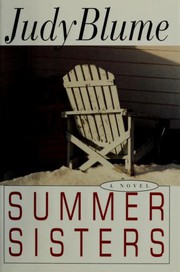
Summer Sisters
3,633-word summary 16 min read 399 pages in the book
- First published
- 1998
- Publisher
- Delacorte Press
- Pages
- 399
- ISBN
- 9780385324052
Reading options
What's inside (8 sections)
I picked up Summer Sisters because I had only known Judy Blume as the writer of classroom paperbacks with cracked spines. A friend left a worn Delacorte Press copy on my kitchen table after a weekend trip, and I started it late on a Sunday night expecting something light. The edition in front of me was the 1998 Delacorte Press edition, 399 pages, and I finished it two days later with a coffee gone cold beside me. I had not expected an adult novel about a friendship that stretches from sixth grade into middle age to hold me that tightly, but Vix and Caitlin felt like people I had actually known.
The book opens with a phone call. Vix Leonard is grown, living her own life, when Caitlin Somers calls to say she is going to marry Bru. Bru is Vix's first love and the man she lost her virginity to. Vix hears the news and feels sick. She hangs up and sits with the shock for a long time. That call frames everything that follows. Blume then pulls back more than twenty years to show how these two girls became summer sisters in the first place, and why a wedding invitation years later can still shake Vix to her core.
Vix grows up in New Mexico, in a crowded house that never quite feels calm. Her mother Tawny works for a countess and runs the home with sharp opinions and constant correction. Her father is steady and plainspoken and often tired from work. There are three younger kids. Lanie is restless and quick to argue. Lewis is quieter and later chooses the military. And Nathan, Vix's favorite, uses a wheelchair and lives with serious physical limits. Vix adores him. She reads to him and wheels him outside and defends him at school when other kids stare. Nathan's humor is dry and he sees more than the adults credit him for, and Vix trusts his view of people more than anyone else's.
Caitlin enters Vix's sixth-grade class like weather. She is bright, loud, pretty, sure of herself. She wears her confidence the way other kids wear new shoes. She singles Vix out, which feels both thrilling and strange to Vix, who thinks of herself as ordinary. Caitlin invites Vix to spend the summer on Martha's Vineyard with her family. Vix has never flown alone, never seen the Atlantic, never stayed in a house where dinner can last two hours and nobody yells. She begs her parents to let her go. Tawny worries about money and manners and what people will think. Vix's father worries about cost and safety. In the end they say yes, partly because the Somers family offers to help, and Vix boards a plane east with a paperback and a stomach full of nerves.
A sixth-grade invitation to the Vineyard
The first Vineyard summer is told in close detail, and I loved this part most. Caitlin's father is Lambert Somers, called Lamb, a laid-back man with money and charm and a habit of letting the day shape itself. He grills fish outside and plays music too loud and treats Vix like family from the first night. Caitlin's older brother Sharkey drifts through the house with teenage cool, teasing the girls and then ignoring them. Lamb's former girlfriend Trisha still hangs around, cooking and laughing and clearly fond of Lamb, though Lamb has started seeing Abby, a kind woman who tries hard and whom Caitlin instantly rejects. Abby brings her son Daniel for part of the summer, and Daniel brings his friend Gus, a thoughtful boy who watches more than he talks.
Vix and Caitlin share a room with damp towels and sand on the floor. They learn the island by bike. They buy fudge at the harbor and swim until their lips turn blue. They spy on older teenagers at the beach. Two older boys hold their attention all summer. Joseph Brudegher, called Bru, is handsome and athletic and easy around adults. His cousin Von is darker in mood, funny in sudden bursts, always testing limits. The girls develop fierce crushes and argue at night about which boy is better. Caitlin claims Bru. Vix watches both and says little, but she watches Bru longer.
Blume captures the small humiliations of being twelve among rich strangers. Vix does not know which fork to use. She mispronounces a place name and Caitlin corrects her in front of others. She bleeds through her shorts on a boat trip and wants to disappear. Lamb covers for her without making it a lesson, and that kindness stays with Vix for years. Caitlin can be generous one hour and cutting the next. She lends Vix a dress for a clam bake, then mocks Vix for thanking Lamb too many times. I recognized that push and pull from my own childhood friendships, where love and power get mixed up and nobody names it.
By late August, Vix does not want to leave. She cries on the ferry and promises to write every week. Caitlin promises the same. On the plane home to New Mexico, Vix presses her forehead to the window and replays each day. That first summer sets the pattern. Vix will return to the Vineyard every summer after, hence the title. The island becomes her second home, and Caitlin becomes the person against whom she measures everything.
Tawny, Lamb, Sharkey and the crowded house
What makes the novel work in its early third is the contrast between the two families. Vix's home is tight, loud, short on money, full of rules about church and chores and grades. Tawny loves her kids but shows it through control. She irons Vix's collars flat and tells her to sit up and to smile and to stop reading at the table. She warns Vix not to act impressed by the Somers money. She tells neighbors that Vix was invited because Vix is smart and polite, as if she needs to justify the invitation. Vix loves her mother and also flinches around her, and Blume lets both feelings sit side by side without explaining them away.
Lamb's house runs on opposite fuel. Doors stay open. People come for dinner and stay for days. Lamb drinks wine at lunch and tells stories about sailing and work and old friends. He pays for Vix's plane tickets and later helps with school fees through the Somers Foundation, and he does it with a shrug that makes refusing hard. Sharkey borrows his father's car without asking and brings home friends who sleep on the porch. Trisha folds laundry that is not hers and remembers Vix's birthday. Abby tries to set bedtimes and shopping lists, and Caitlin treats her with open scorn. Daniel and Gus build a raft that sinks on launch day, and Lamb laughs and helps them drag the wood back up the beach.
Vix learns to move between these worlds. In New Mexico she helps with Nathan's care and babysits Lanie and Lewis for no pay. She studies hard because good grades feel like the one thing Tawny cannot criticize. On the Vineyard she learns to sail a small Sunfish, to shuck oysters without cutting herself, to drink coffee with milk while the adults talk late. Sharkey teaches her to drive a dusty pickup on a dirt road when she is fourteen, and she stalls it three times while Caitlin howls from the back seat. Those scenes have a sunlit ease that made me slow down while reading. I could smell sunscreen and hear screen doors banging.
The friendship deepens even as the imbalance grows. Caitlin needs an audience, and Vix is a loyal one. Vix needs escape and glamour, and Caitlin provides both. They trade secrets at night about periods and parents and teachers. Caitlin tells Vix that Lamb and her mother split because Lamb could not be tied down. Vix tells Caitlin that Tawny cries in the kitchen after parent-teacher nights. They swear they will never compete over boys, a promise that will break more than once. When summer ends they call on Sundays and write long letters during the school year, and each reunion on the island feels like picking up a song mid-verse.
Bru and Von and the high-school summers
The middle summers change tone. The girls grow taller and the games turn sexual. Bru, a few years older, pays attention to Vix in a way that feels serious. He asks her about books and remembers what she says. He teaches her to dive off the dock and steadies her waist a second longer than needed. Von pays attention to Caitlin, and Caitlin loves being wanted by someone with an edge. By fifteen and sixteen, the four of them spend evenings on the beach with beer stolen from Lamb's fridge and music from a car radio. They swim at night and dare each other to go farther out.
Vix eventually pairs with Bru, Caitlin with Von, though nothing stays neat. One night at a party, high and loose and jealous, Vix makes out with Von on a porch while Caitlin watches from the doorway. Vix later thinks Caitlin arranged the scene to test her. Caitlin says Vix threw herself at Von. They fight in the driveway with bare feet and smudged mascara, screaming things they cannot take back. Lamb breaks it up and tells them to sleep it off, and in the morning nobody apologizes properly. The crack from that night never fully closes, though they patch over it with jokes and shared clothes.
Blume is frank about sex here, and this is where the book divided readers on release. Caitlin loses her virginity first, to an Italian ski instructor on a winter trip, then sleeps with Von the next summer. She talks about it with a mix of bragging and unease. Vix waits longer. Her first time is with Bru in a Vineyard guest room with the windows open and gulls crying outside. She bleeds a little and cries after, and Bru holds her and says he loves her. For a while they are steady. Bru writes her letters when she is home in New Mexico. He calls on her birthday. He tells her she is the only girl who really listens.
Then loss hits Vix hard. Just before her senior year of high school, Nathan dies from complications tied to his condition. Blume handles his death quietly. There is no long hospital speech. Vix sits by his bed and holds his hand while machines beep. After, the house feels too large and too quiet. Lanie acts out and soon becomes pregnant and keeps the baby, becoming a young mother while still a teenager herself. Lewis enlists, seeking order and distance. Tawny throws herself into church work and cleaning. Vix moves through her final year of high school in a fog, getting As and forgetting to eat lunch. Only Bru's calls and Caitlin's letters keep her tethered, and even those feel far away.
Vix goes to Harvard on help from the Somers Foundation, and Caitlin turns down Wellesley to travel.
That sentence carries a lot of the book's class tension. Vix earns a scholarship funded by Lamb's family and arrives at Harvard feeling like a fraud among prep-school kids. Caitlin is accepted to Wellesley College but decides against it. She wants Europe, night trains, cheap rooms, lovers who teach her words in other languages. Vix studies in libraries with high windows. Caitlin sends postcards from Rome and Paris and Amsterdam. They see each other on the Vineyard in passing, and each visit feels shorter and stranger.
Harvard, Wellesley that never was, and Europe
College widens the gap. Vix shares a small Harvard dorm room with Maia, an uptight and anxious roommate who alphabetizes her teas and worries over grades. At first Vix finds Maia exhausting. Maia asks where Vix bought her coat and whether Vix's parents went to college. She leaves notes about dishes. Slowly they become close. Maia covers for Vix when Vix stays out late with Bru. Vix talks Maia into skipping a review session to see a film. Their friendship gives Vix a steadier mirror than Caitlin ever did, someone who likes Vix without needing to outshine her.
Bru remains in Vix's life through those years, though the shape changes. He visits on weekends and they walk along the Charles River and argue about law school and teaching and where to live. During Vix's junior year they break up for months. Vix dates other people without much spark. She throws herself into classes and a part-time job in the library. Then a chance meeting with Bru at a Vineyard Christmas party reignites everything. They sleep together that night and agree to try again. For a stretch it feels mature and calm. Just before graduation Bru asks Vix to marry him. He has a ring in a small blue box. Vix says no. She tells him they want different lives. She wants graduate work and time alone. He wants a house and kids soon and a wife who will host his friends. She loves him and still says no, and she cries on Maia's shoulder for a week.
Caitlin's twenties look nothing like that. She drifts through Europe with a backpack and a changing cast. She models for a photographer in Milan. She works a bar shift in London. She has affairs with men and with women, sometimes tender, often careless. She writes Vix funny, raw letters about hostels and border crossings and bad boyfriends. She visits New York and crashes with Vix and leaves without washing the sheets. She borrows money and forgets to pay it back. Vix worries and envies her in equal measure. Caitlin seems free in a way Vix cannot afford to be, and also lost in a way Vix fears becoming.
They keep loose contact into their late twenties. Vix finishes school and starts work that uses her brain and pays modestly. She dates a kind architect and a dull lawyer. Caitlin returns to the States thinner and louder, with stories that sound polished from retelling. They meet on the Vineyard at Lamb's house, which feels smaller now. Sharkey has moved away and calls rarely. Trisha still visits but looks older. Abby has left Lamb's orbit. Lamb himself has slowed, his charm edged with fatigue. Daniel lives elsewhere with a job and a mortgage. Gus, Daniel's old friend from those raft summers, reappears as a grown man. He is calm and funny and remembers Vix as the girl who sank the raft and laughed hardest. Vix notices him properly for the first time.
The phone call, the wedding and Maizie
Then comes the call that opened the book. Caitlin tells Vix she is marrying Bru. Vix feels the floor tilt. Bru, her Bru, who knew Nathan and who held her after her first time and who proposed with a blue box. She asks when and hears herself sound normal. She hangs up and throws up in the sink. Maia, now married and living in another city, tells her not to go. Vix goes anyway. She tells herself it is for closure, for Caitlin, for old times. She packs a black dress and flies to the island.
The wedding weekend is painful in precise ways. Caitlin glows and drinks too much and introduces Vix as her oldest friend in the world. Bru hugs Vix a beat too long. Lamb toasts the couple with tears in his eyes. Sharkey returns for the event and barely speaks to Vix. The rehearsal dinner runs late. After, Bru finds Vix on the porch where she once kissed Von. They talk about Nathan and Harvard and lost years. One thing leads to another and they sleep together the night before his wedding. Blume writes the scene without heat, more sad than erotic. Vix knows it solves nothing. Bru knows it too. In his private thoughts, printed plainly, Bru admits he loves them both and is glad the women have decided his future for him. That line chilled me. It shows how passive he has been, letting Vix say no and Caitlin say yes and calling that fate.
Vix also learns during that weekend that Bru took both her virginity and Caitlin's. Caitlin tells her lightly, as if sharing a funny fact, and Vix feels the old rivalry flare. The wedding goes ahead on a clear day with white chairs on the lawn. Caitlin wears her mother's bracelet. Bru cries during the vows. Vix smiles for photos and leaves before the dancing ends. Nine months later news comes that Caitlin has had a daughter, Somers Mayhew Brudegher, called Maizie. Vix sends a silver rattle and a card she rewrites four times.
Vix's own love story turns in a quieter direction. She reconnects with Gus after the wedding. He remembers small things, like how she takes her coffee and that she hates loud bars. They walk dogs for a neighbor and cook bad pasta and laugh at old photos of the sunken raft. Their courtship is slow and unshowy. When Gus asks Vix to marry him, there is no blue box performance. They eat takeout on the floor and talk about money and kids and where to live. Vix says yes. They marry in a small ceremony with Maia as witness and Lamb raising a glass. It feels adult in a way the Vineyard summers never did.
Trouble returns through Caitlin. Her marriage to Bru frays. She feels trapped by diapers and school pickups and island gossip. She has a breakdown and leaves the family for a stretch, staying with friends and not calling Maizie for days. Bru tries to hold the home together and fails in the patient way he fails at most hard things. They divorce. Bru later marries Star, a local island woman who runs a bakery and knows how to live year-round on the Vineyard, in winter as well as summer. Caitlin drifts again, thinner, brighter, harder to reach. Vix, now pregnant with her first child, a boy she plans to name Nate for Nathan, visits Caitlin for a long weekend. The two women walk the beach and talk honestly for the first time in years. They pledge to be best friends forever and mean it that afternoon.
The ending lands softly and then shocks. While Vix settles into marriage and motherhood with Gus, Caitlin takes a boat out alone one evening and does not return. Searchers find the empty boat drifting, no signs of a struggle, no note. Blume leaves it open whether Caitlin drowned by accident or chose to disappear. Vix recounts her memories of her summer sister and wishes the story had closed differently. She holds baby Nate and tells him about his namesake. She keeps Caitlin's letters in a box. The last pages feel like late light on water, warm and impossible to hold.
What holds and what wears thin
I admired a lot here, and I also winced. Blume is at her best with teenage talk. She hears how girls negotiate, how they test loyalty with dares and confessions. The early Vineyard chapters have real texture, from Sunfish lessons to stolen beer to the sting of being corrected in front of a crush. Tawny and Lamb feel lived in rather than sketched. Nathan's death hit me harder than any love scene because Blume had built his humor and his bond with Vix so carefully. Maia, though secondary, gives Vix a healthy friendship that throws Caitlin's dazzle into relief. Those balances show a writer who knows how friendship actually works, with affection mixed with scorekeeping.
The middle sags for me. Once the girls reach their late teens, sex takes over the plot for long stretches and the emotional stakes blur. Caitlin's European escapades read as a list of beds and cities rather than growth. Bru stays thin as a character across 399 pages. He is handsome and kind and passive, and his big admission that he loves both women and is glad they chose for him reveals a hollowness Blume never quite fills. Von fades without enough weight given how much damage that porch kiss causes. Sharkey, Trisha, Abby, Daniel, Lanie, Lewis, Star, all orbit quickly, and some vanish for a hundred pages then return as if no time passed. I wanted fewer lovers and more follow-through.
Privilege also hangs over the story in ways Blume only partly examines. The Somers Foundation pays for Harvard. Lamb pays for flights. Wellesley can be turned down on a whim. Vix knows she benefits, and she feels guilt, but the book rarely asks what that money costs others. Caitlin can afford to be lost in Europe because safety nets wait at home. Vix cannot, and that difference shapes their choices more than either admits. Readers who love beach-house novels will glide past this. Readers sensitive to class will notice how often cash solves problems that look emotional on the surface.
Still, I closed the 399-page Delacorte Press novel from 1998 feeling moved. The final image of Vix with baby Nate, named for Nathan, speaking Caitlin's name aloud so her son will know it, stayed with me through the week. It is not a tidy book. It sprawls and repeats and leans too hard on romance in its middle third. But its core question holds. What do we owe the friend who made us, and what do we do when that friend cannot be saved. Blume does not answer it cleanly. She lets Vix keep loving Caitlin after the boat is found empty, and she lets that love feel both loyal and incomplete, which felt true to the long friendships I have watched bend and sometimes break.
FAQ
When was Summer Sisters published?
It was published in 1998 by Delacorte Press. The first edition runs 399 pages.
Who are Vix and Caitlin?
Victoria Vix Leonard from New Mexico and Caitlin Somers, whose family summers on Martha's Vineyard. They meet at twelve and stay tied for decades.
Is Summer Sisters for young readers?
No. It is an adult novel with frank sex and mature themes, unlike Blume's books for tweens.
Similar books

The Interestings
Meg Wolitzer follows Jules Jacobson from 1974 arts camp into middle age, as friendship with Ethan and Ash turns into envy, money gaps, marriage strain, and…
2,990-word summary · 13 min read

Almond
Yunjae, born with alexithymia, navigates grief and friendship with troubled Gon after losing mother and grandmother.
2,088-word summary · 9 min read

The Bean Trees
Taylor Greer flees Kentucky, inherits Cherokee toddler Turtle, and roots with Tucson strays.
2,082-word summary · 9 min read

The Elegance of the Hedgehog
A Paris concierge hides her brilliant mind while a gifted girl plans her death, until a new tenant sees through them both.
2,248-word summary · 10 min read

Are You There God? It's Me, Margaret
Twelve-year-old Margaret navigates puberty in New Jersey while trying to choose a religion on her own.
2,178-word summary · 10 min read

What Happened to Goodbye
Mclean has reinvented herself in four towns since her parents divorced. In Lakeview she uses her real name, and for the first time staying put becomes a choice.
2,796-word summary · 12 min read

Little Earthquakes
Four Philadelphia women meet during pregnancy and discover that new motherhood is nothing like the plan, while friendship becomes the thing that holds them…
1,997-word summary · 9 min read

Dumplin'
Willowdean Dickson enters her town's beauty pageant as a protest and discovers that confidence is harder to keep once she lets someone close.
1,922-word summary · 9 min read

The Age of Miracles
A California girl grows up while the Earth's rotation slows, and ordinary adolescence continues alongside slow catastrophe.
2,417-word summary · 11 min read

Peace Like a River
An asthmatic boy in the early 1960s narrates his family's search for his older brother, who is accused of two killings and has escaped custody.
1,969-word summary · 9 min read

We Are Okay
Marin fled San Francisco after her grandfather vanished and stopped answering anyone. When Mabel visits her college dorm, she has to say what happened.
2,253-word summary · 10 min read

The Chosen
A shattered pair of glasses in a 1944 Brooklyn softball game starts a friendship between a Hasidic boy and his Orthodox neighbor, and their fathers pull them…
2,443-word summary · 11 min read

Big Swiss
A transcriptionist for a sex coach falls for one of his clients, the tall Swiss gynecologist she calls Big Swiss, in a funny novel about work and secrets.
2,523-word summary · 11 min read

A Spool of Blue Thread
Four generations of the Whitshank family in Baltimore, and the silences, resentments and quiet love they hand down without ever saying so.
2,408-word summary · 11 min read

The Second Summer of the Sisterhood
Four friends share the traveling pants through a summer of grandmothers, first loves, and mothers who are learning to let go.
2,209-word summary · 10 min read

On the Come Up
Bri Jackson, a sixteen-year-old rapper in Garden Heights, chases a record deal while a viral song turns her into a symbol she never wanted to be.
2,034-word summary · 9 min read

Aristotle and Dante Dive into the Waters of the World
Ari and Dante return for senior year in El Paso, navigating first love, AIDS, family grief, and the cost of being openly gay in 1987 Texas.
2,188-word summary · 10 min read

The Story of Edgar Sawtelle
A mute boy on a Wisconsin dog-breeding farm relives Hamlet as his uncle returns, his father dies in the barn, and the dogs inherit what is left.
2,392-word summary · 11 min read

Someone Like You
Halley and her best friend Scarlett face a summer of grief, a surprise pregnancy, and Halley's dangerous first romance in Sarah Dessen's 1998 young adult novel.
2,218-word summary · 10 min read

Maame
Maddie Wright, 25, has spent years as the responsible one in her Ghanaian British family, and the year she finally tries to live for herself is the year…
2,108-word summary · 9 min read

Luster
Edie, twenty-three and adrift in New York, falls into an affair with an older white archivist in an open marriage, and into the orbit of his wife and adopted…
2,049-word summary · 9 min read
Foster
A girl spends a summer with relatives on a Wexford farm and is cared for properly for the first time. A spare novella about family and what children notice…
2,043-word summary · 9 min read

Since You've Been Gone
Shy Emily spends summer finishing her vanished best friend Sloane list of thirteen dares, finding Frank, Dawn, and courage.
2,566-word summary · 11 min read

Purple Hibiscus
Kambili, fifteen, watches her devout factory-owner father rule the Enugu house through fear until a Nsukka visit teaches her speech and freedom.
2,595-word summary · 12 min read

The Story of the Lost Child
Elena and Lila age through motherhood, quakes, and a vanishing.
2,500-word summary · 11 min read
So Old, So Young
Six college friends reunite at five parties over twenty years in Ginder's funny, moving novel of millennial friendship.
2,457-word summary · 11 min read

Crux
Two broke Mojave teens chase pro climbing dreams as friendship, class gaps, and family strain pull Dan and Tamma apart.
2,489-word summary · 11 min read

Those Who Leave and Those Who Stay
Elena publishes into Florence salons while Lila labors through Naples factories across the 1970s.
2,034-word summary · 9 min read

Lola and the Boy Next Door
Costume maker Lola must choose between older Max and inventor Cricket while her two dads hold home steady.
2,045-word summary · 9 min read

I Am the Messenger
Nineteen year old Ed stops a robbery, then gets playing cards sending him to help strangers.
2,124-word summary · 9 min read