
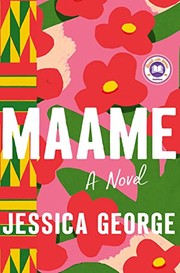
Maame
2,108-word summary 9 min read 320 pages in the book
- First published
- 2023
- Publisher
- St. Martin's Press
- Pages
- 320
- ISBN
- 9781250282521
Reading options
What's inside (9 sections)
There is a particular kind of exhaustion that comes from being the reliable one in a family, and Jessica George's debut novel knows exactly what it looks like. Maame is the story of Maddie Wright, twenty-five, a Ghanaian British woman in London who has spent her adult life taking care of everyone else. The title is a Twi word for woman, or mother, and it is also the nickname her family uses for her, which tells you everything about the job description. It was published in 2023, picked as a Read with Jenna book club selection, and it became a bestseller, and its TV adaptation was put into development before the paperback was even tired.
What makes the book land is its voice. Maddie narrates with a mixture of politeness and barely suppressed frustration that is very funny on the surface and very sad underneath, and George lets her be wrong about things without letting the reader lose faith in her. You spend the book watching a person learn how to want things, which sounds like nothing and is actually the hardest plot there is.
The Maame
Maddie lives in London with her father, who has Parkinson's disease, and she is his primary carer. Her mother spends most of each year in Ghana running a business, and her older brother James lives his own life and keeps his distance, which in practice means that the daily work, the appointments, the cooking, the vigilance, falls on Maddie. She also holds down a job as a personal assistant, where she is competent and underpaid in the way that competent young women usually are.
The nickname Maame is not affectionate in the way nicknames usually are. It is a role, and the book is precise about how roles get assigned in families: someone has to be responsible, and once everyone agrees who that person is, the assignment hardens into a fact. Maddie does not resent it in a single dramatic speech. She resents it in small ways she is embarrassed by, which is much truer to life.
The caregiving is rendered with a lived-in specificity that makes sense once you know George drew on her own experience helping care for her father. Parkinson's disease in fiction is usually a symbol. Here it is a set of chores and worries: the medication schedule, the risk of falls, the quiet negotiations with a man who does not want to be managed. There is love in it, and there is also a life being spent, and the book refuses to flatten either one.
The year she moves out
The plot kicks into gear when Maddie's mother returns from Ghana and plans to stay for a while. Maddie moves into a flat with two roommates, Jo and Cam, and for the first time in years she has a room of her own, friends her own age, and evenings that belong to her. The freedom is dizzying and also oversold. George is good on the small indignities of flat sharing and the awkwardness of trying to become a person in front of new people.
At work, meanwhile, her boss at the office where she is an assistant has a breakdown, and the fallout lands on Maddie. She is fired, which is terrifying and also, in the logic of the book, a kind of door opening. She ends up as an assistant to a publisher, an editor named Penny, in a job that is closer to her actual interests, and the publishing chapters give the novel its workplace-comedy spine.
She also meets Ben, an older, wealthier man, and begins dating him. Ben is polished and attentive in the way that experienced men are when they are enjoying being new, and Maddie loses her virginity to him. The book is frank about the experience: it is painful, and the aftermath is not the romantic revelation she was promised, and Ben soon begins treating her differently. George writes this stretch with a candor that will be familiar to plenty of readers and was, gratifyingly, treated as ordinary in review coverage. Not every debut has the nerve to be this specific about disappointment.
The birthday
The center of the novel, and the scene everything else orbits, arrives around the middle. The night before her father's birthday, Jo and Cam persuade Maddie to come out and celebrate a job she has just left or a milestone she has just hit, and she drinks more than she should, because she is twenty-five and for once not on call. The next day, she is supposed to bake her father a cake. She sleeps through the afternoon instead, hungover, and wakes to her mother's phone call. Her father died that day. On his birthday. While she was asleep.
I have read a lot of grief in fiction and this sequence is among the most quietly devastating I know, because there is no dramatic irony left to spend: the reader knows what is coming, Maddie knows what happened, and the book simply refuses to let anyone off the hook, including the reader who wants to tell her it was not her fault. It was not her fault. She will not believe that for a very long time, and the novel is honest enough to let the guilt stay irrational and stay present.
After the funeral, which she largely organizes and largely pays for out of her savings, the shape of her relationships changes. Her mother and James become people she argues with about money and duty, arguments where the words are about the funeral and the subtext is about years of imbalance. The panic attacks start around here, and George describes them physically and clearly, without metaphor. This is the part of the book where a lot of readers will be tempted to put it down, not because it is bad but because it is heavy, and the comedy that carried the first half does not disappear so much as it goes quiet. Keep going. The novel is about what she builds after, and the second half is the point.
Ben, Alex, and Sam
The romantic threads that accompany the grief are, deliberately, not redemptive. At a party at Ben's place, Maddie discovers he has a white girlfriend and realizes she has been his secret the whole time, the Black woman kept in a separate drawer from his real life. She ends it, and the book gives us her realization in a few clean strokes rather than a speech.
A dating app produces Alex, who is briefly nice and then ends things, and the sex is painful again, which the novel treats without pity or even, particularly, explanation. Maddie is learning that the problem is not exclusively hers, and that lesson takes the whole book.
Then there is Sam, Jo's ex, a Black man who understands parts of Maddie's life without her having to translate them: the family expectations, the code switching, the way London looks different depending on who she is with. Sam is the healthiest relationship in the novel, and the book earns him by making the earlier ones so realistically bad, though readers who want the romance front and center should know it arrives late and stays understated.
Work, therapy, and the inheritance
Between the emotional beats, Maame is also a book about a young woman learning to protect her professional credit, which I did not expect to enjoy this much. At the publishing house, Maddie helps pitch cookbook ideas that get acquired, and when the credit goes to someone else, she has to decide whether to keep being the Maame, quiet and accommodating, or claim what is hers. The book handles the office politics with a light touch and a sharp eye, and the scene where she pushes for a promotion with receipts is one of the most satisfying in the novel.
Running alongside all of it is therapy. Penny arranges company-funded sessions as things fall apart, and Maddie is matched with Angelina, a Ghanaian British therapist who does not let her glide past the obvious: that she has spent her life managing the emotions and needs of other people, and that her parents' marriage gave her the blueprint. When Maddie's mother finds out about the therapy, after a panic attack in session, the confrontation opens a door that has been shut for years. Her mother tells her about her own past, and something loosens between them, enough that Maddie can accept her mother's boyfriend, Kwaku, as a person rather than a threat. The reconciliation is partial and specific, which is how real ones go.
She also moves out of the flat, because Jo's casual microaggressions, the kind delivered with a smile and a claim of allyship, have worn her down past the point of costuming patience. One of the book's smarter observations is that Maddie is more exhausted by the people who think they are her allies than by outright hostility.
Then two things arrive that feel, on paper, like a fairy tale. A literary agent reaches out after reading a submission Maddie wrote about her father, opening a path she never let herself take seriously. And her father's will leaves her a substantial sum of money, which changes what is possible for her financially. In a lesser book, these would be the rescue. Here they mostly remove obstacles that should never have been obstacles, and the novel is careful to keep the emotional work in Maddie's hands. The epilogue, in which she visits her father's grave and catches him up on her life, is the book's final kindness, and it lands because the groundwork was all honest.
What to know before you read
The main criticisms of Maame are fair and worth stating. The tone swings hard between workplace comedy and grief, and some readers will find the whiplash jarring. A few of the plot's kindnesses, the agent, the inheritance, the late-arriving healthy boyfriend, fall into place a little too neatly. And the middle section, after the father's death, is very heavy, very long, and not in a hurry.
What the book does better than almost anything in its lane is the texture of a family held together by one person, and the slow, unglamorous process of that person deciding she is allowed to be a person too. It is specific about Ghanaian British family life in ways that will feel like recognition to some readers and like reporting to others, and it never turns its specificity into an explanation. It simply tells you the truth: that being the responsible one is a whole life, that grief does not arrive on schedule, and that getting out from under the name Maame takes, in the end, everyone's permission but your own.
The debut in context
Maame arrived in February 2023 as a Read with Jenna selection, which is one of the more reliable launchpads in publishing, and it became a New York Times bestseller in short order. A television adaptation went into development with Universal International Studios and Jenna Bush Hager's production company, with George co-writing, which tells you how quickly the industry decided this voice was worth building around. For a debut, that is a lot of machinery, and the book carries it lightly, mostly because it was doing something the market wanted before the market knew it wanted it: a coming-of-age novel that could be marketed as a rom-com and read as a grief memoir.
It also landed in the middle of a rich stretch for Ghanaian British fiction. Yaa Gyasi's Homegoing and Transcendent Kingdom had shown how wide that territory runs, and Caleb Azumah Nelson's Open Water had made intimacy and interiority a selling point rather than a barrier. Maame shares a passport with those books and none of their solemnity. It is domestic, funny, soapy in the best sense, and it uses the beats of contemporary romance, the bad boyfriend, the good boyfriend, the workplace triumph, as scaffolding for something sadder and stranger.
The result is a novel that most readers can pick up for the voice and finish for the family. It is for anyone who has ever been the responsible child, who has translated a parent at a doctor's office, who has carried a household's logistics in their head while holding down a job that does not respect them. That description covers more people than any marketing category allows, which is exactly why the book traveled. George has not yet said what she will do next. On the evidence of this one, whatever it is will be worth the wait.
FAQ
What does Maame mean?
Maame is a Twi word for woman or mother, used in the novel as Maddie's family nickname because she has spent her life being the responsible one.
Is Maame autobiographical?
It is fiction, but Jessica George drew on her own experience helping care for her father, who had Parkinson's disease.
Is Maame a romance novel?
Only partly. It includes relationships and one healthy romance near the end, but it is mainly a coming-of-age story about grief, family duty, and learning to want things for yourself.
Similar books

What Happened to Goodbye
Mclean has reinvented herself in four towns since her parents divorced. In Lakeview she uses her real name, and for the first time staying put becomes a choice.
2,796-word summary · 12 min read

Sam's Letters to Jennifer
A grieving journalist reads her grandmother's letters and finds a decades-long love affair that changes how she sees her family.
2,310-word summary · 10 min read

A Spool of Blue Thread
Four generations of the Whitshank family in Baltimore, and the silences, resentments and quiet love they hand down without ever saying so.
2,408-word summary · 11 min read
On the Come Up
Bri Jackson, a sixteen-year-old rapper in Garden Heights, chases a record deal while a viral song turns her into a symbol she never wanted to be.
2,034-word summary · 9 min read
The No-Show
Three women are stood up on Valentine's Day by the same man, but the timeline is not what it seems. O'Leary's warmest book with a knife in it.
2,127-word summary · 9 min read

Someone Like You
Halley and her best friend Scarlett face a summer of grief, a surprise pregnancy, and Halley's dangerous first romance in Sarah Dessen's 1998 young adult novel.
2,218-word summary · 10 min read

Clap When You Land
Two half sisters, one in Sosúa and one in Queens, discover each other after their father dies in a plane crash, in Elizabeth Acevedo's novel in verse.
2,890-word summary · 13 min read
Summer Sisters
Vix and Caitlin share Martha's Vineyard summers from age twelve into adulthood, through first love, grief, marriage, and a disappearance that still haunts Vix.
3,633-word summary · 16 min read
Almond
Yunjae, born with alexithymia, navigates grief and friendship with troubled Gon after losing mother and grandmother.
2,088-word summary · 9 min read
The Switch
A burned-out consultant and her 79-year-old grandmother swap London and Yorkshire homes for two months, facing grief, dating apps, and village politics.
2,782-word summary · 12 min read
Tell the Wolves I'm Home
A grieving fourteen year old secretly befriends her late uncle's boyfriend in 1980s New York, testing family loyalty and love.
3,014-word summary · 13 min read
Transcendent Kingdom
A neuroscientist studies addiction in mice while mother prays at home.
2,020-word summary · 9 min read
The Last Anniversary
A single woman inherits island house and unknots a vanished baby story.
2,158-word summary · 10 min read
The Keeper of Lost Things
An old writer collects lost objects and leaves the quest to his housekeeper.
1,934-word summary · 9 min read
The Guncle
A sitcom star takes his niece and nephew for a summer and learns presence beats punchlines.
2,779-word summary · 12 min read
Lola and the Boy Next Door
Costume maker Lola must choose between older Max and inventor Cricket while her two dads hold home steady.
2,045-word summary · 9 min read
Home Front
A Guard pilot deploys, comes home wounded, while husband and daughters fight to heal together.
2,091-word summary · 9 min read

Golden Girl
A dead novelist watches her three kids for one summer with three nudges to help.
2,052-word summary · 9 min read
Forever, Interrupted
Elsie elopes in May, loses Ben nine days later, and learns grief beside the mother in law she never met.
2,051-word summary · 9 min read
For One More Day
A ruined ballplayer spends an impossible day with his dead mother.
1,989-word summary · 9 min read
Life's Too Short
A travel YouTuber facing possible ALS takes in baby Grace and falls for Adrian, the lawyer next door.
2,913-word summary · 13 min read
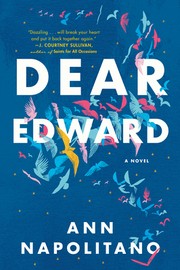
Dear Edward
Twelve-year-old Edward Adler survives a plane crash that kills his family, then learns how to live with grief, letters, and love.
2,903-word summary · 13 min read
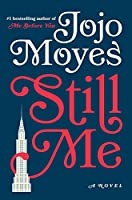
Still Me
Lou spends a year in New York working for the Gopniks, torn between Josh, distant Sam, and the life she wants.
2,939-word summary · 13 min read

David Copperfield
Orphan Davy from Blunderstone through Murdstone, Micawber, Heep, Dora and Agnes to novelist.
2,199-word summary · 10 min read

Always and Forever, Lara Jean
Senior year brings college letters, distance from Peter, and a dad wedding Lara Jean helps hold together.
2,037-word summary · 9 min read
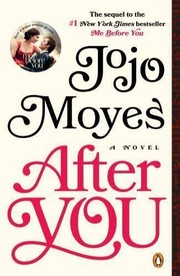
After You
Lou grieves Will, falls from a roof, joins a group, and meets Sam and a surprise from Will's past.
2,031-word summary · 9 min read

Just for the Summer
Emma and Justin date to break a matching curse, then face sudden guardianship and illness on Lake Minnetonka.
3,090-word summary · 14 min read

Extremely Loud and Incredibly Close
Nine year old Oskar searches New York for a lock matching his father's key after 9/11.
2,999-word summary · 13 min read

The Last Song
Angry teen Ronnie spends a summer in Wilmington with her pianist father, finding first love, family repair, and loss.
2,761-word summary · 12 min read
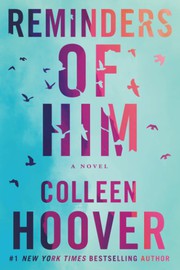
Reminders of Him
Kenna returns after prison to meet the daughter she lost, facing the family that blames her.
2,168-word summary · 10 min read