
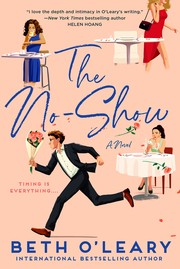
The No-Show
2,127-word summary 9 min read 352 pages in the book
- First published
- 2022
- Publisher
- Berkley
- Pages
- 352
- ISBN
- 9780593438442
Reading options
What's inside (9 sections)
I had a theory about this book by page forty and I was wrong about it in the exact way the book wanted me to be wrong, which is either a compliment or a complaint depending on how you feel about being managed. Beth O'Leary wrote The Flatshare and The Switch, both of which I liked for their warmth and their clean, generous storytelling, and The No-Show is the one where she takes that warmth and bends it around a structural trick with an actual knife in it. The publisher sold it as a romantic comedy. The book is not exactly that, and the gap between the cover and the contents is part of the argument people have about it.
It came out in April 2022 from Berkley, runs about 352 pages, and opens with a propulsive premise. Three women. One Valentine's Day. Three dates, at breakfast, lunch, and dinner, all with the same man, all of whom he fails to attend, in a book that very much wants you to do the arithmetic about a cheating boyfriend. The arithmetic is a decoy. What the book is actually about, once you have been let in on the trick, is grief, recovery, and the question of whether a person can be loved by more than one life at once.
I should say up front that the trick is the reason to read the book and also the reason some readers put it down angry, so I will keep the machinery vague for as long as the story lets me and then discuss it openly at the end. If you want to go in completely clean, stop after the setup sections. It is a good book to be fooled by.
Three women, one Valentine's Day
Siobhan Kelly is a life coach who lives in Dublin and works with clients in London, a woman in her early thirties who has built her whole professional self around other people's problems while keeping her own under lock. She is planning something with Joseph Carter on Valentine's Day. He does not come.
Miranda Rosso is twenty-five, an arborist, which means she climbs trees for a living and says what she thinks, a personality that O'Leary writes with obvious affection. She lives with twin eighteen-year-old sisters she is helping raise, she has been seeing a man she calls Carter for five months, and she is stood up at lunch on the same day. In the middle of the book you learn there is a note in her calendar that reads "First Friday of the month is MINE, Joseph Carter", which is one of the many small flecks of paint that will later assemble into a picture.
Jane Miller is a quiet, careful woman volunteering in a charity shop in Winchester, which is a small city in Hampshire, and she has told a lie to the other volunteers: that Joseph is her boyfriend. He is not. He is a friend, the kind of friend she is not ready to have anything else with, and on Valentine's Day she is left at a table and the lie starts to curdle.
Three women, three meals, one day, one missing man. The chapters rotate between the three of them, and the rotation is brisk, funny, and full of the small domestic observations that are O'Leary's signature.
Siobhan, and the life she is managing
Of the three heroines, Siobhan gets the book's most adult arc. She is the one with the most polished surface and the most patched hull below the waterline. There is an ex named Cillian, there is a pregnancy and a miscarriage the book handles with real care, and there is a work life that has taught her to be more useful than vulnerable. The chapters where she coaches clients are quietly the best dialogue in the novel, because coaches have to listen for a living and Siobhan listens to everyone except herself.
She and Joseph are serious in the way that people are serious when one of them keeps a foot near the exit. He is evasive about his mother, evasive about his weekends, generous with his attention and stingy with his plans. She lets it go, for reasons the book exposes slowly. When she finally goes to his flat and meets the shape of his actual life, the reader starts to suspect the story is not a comedy about a cad but something darker wearing the same clothes.
What happens to Siobhan, and when it happens relative to the other timelines, is the emotional detonation of the novel. I will say here only that O'Leary gives her a death scene with real fear in it, in London, and a specific villain behind it, and that the death lands in the middle of the book rather than the end, which is a structural choice almost nobody makes in this genre and which I respect enormously.
Miranda and the trees
Miranda is the youngest and, for long stretches, the most fun. She is strong, direct, unimpressed by the man she is dating, and raising two teenagers while her own life is still young, which makes her the book's engine of blunt comedy and unexpected pathos. The tree work is written with real texture: climbing gear, pruning, the biology of the profession, the fact that she is frequently forty feet in the air while having the kind of conversations most people require a sofa for. Her coworker AJ is one of the book's best inventions, a colleague whose slow, unflashy decency stands in silent contrast to whatever Joseph is up to.
The way Miranda's storyline collides with the others involves her meeting Joseph's mother, Mary, who has dementia and who, in a scene that should be taught in writing workshops, mistakes Miranda for someone named Siobhan. That name is a hinge, and it is also a heartbreak, because the reader hears it ring against a different part of the book. From then on, Miranda is doing detective work in her love life, and she is better at it than she wants to be.
Jane, and the reason she is so careful
Jane is the quiet one, and quiet women in novels usually get protected by the author. O'Leary does not protect her. Volunteering at the charity shop is where Jane has rebuilt herself after leaving a law firm in London, where she had a relationship with her senior colleague, Richard Wilson, that the book is unflinching about in retrospect. Richard is not a love interest gone wrong. He is a predator with a personnel file, and the way he organized Jane's shame for her is written with such accuracy that I had to stop for a minute in those chapters.
So Jane's lie to the volunteers, that Joseph is her boyfriend, is not a rom-com device. It is a person testing whether she is capable of being claimed by anyone decent. Jane and Joseph's friendship is the book's slowest burn and ultimately its central one, built out of shared shifts, small errands, and the specific trust of two people who have both decided love is a risk they no longer take lightly.
The man in the middle
Joseph Carter himself is the book's most contested element, and I will defend him and then hand the other side its knife. He is a nurse in his forties who looks after his mother, Mary, who has dementia, with a devotion that has eaten his own life down to the studs. He meets the women in different moments of a long decade of caregiving and grief, and he is, in each case, the most decent man in the room, which is exactly what makes him so dangerous to the structure of the story. He is not a lying cad with a rota. He is a man who keeps his lives in drawers, and the book is honest about how much lying that still involves, even when the lying is made of grief and fear.
BookPage called him a cipher, and I know what the reviewer means. O'Leary keeps him opaque for so long that he becomes a puzzle before he becomes a person. That is a real flaw and a deliberate one, and only you can decide which way it lands. For me he arrives, in the last third, as one of the saddest portraits of caretaking I have read in a commercial novel. The scene where he is finally free of one of his obligations and cannot feel it as freedom is worth the price of the book.
The trick, and whether it holds
OK. Here is where I talk about the structure, because the trick is not a twist ending; it is the architecture, and the book is nearly impossible to discuss otherwise.
The three storylines are not simultaneous. They are happening in different years, and the reader is quietly encouraged to assume otherwise: seasons recur, the New Year's Eve parties at a hotel called the Grange recur, and the name split, Carter to Miranda, Joseph to Siobhan and Jane, makes you file them as two men or as one man leading a triple life. They are one man, in sequence. The timeline is a spiral, not a line. What looked like cheating is mourning, then friendship, then fear, arranged out of order.
I was fooled. I should say that clearly, because the fooling is skillful: O'Leary does not cheat; every scene is gorgeously specific about time when you reread, the radishes of detail are all there, and the reason I got it wrong is that I assumed a genre. The book's pleasure, on the second read, is watching the same scenes snap into a different order like a puzzle whose pieces are numberless. The book's cost is that some readers feel the trick was played on them rather than with them, and this is not a small thing. Dear Author's review, one of the most thoughtful, found the reveal manipulative and the book mis-marketed as romance when it reads closer to women's fiction with a mystery engine. I understand the objection. The marketing did promise a different book, and the first hundred pages are written in a voice that signals comedy, so the darkness, when it comes, feels like it broke a promise.
How each of them ends
Because someone reading a summary wants the endings, and this book's endings are the shape of its argument. Siobhan's story ends in the middle of the book, not at the close: Richard, her predator, had been stalking her, and the death scene follows from that. Afterward, the living have to deal with what he did and what he keeps doing, professionally and quietly, to other women. Jane is the one who ends him. With the help of a former colleague, Lou, she reports Richard to HR, puts her career and her name back on a professional file, and the consequences land where they should.
Joseph, at last unburdened of the guilt that had him organizing women into separate drawers, tells Jane he loves her, plainly, and she takes him back on her terms. Miranda makes peace with the version of Joseph she thought she was dating and finds something simpler and happier with AJ. The epilogue, a year later, is warm in exactly the O'Leary mode: Jane and Joseph living near Winchester, the charity shop still running, the friend group filming a memorial for Siobhan, which is the book's way of keeping the dead in the room.
Whether that satisfies you depends on whether you bought the book as a romance, as the cover suggested, or as a novel about grief with a love story in the last act. As the latter, it is the most ambitious thing O'Leary has written, and the craft is real: Publishers Weekly starred it and Kirkus called it an expertly plotted romantic surprise about self-forgiveness and second chances. As the former, plenty of readers finished it feeling handled. Smart Bitches, Trashy Books said it spreads itself too thin, and that is the fairest diagnosis of the failure mode. Three heroines, two timelines, dementia, stalking, grief, a charity shop, and a tree surgery career is a lot of oars to row with, and in the last third the boat races a bit.
My verdict: read it, but read it slowly, and read it as the darker book it is. The No-Show is what happens when a writer known for warmth decides to ask what warmth is for, and answers with a book about people in the middle of losses that do not resolve. It is not the comedy the cover promises. It is better than the comedy the cover promises.
FAQ
Are Joseph and Carter two different men?
No, it is one man. Joseph Carter is called Carter by Miranda and Joseph by Siobhan and Jane, and the name split is part of the novel's misdirection.
Do the three storylines happen at the same time?
The three storylines are not simultaneous. They take place in different years, which the book reveals through recurring scenes like the New Year's Eve parties at the Grange.
Does someone die in The No-Show?
Siobhan, who is stalked by the lawyer Richard Wilson and killed in a collision with a motorbike in the book's earliest timeline. Joseph is with her when she dies.
Similar books
The Flatshare
Two strangers share one bed on opposite shifts and fall in love through notes left around the flat.
2,793-word summary · 12 min read
Ghosts
At 32, food writer Nina Dean faces ghosting by Max and her father's dementia in London.
2,677-word summary · 12 min read
The Keeper of Lost Things
An old writer collects lost objects and leaves the quest to his housekeeper.
1,934-word summary · 9 min read
Someone Else's Shoes
A rich wife loses everything and a tired mom gains red heels when gym bags swap in London.
1,951-word summary · 9 min read

One Day in December
Laurie spots her dream man from a London bus, then meets him again as her best friend Sarah's new boyfriend.
2,513-word summary · 11 min read
The Switch
A burned-out consultant and her 79-year-old grandmother swap London and Yorkshire homes for two months, facing grief, dating apps, and village politics.
2,782-word summary · 12 min read

Little Earthquakes
Four Philadelphia women meet during pregnancy and discover that new motherhood is nothing like the plan, while friendship becomes the thing that holds them…
1,997-word summary · 9 min read

Dumplin'
Willowdean Dickson enters her town's beauty pageant as a protest and discovers that confidence is harder to keep once she lets someone close.
1,922-word summary · 9 min read

Shopaholic and Sister
Becky Brandon returns from a ten-month honeymoon to meet the half-sister she always wanted, then discovers that Jess is thrifty, prickly, and nothing like the…
2,591-word summary · 12 min read

Sam's Letters to Jennifer
A grieving journalist reads her grandmother's letters and finds a decades-long love affair that changes how she sees her family.
2,310-word summary · 10 min read
Mr. Maybe
Libby Mason wants a rich husband, but the wealthy man who proposes is dull and the broke writer she cannot forget is not offering forever.
2,322-word summary · 10 min read

Amy & Roger's Epic Detour
Amy Curry has not driven since the crash that killed her father. With Roger at the wheel and a box of maps between them, a cross-country trip becomes a slow…
3,034-word summary · 13 min read

One to Watch
A plus-size fashion blogger takes the lead role on a reality dating show to prove she belongs on television, and finds she might want what the cameras offer.
2,478-word summary · 11 min read
Between Sisters
Estranged sisters Meghann and Claire reunite in Washington when Claire announces a rushed wedding, then face their mother's desertion and a medical crisis.
2,467-word summary · 11 min read
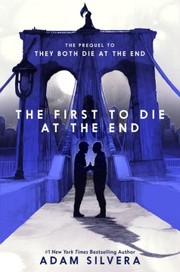
The First to Die at the End
On the night Death-Cast launches, a boy with a bad heart meets a model with everything ahead of him, and one of them gets the call.
2,908-word summary · 13 min read

Big Swiss
A transcriptionist for a sex coach falls for one of his clients, the tall Swiss gynecologist she calls Big Swiss, in a funny novel about work and secrets.
2,523-word summary · 11 min read

Someone Like You
Halley and her best friend Scarlett face a summer of grief, a surprise pregnancy, and Halley's dangerous first romance in Sarah Dessen's 1998 young adult novel.
2,218-word summary · 10 min read
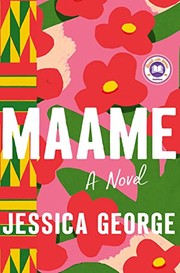
Maame
Maddie Wright, 25, has spent years as the responsible one in her Ghanaian British family, and the year she finally tries to live for herself is the year…
2,108-word summary · 9 min read
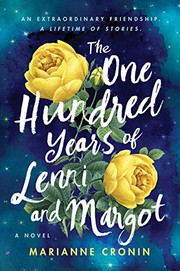
The One Hundred Years of Lenni and Margot
Dying teen Lenni and 83-year-old Margot paint one hundred years of stories.
2,281-word summary · 10 min read
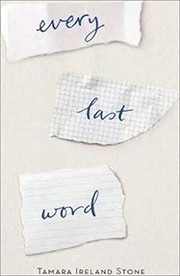
Every Last Word
A girl with OCD finds poetry and friends who know her secrets.
2,434-word summary · 11 min read

Bridget Jones: The Edge of Reason
Bridget doubts Mark, takes a job with Daniel, and lands in trouble in Thailand.
2,198-word summary · 10 min read
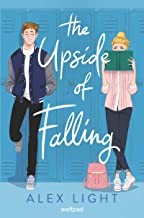
The Upside of Falling
Two teens fake-date for a summer dare and end up facing grief, family secrets, and first love.
2,274-word summary · 10 min read

Since You've Been Gone
Shy Emily spends summer finishing her vanished best friend Sloane list of thirteen dares, finding Frank, Dawn, and courage.
2,566-word summary · 11 min read
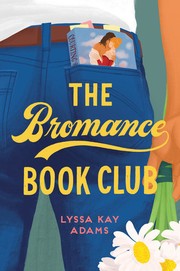
The Bromance Book Club
A Nashville pitcher joins a secret romance book club to save his marriage after his wife Thea asks for divorce. He trades pride for listening, chores, and…
2,932-word summary · 13 min read
Jemima J
Overweight London journalist Jemima Jones invents a slim online self for a California lover, starves to match the photo, then faces betrayal and learns to…
2,883-word summary · 13 min read
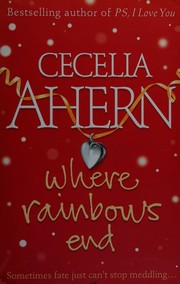
Where Rainbows End
Told in letters and emails, Rosie Dunne and Alex Stewart grow from Dublin childhood to midlife, missing chances at love while raising Katie.
1,943-word summary · 9 min read
You've Reached Sam
After Sam dies, Julie calls his phone to hear his voicemail and he answers, forcing her to face grief and learn how to say goodbye.
2,887-word summary · 13 min read
Queenie
Jamaican British Queenie spirals after Tom break while friends hold her.
2,056-word summary · 9 min read
Good Material
A struggling comic replays his breakup with Jen while sofa surfing, bombing gigs and missing the other half of the story.
2,500-word summary · 11 min read
Evvie Drake Starts Over
A widow hiding a painful secret rents her back apartment to a pitcher who lost his throw, and they slowly learn to start again.
2,584-word summary · 11 min read