
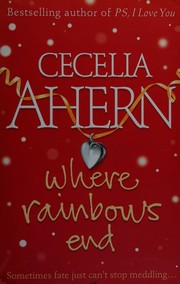
Where Rainbows End
1,943-word summary 9 min read 453 pages in the book
- First published
- 2004
- Publisher
- HarperCollins
- Pages
- 453
- ISBN
- 9780007189953
Reading options
What's inside (10 sections)
I came to Where Rainbows End after watching Love, Rosie on a rainy night and wondering what the film had smoothed over. The answer is quite a lot. This is a big, chatty, sad-funny novel told entirely in letters, notes, emails, texts, and invitations, following Rosie Dunne and Alex Stewart from age five to middle age. It sprawls on purpose, letting jokes and hurt share the same page the way long friendships do.
Two kids in Dublin
Rosie and Alex meet as children in Dublin. She is blunt, warm, and quick to laugh. He is steady, kind, and a little more cautious. Their early notes passed in class are full of spelling mistakes, dares, and plans to run away together. Ahern captures kid logic well. A lost job, a new teacher, a move across the street all feel huge. Teachers read the notes aloud as warnings, which only makes the two write more secretly and more often.
The families matter. Rosie grows up with a loving, chaotic household and a sharp-tongued best friend dynamic with her mother. Alex has a more reserved home, with parents who push education. When Alex's family moves to Boston in their teens, the friendship has to survive on paper. Phone calls cost too much, so they write. Long letters, short postcards, birthday cards with jokes only they get.
What I liked here is how Ahern lets small choices set the track. Rosie is bright but drifts at school. Alex works hard and aims for medicine. Neither path is judged, but the gap widens. You can see the future problem forming years before either of them names it.
The dance, the pregnancy, and diverging roads
At eighteen Rosie plans to leave Dublin for a hotel management course in Boston, close to Alex at Harvard. Then one night changes everything. After a school dance she sleeps with Greg Collins, a boy she barely likes, and becomes pregnant. She tells Alex late, by letter, after he has already fixed up a spare room for her.
This is where the book finds its ache. Rosie stays home and has Katie, a daughter she loves fiercely from the start. She takes office jobs, night classes, and endless condescension from people who assume her life is over. Alex goes to medical school, dates, and builds a polished Boston life. They keep writing, but the tone shifts. Jokes cover hurt.
Greg drifts back and proposes. Rosie marries him partly from love, partly from exhaustion and a wish to give Katie a tidy family. Ahern does not paint Greg as a villain at first. He is charming, unreliable with money, and allergic to hard talks. The cracks show early. He misses clinic visits, borrows from Rosie's parents, flirts at work parties. Rosie tells herself marriage is compromise.
Alex marries too, to Sally, a kind American woman who senses she is second to a girl across the ocean she has never met. The wedding invitation to Rosie is a painful set piece. Rosie attends, smiles for photos, dances with Alex once, and cries on the flight home. Ahern handles this without melodrama, just the flat detail of a too-tight bridesmaid dress and a borrowed charger for her phone.
Letters, missed chances, and bad timing
The middle of the novel runs on near misses. Alex divorces. Rosie divorces Greg after finding him cheating. For a brief window both are free, both feel the pull, and both panic. Rosie starts dating again. Alex gets engaged to a nurse with a calm manner. Friends stage interventions by email that are both meddling and sweet.
Katie grows from toddler to teen in these pages, and her voice is a delight. Her school notes, birthday lists, and later sharp emails to Alex show a girl who loves her mum and sees more than adults admit. She pushes Rosie to apply for better jobs and to stop settling. She also bonds with Alex, who becomes a sort of faraway uncle, then something closer.
Work gives Rosie a second spine. She starts as a secretary, learns the hotel trade from the bottom, and slowly earns respect. Ahern knows this world of shift rotas, rude guests, and small kindnesses in break rooms. When Rosie finally gets a chance to run a small hotel project, the win feels earned because we saw the years of filing and night shifts.
The romance question never fully leaves. Should they just say it? Every reader will want to shake them. Ahern makes their cowardice believable. Rosie fears ruining the one stable friendship she has. Alex fears he idealized a childhood bond that cannot survive real bills and sick kids. Both have been burned by quick decisions. So they joke, they sign off with love, and they marry other people.
What the film changed
If you saw Love, Rosie, you remember the broad beats but not the texture. The film compresses decades into two hours, drops many side characters, and ages everyone down for sparkle. Lily Collins and Sam Claflin have real charm, and the movie gets the central ache right.
The book is rougher and funnier. Greg is worse for longer. Rosie's parents are more present and more Irish in speech. Alex's brother and hospital friends get subplots about money and addiction that the film cuts. The ending is also less tidy on the page in tone, even if the plot lands in a similar place. Ahern lets Rosie feel angry at lost time, not just grateful.
One fair criticism is repetition. Because the story is told in messages, characters restate news for different recipients. You will read about the same breakup three times in three voices. At 450 plus pages, some stretches sag. I skimmed a few group emails about school fundraisers. The payoff is worth it, but the book could lose fifty pages.
Katie grows up and talks back
One of my favorite threads is Katie herself. At first she is a plot fact, a baby who keeps Rosie in Dublin. Then she gets a voice. Crayon notes to the tooth fairy, furious letters about a lost coat, teenage emails full of eye rolls and sudden tenderness. Ahern uses her to call out adult self pity without cruelty.
Katie adores Alex from afar and is clear eyed about Greg. She sees Greg charm strangers and forget her recital. She sees Rosie work double shifts and still make pancakes on Sundays. When Katie applies for schools and later for jobs, Rosie has to learn to let her go a little. Those scenes hurt more than the romance will they or will they not, because they are about time passing in a way no letter can stop.
There is a lovely run where Katie and Alex email directly about music and medicine. He treats her like a smart person, not a kid to be managed. She tells him her mum cries after his calls sometimes. He does not know what to do with that information, and his awkward reply tells you everything about why he and Rosie keep missing each other. He is kind, but he freezes when feelings get messy.
Money, class, and staying put
Ahern is good on money without turning the book into a lecture. Rosie never has quite enough. Rent rises, childcare costs, Greg gambles or invests in sure things that fail, her parents help but have limits. Alex, by contrast, moves into a world of good salaries, health insurance, and school choices. He sends gifts that embarrass Rosie because she cannot return them.
Staying in Dublin is both love and trap. Rosie loves her streets, her chip shop, her mum's kitchen. She also knows that leaving at eighteen might have given her a different career. Ahern does not resolve this cleanly. Rosie builds a solid work life late, running events and then managing a small hotel, but she carries tiredness in her bones. When Alex complains about Boston hospital politics, Rosie listens but thinks about cleaning rooms after a long shift. The class gap shapes their jokes. He teases her spelling. She teases his fancy coffee. Underneath is real difference in daily pressure.
This is where Ruby helps. Ruby is broke too, funny about it, and blunt about men who waste women's time. Her messages push Rosie to ask for raises, to dump Greg sooner, to stop apologizing for having a child young. If Rosie is heart, Ruby is backbone. Their friendship feels truer than many romances I have read lately.
Why it still works
What saves it is voice. Rosie sounds like herself at seven, seventeen, and forty seven. Early notes are run on sentences with too many exclamation marks. Later emails are shorter, drier, with jokes tucked into PS lines. Alex starts formal and loosens up. His letters from Harvard are earnest and a bit pompous, then soften after divorce and fatherhood.
Ahern also writes female friendship without turning it into therapy talk. Rosie's friend Ruby is foul mouthed, loyal, and often wrong. Their exchanges about bad dates, smear tests, job interviews, and Katie's school plays feel lived in. Men in the book are drawn with care too. Alex is not a fantasy prince. He can be passive, snobbish about Boston medicine, and slow to apologize.
The Dublin setting matters. Pubs, rain, bus routes, parish gossip, and the particular sting of leaving Ireland in the early 2000s for America give the story weight. Rosie stays when many friends emigrate. That choice costs her and roots her. When she finally travels for herself rather than for a man, the trip means more.
I finished the last fifty pages in one sitting, which surprised me after the saggy middle. The final reunion is not grand. It is awkward, tender, and full of practical talk about Katie, work, and where to live. Ahern trusts that after 500 pages of paper, simply being in the same room is event enough. She is right.
The parents and the long view
Rosie's parents carry quiet arcs that reward attention. Her mother starts as comic relief with sharp one liners about Greg's hair, then shows steel when Rosie needs childcare to take night classes. Her father, quieter, fixes things without speeches. A taped chair, a lent car, a phone bill paid without mention. Those acts let Rosie keep dignity while accepting help.
Alex's parents show the opposite pressure. Proud of a Harvard doctor son, they push suitable matches and view Rosie as a sweet past to outgrow. Their cool politeness at events stings more than open rudeness. Alex loves them but learns to set limits late. When he finally tells his mother to stop ranking Rosie, the scene is short and powerful because he has avoided it for decades.
Time itself is a character. Ahern dates messages carefully, letting slang shift from letters to texts, from photo prints to attachments. Katie grows, parents age, friends divorce and remarry. Rosie finds gray hairs and laughs, then cries, then books a haircut. Alex finds his hands ache after surgery days. These small age marks keep the decades honest. Love at forty seven cannot copy love at seventeen, and the book does not try. When they finally sit together without writing, the quiet feels louder than any declaration they mailed before.
Read it if you like slow burn friendships that might be love, if you enjoy epistolary novels, or if you want a romance that allows for baby sick, rent stress, and aging parents. Skip the urge to rush. Let the letters pile up. The rainbows of the title are not promises. They are brief clearings, and the book honors them as such.
FAQ
When was Where Rainbows End published?
HarperCollins published it in 2004 in Ireland and the UK. The US title is Love, Rosie, and Rosie Dunne is another alternate title for the same novel.
Is Love, Rosie the same book?
Yes. Where Rainbows End, Rosie Dunne, and Love, Rosie are the same Cecelia Ahern novel. The 2014 film uses the Love, Rosie title.
Why do Rosie and Alex stay apart so long?
Her daughter Katie, born when Rosie is eighteen, anchors her in Dublin while Alex builds a medical career in Boston, shaping decades of missed timing.
Similar books
Beautiful World, Where Are You
Two friends Alice and Eileen trade letters while navigating love with Felix and Simon.
2,872-word summary · 13 min read

Alone With You in the Ether
Two people in Chicago agree to six conversations, and the experiment becomes a love affair that is also a study of bipolar disorder, obsession, and the shape…
2,713-word summary · 12 min read

Dumplin'
Willowdean Dickson enters her town's beauty pageant as a protest and discovers that confidence is harder to keep once she lets someone close.
1,922-word summary · 9 min read

One to Watch
A plus-size fashion blogger takes the lead role on a reality dating show to prove she belongs on television, and finds she might want what the cameras offer.
2,478-word summary · 11 min read

Big Swiss
A transcriptionist for a sex coach falls for one of his clients, the tall Swiss gynecologist she calls Big Swiss, in a funny novel about work and secrets.
2,523-word summary · 11 min read
The No-Show
Three women are stood up on Valentine's Day by the same man, but the timeline is not what it seems. O'Leary's warmest book with a knife in it.
2,127-word summary · 9 min read
Every Last Word
A girl with OCD finds poetry and friends who know her secrets.
2,434-word summary · 11 min read

Since You've Been Gone
Shy Emily spends summer finishing her vanished best friend Sloane list of thirteen dares, finding Frank, Dawn, and courage.
2,566-word summary · 11 min read
The Marriage Plot
At Brown in 1982, Madeleine loves Austen while torn between brilliant Leonard and steady Mitchell.
2,804-word summary · 12 min read
The Bromance Book Club
A Nashville pitcher joins a secret romance book club to save his marriage after his wife Thea asks for divorce. He trades pride for listening, chores, and…
2,932-word summary · 13 min read
Ghosts
At 32, food writer Nina Dean faces ghosting by Max and her father's dementia in London.
2,677-word summary · 12 min read

Magnolia Parks
London socialite Magnolia Parks and BJ Ballentine keep hurting each other while trying to move on.
2,459-word summary · 11 min read
Someone Else's Shoes
A rich wife loses everything and a tired mom gains red heels when gym bags swap in London.
1,951-word summary · 9 min read

One Day in December
Laurie spots her dream man from a London bus, then meets him again as her best friend Sarah's new boyfriend.
2,513-word summary · 11 min read

The Flatshare
Two strangers share one bed on opposite shifts and fall in love through notes left around the flat.
2,793-word summary · 12 min read
Something Borrowed
Good girl Rachel loves her best friend's fiance through a summer of weddings and lies.
2,100-word summary · 9 min read
In Five Years
Dannie sees herself with another man in 2025, then meets him as her best friend Bella's boyfriend. A sad, readable story about plans, friendship, and grief.
2,748-word summary · 12 min read
Ugly Love
Colleen Hoover's Ugly Love retold: Tate and Miles, the rules, the past with Rachel, and the lake letter.
2,339-word summary · 10 min read
People We Meet on Vacation
Poppy and Alex have shared one vacation each summer for ten years. Two years after a silent falling out, she talks him into one more trip to fix it.
2,358-word summary · 10 min read
Normal People
Normal People retold: Connell and Marianne from Sligo school to Trinity, class and love.
2,066-word summary · 9 min read
It Ends with Us
It Ends with Us from Lily's flower shop to her marriage: alternating past and present, Ryle's cycles of violence, and why the ending refuses a clean romantic…
2,381-word summary · 11 min read
PS, I Love You
Widowed at thirty, Holly Kennedy follows ten monthly letters left by her late husband Gerry, facing grief, loving family chaos and slow steps toward a new life…
2,501-word summary · 11 min read

What Happened to Goodbye
Mclean has reinvented herself in four towns since her parents divorced. In Lakeview she uses her real name, and for the first time staying put becomes a choice.
2,796-word summary · 12 min read

The Japanese Lover
A Polish refugee and the son of a Japanese gardener fall in love in San Francisco in 1939, then keep the affair secret for nearly seventy years.
2,286-word summary · 10 min read

Size 12 Is Not Fat
Former teen pop star Heather Wells investigates two dorm elevator deaths while juggling her ex, her crush, and a size-12 wardrobe.
2,805-word summary · 12 min read

Little Earthquakes
Four Philadelphia women meet during pregnancy and discover that new motherhood is nothing like the plan, while friendship becomes the thing that holds them…
1,997-word summary · 9 min read

Shopaholic and Sister
Becky Brandon returns from a ten-month honeymoon to meet the half-sister she always wanted, then discovers that Jess is thrifty, prickly, and nothing like the…
2,591-word summary · 12 min read

Sam's Letters to Jennifer
A grieving journalist reads her grandmother's letters and finds a decades-long love affair that changes how she sees her family.
2,310-word summary · 10 min read
Mr. Maybe
Libby Mason wants a rich husband, but the wealthy man who proposes is dull and the broke writer she cannot forget is not offering forever.
2,322-word summary · 10 min read
I Kissed Shara Wheeler
Shara Wheeler kisses her rival Chloe Green at prom and disappears, leaving a scavenger hunt that forces Chloe to rethink everything she knew about her.
2,083-word summary · 9 min read