
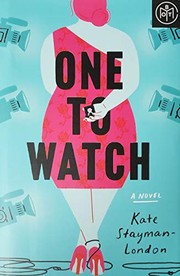
One to Watch
2,478-word summary 11 min read 432 pages in the book
- First published
- 2020
- Publisher
- The Dial Press
- Pages
- 432
- ISBN
- 9780525510444
Reading options
What's inside (9 sections)
The best scene in One to Watch happens ten years before the main story, in a Paris flea market, and everything else in the book is downstream of it. A shopkeeper named Jeanne drapes a floor-length velvet cape over a shy, plus-size American student and tells her she has been hiding. That is the whole thesis of the novel in one gesture: a woman who has been hiding decides to stop, and the industry that profits from her hiding gets very interested. Kate Stayman-London published it in the United States through The Dial Press, an imprint of Random House, in July 2020, in a 432-page paperback, with Hodder & Stoughton bringing it out in the UK the same year. I read it expecting a light, escapary romance with a plus-size lead, and got something with a sharper argument than that.
Bea and the blog that made her
Bea Schumacher runs a fashion blog out of Los Angeles, OMBea.com, and has half a million followers on Instagram. She writes about clothes, yes, but mostly about the fact that the fashion world has no idea what to do with a body like hers, and about how much easier it is to build an audience on that kind of frustration than to build a career on clothes. The blog pays well enough. The apartment is good. The family is close.
The trouble is that Bea has organized her entire life around not being left. Her own father walked out on the family when she was younger, and her mother later married Bob, a man who stayed and stepped into the gap. Bea's response to the original leaving was to stop wanting anything risky. She has a best friend and roommate, Marin Mendoza, who knows every detail of this, and who is a better comic character than most of the men who will come later.
Ray Moretti is the wound. He was a coworker, years ago, and the two of them orbited each other for a long time without touching. The summer before the novel starts, he was in Los Angeles for a night, and there was a rooftop party and a kiss and then a bed, and in the morning he was gone. He left no number, no note, no explanation. Then his engagement to a woman named Sarah came back into view on social media, and Bea spent months doing the thing where you refresh someone who has already decided you are not worth a notification.
That is the setup, and it explains the decision she makes at the end, which is more surprising than the romance plot suggests.
A rant that becomes a job
Bea watches reality dating shows the way other people watch football, and she watches them with her best friend while live-tweeting the season premiere of Main Squeeze. During a commercial she gets carried away and posts a sharp critique of the show, above all the fact that every woman who has ever been chosen to stand at the finale has been the same size. The rant lands harder than she expects. It goes viral in the way that things go viral now, which means thousands of strangers arriving in her mentions, and a wave of harassment that includes death threats, and a sudden jump in her follower count that she did not ask for and cannot use.
The show's ratings have been sliding, so the change does two things at once for the network. Viewers are angry that Bea said it. Viewers are also watching it more closely than they watched it last year.
A new executive producer named Lauren Mathers offers Bea the starring role. The conversation is frank about the mechanics: the show wants its first plus-size lead, it wants to be talked about, it wants the ratings back, and Bea wants the platform, the reach, and a reason to stop being a woman with opinions about television and start being a woman on television. Lauren is clear that Bea does not have to fall in love. That is the one condition Bea makes her own, and it is the condition the book spends the next four hundred pages testing.
Before the cameras roll, there is pre-production, which is where the book becomes most specific and most fun. Bea bonds with Alison Sommers, the show's plus-size stylist, and the two of them talk about what a woman in a red carpet gown is actually told to do with her body. The internet reacts in real time, which Stayman-London renders as chat windows and comment threads rather than prose, and for the first hour it is a treat.
The premiere and the first three men
The live premiere is a disaster, and it is staged to be one. Lauren has secretly arranged for one of the suitors to walk off stage the moment he meets Bea, purely to create a sympathy beat, and Bea is not warned. She is humiliated in front of a live audience. What saves the evening is that most of the men behave decently, and two in particular stay with her.
Wyatt is a wheat farmer from Oklahoma, kind, unfussy, and steady. Luc is a French chef who introduces himself with a series of lines that land partly because he is good at them and partly because he is French. Bea survives the night, eliminates several men, and the first weeks of her life as a televised romantic heroine begin with a set of competitors and a producer who keeps checking the numbers.
The early episodes are the strongest stretch. On a group yacht date, one man objectifies her body and another offers unsolicited advice about her weight, and Bea handles both with the specific, exhausted competence of a woman who has written a whole blog about this. The man who unsettles her is Asher, a history professor from Vermont who asks, with no cruelty in it, whether she seems to be looking for love at all. It is the accurate question, which is why it lands like a slap. Later that night Luc comes to her room and they share a first kiss over homemade crème brûlée.
Two more dates follow quickly, and they are the clearest statement of what the show can do when it is working. With Sam, a twenty-four-year-old former teacher from New Jersey, she goes to Disneyland and finds easy, funny chemistry. With Asher, she goes to the Los Angeles County Museum of Art, her favorite museum, and he delivers an apology so profane that it cannot be broadcast, which is the only way she learns it is sincere. They dance near a sculpture. He does not kiss her, and she goes home humiliated, because the refusal is not cruelty, it is care, and she is not yet able to tell the difference.
Hometown, Morocco, and the men who were not what they looked like
The show travels to Bea's hometown in Ohio, where the date is a staged prom with Wyatt. Both of them admit they have never been to their own prom, and that shared embarrassment is worth more than the prom itself. Bea tells him the story of her first kiss, which happened roughly once, roughly, and only because her brothers asked a classmate to do it. Then she kisses him slowly, and it is the first kiss in the book that is clearly a choice by both people.
At the family cookout, her sister-in-law pushes her to stop describing herself as unwanted, and her stepfather Bob tells her that building a family means choosing someone. That night she tells Asher she has feelings for him. He explains why he would not kiss her in Los Angeles: he has two children, Gwen and Linus, and he would not risk their hearts until he was sure. It is the right reason, delivered badly, because he lets her sit in uncertainty for a week. Once she knows, they kiss, and the relief is enormous.
Morocco is where the show starts to spend its money. Sam and Bea kiss in a hammam. Luc implies to Asher that he and Bea have slept together, which is either true or a move, and Asher spirals for a day. Bea eliminates Jefferson, a warm, decent man from Missouri, and Jefferson reacts by telling her that none of the men are really interested in her and that the gap she is trying to close is about eighty pounds. He has been saying similar things to the other men, apparently. Bea walks off set crying.
Then the show does something genuinely clever. The four remaining men each come to her room and ask her to keep them, inverting the ritual that has been humiliating her all season. The private week that follows is the most fun stretch of the book: a trip to a farm in Vermont where Asher's twelve-year-old daughter Gwen asks Bea why she should be trusted not to leave the way their mother did, a visit to New Jersey where Sam tells her he is in love with her, which is the first time anyone has said those words to her romantically, and a date with Wyatt, who admits he has never experienced romantic or sexual attraction and offers to stay as a safety net so she can have a happy ending. She wants that, for a second. Then she sends him home and chooses Luc, the risk, over the safety.
Paris, and the ex who came back
Paris is where the book turns on itself. Sam and Asher both refuse to sleep with her, each for his own decent reason, and Bea is left choosing between a man she does not want and a man she does not trust. She spends the night with Luc at a fairytale château outside the city, her first time with anyone since Ray, and the next morning she finds Luc in bed with Lauren. She eliminates him, and the host then announces that Ray has ended his engagement and flown to France to be on the show.
Asher, who has just learned that Bea slept with a man who was engaged at the time, accuses her of lying and compares her to his ex-wife, who cheated on him, and walks. He is wrong, and being wrong does not make it hurt less.
Ray says the things he should have said years ago. He loved her, he was ashamed to be seen publicly with a plus-size woman, and he has been a coward about it for a decade. They kiss in Paris, and it is good, and Bea feels the difference between this and everything else, which is that she does not want it.
On the Pont des Arts she turns down both finalists. Sam gets a gentle speech about helping each other toward their futures rather than sharing one. Ray gets the harder one: she once imagined this moment, and now she wants more than it offers. She becomes the first woman ever to say no to both men on that show, which is a small act of defiance that the book treats as more interesting than a proposal.
The reunion, the museum, and the ring
A month later there is a live reunion show. Bea parts with Ray and Luc properly. Sam is announced as the next Main Squeeze. Asher has not come, but his children have, and from three thousand miles away they make him promise to think about Bea, which is the moment the book earns its ending.
Back in Los Angeles, Bea goes to the museum on a free afternoon and posts an Instagram story. Asher sees it from the airport, and he goes to the museum, and they find each other in the impressionist gallery where they had danced months earlier. He apologises for confusing her situation with his ex-wife's betrayal, and she tells him she chooses him. A year later they live together in Brooklyn with Gwen and Linus, and at a tour of the Vogue wardrobe he gets down on one knee with a ring she had secretly wanted for years, an opal piece with a history of its own.
What the book does well, and where it sags
The achievement here is the voice. Bea is funny in a specific, self-aware way that never turns into a defence of her own size, and the writing carries her blog posts, her texts with Marin, her live-tweeting, and her internal monologue without making them feel like different books. Stayman-London clearly knows the reality television machine from the inside: the manipulated walk-off, the ratings fix, the producers who say they are on your side, the difference between a live finale and a taped one. When the book is funny about that machinery, it is very funny.
The plot of the romance is a formula, though, and the formula shows. The suitors are types assembled to test different theories of intimacy: the hot French chef, the wounded intellectual, the sweet younger man, the safe asexual. Some of them are people. Several of them are arguments.
The screen format is a mixed blessing. The texts and comment threads give the book a texture that a flat third person could not, and they suit a heroine who is a professional curator of her own image. They also stop the prose for long stretches, and the middle of the season, Morocco and the four hometown dates, reads like a list of assignments rather than a story. Ray is the weakest creation in the book. He is a wound, not a man, and when he turns up in Paris to declare his love it feels like a device designed to force a decision at the right moment. And the reunion at the museum is neat, maybe too neat, the same place where the refusal happened now holding the kiss, rescued by two children who are smarter than the adults.
The ending is the part I did not expect and the part I would recommend. Bea does not get swept off her feet, and she does not get proposed to on national television. She gets a choice she makes with her eyes open, and then a life in Brooklyn that involves two teenagers who have every right to be skeptical of her, and a man who spends a year earning the word yes.
Read it for the voice and the argument, which is that being visible is not the same as being wanted, and that the two have been sold to women as the same package for a long time. Skip it if you want a plottier romance, because the engine here is a talk show with a body count.
FAQ
What is One to Watch about?
Bea Schumacher, a plus-size fashion blogger in Los Angeles, is offered the starring role on the reality dating show Main Squeeze after a viral rant about the show's lack of body diversity. She agrees on the condition that she will not fall in love.
Who does Bea end up with?
She turns down both men in the finale, then reconnects with Asher, a history professor with two children, in a museum in Los Angeles. The epilogue has the two of them living together in Brooklyn and engaged.
Is One to Watch part of a series?
No, it is a standalone debut. The Dial Press, an imprint of Random House, published the 432-page US edition in July 2020, and Hodder & Stoughton published the UK edition the same year.
Similar books

The Coincidence of Callie & Kayden
Callie saved Kayden in an alley and meets him again in college, where both must face assault and abuse to learn trust.
2,578-word summary · 11 min read
Before We Were Strangers
Matt waits fifteen years to ask Grace why she left after one college night that shaped them both.
2,386-word summary · 11 min read

Magnolia Parks
London socialite Magnolia Parks and BJ Ballentine keep hurting each other while trying to move on.
2,459-word summary · 11 min read

Dumplin'
Willowdean Dickson enters her town's beauty pageant as a protest and discovers that confidence is harder to keep once she lets someone close.
1,922-word summary · 9 min read

Lick
Evelyn wakes up married to the lead guitarist of Stage Dive after a Las Vegas birthday she cannot remember, and the annulment gets complicated.
1,989-word summary · 9 min read

Ricochet
Lily Calloway tries to stay celibate for ninety days while Loren is in rehab, leaning on Rose, Connor, and Ryke as therapy forces her to face her childhood.
2,575-word summary · 11 min read
Under Locke
Iris Taylor moves to Austin broke and wary, takes a front-desk job at a tattoo shop, and spends the book learning that Dex Locke’s blunt cruelty and unexpected…
2,591-word summary · 12 min read
Bet Me
A sharp actuary agrees to dinner with a charming serial bettor, then spends the next month pretending the wager does not matter.
2,710-word summary · 12 min read
Beneath This Man
Ava returns to Jesse after five days apart and finds his drinking, jealousy, and a hidden deception that changes what she can forgive.
2,341-word summary · 10 min read

The Casanova
Kate Landon's boss is also the pen pal she falls for online, hiding behind fake names, until family secrets and a trip to Paris get in the way.
2,274-word summary · 10 min read

Big Swiss
A transcriptionist for a sex coach falls for one of his clients, the tall Swiss gynecologist she calls Big Swiss, in a funny novel about work and secrets.
2,523-word summary · 11 min read
Marriage for One
Rose marries a cold lawyer to save her coffee shop, then discovers the arrangement was never only business.
2,032-word summary · 9 min read

Rule
A tattoo artist still grieving his twin and the polished girl who has loved him since she was thirteen finally collide one drunken night in Denver.
2,014-word summary · 9 min read
The Road Trip
Two exes squeeze into one small car for the drive to a Scottish wedding, with four years of history and one photograph between them.
2,418-word summary · 11 min read
The No-Show
Three women are stood up on Valentine's Day by the same man, but the timeline is not what it seems. O'Leary's warmest book with a knife in it.
2,127-word summary · 9 min read
Losing It
Bliss plans a one-night stand, then finds her hookup is her professor.
2,195-word summary · 10 min read
Every Last Word
A girl with OCD finds poetry and friends who know her secrets.
2,434-word summary · 11 min read

Collided
Sophie bets she can resist playboy Liam, then pit walls fall.
2,219-word summary · 10 min read

Broken Prince
Reed loses Ella and ruins his name while rivals circle him.
2,356-word summary · 10 min read
To Love Jason Thorn
Childhood friends Olive and Jason reunite when the Hollywood star returns home, fake a romance for the cameras, and face old family wounds before trust turns…
2,506-word summary · 11 min read
This Man
Ava O Shea meets Jesse Ward while designing The Manor House, and their obsessive affair tests her work and limits.
2,209-word summary · 10 min read

Since You've Been Gone
Shy Emily spends summer finishing her vanished best friend Sloane list of thirteen dares, finding Frank, Dawn, and courage.
2,566-word summary · 11 min read
Playing for Keeps
Childhood neighbors Haley and Jason turn a long prank war into a fake relationship that turns real.
2,571-word summary · 11 min read

Love Redesigned
Rival designers Dahlia and Julian restore a Lake Wisteria Victorian while facing grief, family pressure, and old sparks.
2,248-word summary · 10 min read
Hello Stranger
Portrait artist Sadie loses face recognition after brain surgery and must finish a contest piece while falling for two men.
2,210-word summary · 10 min read
Gabriel's Rapture
A professor faces a hearing while Julia fights for her own name in Florence, testing love through distance and work.
2,480-word summary · 11 min read

Effortless
Kiera and Kellan try to build trust after choosing each other, tested by tour life, jealous fans, and Denny's lingering presence.
2,568-word summary · 11 min read

The Takeover
An arrogant CEO and the sharp employee forced to staff his deal trade insults, trips and late nights across a long push-pull, until pride and jealousy force…
2,580-word summary · 11 min read
The Heart Principle
Violinist Anna Sun plans one night with Quan Diep, then faces autistic burnout and family duty after her father's stroke in Hoang's 352-page 2021 Berkley…
2,793-word summary · 12 min read