
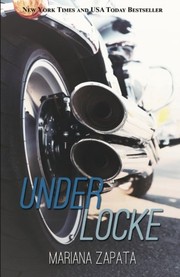
Under Locke
2,591-word summary 12 min read 496 pages in the book
- First published
- 2014
- Publisher
- Mariana Zapata
- Pages
- 496
- ISBN
- 9780990429203
Reading options
What's inside (11 sections)
The first thing Dex Locke does in this book is tell Iris Taylor she is late. She has driven from Florida to Austin, she has found the tattoo shop, she has walked in at four o'clock because four o'clock is when she understood she was expected, and the man behind the counter looks at the clock and then at her and says it anyway. Welcome to Pins and Needles.
I had heard this novel called a comfort read, which is a strange label for a book that opens with a man being casually cruel to a woman with less than eighty dollars. The people who say it are not wrong about the feeling, only about the route: the comfort is in the small domestic things that accumulate around the unkindness.
Four o'clock, and already late
Iris is twenty-four, newly laid off, and out of options. Her mother is dead, her father left years ago, and the only family she can call is Sonny, her older half-brother, who rides with the Widowmakers motorcycle club and who has arranged this job as a favor. Sonny's description of Dex is warm: a reformed sort of boss, easygoing, someone who will look after her. Sonny is describing a different man, or possibly the man he needs Dex to be.
What Iris finds instead is a polished, busy, successful business, nothing like the dangerous den she had braced for, and an owner with a cold stare and a habit of speaking in clipped orders. He rushes her through the booking system and assumes she will absorb the scheduling, deposits, and paperwork of a full shop in an afternoon. She nods and writes things down and understands maybe a third of it.
The job is not the problem. The problem is that she cannot afford to lose it. Zapata is good at this specific arithmetic: the price of a room, the cost of gas, the way eighty dollars turns every small humiliation into something you have to swallow. Iris cannot afford a principled exit, and the book keeps that number in view without turning it into a speech.
Then she asks for help with the accounts, and Dex snaps that she has already made a mess of them. Later she overhears him on the phone describing her as stupid and unreliable. That is the moment the book earns its hook, because it is not a misunderstanding and it is not banter. It is a man with power saying something contemptuous about a woman who is standing close enough to hear it.
She tells Sonny. Sonny calls Dex. And then Iris does the thing I did not expect: she confronts him herself, in the shop, and when he apologizes she refuses to pretend the apology fixed it. He wants the conflict closed on his schedule. She says no. It is a small scene and an important one, because it establishes that she is not going to be grateful for scraps.
His protectiveness arrives early too, and it is as uncomfortable as his temper. He catches her walking home alone at night and is furious about it. The anger is on her behalf, technically. It also treats her as a problem he has been assigned to solve, and Zapata lets both readings sit there.
The men who make room for her
The shop is where the book loosens up. Blake, Slim, and Blue are the artists, and they are the reason the first hundred pages do not suffocate. They tease her, show her where things are, and translate Dex into something manageable without making a production of welcoming her. Blake in particular has the easy warmth of a man who has decided you are fine and does not need to announce it.
The scene that convinced me the book knew what it was doing is the drunk customer. He calls Iris a slur and demands to see Dex. Dex appears, pulls her out of the way, throws the man out, and then, instead of making a speech, sits her down with bread and a soda and waits for her hands to stop shaking. He does not ask if she is all right in a tender voice. He feeds her. It is the first clear look at the language these people speak, and it made me forgive a lot of the earlier coldness, temporarily.
She gets a navel piercing from Dex, which is either a terrible idea or the most obvious thing in the world, and the scene plays like both. Then the crew takes her to Mayhem, the biker bar, and the book does its version of world-building: the noise, the loyalties, the way a room reorganizes itself around who belongs. Outside, a group of unfamiliar bikers studies her on the way to her car. Dex and Slim appear before anything happens. Nothing happens. That is the point, and also the limitation, because the danger in this novel is usually a mood rather than an event.
The drive to Houston
The best section of the book is a road trip. Dex and Slim drive to a tattoo expo in Houston and Iris comes along to work the booth. She watches the artists work and tattoos a tiny heart on Slim, the kind of detail that makes the shop feel inhabited. Zapata is very good at the texture of work: the setup, the waiting, the small talk with strangers who are deciding whether to trust you with their skin.
The drive back is where the book finally sits still. In the truck, Dex talks about his father, an abusive alcoholic, and about the fear that the same thing is in him, waiting. Iris tells him about her own father, who left, and about her mother, who died of breast cancer when Iris was sixteen. She tells him about the soft-tissue cancer she survived, and the scar on her arm she usually hides. He tells her about his childhood and about prison.
This is the emotional center, and it works because Zapata does not make it a confession scene with swelling music. It is two people in a truck at night, trading the worst facts about themselves in flat voices, because flat is the only register available. It is also where I started to understand Dex: a man who learned early that tenderness was a way to get hurt, and who therefore offers care in the form of food, driving, and rage on your behalf.
There is one more piece of information in this stretch, and it lands like a stone in still water: Iris learns her father has another child. Not a rumor, not a maybe. A sibling. The book does not stop to let her process it, which is realistic and also maddening.
Curt, the Reapers, and the debt
Curt, the father, turns up in Austin. He wants ten thousand dollars from Sonny, and when Sonny asks why, Curt will not say. Sonny refuses. Luther, the Widowmakers' president, is drawn into it because Curt has a way of making his problems other people's problems. Around the same time, the Reapers, a rival club with an old grievance, start appearing near Sonny's house.
Then Sonny disappears. Iris finds his phone and a message telling her to contact Dex. Dex organizes a search, and Sonny is found near a park, beaten and concussed. The reason is exactly as stupid and sad as it sounds: Curt borrowed money from the Reapers and did not repay it. Sonny leaves with his friend Trip to go find their father, and he leaves Iris in Dex's care. Dex takes her to his house in the country, which is the first time the book lets us see him at home, and the first time the house feels like a place rather than a backdrop.
I want to be fair to the plot here, because it is the part of the book that gets criticized most, and the criticism is mostly right. The biker material is thin. The Reapers are a threat because the book says they are, not because we spend enough time with them to feel it. The Croatian enforcers who show up later are scarier, but they arrive almost as a correction, as if the book realized the first villains were not doing the job.
Busty's, and the lie she keeps
This is the section where Iris does something genuinely stupid, and the book knows it. She drives alone to Busty's, the San Antonio club where the Reapers gather, and asks their leader, Liam McDonaugh, for more time on her father's debt. It is brave in the way that walking into traffic is brave. Liam kisses her. He hints that the debt could be reduced if she were more receptive to his attention. She gets out of there and then hides the visit from Dex, which is the decision that will cost her.
Liam comes back. He approaches her near Pins with a longer, more coercive version of the same proposition. This time she refuses outright and tells him she is with Dex. It is not a triumphant moment. It is a woman using a man's name as a shield because she does not have a better one, and the book is honest about how little she likes it.
Dex finds out about the first visit and explodes. His anger is not really about the lie. It is about the risk, and about the fact that she walked into a room full of people who could have hurt her. But he explodes in the way he always explodes, which means the fear comes out as contempt, and Iris leaves hurt and angry. Zapata does not resolve it quickly, and I was glad, because the fight is one of the few places the book lets Dex be wrong without immediately handing him a redemption beat.
It is around here that Sonny tells her the rest of it: Curt fathered another child while Iris's mother was ill. The timeline is ugly in a very ordinary way. It reframes the father from a man who left to a man who was absent while still there, which is worse.
Trey, the catalog, and the scar
A customer named Trey asks Iris on a date. He is normal, pleasant, and interested, and the book uses him for exactly one purpose, which is to make Dex move. Dex blocks the invitation and then kisses her in his office. It is jealousy converted into a declaration, and it is the kind of scene this book does better than almost anything else, because the physical charge is built out of a hundred small prior moments rather than sprung on the reader.
Then he brings her a community-college catalog and offers to support her going back to school. That is the gesture that matters. Not the kiss. The catalog. It says he has been paying attention to what she actually needs, and it is the first time he offers her something that does not require her to be in danger.
At a Widowmakers gathering she shows the scar and tells the room about the cancer. Dex is shaken that she kept it from him. What I liked is that he does not turn it into pity. He treats it as information about how tough she is, which is the correct read and also the only read he is capable of. Their relationship becomes sexual around this point, and the book handles it with more patience than the build-up had any right to expect.
Three men, one deadline
Then the shop is attacked. Three masked men come in, knock Blake unconscious, point a gun at Iris, slap her, and tell her that Curt has to repay them by midnight the next day. They are Croatian enforcers, not the Reapers, which means the debt has been sold or escalated or both. Dex is at Mayhem when he sees her face, and for a moment he is ready to throw his life away. She is the one who asks him not to risk prison for her. Blake needs stitches.
Iris blames herself, calls Sonny, and decides to go to Florida to find their father. It is the first time she takes charge of the plot rather than being moved by it, and it arrives late. That is a fair complaint. She spends a long time reacting.
South Florida
Iris and Dex drive to South Florida in Luther's truck. They search motels and biker bars. They visit the cemetery where Iris's mother and grandmother are buried, and there are no flowers and no sign that Curt has ever been there. That scene is quiet and awful in the right way, and it does more for Iris than several chapters of dialogue.
Driving away, she spots Curt's Harley outside a cheap motel. He opens the door with a younger woman behind him, older than Iris expected, diminished and still ready to argue. He sees her bruises and assumes Dex did it. That is the measure of him: his first instinct is to accuse the man standing next to her, because that is the kind of man he is.
He admits he owes twenty thousand dollars and has eighteen. He tries to defend his past and to object to Dex, and Iris refuses to let him change the subject. She reminds him that Sonny was beaten, that Blake was injured, that she was threatened. He sees the cancer scar. It does not restore anything. She demands his keys.
At a pizza restaurant he says he can raise the rest by gambling. Iris ends their relationship in plain terms, and Dex punches him when he insults her. It is not a dignified scene and it is not meant to be. They find fifteen thousand dollars hidden in his motel room and sell the Harley through a contact to cover the Croatian debt. Dex has already dealt with the Reapers through the Widowmakers. Iris does not give Curt her savings, which is the detail I keep coming back to, because it would have been so easy for the book to let her be noble.
What holds, and what grates
Back home, Iris offers to repay Dex. He refuses cash. He asks her to enroll in college and take over the accounting for the shop and the club. She tells him she loves him, and he answers with the same certainty he has shown throughout, which is either deeply satisfying or slightly alarming depending on your tolerance for a man who is never ambiguous about what he wants.
The book is 496 pages, self-published in 2014, and it feels its length. There are stretches in the middle where the plot idles and the same argument between Iris and Dex gets replayed with different furniture. Dex's early cruelty is hard to forgive, and Zapata asks for it largely on the strength of his later protectiveness. The danger plot is thinner than the romance by a wide margin. Iris is passive for longer than is comfortable. None of that is enough to sink it, but none of it is nothing.
What the book has is patience. The domestic detail is the point: the shop, the truck, the food, the catalog, the way people show love by handling logistics. If you read for suspense you will be bored. If you read for the slow accumulation of trust between two difficult people, it does what it promises, and it takes its time doing it.
FAQ
Is Under Locke a motorcycle club romance?
It is set around a tattoo shop and the Widowmakers motorcycle club, but the club plot stays secondary. The central story is the slow relationship between Iris Taylor and Dex Locke.
Can Under Locke be read as a standalone?
Yes. It has its own couple and a complete ending, though it shares a fictional world with some of Mariana Zapata's other books.
Why is Dex so rude to Iris at the start?
He is guarded, used to giving orders, and shaped by a violent childhood that the novel reveals later. The book does not excuse the cruelty, and Iris makes him answer for it.
Similar books

Ricochet
Lily Calloway tries to stay celibate for ninety days while Loren is in rehab, leaning on Rose, Connor, and Ryke as therapy forces her to face her childhood.
2,575-word summary · 11 min read

Wait for It
A twenty-nine-year-old hairstylist raising her two nephews meets her new neighbor, a former Navy man mid-divorce, in Zapata's slow-burn romance about trust and…
2,154-word summary · 10 min read

All Rhodes Lead Here
Grieving Aurora moves to Colorado to fix a farmhouse, finding slow healing with her gruff older neighbor Tobias Rhodes.
2,249-word summary · 10 min read

Kulti
Pro soccer player Sal Casillas gets childhood idol Reiner Kulti as assistant coach, and a tense season turns into slow friendship.
2,544-word summary · 11 min read

The Wall of Winnipeg and Me
Vanessa Mazur quits assisting football star Aiden Graves, until he returns with a marriage proposal that changes both their plans.
3,049-word summary · 14 min read

Lick
Evelyn wakes up married to the lead guitarist of Stage Dive after a Las Vegas birthday she cannot remember, and the annulment gets complicated.
1,989-word summary · 9 min read

Beneath This Man
Ava returns to Jesse after five days apart and finds his drinking, jealousy, and a hidden deception that changes what she can forgive.
2,341-word summary · 10 min read

Act Your Age, Eve Brown
Eve Brown crashes into a Lake District bed and breakfast, breaks the owner's arm, and talks her way into his kitchen. A grumpy-sunshine romance about work,…
2,474-word summary · 11 min read

Two by Two
Sparks's twentieth novel turns from first love to a marriage breaking up: Russell Green loses his wife and his job, then rebuilds his life around his…
2,192-word summary · 10 min read

The Casanova
Kate Landon's boss is also the pen pal she falls for online, hiding behind fake names, until family secrets and a trip to Paris get in the way.
2,274-word summary · 10 min read

One to Watch
A plus-size fashion blogger takes the lead role on a reality dating show to prove she belongs on television, and finds she might want what the cameras offer.
2,478-word summary · 11 min read

At First Sight
Jeremy and Lexie are married and expecting a baby when anonymous emails tell him the child may not be his.
2,317-word summary · 10 min read

2 States: The Story of My Marriage
A Punjabi boy from Delhi and a Tamil Brahmin girl from Chennai meet at IIM Ahmedabad, and turn a love marriage into a campaign to convince two families.
2,634-word summary · 12 min read

Delilah Green Doesn't Care
Delilah returns to Bright Falls to photograph her stepsister's wedding and falls for Claire, a bookstore owner and single mother, while a cruel bet threatens…
2,315-word summary · 10 min read

Rule
A tattoo artist still grieving his twin and the polished girl who has loved him since she was thirteen finally collide one drunken night in Denver.
2,014-word summary · 9 min read
Losing It
Bliss plans a one-night stand, then finds her hookup is her professor.
2,195-word summary · 10 min read

Broken Prince
Reed loses Ella and ruins his name while rivals circle him.
2,356-word summary · 10 min read

The Coincidence of Callie & Kayden
Callie saved Kayden in an alley and meets him again in college, where both must face assault and abuse to learn trust.
2,578-word summary · 11 min read

Mr. Wrong Number
After a fire and a wrong-number text, Olivia falls for a stranger who is closer than she thinks in this funny Omaha rom com.
2,248-word summary · 10 min read

Good Girl Complex
A people-pleasing college girl moves to beach town Avalon Bay and falls for a local boy who distrusts her whole world.
2,225-word summary · 10 min read
Before We Were Strangers
Matt waits fifteen years to ask Grace why she left after one college night that shaped them both.
2,386-word summary · 11 min read

Vision in White
Wedding photographer Mac Elliot does not believe in lasting love. Steady teacher Carter Maguire plans to change her mind. First in the Bride Quartet.
2,167-word summary · 10 min read

The Last Letter
Ella trades letters with soldier Chaos, then her brother Ryan death brings Beckett to Telluride with a hidden name, sick Maisie, and a love tested by truth.
2,559-word summary · 11 min read

After Ever Happy
Tessa and Hardin face family truths and tragedy before wedding.
2,373-word summary · 11 min read
This Girl
Honeymoon retelling as Will recalls first love, classroom ban, loss, fights, and vows that stick.
2,526-word summary · 11 min read

The Friend Zone
Kristen will not risk pregnancy, Josh wants kids, and their friends only plan keeps failing.
2,039-word summary · 9 min read

The Sweetest Oblivion
Sheltered Elena Abelli catches the eye of feared made man Nicolas Russo after her sister flees an arranged match.
3,342-word summary · 15 min read

Corrupt
College student Rika Fane faces Michael Crist and his friends three years after Devil's Night put them in prison.
2,870-word summary · 13 min read

Reflected in You
Eva and Gideon deepen their obsessive love while facing past abuse and public exposure.
2,587-word summary · 11 min read