
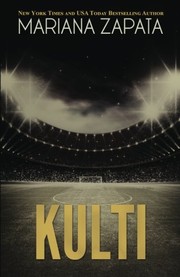
Kulti
2,544-word summary 11 min read 494 pages in the book
- First published
- 2015
- Publisher
- Mariana Zapata
- Pages
- 494
- ISBN
- 9780990429210
Reading options
What's inside (8 sections)
I came to Kulti late, after friends wore me down. They kept saying Mariana Zapata writes the slowest burn in romance and makes you grateful for it. I had already read her skating book and her football book, so I knew her pattern. A capable heroine with money worries, a quiet man with a reputation, months of friction before anything soft happens. Soccer was the one sport I had not tried from her, and I follow the womens game on and off, so this felt like the right next door to open.
Kulti was first published in 2015. Zapata self published it under her own name, Mariana Zapata, and the paperback edition tied to ISBN 9780990429210 runs 494 pages. That matters because the book feels like an early self published doorstopper in the best way. Long season, full roster of teammates, family meals, sore legs, extra jobs. Later reissues exist, including a Headline paperback, but the story itself belongs to that 2015 original about a womens pro team in Houston trying to get through one more year.
Sal Casillas is twenty seven, a professional soccer player who grew up idolizing Reiner Kulti. He was the German international star with posters on her bedroom wall. She wrote him fan letters as a kid. She pictured marrying him and having super athletic soccer babies, the way kids do when admiration has no limits. Then life added a wrinkle. Years before the book opens, a tackle by Kulti injured her older brother Eric badly enough to change his path in the sport. Sal still loves the game Kulti played. She no longer loves the idea of meeting him.
Then her Houston team hires Kulti as an assistant coach for the season. That setup is the whole engine. Idol becomes coworker. Legend becomes the guy who watches practice with his arms crossed and says almost nothing.
The girl who papered her walls
Sal is easy to root for because her life is specific without being miserable. She plays midfield, runs hard, studies film, takes knocks. She lives with her dad in Houston in a house that feels lived in. Cooked food, loud television, family friends dropping by. Her dad adores soccer and adores Kulti in the abstract, the way a longtime fan does. Her mom is gone from the picture, which leaves Sal and her dad and her brother in a tight triangle. Money is tight in the way it often is in womens sports. Sal loves playing, but the paycheck does not stretch far enough, so she does landscaping work on the side to fill gaps. Mowing, hauling, sunburn. She comes to practice already tired some days and stays late anyway.
What I appreciated right away is that Sal has stage fright about everything except soccer. Put her on the field and she is loud, direct, willing to argue for the ball. Put her in front of reporters and she freezes, says the wrong thing, blushes through it. Early in the book her coach pushes her to handle a press event, and it goes badly in a very human way. She stumbles, the cameras catch it, teammates tease her. That small humiliation sets the tone. She will be visible all season whether she wants to be or not, because Kulti arriving makes every practice feel like a media day.
Her friendships on the team give the locker room texture. She has a couple of close teammates she eats with, complains with, trades rides with. They talk about minutes, about coaches who play favorites, about dating, about whose knees are holding up. Nothing here feels like a glossy pro league. It feels like a working league. Ice bags, cheap hotels, long bus rides, tape everywhere. Sal wants more minutes and a stable contract. She wants her body to hold. She wants to stop feeling twelve years old whenever Kulti walks past.
The brother history sits under all of it. Eric does not appear on every page, but his injury shadows Sal opinion of Kulti. She grew up watching Kulti brilliance. She also grew up watching what one hard challenge can cost a family. So when people ask if she is excited to be coached by her hero, she does not have a clean answer. Yes, and no, and leave me alone about it. That mixed feeling drives her choices for the first third. She does not fawn. She watches.
The ghost on the sideline
Kulti arrives as a rumor first, then as a silent man at the edge of the field. Retired now, older, heavier with whatever ended his playing days, he does not look like the explosive player from Sal childhood tapes. He watches. He takes notes or pretends to. He answers questions with one or two words. Players who hoped for stories and drills get shrugs. Sal, who once knew his stats by heart, finds herself irritated within days.
It would be easy to paint him as mysterious and hot and leave it there. Zapata does something more annoying and more true. She makes him rude in the specific way withdrawn people can be rude. He ignores greetings. He walks past Sal father at a team event without stopping, which Sal takes personally because her dad lit up at meeting him. He offers no feedback after sessions where feedback was the whole point of hiring him. The team starts joking about it, then stops joking because it affects training. If your assistant coach will not coach, practices thin out. People stand around. Energy drops.
Sal tries courtesy first. She says hello. She asks a soccer question she actually wants answered. He gives her almost nothing. I winced reading those scenes because they match how real hero meetings often go. Sal absorbs it for a while. Then she stops.
Calling him out
The turn comes when Sal stops performing admiration and starts demanding basic professionalism. She confronts him about his distance, not in a grand speech but in sharp, tired exchanges after training. She tells him that ignoring players is not coaching. She tells him that snubbing her dad cost him any benefit of the doubt from her. She is not cruel. She is blunt in the way people get when they are overworked and embarrassed.
I found those confrontations satisfying because Sal does not ask him to be her hero. She asks him to do his job. That distinction lets the book grow out of fan fiction territory into something adult. She separates the poster from the paycheck. You can be a legend and still be a poor assistant coach this week. Fix that part first.
Kulti responds badly at first, then slightly less badly, then with something like respect. He is a man used to being either worshipped or blamed, and Sal does neither for long. She argues, then walks away to ice her shins. He watches her go. The next day he offers a small correction on her positioning. It is not warm, but it is useful. She takes it and uses it in a scrimmage. He notices she used it.
Around the same time, Sal sees cracks in his wall that have nothing to do with soccer. He drinks too much one night and she ends up helping him get home safely. No glamour in the scene. Just a big man being quiet and sad and difficult to steer into a car. She does not romanticize it. She finds it worrying and a little pathetic, and she tells him so later. He does not apologize with flowers. He shows up to work the next day and actually coaches for an hour. Progress in this book is measured in drills explained and cones moved, not speeches.
Family keeps pulling them together. Sal dad remains thrilled that Kulti is around, which embarrasses Sal. She tries to shield her dad from another snub. Kulti starts to stay a minute longer and answers her dad questions about old matches with more patience than he shows at the field. Sal watches him be gentle with her dad and gets confused. It is easier when he is simply awful.
Rides, food and late talks
The middle of Kulti is long, and deliberately so. After the early fights, Sal and Kulti settle into a working truce that slowly becomes a friendship. Shared rides after late sessions. Takeout eaten on tailgates. Extra passing drills when the field is empty. Time at youth camps where both of them are better with kids than with adults. These chapters do not race. They accumulate.
This is where Zapata is strongest. She writes work as intimacy. Kulti starts coaching Sal in earnest, and his eye is good. He spots that she hesitates half a beat before a tackle she should win. He tells her to trust her first read. He has her repeat a pattern until her legs memorize it. Sal, who has been coached politely for years, responds to being pushed hard by someone who clearly knows the game. Her form sharpens. She plays with less fear. Teammates notice.
Off the field, Kulti thaws in fragments. He remembers small things she mentions, like how she takes her coffee or which landscaping job wrecked her back that week. He teases her about her terrible taste in music. She teases him about his terrible social skills. They develop a private shorthand that feels earned because we watched it form over dozens of ordinary moments. He calls her by a German pet name that means little snail, which sounds odd on paper and plays sweet in context because he uses it when she is being stubborn and slow to accept help. She pretends to hate it. She does not hate it.
Sal family life deepens the warmth. Her dad adopts Kulti the way soccer dads adopt anyone who will talk tactics over grilled meat. Eric calls sometimes, and those calls are tenser. The book lets that history sit without forcing a courtroom scene. Guilt lives in actions here. Extra rehab tips. A quiet question about how Eric is moving now.
Money pressure never leaves Sal side of the story. Landscaping in Houston heat after full training is brutal. Sal keeps at it because she needs the cash. Kulti sees it and disapproves, from a coach view that she is wearing out her legs. They argue about it. She tells him bills do not care about freshness for Saturday. He has no answer.
If you love banter, this stretch delivers. Sal narrates in first person with a dry, self mocking voice. She replays her own awkward comments and groans. The humor comes from embarrassment and stubbornness, not polished lines.
The romance itself stays off center for a long while. Both of them know the rule, spoken or not. Players and coaches do not mix without consequences. So they call it friendship and protect it fiercely, even as it starts to look like more to outsiders.
When friendship looks like favoritism
No sports romance can avoid the optics problem, and Kulti does not dodge it. As Sal and Kulti grow closer, teammates notice. Who gets extra drills. Who rides together. Who defends whom in film review. Even when help is fair, it can look unfair. Sal, who has worked for every minute, hates the idea that people might credit Kulti for her form. Kulti, who knows how locker rooms talk, pulls back whenever gossip spikes, which confuses Sal because his distance feels like punishment after weeks of steady support.
Management pressure adds weight. A player dating a coach, or seeming to, gives everyone an excuse to question decisions. Zapata handles this without turning the team into villains. Some teammates are supportive. Some are wary.
Sal gets targeted for a possible trade in the back half, and her contract security wobbles. Kulti intervenes in ways that risk his own standing, offering to step aside from certain duties so she can stay on the field without an asterisk. He chooses her career over his comfort.
That choice forces both of them to name what they have been circling. They talk, badly at first, then plainly. Neither speech is smooth. Both carry the stiffness of people who are better with drills than declarations. I believed it for that reason.
The late reveal that Kulti kept Sal childhood fan letters lands hard, and readers will split on it. Sal learns he held onto those earnest kid notes all those years. Zapata frames it as Kulti sentimentality hidden under reserve rather than as a plan. Sal decides what it means to her, which is the right call.
The season ending brings a playoff push, lineup shuffles, a benching that stings, and a final stretch where Sal has to perform while her personal life is under a microscope. Europe comes up as a possible next step. Kulti does not decide for her. He lays out what he knows about playing abroad and leaves the choice with her.
What holds up and what sags
What holds up best is Sal voice and the slow change in Kulti from obstacle to partner. Sal works, she doubts herself, she apologizes when she snaps, she shows up the next day. Kulti learns to coach out loud, to stay after to explain, to ask about Eric without flinching. The book earns their ending because it shows labor. Hundreds of passes, rides, meals, corrections.
The soccer detail also holds. Training load, minor injuries, tape, ice, film, set piece reps. Sal landscaping double life becomes the clearest proof of her priorities. She will do tired, sweaty work to keep playing the game she loves.
What sags is length and repetition. At almost five hundred pages, the middle repeats its beats. I skimmed some training chapters because the pattern locked in early. Readers who mainline slow burn will not mind. Readers who want plot turns every fifty pages may stall around the sixty percent mark.
Kulti himself will divide readers, and fairly so. Early behavior that the book frames as reserve reads as plain rudeness for a long stretch. Growth later does not erase those scenes, and Zapata does not ask you to excuse them fully. If you need male leads to be decent from page one, this will grate.
A note on content and fit. This is an adult contemporary romance with open door scenes later, strong language, and heavy sports injury talk. It deals with sibling injury and guilt, money stress, media scrutiny, and workplace gossip. No cliffhanger. The ending gives Sal and Kulti a committed future and leaves her career choice in her own hands. The book never asks Sal to quit to keep the man.
If you are new to Zapata, Kulti is a fair entry point, though not the tightest. Start here if you want soccer, Houston heat, family meals, and banter that builds over months. I read Kulti after her skating and football books and was glad I did. I knew to trust the pace.
For me the image that stays is Sal finishing a landscaping job with grass on her socks, driving straight to training, and finding Kulti already there moving cones into place. No speech. Just cones, and water bottles, and an extra half hour neither of them had to give.
FAQ
When was Kulti first published?
It was first published in 2015. Mariana Zapata self published it, and the paperback edition runs 494 pages.
Is Kulti part of a series?
No. Kulti is a standalone sports romance. You can start here with no prior Zapata books.
Is the coach player dynamic a big part of the story?
Yes. Sal is 27 and Kulti is an older retired star serving as her assistant coach. Much of the tension comes from that uneven work setup.
Similar books

From Lukov with Love
Stalled skater Jasmine pairs with rude champion Lukov for one last season built on 5 a.m. ice.
2,013-word summary · 9 min read

Under Locke
Iris Taylor moves to Austin broke and wary, takes a front-desk job at a tattoo shop, and spends the book learning that Dex Locke’s blunt cruelty and unexpected…
2,591-word summary · 12 min read

Wait for It
A twenty-nine-year-old hairstylist raising her two nephews meets her new neighbor, a former Navy man mid-divorce, in Zapata's slow-burn romance about trust and…
2,154-word summary · 10 min read

All Rhodes Lead Here
Grieving Aurora moves to Colorado to fix a farmhouse, finding slow healing with her gruff older neighbor Tobias Rhodes.
2,249-word summary · 10 min read

The Wall of Winnipeg and Me
Vanessa Mazur quits assisting football star Aiden Graves, until he returns with a marriage proposal that changes both their plans.
3,049-word summary · 14 min read

Ricochet
Lily Calloway tries to stay celibate for ninety days while Loren is in rehab, leaning on Rose, Connor, and Ryke as therapy forces her to face her childhood.
2,575-word summary · 11 min read

My Dark Romeo
A debutante ball kiss traps Dallas Townsend in a marriage to Romeo Costa, a man who wants her as leverage in a war against his father and her fiance.
2,530-word summary · 11 min read

The Ex Talk
Two rival public radio producers pretend to be exes for a dating show, then fall for each other while the lie grows.
2,389-word summary · 11 min read

There Are No Saints
Two rival artists circle a struggling San Francisco painter. Cole Blackwell wants her, Alastor Shaw wants her dead. Book one of the Sinners duet.
2,190-word summary · 10 min read

The Predator
Coder Morana Vitalio and mob enforcer Tristan Caine chase stolen software while a case of missing girls from twenty years back catches up with them both.
2,296-word summary · 10 min read

The Casanova
Kate Landon's boss is also the pen pal she falls for online, hiding behind fake names, until family secrets and a trip to Paris get in the way.
2,274-word summary · 10 min read

Indigo Ridge
A new police chief in a Montana town meets the founding family's eldest son in a bar, and one night later a body turns up under their cliff.
2,763-word summary · 12 min read
Pestilence
Firefighter Sara Burns shoots the Horseman Pestilence and discovers he cannot die. Taken captive, she rides with him as his plague sweeps the world.
2,508-word summary · 11 min read

The Kiss Thief
Promised to one man, taken by another, Francesca must choose in Chicago.
2,545-word summary · 11 min read

The Dare
Dared to seduce Conor, Taylor fakes dating him and feels it turn real.
2,371-word summary · 11 min read

Broken Prince
Reed loses Ella and ruins his name while rivals circle him.
2,356-word summary · 10 min read


My Killer Vacation
A teacher and a bounty hunter share a Cape Cod rental with a corpse and a growing attraction.
2,625-word summary · 12 min read

Below Zero
Stranded at an Arctic station, NASA engineer Hannah is rescued by rival Ian, and a storm forces them to face old grudges and attraction.
2,555-word summary · 11 min read

The Cheat Sheet
Best friends Bree and NFL star Nathan fake date for three weeks after her drunken confession goes viral.
2,401-word summary · 11 min read

Flawless
Pro bull rider Rhett Eaton is benched by scandal, and his agent's daughter Summer must keep him in line in Chestnut Springs.
2,484-word summary · 11 min read

King of Wrath
Billionaire Dante Russo enters an arranged engagement with Vivian Lau and control slips into feeling.
2,975-word summary · 13 min read

Austenland
A New York graphic designer obsessed with Mr. Darcy inherits a trip to a Jane Austen theme park, where the fantasy of Regency romance collides with the men…
2,030-word summary · 9 min read

Lick
Evelyn wakes up married to the lead guitarist of Stage Dive after a Las Vegas birthday she cannot remember, and the annulment gets complicated.
1,989-word summary · 9 min read

Blood Bonds
Oleander is chained in a Resistance camp, and her five Bonds have to find her before Silas Davies finishes what he started in this third Bonds that Tie book.
2,018-word summary · 9 min read

The Bookshop on the Corner
A Birmingham librarian loses her job, buys a van, and moves to the Scottish Highlands to run a mobile bookshop. Warm and bookish, with uneven pacing.
2,557-word summary · 11 min read

Bet Me
A sharp actuary agrees to dinner with a charming serial bettor, then spends the next month pretending the wager does not matter.
2,710-word summary · 12 min read

Beneath This Man
Ava returns to Jesse after five days apart and finds his drinking, jealousy, and a hidden deception that changes what she can forgive.
2,341-word summary · 10 min read

Act Your Age, Eve Brown
Eve Brown crashes into a Lake District bed and breakfast, breaks the owner's arm, and talks her way into his kitchen. A grumpy-sunshine romance about work,…
2,474-word summary · 11 min read

Two by Two
Sparks's twentieth novel turns from first love to a marriage breaking up: Russell Green loses his wife and his job, then rebuilds his life around his…
2,192-word summary · 10 min read