
Austenland
2,030-word summary 9 min read 208 pages in the book
- First published
- 2007
- Publisher
- Bloomsbury USA
- Pages
- 208
- ISBN
- 9781596912854
- Series
- Austenland (#1)
Reading options
What's inside (8 sections)
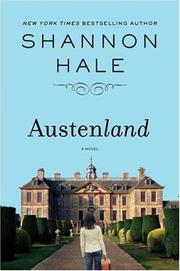
Austenland is a book for people who have watched the 1995 Pride and Prejudice miniseries more times than they will admit. Shannon Hale's novel, published by Bloomsbury in 2007, is about a woman who is so obsessed with Mr. Darcy that she has ruined her real love life, and who gets a chance to live inside the fantasy for three weeks. It is a romantic comedy, a parody of Austen fandom, and a surprisingly honest book about the difference between wanting a story and wanting a person.
The premise is a gift. Jane Hayes is thirty-two, a graphic designer in New York, and secretly in love with Colin Firth's Darcy. She has a cardboard cutout of him in her closet. She has a rule against dating men who do not measure up. She knows this is ridiculous, and she cannot stop. When her great-aunt Carolyn dies, she leaves Jane a trip to Pembrook Park, a Jane Austen-themed resort in the English countryside where guests dress in Regency clothing and actors play the roles of eligible gentlemen, stern aunts, and helpful servants.
Jane decides to go, mostly because she has nothing better to do. She tells herself that this will be her last romantic fantasy, and that after the trip she will give up on Darcy and settle for a real man. That plan lasts about five minutes after she arrives.
Pembrook Park
Pembrook Park is run by Mrs. Wattlesbrook, a woman who takes the Regency era very seriously. The rules are elaborate. Guests must stay in character. They must not use modern technology. They must not discuss the outside world. They must wear the clothes, attend the dinners, and participate in the social rituals of the period. Mrs. Wattlesbrook makes it clear that Jane, who did not pay for the trip herself, is not their usual type of customer.
Jane is assigned the identity of Miss Jane Erstwhile. She is given a pretend aunt, Aunt Saffronia, and a pretend uncle, Lord Templeton. She meets the other guests, including Miss Charming, a wealthy woman who is very good at the game, and two actors, Colonel Andrews and Mr. Nobley. Andrews is jolly and flirtatious. Nobley is brooding, arrogant, and rude, which means he is obviously the Darcy figure.
Hale has a lot of fun with the mechanics of the resort. The actors are not just performing for the guests. They are managing them, steering conversations, creating dramatic moments, and making sure everyone gets the experience they paid for. The guests are also performing, trying to be the version of themselves that fits the story. The whole place is a machine for producing romance, and Jane is both a customer and a critic of the machine.
The comedy comes from the collision between Jane's modern sensibility and the Regency rules. She smuggles in a cell phone. She makes sarcastic comments that do not fit the period. She keeps noticing the artificiality of the setup, even as she gets swept up in it. Hale is affectionate toward Austen fans, but she is also willing to poke fun at them. Jane's obsession is not presented as a harmless quirk. It is a way of avoiding intimacy, and the book knows it.
Martin
Jane meets Martin Jasper, the gardener, early in her stay. He is not part of the fantasy. He is a real person, or at least he seems to be. He breaks the rules to talk to her, and he is rude in a way that feels honest rather than performed. Jane is drawn to him because he represents an escape from the artifice of Pembrook Park. He is the anti-Darcy: working class, blunt, and unimpressed by the whole enterprise.
Their relationship is the book's reality check. Jane begins to think that maybe the answer is not a Regency gentleman but a real man with dirt on his hands. She meets Martin in the servants' quarters, and they start a secret romance. It is exciting because it feels like a transgression. It is also convenient, because it lets Jane believe she is choosing reality over fantasy.
Then Martin cuts it off. He says he is worried that his involvement with her will cost him his job. Jane is hurt and confused. She does not know that Martin is an actor, and that his job is not what she thinks it is. The reveal comes later, and it changes the meaning of everything that came before. Martin was not a real alternative to the fantasy. He was another part of the performance, and he reported back to Mrs. Wattlesbrook about Jane's feelings.
That twist is the book's sharpest point. Jane thinks she is rebelling against the artificial world by falling for the gardener, but the gardener is also on the payroll. There is no outside. The whole estate is a stage, and even the people who seem to be outside the story are inside it.
Nobley
Mr. Nobley is the Darcy figure, and Hale has a good time making him insufferable. He is cold, dismissive, and constantly correcting Jane's behavior. He tells her she is not taking the experience seriously. He criticizes her manners. He is, in other words, exactly the kind of man that Austen's heroines are supposed to reform.
But Nobley is also an actor, and the book is careful about the difference between the role and the person. His real name is Henry Jenkins. He has a past, including a divorce. He is not a brooding Regency gentleman. He is a man doing a job, and the job requires him to be unpleasant in a very specific way. Jane starts to see glimpses of the person behind the performance, and that is what makes him interesting.
The middle of the book introduces Miss Amelia Heartwright, a guest who has been to Pembrook Park before, and Captain George East, a new actor. It becomes clear that Amelia and East have a history. They were engaged, and her family disapproved, and they were forced apart. Nobley tells Jane the story, and Jane starts to see him as more than a caricature. He is capable of empathy. He notices things. He is not just the role he is playing.
The other guests are less developed. Miss Charming is a comic foil, and Colonel Andrews is a source of broad humor. The book is short, and it does not have room for a large cast. That is fine. The focus is on Jane, Martin, and Nobley, and the supporting characters exist to keep the plot moving.
The ball
The climax is a ball, because of course it is. Jane and Nobley are cast as a couple in a play, and the rehearsals force them to spend time together. The lines between acting and feeling start to blur. Nobley confesses his love to Jane and proposes. Jane refuses. She cannot tell whether he is speaking as Nobley or as Henry, and she does not want to be proposed to by a character.
She finds Martin and plans to leave Austenland with him. She has chosen reality, or what she thinks is reality. Then, in the carriage ride to the airport, Amelia explains that Nobley was the one who saved Jane after her cell phone was discovered. Mrs. Wattlesbrook reveals that Martin was an actor too, and that he reported back to her about Jane's relationship with him. Jane's rebellion was part of the script.
Martin finds her at the airport. So does Nobley. They fight over her, and Jane walks away from both of them. It is a good moment. She refuses to be a prize in someone else's story. She gets on the plane alone, and then Nobley sits down beside her. He introduces himself as Henry, not Mr. Nobley, and confesses his love again, this time in his own words. He flies home with her to New York. Jane puts her Pride and Prejudice DVDs out for all to see.
The Austen machinery
Hale is not just borrowing Darcy. She is borrowing the whole apparatus of an Austen novel: the country house, the social rules, the eligible men, the woman who has to learn to see clearly before she can choose. Pembrook Park is a literalization of that apparatus. It gives Jane the setting and the suitors, but it cannot give her the inner change that makes an Austen heroine worth reading. That has to come from her.
The novel also has fun with the idea that Austen's world was never as tidy as the adaptations make it seem. The real Regency was full of money problems, restricted options for women, and social cruelty. Pembrook Park smooths all of that into a costume party. Jane notices the smoothing, and her discomfort is part of the joke. She wants the fantasy, but she also knows that the fantasy is built on exclusion. The servants are invisible. The rules are arbitrary. The eligible men are employees.
The 2013 film adaptation, directed by Jerusha Hess and starring Keri Russell, captures the book's tone well, though it simplifies the ending and adds some broader comedy. The novel is better at the internal stuff, especially Jane's embarrassment about her own desires. It is also better at the ambiguity of the resort. In the book, you are never entirely sure whether Pembrook Park is a harmless game or a machine that exploits the people who work there. That ambiguity is what gives the comedy some bite.
What the book is saying about Austen fandom
Austenland is a love letter to Jane Austen and a critique of the way fans use her. Jane's obsession with Darcy is not just a preference. It is a fantasy of being chosen by a man who is difficult, superior, and secretly tender. The fantasy is appealing because it promises that love will be worth the humiliation. Jane has spent years waiting for a Darcy, and she has missed the ordinary men who might have loved her.
The book's answer is not that Jane should give up on Austen. It is that she should stop expecting a novel to happen to her. Henry is not Darcy. He is a divorced actor with a job. He is kind, but he is also a person with his own problems. The romance works because Jane chooses him as a person, not as a character. The final scene, where she displays her DVDs, is a joke about her old shame, but it is also a statement that she no longer needs to hide what she loves.
Hale's prose is light and funny, and the book moves quickly. It is a romantic comedy, and it follows the beats you expect: the meet-cute, the misunderstanding, the grand gesture, the choice between two men. The pleasure is in the execution. Hale knows the Austen tropes well enough to play with them, and she knows that the best parody is affectionate.
The weaknesses are the ones that come with the genre. The ending is rushed. Martin's betrayal is resolved too quickly, and the final reconciliation with Henry happens in a few pages. Some of the supporting characters are one-note. The book is also very white and very straight, even for a 2007 romantic comedy. It is not trying to be a broad social novel, but the narrowness of the world is noticeable.
Still, Austenland is charming. It is the kind of book you read in an afternoon and recommend to a friend who has also watched the 1995 miniseries too many times. It understands that fandom is a way of managing desire, and that the desire underneath is not really for a man in a wet shirt. It is for a story where you are loved, and where the ending is happy. The book's modest proposal is that you can have that without losing yourself, as long as you are willing to meet the other person halfway.
I picked it up expecting a fluffy parody and got a few genuine laughs and a surprisingly sharp point about the stories we use to avoid our own lives. That is more than most romantic comedies manage.
FAQ
What is Pembrook Park in Austenland?
It is a Jane Austen-themed resort in the English countryside where guests dress in Regency clothing and actors play relatives, suitors, and servants to create an immersive romantic fantasy.
Who does Jane end up with in Austenland?
She ends up with Henry Jenkins, the actor who plays Mr. Nobley. He introduces himself by his real name on the plane and follows her home to New York.
Is Austenland connected to Pride and Prejudice?
It is a comedic homage to Pride and Prejudice and its 1995 BBC adaptation. Jane's obsession with Colin Firth's Mr. Darcy drives the plot, but the novel is an original story.
Similar books
More from Austenland first, then related titles.
Bet Me
A sharp actuary agrees to dinner with a charming serial bettor, then spends the next month pretending the wager does not matter.
2,710-word summary · 12 min read

Size 12 Is Not Fat
Former teen pop star Heather Wells investigates two dorm elevator deaths while juggling her ex, her crush, and a size-12 wardrobe.
2,805-word summary · 12 min read
The Ex Talk
Two rival public radio producers pretend to be exes for a dating show, then fall for each other while the lie grows.
2,389-word summary · 11 min read
Mr. Maybe
Libby Mason wants a rich husband, but the wealthy man who proposes is dull and the broke writer she cannot forget is not offering forever.
2,322-word summary · 10 min read
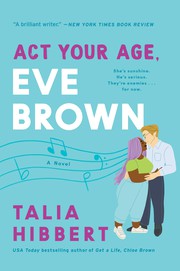
Act Your Age, Eve Brown
Eve Brown crashes into a Lake District bed and breakfast, breaks the owner's arm, and talks her way into his kitchen. A grumpy-sunshine romance about work,…
2,474-word summary · 11 min read
This Time Next Year
Two women give birth minutes apart on New Year's Day 1990, and one takes the other's lucky name. Thirty years on, their children meet again.
2,194-word summary · 10 min read

2 States: The Story of My Marriage
A Punjabi boy from Delhi and a Tamil Brahmin girl from Chennai meet at IIM Ahmedabad, and turn a love marriage into a campaign to convince two families.
2,634-word summary · 12 min read
Wedding Night
Lottie marries an old flame days after a breakup, then flies to a Greek island while her sister quietly works to sabotage the honeymoon. A farce about memory,…
2,213-word summary · 10 min read
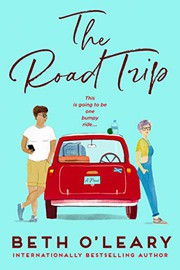
The Road Trip
Two exes squeeze into one small car for the drive to a Scottish wedding, with four years of history and one photograph between them.
2,418-word summary · 11 min read
My Favorite Half-Night Stand
Millie, a criminology professor who has always been one of the guys, invents a secret dating profile and matches with her best friend Reid.
2,362-word summary · 10 min read
Take a Hint, Dani Brown
A viral rescue video turns a PhD student and a grumpy security guard into internet couple goals, and the fake relationship they build to keep the attention…
2,005-word summary · 9 min read
The Marriage Bargain
A bookstore owner marries a billionaire friend's brother for a year to save home and company.
2,092-word summary · 9 min read
Bridget Jones: The Edge of Reason
Bridget doubts Mark, takes a job with Daniel, and lands in trouble in Thailand.
2,198-word summary · 10 min read
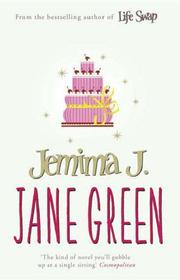
Jemima J
Overweight London journalist Jemima Jones invents a slim online self for a California lover, starves to match the photo, then faces betrayal and learns to…
2,883-word summary · 13 min read
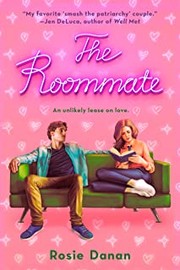
The Roommate
Uptight Clara shares a flat with porn star Josh and teams up to build ethical adult films for women.
2,362-word summary · 10 min read
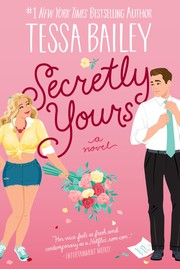
Secretly Yours
A bubbly Napa gardener sends anonymous love letters to her grumpy professor neighbor in this steamy small-town rom-com.
2,504-word summary · 11 min read
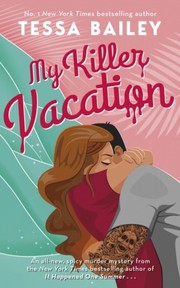
My Killer Vacation
A teacher and a bounty hunter share a Cape Cod rental with a corpse and a growing attraction.
2,625-word summary · 12 min read
Mr. Wrong Number
After a fire and a wrong-number text, Olivia falls for a stranger who is closer than she thinks in this funny Omaha rom com.
2,248-word summary · 10 min read
Twenties Girl
Dumped and flailing, Lara Lington is haunted by her great-aunt Sadie, a 1920s ghost who wants her lost necklace back.
2,938-word summary · 13 min read
Can You Keep a Secret?
Emma blurts every secret to a stranger on a turbulent flight, then finds him running her company.
3,114-word summary · 14 min read
First Grave on the Right
Charley Davidson is a private investigator in Albuquerque and the grim reaper. When three murdered lawyers come back as ghosts, her two jobs collide.
2,770-word summary · 12 min read

The Shadow Sister
Star D'Apliese steps out of her sister's shadow and follows a bookshop clue into the Edwardian life of Flora MacNichol, a woman who gave up love for duty.
2,260-word summary · 10 min read
Lick
Evelyn wakes up married to the lead guitarist of Stage Dive after a Las Vegas birthday she cannot remember, and the annulment gets complicated.
1,989-word summary · 9 min read
The Bookshop on the Corner
A Birmingham librarian loses her job, buys a van, and moves to the Scottish Highlands to run a mobile bookshop. Warm and bookish, with uneven pacing.
2,557-word summary · 11 min read

Shopaholic and Sister
Becky Brandon returns from a ten-month honeymoon to meet the half-sister she always wanted, then discovers that Jess is thrifty, prickly, and nothing like the…
2,591-word summary · 12 min read
Ricochet
Lily Calloway tries to stay celibate for ninety days while Loren is in rehab, leaning on Rose, Connor, and Ryke as therapy forces her to face her childhood.
2,575-word summary · 11 min read
My Dark Romeo
A debutante ball kiss traps Dallas Townsend in a marriage to Romeo Costa, a man who wants her as leverage in a war against his father and her fiance.
2,530-word summary · 11 min read
Under Locke
Iris Taylor moves to Austin broke and wary, takes a front-desk job at a tattoo shop, and spends the book learning that Dex Locke’s blunt cruelty and unexpected…
2,591-word summary · 12 min read
Beneath This Man
Ava returns to Jesse after five days apart and finds his drinking, jealousy, and a hidden deception that changes what she can forgive.
2,341-word summary · 10 min read

Two by Two
Sparks's twentieth novel turns from first love to a marriage breaking up: Russell Green loses his wife and his job, then rebuilds his life around his…
2,192-word summary · 10 min read