

Bone, Vol. 1: Out from Boneville
2,155-word summary 10 min read 138 pages in the book
- First published
- 1995
- Publisher
- Cartoon Books
- Pages
- 138
- ISBN
- 9780439706407
- Series
- Bone (#1)
Reading options
What's inside (8 sections)
Start with the tar. Three cartoon cousins are run out of their hometown in the back of a wagon, covered in the stuff, and one of them is still complaining about the money he lost. That is the opening of a 1,300-page fantasy epic, and it is a pie in the face. Jeff Smith knew what he was doing. The first volume of Bone does not announce itself as important. It announces itself as funny, then quietly starts building something under the jokes.
Fone Bone is the decent one. He is small, white, and shaped like a bone, with a round skull and a simple face that Smith can push into panic or longing with a couple of lines. His cousin Phoncible P. Bone, called Phoney, is the schemer. He has a bald head and a permanent squint and a plan for everything, usually a bad one. Smiley Bone is the tall, cheerful one with a wide grin and almost no judgment, which makes him the perfect accomplice and the perfect witness to whatever Phoney is about to do.
The campaign for mayor of Boneville is where the trouble starts. Phoney runs, and it goes badly, and the town reacts the way towns do to a man who has been cooking the books or at least trying to. Tar and feathers, a wagon, a road out. Smiley and Fone follow him, partly out of loyalty and partly because they are cousins and that is what cousins do. The three of them cross a desert, bickering the whole way, and then the locusts come.
The swarm separates them. That separation is the real engine of the book. Smith takes the trio apart so he can put them back together in a place none of them understands, and the reader gets to watch each one handle the valley differently. Phoney and Smiley stumble into the valley together. Fone ends up alone, which is the worst possible outcome for a character who mostly wants a quiet life and a nap.
Alone with the bugs and the monsters
Fone's solo stretch is where the book finds its tone. He meets Ted, a bug who talks and complains and becomes the first of many valley creatures who treat Fone as a mild nuisance rather than a wonder. Ted is a small joke that keeps paying off, because Smith understands that a talking animal is funnier when it is unimpressed.
Then the Rat Creatures show up. They are big, droopy-eared, hunched things with goofy faces and a taste for bone, and they are genuinely threatening in a way that sneaks up on you. They chase Fone, they argue with each other, and they produce the line that runs through the whole series: stupid, stupid rat creatures. The repetition is the joke. The monsters are incompetent, and they are also going to eat him.
A red dragon appears. It saves Fone more than once, and Fone is never entirely sure whether it is real, whether it is friendly, or whether he imagined the whole thing. Smith keeps the dragon at the edge of the panel, sometimes a shape in the background, sometimes a full-body interruption. The uncertainty is the point. Fone has been dropped into a world with rules he cannot see, and the dragon is the most obvious sign that something is watching him.
That stretch also shows off the art. Smith draws clean, rounded cartoon figures against backgrounds with real texture: rocks, grass, tree bark, the folds of a cloak. The contrast is the whole appeal. The characters look like they wandered out of a 1940s newspaper strip, and the world around them looks like it took work. There are wordless panels where Fone just walks and the landscape does the talking, and they never feel like padding.
The Rat Creatures deserve a second look, because they are the clearest example of what Smith is doing with tone. Their design is ridiculous. The ears droop, the noses are bulbous, the bodies are lumpy and hunched. Then Smith puts them in a dark panel with Fone small in the corner, and the ridiculousness turns into something else. They are funny and they are hungry, and the book never makes you choose between those reactions. That double register is the trick the whole series runs on.
Barrelhaven and the girl with the book
Fone reaches the Barrelhaven tavern, and the book changes gear. Thorn is a young woman who works there, and Fone falls for her immediately and completely. He writes her poetry. The poetry is terrible, and Smith lets us see enough of it to know it is terrible, and Fone keeps writing it anyway. It is one of the best running gags in the volume because it is not cruel. Fone is earnest, Thorn is amused, and the reader is on both sides.
Gran'ma Ben runs the place. She is old, she is strong, and she is strange. She chops wood, she handles a tavern, and she has opinions about the valley that do not quite match what she says out loud. Thorn lives with her because Thorn's parents are gone, and Thorn does not know the full story of her family. Smith plants that fact early and lets it sit. It is not a mystery the volume solves. It is a mystery the volume teaches you to keep in your pocket.
The tavern is also where the book slows down in a way that is mostly pleasant and occasionally frustrating. Fone gets a job, sort of. He gets a place to sleep. He gets to be near Thorn and to be patronized by Gran'ma Ben and to be confused by the locals. The valley people are drawn as ordinary, suspicious, and funny, and their suspicion of outsiders is the kind of thing that will matter later.
The cousins arrive and the con begins
Phoney and Smiley turn up, and Phoney immediately starts working the town. He calls the valley people yokels, which is both a joke and a character note, and he looks for angles. His schemes set up the running joke of the series: Phoney is always selling something, and the valley is always one step from catching him. In this volume the con is mostly setup. He talks, he plots, he tries to turn a situation into cash, and it goes about as well as you would expect.
Smiley gets a job and fits in without effort. That is the joke about Smiley. He has no plan and no guile, and the valley accepts him faster than it accepts either of his cousins. The reunion at the tavern is warm and funny and a little sad, because the three of them are together again and none of them has any idea what they have walked into.
Around the edges, the threat gathers. The Rat Creatures are not just random wildlife. They have a leader, Kingdok, and behind Kingdok there is a Hooded One, and behind the Hooded One there is something older called the Lord of the Locusts. Smith gives you these names in fragments, mostly as ominous asides, and does not explain them. The volume ends with the cousins together at Barrelhaven and the danger still out there, unresolved.
What the first act does and does not deliver
This is a short book, and it feels short. It collects six issues, and a lot of those pages are spent getting Fone from the desert to the tavern, then getting Phoney and Smiley to the tavern, then letting everyone settle in. The plot does not resolve much. It sets up. If you come to it expecting a complete story, you will notice the shape of a first act and you will be right.
Phoney's con is the weakest thread. It is funny once, and then it repeats, and the repetition is not always the good kind. Smith is building a character who will keep doing this for 55 issues, and in volume one the bit has not yet found enough variation to justify how much room it takes up.
Thorn is the other soft spot. She is likable, she is clearly important, and she is mostly a plot device here. She exists to give Fone someone to moon over and to carry a family secret the book is not ready to explain. The later volumes give her much more. In this one she is a promise more than a person.
And yet the book works. The comedy lands, the art is genuinely beautiful, and the pacing has the confidence of someone who knows exactly how long the road is. The darker material stays in the background, which is the right call for a first volume. You get hints of the Lord of the Locusts, hints that Gran'ma Ben knows more than she says, hints that Thorn is connected to the valley's royal family, hints that the dragon is watching Fone for a reason. None of it is explained. All of it is planted.
The craft behind the jokes
Jeff Smith started self-publishing Bone through Cartoon Books in 1991, after deciding against an animation career. He had been drawing these characters since childhood; the first sketch apparently looked like a telephone receiver. He had made a Thorn comic strip for Ohio State's student paper, which explains why Thorn feels like a character he had been carrying around for years. The series ran 55 issues to 2004, won ten Eisner Awards and eleven Harvey Awards, and the color Graphix editions from 2005 brought it into schools and libraries.
The influences show. Mark Twain's Huckleberry Finn is the structural model: start simple and funny, then let the world get darker without losing the voice. Carl Barks's Uncle Scrooge is there in the comic timing and the way a greedy character can be both ridiculous and sympathetic. Star Wars, The Lord of the Rings, Moby Dick, Peanuts, and Pogo are all in the mix. Smith wanted a long adventure with the craft of a great newspaper comic, and you can see the newspaper-comic discipline in every panel: clear silhouettes, readable expressions, jokes that land in three beats.
The Moby Dick references are the one place where the ambition outruns the tone. A book that is also doing Three Stooges gags does not always earn its literary allusions, and some readers will find the chosen-one hints heavy for a story that is still mostly about a guy writing bad poetry. That is a fair complaint. It is also the kind of complaint that looks different once you have read further and seen where Smith takes it.
Why it still reads as an opening
The honest summary is that Out from Boneville is a first act and reads like one. It is funny, it is gorgeous, and it spends most of its length setting up rather than resolving. New readers may finish it and wonder why the series is so revered. The answer is not in this volume. The answer is in what this volume makes possible.
What it makes possible is trust. Smith establishes that he can do slapstick and dread in the same book, that he can draw a valley that feels lived in, and that he can write three cousins who are distinct without being types. Fone is the heart, Phoney is the engine, Smiley is the release valve. When the serious material arrives later, it will land because the comedy taught you to care about these idiots.
There is also something quietly impressive about how much Smith leaves unexplained. The dragon, the Hooded One, Gran'ma Ben's past, Thorn's family, the reason the Rat Creatures are organized at all. A lesser first volume would explain one of these to prove it had a plan. Smith explains none of them and trusts the reader to keep going. That is either confidence or luck, and the rest of the series suggests confidence.
The color edition is worth mentioning because it changes the reading experience. The Graphix version, 138 pages, adds a palette that makes the valley warmer and the night scenes colder, and it is the version most people encounter now. The black-and-white original has its own appeal, closer to the newspaper strips Smith was imitating. Either way, the line work is the star. Smith's clean cartoon figures against detailed backgrounds, his wordless panels, his real comic timing: that is what you remember.
So: a tarred mayor, a desert, a swarm of locusts, a bug with an attitude, monsters who cannot stop insulting each other, a dragon nobody can confirm, a girl with a book and a grandmother with a secret. That is the opening move of one of the great long comics, and it is a good one. It is not the whole reason people love Bone. It is the reason they kept reading.
FAQ
Should I read the black-and-white Bone or the color edition?
Either works. The 2005 Graphix color edition is the version most readers encounter, and it keeps Smith's line work intact while adding a palette that separates the valley from the night scenes.
Is Out from Boneville a complete story?
No. It collects issues 1 through 6 and functions as the opening act of a 55-issue series, ending with the cousins reunited while the larger threat is still gathering.
Why is Thorn important if she does not do much in this volume?
She is tied to the valley's royal family and to a family history Gran'ma Ben will not fully explain. This volume plants those hints and leaves them for later books.
Similar books
More from Bone first, then related titles.
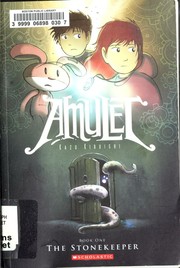
The Stonekeeper
After their father's death, Emily and Navin chase a monster into a hidden world to save their mother, and Emily's great-grandfather's amulet offers power at a…
2,753-word summary · 12 min read

The Icebound Land
Captured and enslaved in Skandia, Will fights a drug that erases him while Halt and Horace cut a bloody road through Gallica to bring him home.
2,088-word summary · 9 min read

The Field Guide
Three siblings move into a creepy Maine estate, anger a brownie, and find a forbidden guide to the fairy world in the first Spiderwick book.
2,033-word summary · 9 min read

Secrets of the Dragon Sanctuary
Kendra is replaced by a plant copy and held by the Society, while Seth steals a unicorn horn so the family can enter a dragon sanctuary.
2,590-word summary · 12 min read
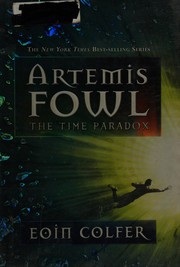
The Time Paradox
When his mother falls ill with a fairy disease, Artemis Fowl travels back in time to find the extinct lemur that can cure her and confronts his younger self.
2,601-word summary · 12 min read
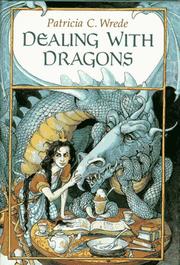
Dealing with Dragons
A princess who hates embroidery runs away to become the cook and librarian for a dragon, then has to outthink wizards, knights, and a plot against the dragon…
2,563-word summary · 11 min read
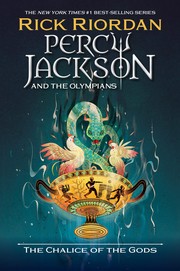
The Chalice of the Gods
Percy needs three recommendation letters from three gods to apply to college, so his first quest is recovering a stolen chalice from the god of old age.
2,106-word summary · 9 min read
Nettle & Bone
Marra, a princess in a convent, leaves to save her abused sister, but first she must finish three impossible tasks: a bone dog, a nettle cloak, moonlight in a…
2,061-word summary · 9 min read

Grip of the Shadow Plague
A plague turns Fablehaven's creatures of light into shadows while Kendra hunts an artifact in Arizona and Seth races to find the cause.
2,131-word summary · 9 min read
Saga, Volume 3
Marko, Alana, and Hazel hide on the planet Quietus with the reclusive author who inspired their romance, while assassins and a prince close in.
1,989-word summary · 9 min read
The Penultimate Peril
Baudelaires as concierges in a hotel sort friends from foes before the end.
2,234-word summary · 10 min read
The Indian in the Cupboard
Omri learns a key turns plastic Little Bear into a live Iroquois man.
2,228-word summary · 10 min read
The End
Baudelaires wash on an island where others decide what safe means.
2,320-word summary · 10 min read
Into the Wild
Housecat Rusty joins ThunderClan and learns clan law before war.
2,597-word summary · 12 min read
Hoot
Roy tracks a shoeless boy to save burrowing owls from a pancake house.
2,290-word summary · 10 min read
Gregor the Overlander
Gregor follows Boots down a grate into the Underland and a war prophecy.
2,516-word summary · 11 min read
The Wee Free Men
Nine-year-old Tiffany Aching teams with the Nac Mac Feegle to rescue her brother from the Fairy Queen.
2,600-word summary · 12 min read
The Miraculous Journey of Edward Tulane
A china rabbit lost at sea learns to love through owners kind and cruel across many years.
2,002-word summary · 9 min read
The Demigod Files
Three Percy Jackson side quests plus camp maps, cabin guides, interviews, and god profiles set before the final battle.
2,498-word summary · 11 min read
Saga, Volume 2
Alana and Marko flee with baby Hazel while exes, princes, and ghosts close the net.
2,028-word summary · 9 min read
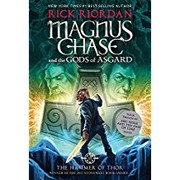
The Hammer of Thor
Magnus and Sam chase Thor's stolen hammer to a giant wedding heist, with Alex Fierro joining Floor Nineteen as Loki bargains and Ragnarok stirs.
3,068-word summary · 14 min read
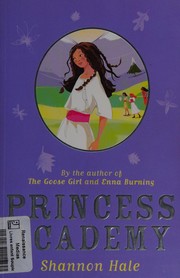
Princess Academy
Miri leaves her Mount Eskel quarry home for Princess Academy, where quarry songs, books, and a bandit siege shape her fight for fair trade, a school, and a…
2,441-word summary · 11 min read
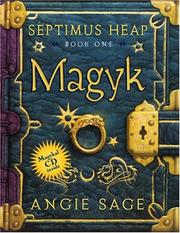
Magyk
A baby found in snow, a lost seventh son, and a run for the Marram Marshes as Marcia Overstrand shields two children from DomDaniel.
2,604-word summary · 12 min read
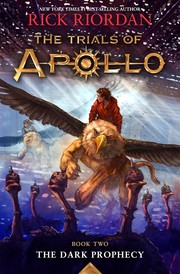
The Dark Prophecy
Mortal Apollo and Leo cross America to free the Oracle as Commodus hunts them.
2,368-word summary · 11 min read
The Carnivorous Carnival
Baudelaires hide as carnival freaks to find V.F.D. clues, facing lions, Olaf, and a fateful cliff split.
2,027-word summary · 9 min read
Rise of the Evening Star
Kendra and Seth return to Fablehaven as the Society of the Evening Star closes in, with a traitor inside the house and a demon prison key at stake.
2,874-word summary · 13 min read
The Wishing Spell
Twins Alex and Conner fall through a book of fairy tales and must gather eight keepsakes to get home.
2,714-word summary · 12 min read
The Opal Deception
Mind-wiped Artemis steals a Munich painting while escaped pixie Opal Koboi frames Holly Short for murder and plots exposure.
2,767-word summary · 12 min read
The Eternity Code
Artemis shows fairy tech to Chicago tycoon Jon Spiro, loses Butler to a bullet, and must raid Spiro Needle with Holly to get it back.
2,949-word summary · 13 min read
The Lost Colony
Artemis and Holly chase returning demons while a rival genius risks everything for fame.
1,903-word summary · 8 min read