
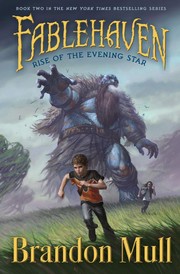
Rise of the Evening Star
2,874-word summary 13 min read 441 pages in the book
- First published
- 2007
- Publisher
- Shadow Mountain
- Pages
- 441
- ISBN
- 9781590387429
- Series
- Fablehaven (#2)
Reading options
What's inside (8 sections)
I came back to Fablehaven for this second book with the usual second book nerves. The first one had been a surprise for me. Plain sentences, quick chapters, a preserve with rules that held. I worried the sequel would do what sequels do, add more creatures, raise the noise, forget the people. It does add more, a lot more, and most of it works. The book came out in 2007 from Shadow Mountain, the first hardcover runs 441 pages, and it is the second of five in the Fablehaven series. Brandon Mull wrote it with Brandon Dorman again on illustrations. It is bigger, darker, and more crowded than book one, and it ends with the series engine fully running.
The setup picks up after summer. Kendra Sorenson is back at school trying to be a normal kid, which is hard when you can see things nobody else can. The fairies kissed her at the end of book one, and that left her with the sight built in. No milk needed. She drinks nothing special and still sees through every disguise. That gift is useful and lonely in equal measure. Try sitting through math class when one of your classmates is something with too many teeth and everyone else thinks he is handsome.
Seth is home too, carrying his own mark from last summer. He helped feed a creature early in this book without understanding what he was doing, and that small act grows teeth. Literally. Something out in the world is now growing toward him, meal by meal, and it will not stop until it reaches him. Seth being Seth, his response to this news is not caution. It is curiosity with a match in its hand.
A new kid at school
The trouble starts small, which I liked. Kendra notices that a boy at school is wrong. To everyone else he is an ordinary good looking kid. To her he is a kobold, a nasty little magical thing wearing a human shape like a rented suit. She cannot prove it. She cannot tell anyone without sounding wild. She just has to sit near it every day and feel her skin crawl. It is a strong opening image for what this book is about. Seeing clearly does not give you power. Most of the time it just gives you fear with no outlet.
Then a man shows up at the school saying he was sent by friends of their grandfather. His name is Errol Fisk, and he is friendly in the way of someone who has practiced being harmless. He tells Kendra and Seth the kobold is a real problem and he can remove it, but he needs a favor first. Seth, who is twelve and therefore young enough to enter a place with an age barrier on it, has to walk into a mortuary and take something. The scene that follows is pure Mull. A quiet building, a small creature that wants a dog biscuit as payment, a bite that leaves marks in Seth's skin. It reads creepy without gore, and it sets the price of the whole book. Every favor in this story costs more than it first appears.
Errol asks for a second favor, bigger this time, tied to saving the preserve. Kendra gets suspicious, which shows how much she grew since book one. Last summer she might have gone along to keep the peace. Here she stalls and calls her grandfather. When Grandpa Sorenson finally gets through, he is blunt. He never sent Errol. Nobody sent Errol. There is a code word, a ride coming, and strict orders not to leave the house. The pickup arrives in the form of Vanessa Santoro in a fast car, and the chase out of town kicks the book into its real shape. By the time the kids reach Fablehaven again, the reader understands the season has changed. The preserve is not resting. It is under threat, and the threat has a name.
Three guests and a riddle
The name is the Society of the Evening Star. Say it out loud and it sounds like something from a history book, which is the point. This is an old organization that wants the magical preserves opened and used, and preserves have been falling around the world at a frightening rate. Grandpa Sorenson, who holds Fablehaven as its caretaker, has called in help approved by a strange and powerful figure called the Sphinx. Three specialists arrive, and each of them gets time to breathe on the page.
Tanu is a potion maker, warm and careful, the kind of adult who explains what he is doing while he does it. Coulter is a collector of magical objects, prickly and private, carrying trunks of strange items with histories attached. Vanessa is a tracker and trapper of dark creatures, confident and charming, quick with kids in a way that makes both Kendra and Seth trust her fast. Maybe too fast. The book tells you early that one of the people inside the house may be working against it, and then it lets you sit with that itch for a long stretch. Every kindness from every adult gets weighed. Every closed door gets noticed.
The Sphinx himself is the most interesting addition. He runs a sanctuary for magical knowledge, collects artifacts, speaks softly, and gives Kendra a strange object to test her. The test shows she is fairykind, someone favored and marked by fairy magic, a thing that has not happened in centuries. Kendra does not get a party for this. She gets a heavier load. Fairykind means the stakes around her are higher and the attention on her is worse. I liked that Mull refuses to make specialness feel good. It isolates her. It paints a target on her. It also gives her a thread to pull through the rest of the series, since fairy business clearly goes somewhere large.
The job the specialists were brought for is specific and scary. Somewhere on the Fablehaven grounds hides an artifact, one piece of a key that opens Zzyzx, a prison holding an enormous number of demons. If the pieces come together and that door opens, the world as the characters know it ends. So the kids spend the middle of the book learning. Tanu teaches them about potions. Coulter shows them objects and what they do. Vanessa teaches them how dark things think. Lessons alternate with small trips onto the preserve, each one adding a rule or a creature to the mental map. Readers who like training stretches will be happy. Readers who want constant action may fidget. I mostly enjoyed it, because the lessons pay off later in ways that feel planted rather than improvised.
There is also Warren, and Warren broke my heart a little. He is Dale's brother, kept in a cottage in a blank, unresponsive state ever since something in a grove on the preserve emptied him out years ago. Dale feeds him and moves him and talks to him like a brother anyway. When Kendra touches Warren and gets a flicker of response, the book finds its tenderest note. Someone in there is still home. Getting him back becomes a quiet wish underneath all the loud danger, and I cared about it more than some of the bigger set pieces.
The thing growing toward Seth
Seth's half of the book is the darker half, and parents should know that going in. The creature he fed back at the start is called Olloch the Glutton. It imprinted on him. Now it eats and grows and eats and grows, working its way across the world toward the boy who fed it, and nothing in its path survives long. The Sphinx explains this to Seth plainly. The thing will keep consuming until it is big enough to break through anything keeping it from him. Imagine being twelve and hearing that your kind act created a missile with your name on it. Seth handles it the way Seth handles everything. He jokes, he pokes, he volunteers for danger. Underneath, for the first time, he seems properly scared, and that fear makes him more sympathetic than all of book one did.
The fear plot and the artifact plot join at the grove at Four Hills, the same place that emptied Warren. Coulter wakes Seth in the night and takes him there, which should tell the reader something is off, and inside they meet a revenant, a being whose fear is so strong it shuts minds down. Dale's brother met it years ago and never came back. Now Seth and Coulter stand in front of it together. Before the fear finishes them, Olloch arrives, huge and hungry, and Coulter does something desperate. He forces a cocoon into Seth's mouth, a shelter that seals him inside something nothing can bite through. Morning comes. The house believes Seth is dead. Kendra is wrecked. Grandpa Sorenson studies the mess and decides Coulter's plan was too clumsy to be treachery, which is a nice touch. Evil is usually neater than that.
Seth, meanwhile, is alive inside the cocoon inside Olloch. I will not spoil the exact mechanics of how he gets out, except to say it involves going through the creature rather than around it, and it is one of the grossest and most satisfying passages Mull has written. Seth wakes alone near an old shut up mansion, climbs to the roof to get his bearings, spots the cottage, and walks toward it. When he and Kendra find each other there, the reunion is short, because they disagree at once about what to do next. Seth wants to borrow courage from one of Tanu's potions and go finish the job himself. Kendra wants to wait and think. Guess who wins that argument. Guess how well it goes.
Seth's solo run at the grove is the bravest and stupidest thing he does in either book so far, and I mean both words. He beats the revenant and nearly dies doing it, and his victory is what brings Warren back. Cause and effect land cleanly. The grove's fear made Warren empty. The grove's defeat lets Warren fill again. It is the kind of payoff that makes the slower middle feel worth it on reflection, even if some of those lesson chapters dragged in the moment.
The mask comes off
All of this has been building toward the question the book planted early. Who is the traitor. When the answer arrives, it arrives with speed. Evidence that looked scattered lines up. A net meant to catch thieves catches the wrong person. Control shifts in the house in a single night. Vanessa is revealed as a narcoblix, someone who can take over others in their sleep, and suddenly every odd moment replays with new meaning. The charm was real and also a tool. The kindness to the kids was real and also access. Mull plays fair here. The clues were on the page. I did not assemble them in time, and I liked that.
The back third turns into a running fight with high costs. Tanu falls under control along with the rest of the house. Kendra flees into the woods with nowhere good to go and ends up rattling the water nymphs, who hand her over to Mendigo, a wooden limberjack bound to obey whoever holds its orders. Mendigo drags her to the old chapel from book one, where Muriel and the buried thing still wait, and only quick thinking plus help from a fairy lets Kendra turn the wooden man to her side. It is a strong sequence because Kendra solves it with attention rather than force. She remembers how commands work. She listens to exactly what is said. Book one Kendra would have frozen. This Kendra acts.
Then comes the inverted tower, the hiding place of the artifact, and a climb full of obstacles that Warren and Kendra work through while Errol and Vanessa close in. People get hurt badly. Errol dies in the trials. Warren and Vanessa are left broken enough that only the artifact itself can save them, and here Mull gives the object a character that surprised me. It heals. That is its power, near bottomless mending, and in a book full of hungry things the most powerful object turns out to be one that puts bodies back together. Tanu arrives in time to turn the fight. The Sphinx arrives to take the artifact somewhere safe. The house locks Vanessa in a quiet box that blocks her control, and for a moment everything looks settled.
It is not settled. Almost the last thing in the book is a whisper. Something Vanessa said sticks in Kendra's head, and Kendra finds a hidden message accusing the Sphinx himself of leading the Society of the Evening Star. Kendra tells her grandparents. The book closes on that doubt like a door that will not latch. I admired the nerve of it. Most middle books end with a won battle. This one ends with the kids wondering whether their side's wisest ally is the enemy's head. It sends you to book three with real momentum instead of homework.
What holds and what sags
The best parts are the systems and the siblings. Mull keeps every magic working the way he said it works. Potions do what potions do. The cocoon does what it does. The quiet box does what it does. When Kendra wins, she wins by remembering rules under pressure, which makes her victories feel earned in a way chosen one stories often skip. And the two leads have grown apart in a believable way. Kendra is steadier, more willing to doubt friendly adults, more able to act alone. Seth is still reckless, but now his recklessness has a bill attached, and he knows it. Their fight at the cottage about whether to charge the grove is the truest sibling scene in either book. Both are right. Both are wrong. Love does not resolve it. Action does, at a cost.
Complaints, then, because this book has real ones. The middle sags in at least two places. There is a stretch of lessons and small errands where the traitor question idles and the pages fill with interesting but unurgent preserve lore. I enjoyed the lore, the entries about creatures and objects are fun, but I could feel the main plot waiting offstage. Tighter cutting would have helped. Related to that, Seth's disobedience engine from book one returns almost unchanged. He is told to stay put, he leaves, trouble follows, Kendra cleans up. The book gives him better reasons this time and real guilt afterward, so it lands softer, but readers who were tired of that shape in book one should expect more of it here. It is clearly Mull's favorite motor. He should vary it in later books.
One more honest note. This is scarier than book one. The revenant's fear, Olloch eating its way across the countryside, the chapel scenes, people the kids trust turning cold, these land harder than the Midsummer Eve chaos did. The publisher sells it for ages eight to thirteen, and that range seems right for strong readers with an adult nearby, but sensitive kids may find the Glutton chapters rough. Nothing is graphic. It is the dread that does the work. A thing growing bigger every day with your name on it is a nightmare built for childhood.
Still, I closed it pleased. The artifact hunt resolves. Warren wakes. The traitor is caught. The costs are visible. And the last page doubt about the Sphinx reframes everything without cheating. That is exactly what a second book should do. Deepen the people, widen the world, spend the goodwill of book one on something bigger, and leave one thread burning. If book one asked whether these kids could survive one night, book two asks whether their side even knows who its leaders are. I started book three the same week.
Reading it after book one
For anyone coming straight from Fablehaven, a few practical notes. Yes, read them in order. This book assumes you know the preserve rules, the milk, the knots, Midsummer Eve, Bahumat under the chapel, all of it, and it will not slow down to reteach. The facts line up cleanly with the first volume. Same preserve, same family, same caretaker, same illustrator, same publisher in Shadow Mountain for the first edition. Tone shifts older by maybe a year. Jokes are still there, Newel and Doren still steal scenes, Hugo still lumbers sweetly through, but the chapters with Olloch and the revenant carry genuine weight.
My advice is simple. If your kid or your book club liked book one for the creature logic and the sibling friction, book two gives more of both with higher stakes. If book one lost you whenever Seth ran toward the nearest warning sign, know that habit survives here, though the book starts charging him for it. And if you, like me, worried the series would go soft, the Sphinx question at the end should cure that. Nothing about this story is soft anymore. The preserves are falling. The key has pieces. The prison has a name. Onward.
FAQ
What age is Rise of the Evening Star for?
The publisher sells it for ages 8 to 13, and strong readers in that range do well with an adult nearby. The Olloch and revenant chapters are scarier than book one, though nothing is graphic.
Do I need to read Fablehaven first?
Yes. This book assumes you know the preserve rules, the milk, Midsummer Eve, and the chapel, and it will not slow down to reteach them.
Is the Sphinx really the villain?
The book ends with Vanessa's hidden message accusing him of leading the Society, and Kendra passes it to her grandparents. Book two does not settle it, so readers must continue the series for the answer.
Similar books
More from Fablehaven first, then related titles.
Fablehaven
Kendra and Seth spend the summer with their grandfather and learn his woods hide Fablehaven, a preserve for fairies, satyrs and darker things.
2,949-word summary · 13 min read
Grip of the Shadow Plague
A plague turns Fablehaven's creatures of light into shadows while Kendra hunts an artifact in Arizona and Seth races to find the cause.
2,131-word summary · 9 min read
Secrets of the Dragon Sanctuary
Kendra is replaced by a plant copy and held by the Society, while Seth steals a unicorn horn so the family can enter a dragon sanctuary.
2,590-word summary · 12 min read
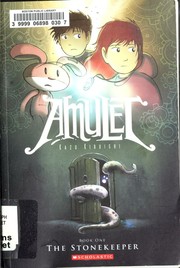
The Stonekeeper
After their father's death, Emily and Navin chase a monster into a hidden world to save their mother, and Emily's great-grandfather's amulet offers power at a…
2,753-word summary · 12 min read
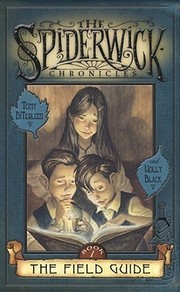
The Field Guide
Three siblings move into a creepy Maine estate, anger a brownie, and find a forbidden guide to the fairy world in the first Spiderwick book.
2,033-word summary · 9 min read
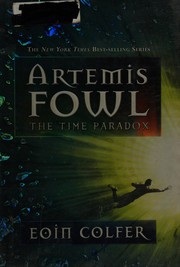
The Time Paradox
When his mother falls ill with a fairy disease, Artemis Fowl travels back in time to find the extinct lemur that can cure her and confronts his younger self.
2,601-word summary · 12 min read
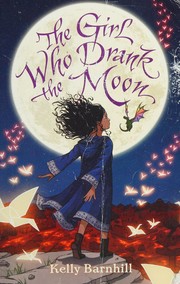
The Girl Who Drank the Moon
A witch who secretly rescues the town's sacrificed babies accidentally enmagicks one with moonlight, and the girl grows up with a power she cannot name.
2,078-word summary · 9 min read
The Indian in the Cupboard
Omri learns a key turns plastic Little Bear into a live Iroquois man.
2,228-word summary · 10 min read
Magyk
A baby found in snow, a lost seventh son, and a run for the Marram Marshes as Marcia Overstrand shields two children from DomDaniel.
2,604-word summary · 12 min read

The Blinding Knife
Kip trains to join the Blackguard while the Prism hides his true identity, loses his colors, and fights a war against a rogue drafter who wants to birth a god.
2,049-word summary · 9 min read
Ship of Magic
A sentient ship wakes when her captain dies, and the family that owns her starts to come apart over who gets to sail her.
2,026-word summary · 9 min read

Inkdeath
The final Inkworld novel sends Mo into the land of the dead, leaves Meggie choosing between two boys, and ends the Adderhead's immortality with three written…
2,062-word summary · 9 min read
Dawnshard
Rysn sails toward forbidden Akinah to save her dying larkin and finds a Dawnshard guarded by the Sleepless.
3,229-word summary · 14 min read

Bone, Vol. 1: Out from Boneville
Three cartoon cousins are run out of Boneville, separated by locusts, and dropped into a valley where rat creatures and an old grudge are waiting.
2,155-word summary · 10 min read
The Icebound Land
Captured and enslaved in Skandia, Will fights a drug that erases him while Halt and Horace cut a bloody road through Gallica to bring him home.
2,088-word summary · 9 min read
Lioness Rampant
Alanna searches for the Dominion Jewel with the Shang Dragon, then returns to Tortall to face Duke Roger at Jonathan's coronation.
2,478-word summary · 11 min read
Witches Abroad
Three Lancre witches fly to Genua to stop a fairy godmother from forcing a servant girl into a storybook marriage, and find a city arranged around a happy…
2,651-word summary · 12 min read
The Golem's Eye
Two years after The Amulet of Samarkand, Nathaniel is a rising bureaucrat, Bartimaeus is his unwilling servant again, and something made of clay is tearing…
2,299-word summary · 10 min read
Magician's Gambit
Garion and his companions cross haunted Maragor and the caves beneath Rak Cthol to recover the Orb of Aldur.
2,391-word summary · 11 min read
Homeland
Drizzt Do'Urden is born into the cruel drow city of Menzoberranzan, where his father teaches him to fight and to doubt everything his family believes.
2,303-word summary · 10 min read
Enchanters' End Game
Garion marches toward Torak while Ce'Nedra leads the West's army in the final Belgariad volume, where prophecy and war meet.
2,557-word summary · 11 min read
The Chalice of the Gods
Percy needs three recommendation letters from three gods to apply to college, so his first quest is recovering a stolen chalice from the god of old age.
2,106-word summary · 9 min read
Nettle & Bone
Marra, a princess in a convent, leaves to save her abused sister, but first she must finish three impossible tasks: a bone dog, a nettle cloak, moonlight in a…
2,061-word summary · 9 min read

The Rose & the Dagger
Shahrzad is pulled from her Caliph husband and left in a desert camp of rebels, needing to break his curse and end a war before it ends her.
2,520-word summary · 11 min read
The Queen of the Tearling
Nineteen-year-old Kelsea leaves the woods to take her throne, ends a shipment of human captives, and draws the Red Queen's revenge.
2,357-word summary · 10 min read
Fool's Errand
FitzChivalry Farseer has lived in exile for fifteen years. When Prince Dutiful vanishes before his betrothal, Fitz returns to Buckkeep to find him, with a wolf…
2,606-word summary · 12 min read

We Hunt the Flame
In a fractured Arabia-inspired world, a disguised huntress and a prince-assassin race to find a magic-restoring book and confront an ancient evil.
2,195-word summary · 10 min read
The Sword of Shannara
A young half-Elf and a company of companions set out to recover a magic sword before the Warlock Lord destroys the Four Lands.
2,474-word summary · 11 min read
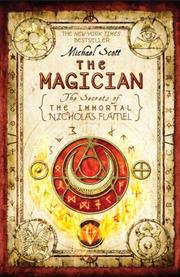
The Magician
Sophie and Josh flee to Paris with Nicholas Flamel, where John Dee, Machiavelli, and an awakened god close in on the missing pages of the Codex.
2,162-word summary · 10 min read
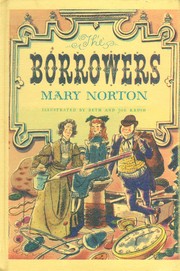
The Borrowers
A family of tiny people live under the floorboards of an English house, borrowing what they need until a lonely boy and a suspicious housekeeper change…
2,164-word summary · 10 min read