
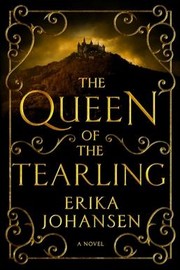
The Queen of the Tearling
2,357-word summary 10 min read 434 pages in the book
- First published
- 2014
- Publisher
- Harper
- Pages
- 434
- ISBN
- 9780062290366
- Series
- The Queen of the Tearling (#1)
Reading options
What's inside (9 sections)
I picked this up because the cover promised a girl on a horse with a sword and a crown, and because I had been reading adult fantasy that was mostly about fighting. What I got was a book about government. The fights in The Queen of the Tearling are real, but the first thing the new queen does when she reaches her capital is cancel a treaty, and the second is accept that the war is coming. It is a fantasy with swords in it and paperwork underneath.
Harper published it in July 2014. The edition I read runs 434 pages and carries the ISBN 9780062290366. It is Erika Johansen's debut, and the first volume of the Tearling trilogy, followed by The Invasion of the Tearling in 2015 and The Fate of the Tearling in 2016. A prequel, Beneath the Keep, arrived in 2021. Johansen grew up in the San Francisco Bay Area, studied at Swarthmore and at the Iowa Writers' Workshop, then trained as a lawyer and kept writing anyway, and she now lives in England. The book sold well and was optioned for film with Emma Watson attached, which tells you about the marketing and not much about the writing.
The world after the Crossing
The setting is a future, and it is a strange one, because the future looks backward. Three centuries ago a group of idealists led by William Tear got out of the old world in a single journey called the Crossing, and their descendants ended up on a peninsula about two hundred miles by a hundred, with the Tearling Gulf and then God's Ocean to the west, the impassable Fairwitch mountains on the northern border and the Cadarese to the south. New London is the capital, New Dover the main port. There are a little over two million people, most of them poor, living off forest and farmland, and there is no technology worth the name: people travel by horse, and a book by Dickens is a museum piece. Pre-Crossing memory survives in fragments, which is why the word "future" in the marketing copy is doing more work than it should.
This is where the usual comparison to Tolkien and to The Hunger Games starts to come apart, and the differences are more interesting than the similarities. The Tearling is not a medieval world that never modernized. It is a modern world that deliberately unmodernized, which means its cruelty looks chosen rather than inevitable. There is a church with a working hierarchy, priests, bishops, cardinals and a Holy Father, and the buildings it keeps are political instruments. There is a census office, a slave trade, and a border war that everyone expects. In other words, there is a state, and the novel is interested in what a state does to the people it is supposed to protect.
The magic in here is small and physical, which is one of the book's better surprises. It shows up as a sapphire necklace that glows, then burns, then throws off light that clears a path through a battle. It shows up in the Red Queen's blood magic and the demon she keeps by feeding it a child. It shows up in Kelsea's visions, which arrive whether she wants them or not. There is no wizard explaining the rules, and Johansen does not dwell on the metaphysics. The sapphires are treated the way the book treats everything else, as an inheritance with a cost attached.
The girl in the woods
Kelsea Raleigh Glynn has been hidden in a cottage in the woods since she was a baby, and the novel opens on her nineteenth birthday, the traditional age of ascension, when nine riders in the grey of the Queen's Guard arrive to collect her. The first chapter is called "The Tenth Horse," and the tenth horse is hers.
The two people who raised her are Carlin and Bartholomew Glynn. Carlin is the schoolmistress: mathematics, geography, Tear grammar, then the languages of the neighbors, Mort and Cadarese, and history, which she insists is the only thing worth learning because people repeat their mistakes. Barty was a guard once, took a sword in the back of the knee, and teaches Kelsea knives, plants, and how to disappear into trees. They are also secretly keeping her ignorant. She does not know what her mother, Queen Elyssa, was like, or what her reign cost the country. She does not know that the regent, her uncle Thomas, has been hunting for her since infancy, or that her father is a subject for speculation in the palace records. She knows her mother's face only from a description.
She is also, in her own estimation, plain. Her mother was a blonde beauty and Kelsea is dark and plain-faced, which she reads as evidence that she will not be believed. The proof the Guard demands is physical: the sapphire she has worn since she could remember, and a knife-shaped scar on her forearm. Carlin is in charge of that secret, and she manages it badly, which is the source of much of the friction in the first act.
What makes Kelsea work as a character is that she is competent and completely unqualified. She has been taught everything a queen is supposed to know, except how to rule. She is also, by the standards of the court she arrives in, an atheist who has been assigned a priest whether she wants one or not.
The road to New London
The journey east is short on ink and long on consequence. The Guard is attacked on the road, Kelsea and Lazarus are cut off, and both are taken captive by a band of masked riders led by a man called the Fetch, an infamous assassin and thief whom the countryside knows by reputation. He takes the second sapphire, the twin that Carlin smuggled into Kelsea's saddlebags, and keeps it. He also talks to her, and the conversation convinces him to let the queen and her captain go, though he holds on to the second stone as a test of what she will do with it.
The road scenes are where the book earns its medieval color honestly. There is an ambush, a captivity, an outlaw who talks to his hostage instead of selling her, and a stretch of road where Kelsea and Lazarus try to walk through a crowd without being noticed. Kelsea, disguised and travelling light, is a poor queen and a decent traveller.
Then the Keep, and the lawn, and the cages.
The tribute and the crown
Two hundred and fifty people a month, chosen by lottery, caged on the grass in front of the Keep and sent to Mortmesne. That is the Mort Treaty, signed by Kelsea's mother after a war, and it is the price of nineteen years of peace. Children go in the cages too, and one mother at the cages tells Kelsea what fate her own daughter narrowly escaped.
Kelsea has never seen the arrangement. She sees it on her first morning, and the sapphire flares while she orders the cages opened, the people released and the cages burned. The crowd on the lawn howls, which is the first time the book lets the ordinary people speak, and the decision is irreversible from that moment. Her uncle's ally, the official who ran the shipment, questions her right to rule in front of everyone. The antagonists in this book are usually men who assume a nineteen-year-old will not answer back.
The crowning is worse. Thomas's men are inside the Keep, one of them puts a knife in her, and she is crowned anyway, with the wound open, by a bookish priest named Father Tyler whom she has chosen precisely because he is not ambitious. The public sees a queen who did not fall over. She gives her uncle a deadline to leave, has his property confiscated, frees the women he kept chained, and takes the women into the Keep's service. The people decide to call her Glynn rather than Raleigh, in honor of the couple who raised her, and they roar for that.
The name change is the moment the book is really about. Kelsea has been a Raleigh, a piece of a dynasty, and a ward. By choosing a family name, she tells the country that the queen is a person first and a symbol second. It is also a small, plain act of loyalty to two old people who are already dead, which she learns later in the book: her foster parents poisoned themselves with cyanide the moment she left, so that no one could torture them for information or ransom.
The Red Queen and the shape of the magic
Mortmesne lies to the east and it is stronger, richer and better armed, and it belongs to the Red Queen, who has held her throne for well over a century and has kept herself unnaturally young. The Tearling fears her as a witch, and the evidence supports the fear. She sacrifices a slave boy to feed a demon, and the demon tells her plainly that she must not invade the Tear, because the price of killing the heir will be worse than the war. She does not take the advice, because the Red Queen is not in the habit of taking advice.
The book keeps the two powers on separate tracks and the collisions between them rare and strange. Kelsea's magic is not her own. It comes from the sapphires, which were made to counter exactly this kind of darkness, and when she uses it she is frightened by it. The blue light that clears the slavers' camp at the border is a mercy and a violation at the same time, and she is dazed afterward. The visions are worse, because they cannot be turned off: she sees the Red Queen's city and her army, she sees the women and children being loaded into cages, and she has to decide whether to act on a dream.
The book ends with the machine set in motion rather than with a battle. The army will come, and the queen is preparing a kingdom that has no idea what it is preparing for.
What works and what does not
The prose is plain and unsentimental, which suits the material. There are no swoons, no pageantry for its own sake, and the fight scenes are short and brutal. Adam Roberts, reviewing in Strange Horizons, called the flavor "pretty pungently Tudor Fantasyland" and said it was unostentatiously written, and he liked the way the past is uncovered by Kelsea and by the reader at the same time. Faren Miller in Locus was won over too, quoting Sheila Finch on the apparent effortlessness of simple words and images that stir emotion. Kirkus was blunter, calling it a middling Middle Earth yarn, and a review in Reactor said the novel was stuck in limbo between Game of Thrones and The Hunger Games without the virtues of either, and that its fantasy ran at the lowest difficulty setting. Both verdicts are fair, and they are not as far apart as they sound.
The biggest structural problem is Kelsea's ignorance. The plot needs her not to know that the tribute exists, and so her guardians keep her in the dark for nineteen years, which strains belief and strains the reader. A review of the book complained about exactly this, and the complaint is fair. The Red Queen is the other soft spot. She is present, menacing and thinly drawn, and the novel gives us a great deal of her point of view without giving her much interior life. Uncle Thomas is close to a cartoon, a corpulent drunk with a woman chained at his feet and no motive beyond appetite.
The pacing is the third issue and the one most readers will feel first. Nothing much happens for a long stretch, because the world has to be built, the character has to be educated, and the reader has to learn what a tribute of two hundred and fifty people a month actually means. Readers who push through it usually enjoy the rest. Readers who do not tend to bounce off in the first hundred pages, and this is a book that repays patience rather than rewarding speed.
The comparisons to other series also deserve a warning. The Hunger Games comparison is about marketing. The Tolkien comparison is about furniture, in the sense that the trappings are borrowed and the story behind them is not. What the book has that neither of them has is a heroine who takes an ethical decision that costs her, and a world that is described with a kind of tired precision: two million people, mostly poor, mostly on the land, ruled by a church that keeps its own real estate. If you can give it eighty pages, it is worth the rest.
Who it is for
It is for readers who want a fantasy with a working government in it, and for readers who like their heroines to be uncertain. It is also for readers who like their fantasy to come with a census, a church hierarchy and a treaty somebody signed once that everybody has to live with.
It is not for readers who want a magic system to master, and it is not for readers who need the villain to be more than a silhouette. The first volume also leaves a lot of business unfinished, so it suits readers who enjoy a series and are willing to wait for the war to arrive.
I came for the girl on the horse and stayed for the ledger. Johansen writes a queen who learns to count. The last chapters of the book are not a battle but a set of decisions: what to do with her uncle, what to do with the women he kept, and what name two million people will decide to call her by. They are more gripping than the fight that comes before them, which tells you what kind of fantasy this actually is.
FAQ
How old is Kelsea when she takes the throne?
Nineteen. The age of ascension has run in the Tearling since Jonathan Tear, and her mother's guard arrives on her nineteenth birthday to bring her out of hiding.
Is this the first book in a series?
Yes. It is the first of the Tearling trilogy, followed by The Invasion of the Tearling in 2015 and The Fate of the Tearling in 2016, with a prequel, Beneath the Keep, published later.
Does the book have a lot of magic in it?
Some, but it stays physical and grounded: sapphires that glow and flare, visions Kelsea cannot control, and the Red Queen's blood magic and demon. Reviewers regularly note that the magic is not arbitrary.
Similar books
More from The Queen of the Tearling first, then related titles.
Lioness Rampant
Alanna searches for the Dominion Jewel with the Shang Dragon, then returns to Tortall to face Duke Roger at Jonathan's coronation.
2,478-word summary · 11 min read

The Rose & the Dagger
Shahrzad is pulled from her Caliph husband and left in a desert camp of rebels, needing to break his curse and end a war before it ends her.
2,520-word summary · 11 min read
Fool's Errand
FitzChivalry Farseer has lived in exile for fifteen years. When Prince Dutiful vanishes before his betrothal, Fitz returns to Buckkeep to find him, with a wolf…
2,606-word summary · 12 min read
Furies of Calderon
Furyless Tavi defends Calderon Valley when the Marat return and lords scheme.
2,587-word summary · 11 min read
Edgedancer
Hungry street thief Lift and her vine-like friend Wyndle cross the Herald Nale in Tashikk when a child emperor shows Radiant signs and she refuses to step…
2,328-word summary · 10 min read
Bitterblue
Eighteen-year-old Queen Bitterblue sneaks out to learn why Monsea still suffers after Leck, facing court lies, ciphers, and trials in Cashore's rich third…
2,686-word summary · 12 min read

The Blinding Knife
Kip trains to join the Blackguard while the Prism hides his true identity, loses his colors, and fights a war against a rogue drafter who wants to birth a god.
2,049-word summary · 9 min read

Inkdeath
The final Inkworld novel sends Mo into the land of the dead, leaves Meggie choosing between two boys, and ends the Adderhead's immortality with three written…
2,062-word summary · 9 min read

Vow of Thieves
Kazi and Jase return to Tor's Watch to find it occupied, and their marriage is tested by captivity, betrayal, and a war for the town of Hell's Mouth.
2,059-word summary · 9 min read

The Golem's Eye
Two years after The Amulet of Samarkand, Nathaniel is a rising bureaucrat, Bartimaeus is his unwilling servant again, and something made of clay is tearing…
2,299-word summary · 10 min read
Magician's Gambit
Garion and his companions cross haunted Maragor and the caves beneath Rak Cthol to recover the Orb of Aldur.
2,391-word summary · 11 min read
Homeland
Drizzt Do'Urden is born into the cruel drow city of Menzoberranzan, where his father teaches him to fight and to doubt everything his family believes.
2,303-word summary · 10 min read
Enchanters' End Game
Garion marches toward Torak while Ce'Nedra leads the West's army in the final Belgariad volume, where prophecy and war meet.
2,557-word summary · 11 min read

We Hunt the Flame
In a fractured Arabia-inspired world, a disguised huntress and a prince-assassin race to find a magic-restoring book and confront an ancient evil.
2,195-word summary · 10 min read
The Sword of Shannara
A young half-Elf and a company of companions set out to recover a magic sword before the Warlock Lord destroys the Four Lands.
2,474-word summary · 11 min read
The Magician
Sophie and Josh flee to Paris with Nicholas Flamel, where John Dee, Machiavelli, and an awakened god close in on the missing pages of the Codex.
2,162-word summary · 10 min read
Magician: Apprentice
An orphan kitchen boy and a smith's son grow up in a frontier castle just as invaders from another world open a rift and begin a war that will change both of…
2,114-word summary · 9 min read
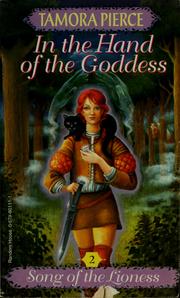
In the Hand of the Goddess
Alanna, still disguised as a boy, survives war, court plots, and a death duel as the Goddess's chosen warrior in the second Song of the Lioness book.
2,018-word summary · 9 min read
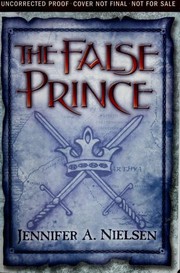
The False Prince
A nobleman buys four orphans and tells them only one will survive to impersonate the missing prince. The narrator, a defiant thief named Sage, has other plans.
2,044-word summary · 9 min read
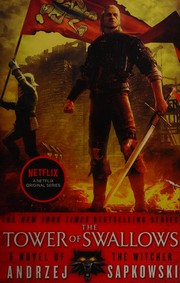
The Tower of the Swallow
Ciri flees as a bandit while Geralt gathers allies to find her.
2,580-word summary · 11 min read
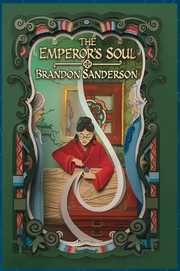
The Emperor's Soul
Forger Shai must stamp a new soul for the dying emperor in 100 days.
2,313-word summary · 10 min read
Shadow's Edge
Kylar fakes death as a king killer while Vi hunts him for the Godking.
2,245-word summary · 10 min read
Pawn of Prophecy
Farm boy Garion learns sorcerers watch him as an old Orb wakes.
2,331-word summary · 10 min read
New Spring
Moiraine and Lan hunt the newborn Dragon before the Black Ajah finds him.
2,475-word summary · 11 min read
A Winter's Promise
Ophelia reads objects and is sent to marry Thorn on a cold ark.
2,502-word summary · 11 min read
Three Dark Crowns
Three triplet queens must kill each other for the crown, but love and gifts get in the way.
2,134-word summary · 9 min read
Stone of Tears
After the veil tears, Richard seeks training from the Sisters while Kahlan holds a fracturing Midlands and Zedd hunts the missing Stone.
2,483-word summary · 11 min read
The Farthest Shore
Archmage Ged and Prince Arren sail to the far west to stop Cob, whose bid for endless life drains magic across Earthsea in Le Guin's sad 1972 third volume.
2,800-word summary · 12 min read
Lirael
A Sightless Clayr girl and a prince afraid of Death join the Dog and Mogget to stop necromancers from waking the Destroyer Orannis at the Red Lake while old…
2,692-word summary · 12 min read
Dragons of Autumn Twilight
Old friends reunite at the Inn of the Last Home, guard a glowing Blue Crystal Staff, face black dragon Khisanth, and free slaves at Pax Tharkas in this 1984…
2,803-word summary · 12 min read