
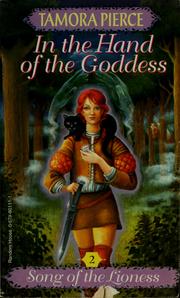
In the Hand of the Goddess
2,018-word summary 9 min read 232 pages in the book
- First published
- 1984
- Publisher
- Atheneum
- Pages
- 232
- ISBN
- 9780689310546
- Series
- Song of the Lioness (#2)
Reading options
What's inside (8 sections)
The second Song of the Lioness book is where the training wheels come off. Tamora Pierce published it in 1984 with Atheneum, 232 pages, a year after Alanna: The First Adventure, and used the middle volume to do something the first book only hinted at: let its heroine be really good at a thing and then complicate the cost of being good. I came to these books late, as an adult who had heard them described as foundational, and what surprised me is how much of the second one is about love and law rather than swords.
The story picks up with Alanna around fifteen, still disguised as a boy called Alan, now squire to Prince Jonathan of Conté. She is riding back from an errand and camps under a willow tree, where a small black cat with purple eyes adopts her. She names him Faithful. What nobody else hears, Alanna hears clearly, because Faithful speaks mind to mind, and he is not a stray. The Great Mother Goddess appears at the fire that night, tells Alanna she is her chosen warrior maiden, and gives her an amulet, often called an ember-stone, that grows warm when magic is being worked nearby. That stone ends up mattering more than it looks.
Tusaine, Dain, and War
Back at court, diplomacy has gone sour. A Tusaine delegation is pushing King Roald toward war, and a Tusaine knight named Dain loudly mocks Tortallan swordsmanship in a hall full of witnesses. Alanna, as Alan, challenges him and wins. It is a great scene for a girl in disguise and a terrible scene for anyone who wants peace, because the insult has now been answered and the pressure grows. The war with Tusaine eventually breaks out anyway, and the fighting is real at the River Drell, with casualties and mud and nothing like the duel.
Pierce does not pretend a fifteen-year-old should be at that river. What she does instead is send Alanna as a squire attached to Jonathan's command, where she heals wounded soldiers with a Gift she is still hiding from almost everyone. The healing drains her and puts her in places that get her noticed. Tusaine nobles capture her, and Jonathan leads the rescue, after which the two of them kiss and begin an affair that neither of them knows how to conduct safely. Readers expecting a clean romance should note the fog: Alanna loves Jonathan, loves George Cooper, and has no framework for any of it, because she has spent years performing as a boy and the performance has eaten most of her maps for intimacy.
The war also leaves scars the book does not fix. People die. Alanna fails to save some of them. Her Gift, used up at the river and afterward, teaches her the difference between power and stamina, and Pierce lets her be bad at pacing herself, which is a thing young prodigies are, and a thing most stories forgive too quickly.
George, Delia, and the Trellis of Court
The court half of the book runs on three social engines. The first is George Cooper, King of the Rogues, who knows Alanna is a woman and keeps it while continuing to tease her about everything else. He says plainly that he loves her. She cannot say it back, because she does not know how to want one person while wanting another, and because she is fifteen and scared and because on some level she understands that choosing George would mean choosing a life outside the court she has spent years fighting to enter. That refusal is a real conflict, not a misunderstanding to clear up in a chapter.
The second engine is Delia of Eldorne, beautiful, sharp, and placed near Jonathan by Duke Roger, who is gathering influence around the heir. Everybody at court wants things. Delia wants position. Roger wants a throne. Alex of Tirragen, Alanna's old page-friend, has gone to Roger's service as a squire and grown cooler and harder. The third engine is simply the years of secrecy, which by now have weight: the corsets that flatten her chest, the excuses during monthly bleeding, the baths taken at odd hours, the friends who trust Alan without ever having met Alanna.
Pierce handles the question of who knows what with unusual honesty. Jonathan knows and loves her. George knows. Gary of Naxen has guessed. Eleni Cooper, George's mother, has quietly taught Alanna how to dress and move as a woman, which is how the book gets its best jokes and its tenderest scenes. Myles of Olau watches everything and says almost nothing, which is his superpower. Thom, Alanna's twin, is off being a magical prodigy and occasionally throwing her a line, sibling to sibling.
The Goddess Problem
The religion in this book is not decoration either. Alanna is chosen by the Great Mother Goddess, given a cat who talks and a stone that warms near magic, and told in plain terms that she is a warrior maiden. Pierce does not turn her into a priestess. Alanna prays when she is frightened, argues with the Goddess in her head, and keeps training. The chosen-one material sits alongside the ordinary work of sword drills and saddle sores, and the tension between destiny and practice is one of the book's better ideas.
I have seen readers complain that the Goddess makes Alanna too special, that the amulet is a shortcut in the final fight. I understand the objection, but I think it misreads what the amulet does. It does not make her stronger. It lets her see what is actually there, which is the same lesson Myles teaches in the classroom and George teaches in the alleys. The Goddess is not handing her victory. She is handing her clarity, and clarity still requires a sword arm steady enough to use it.
Faithful is the lighter side of the same gift. He is funny, vain, and blunt, and he gives Alanna someone to talk to when the performance of Alan becomes unbearable. The cat also gives the reader a break from the court politics. Some of the best pages are just Alanna and Faithful on the road, trading insults. It is a small thing that makes a large book feel human.
The war chapters are where the chosen-one story gets complicated. Alanna heals soldiers and cannot save all of them. She is captured, rescued, and kissed, and none of it feels like a reward. Pierce is showing that a Gift is a responsibility before it is a privilege. The Goddess chose a girl who wants to be a knight, and the book keeps asking what knighthood is for when the fighting is over and the wounded are still dying.
The Ordeal, and the Real Reveal
When Alanna's knighthood approaches, the test is the Ordeal of Knighthood, a vigil in the Chamber of the Ordeal that is more spiritual trial than exam. Alanna walks in exhausted and afraid, because Duke Roger has been circling her for months, and she survives. She emerges a knight. In a moment that lands better because of everything suppressed underneath it, she is dubbed and handed a shield with the Trebond crest, and Thom privately tells her it will become a golden lioness on red when she is ready to reveal herself.
Two things usually get misremembered about this book, and both matter. The first is that people think her disguise is exposed during the Ordeal. It is not, and if it were, the Chamber would have become a cheap trick rather than a trial. The second is Faithful. Readers remember him as a lucky stray. He is not a stray at all, and the amulet, not Jonathan or any rescue, is what eventually beats Duke Roger.
The exposure, when it comes, is not a whisper or a slip. It happens at a public feast after Alanna uncovers Roger's plot. She has found the wax figure of Queen Lianne in Roger's magical fountain and dolls representing his intended victims, which is about as much proof as the book allows in a world where magic is evidence. She accuses him before the court. Roger, who has been waiting his whole life for a stage like this, demands trial by combat.
Trial by Combat
The duel is the best choreographed sequence in the novel. Roger is bigger, better rested, and willing to use magic, and the fight goes badly for Alanna until his sword slices through her corset and the concealment fails in front of everybody. She is revealed as a woman in the middle of a trial for her life. That is the moment the entire first two books have been building toward, and Pierce is careful to make the court's reaction complicated rather than uniform. Some gasp. Some are furious. Jonathan, Myles, and Gary announce, more or less, that they already knew, which retroactively warms a lot of earlier pages.
Roger does not stop fighting when the secret comes out. He escalates, throwing an illusion at her once sword has failed him, and Alanna uses the Goddess's amulet to see through the picture and find the man behind it. She kills him. Then she does the thing the first book trained us to expect from her and the second book makes us understand: she does not stay to enjoy the vindication. She says goodbye to Jonathan, and it is a genuinely sad goodbye, because love and service and a secret have tangled past the point where any honest choice keeps everyone whole. She rides south into the desert with Faithful, Coram, and her horse Moonlight.
Why It Still Works
Structurally the book is a bridge, and bridges are usually the disappointing volume in a quartet. Character events matter for later books more than they matter in themselves, the war half can feel like a detour before the court half, and the cast keeps expanding in ways a 232-page book can barely hold. Alex's turn toward Roger gets one good scene and then waits for the sequel. Thom is mostly offstage.
What it gains is stakes of the right size for its heroine. Alanna spends the first book earning her costume and the second book learning what it costs to wear it. She heals soldiers and cannot save them all. She wins a duel and hates what it launches. She loves two people who love her and cannot untangle it. She becomes a knight, which is the only part of her future that comes out clean, and even that comes with a goodbye at the gate.
The book is also unusually honest about friendship as a casualty of secrecy. Gary has guessed, George knows, Jonathan knows, and each of them holds a different piece of Alanna's truth. None of them can talk to the others about it, which means the person closest to her is also the person who keeps her most isolated. Pierce does not solve that. She lets it sit, and the loneliness is part of why the ending feels like a door closing rather than a victory parade.
Pierce's prose is workmanlike, occasionally blunt, and much less polished than her later Tortall books, and the gender themes can read as binary to a modern eye in ways that have aged unevenly. But the choice at the center, letting a girl be knighted and then ride off alone rather than ending with a wedding or a throne, was quietly radical in 1984 and is still the reason to hand this to a young reader. The sequel, The Woman Who Rides Like a Man, begins exactly where this one leaves off, in the desert, with a woman knight who has stopped pretending to be anything other than what she is. Read this one second, after Alanna: The First Adventure, and pay attention to the small kindnesses, because the series remembers them longer than it remembers the duels. The ending is not a cliffhanger in the modern sense. It is a door, and the next book walks through it.
FAQ
When was In the Hand of the Goddess published?
Atheneum published it in 1984, a year after Alanna: The First Adventure. The first edition runs 232 pages.
Is Alanna exposed during the Ordeal of Knighthood?
No. She survives the vigil and becomes a knight. Her disguise is exposed later, during the trial by combat with Duke Roger, when his sword cuts through her corset in front of the court.
Where does this book fall in the series?
It is Song of the Lioness book two, between Alanna: The First Adventure and The Woman Who Rides Like a Man. It ends with Alanna leaving for the desert with Faithful, Coram and Moonlight.
Similar books
More from Song of the Lioness first, then related titles.
Alanna: The First Adventure
Twins swap roles so Alanna trains as boy page Alan for knighthood while Thom studies sorcery.
2,107-word summary · 9 min read

Lioness Rampant
Alanna searches for the Dominion Jewel with the Shang Dragon, then returns to Tortall to face Duke Roger at Jonathan's coronation.
2,478-word summary · 11 min read

Inkdeath
The final Inkworld novel sends Mo into the land of the dead, leaves Meggie choosing between two boys, and ends the Adderhead's immortality with three written…
2,062-word summary · 9 min read

The Golem's Eye
Two years after The Amulet of Samarkand, Nathaniel is a rising bureaucrat, Bartimaeus is his unwilling servant again, and something made of clay is tearing…
2,299-word summary · 10 min read

The Rose & the Dagger
Shahrzad is pulled from her Caliph husband and left in a desert camp of rebels, needing to break his curse and end a war before it ends her.
2,520-word summary · 11 min read

The Queen of the Tearling
Nineteen-year-old Kelsea leaves the woods to take her throne, ends a shipment of human captives, and draws the Red Queen's revenge.
2,357-word summary · 10 min read

We Hunt the Flame
In a fractured Arabia-inspired world, a disguised huntress and a prince-assassin race to find a magic-restoring book and confront an ancient evil.
2,195-word summary · 10 min read
The Magician
Sophie and Josh flee to Paris with Nicholas Flamel, where John Dee, Machiavelli, and an awakened god close in on the missing pages of the Codex.
2,162-word summary · 10 min read
Magician: Apprentice
An orphan kitchen boy and a smith's son grow up in a frontier castle just as invaders from another world open a rift and begin a war that will change both of…
2,114-word summary · 9 min read
The False Prince
A nobleman buys four orphans and tells them only one will survive to impersonate the missing prince. The narrator, a defiant thief named Sage, has other plans.
2,044-word summary · 9 min read
La Belle Sauvage
Philip Pullman's prequel to His Dark Materials follows eleven-year-old Malcolm Polstead as a secret message, a hunted baby, and the flood of the century carry…
2,530-word summary · 11 min read
Furies of Calderon
Furyless Tavi defends Calderon Valley when the Marat return and lords scheme.
2,587-word summary · 11 min read

A Winter's Promise
Ophelia reads objects and is sent to marry Thorn on a cold ark.
2,502-word summary · 11 min read
Lirael
A Sightless Clayr girl and a prince afraid of Death join the Dog and Mogget to stop necromancers from waking the Destroyer Orannis at the Red Lake while old…
2,692-word summary · 12 min read
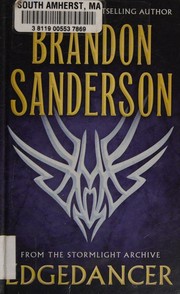
Edgedancer
Hungry street thief Lift and her vine-like friend Wyndle cross the Herald Nale in Tashikk when a child emperor shows Radiant signs and she refuses to step…
2,328-word summary · 10 min read
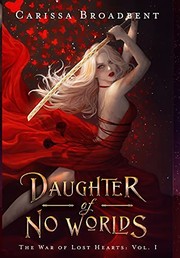
Daughter of No Worlds
A former slave with rare magic hires exiled warrior Max to train her for a daring rescue, sparking slow burn love and wider war in this big 520-page fantasy…
2,529-word summary · 11 min read
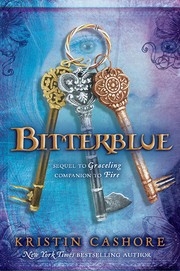
Bitterblue
Eighteen-year-old Queen Bitterblue sneaks out to learn why Monsea still suffers after Leck, facing court lies, ciphers, and trials in Cashore's rich third…
2,686-word summary · 12 min read
The Tombs of Atuan
Priestess Arha guards dark Tombs until wizard Ged comes to steal back ring.
2,043-word summary · 9 min read

The Amulet of Samarkand
Boy magician Nathaniel summons djinn Bartimaeus to steal the Amulet and stop Lovelace's coup in London.
2,350-word summary · 10 min read
Strange the Dreamer
Orphan librarian Lazlo Strange joins a quest to the lost city of Weep, where blue-skinned godspawn haunt dreams.
2,221-word summary · 10 min read
Inkspell
Meggie and Farid read themselves into the Inkworld, where Mo is wanted as the Bluejay and words can wound.
2,406-word summary · 11 min read
Abhorsen
Lirael as Abhorsen-in-Waiting must bind the Destroyer Orannis with Sam, Dog, and Mogget.
2,214-word summary · 10 min read
The Goose Girl
A shy princess loses her name on the road to her wedding and must earn it back as a palace goose girl in this Grimm retelling.
2,357-word summary · 10 min read
The Alchemyst
Twins Sophie and Josh learn their boss is Flamel as Dee steals the Codex minus two pages.
2,085-word summary · 9 min read
Poison Study
Sentenced to die, Yelena becomes the Commander's poison taster and learns survival in Ixia has a daily price.
2,501-word summary · 11 min read
To Kill a Kingdom
A siren princess turned human must steal a siren-hunting prince's heart to win back the sea.
2,248-word summary · 10 min read

Fire
A human monster who reads minds is pulled into war in the Dells and must decide how to use her power.
2,727-word summary · 12 min read
Children of Blood and Bone
White haired Zelie chases magic return with princess Amari hunted by Inan.
2,027-word summary · 9 min read

Finale
Sisters face waking Fates with debts due, loving princes, and choices that break immortal math.
1,995-word summary · 9 min read
A Wizard of Earthsea
A proud goatherd becomes the wizard Ged, looses a shadow at Roke, and must hunt it across Earthsea to name it. Le Guin's lean 1968 series opener.
2,972-word summary · 13 min read