
Bitterblue
2,686-word summary 12 min read 480 pages in the book
- First published
- 2012
- Publisher
- Dial Books
- Pages
- 480
- ISBN
- 9780803734739
- Series
- Graceling Realm (#3)
Reading options
What's inside (7 sections)
I came to Bitterblue because Graceling had left me with a favorite kind of ache. I liked Katsa and her bluntness. I liked Po and his easy laugh. When I heard the third book after Graceling and Fire was about the little girl from the first book, all grown up and trying to run a kingdom, I bought it the same week. Dial Books published it in May 2012, a thick first hardback of 480 pages, and I remember thinking the size suited the job. This was not going to be a road adventure. It was going to be paperwork, lies, and slow repair.
That is exactly what Cashore gives us. Bitterblue is eighteen now and Queen of Monsea. Eight years have passed since Katsa spared her life as a child and helped end her father. Her father was King Leck, a man with a Grace that let him twist what people saw and remembered. He held Monsea under a mind spell for thirty-five years. People cut themselves because he liked it. People forgot crimes they witnessed. Mothers forgot what happened to their children. Now Leck is dead and the spell is gone, but no one woke up clean. The whole country is like a house after a flood. The water is out. The rot is still in the walls.
Bitterblue knows this. She sits in a castle tower in Bitterblue City signing laws and pardons and trade papers from morning until her hand cramps. She wants to be good. She wants to fix the courts, open the libraries, pay debts, punish the cruel men who served her father and reward the ones who resisted. The problem is she cannot tell which is which. Her advisers filter everything.
A queen who signs what she cannot read
The opening stretch is quiet on purpose. Bitterblue wakes early. Her maid Helda fusses over dresses and breakfast. Guards walk her to council. In council sit four older men: Thiel, her most trusted adviser and minister of justice in all but name, plus Runnemood, Darby, and Rood. They were Leck's men first, healers and scholars by training, kept close by the old king for his own uses. Now they serve his daughter, appointed with the blessing of King Ror of Lienid. They speak softly. They tell her the kingdom is healing. They urge her to sign.
She signs. Then she starts to notice gaps.
A petition mentions a man hanged for a murder she never heard about. A budget line pays for paper that never arrives at the library. A clerk blushes when she asks who wrote a report. Thiel smiles and says she works too hard and should rest. Runnemood gets sharp when she asks twice. Darby changes the subject to binding and ink. Rood says little at all.
Cashore is good at this part. She does not make Bitterblue stupid. She makes her sheltered and tired and surrounded by men who have decided what she can bear. Bitterblue can read law. She can follow money. What she lacks is raw information. The castle runs on summaries of summaries. When she asks her head librarian, a sharp woman everyone calls Death, for old court records, Death tells her many were burned under Leck and many more went missing after. When she asks about truthseekers, the people who tried to tell true stories during Leck's rule, people look away.
One night Bitterblue does something reckless and very eighteen. She borrows servant clothes, covers her pale hair, and slips out through a forgotten passage to see the city herself.
I liked this decision because it felt earned, not cute. She is not playing at being common. She is starved for unfiltered talk.
Sparks and the print shop by the bridge
Out in the night city, Bitterblue finds a tavern that is really a story room, where people gather to speak aloud what happened under Leck. She hears a woman describe a brother taken in the night. She hears a man try to date a beating he cannot quite place in time. Time itself is broken for these people. Thirty-five years of false memory does not snap back in eight years.
She also meets two young men who change the book. Teddy is open faced and talkative, an apprentice printer with ink under his nails. Saf, full name Sapphire, is lean and quick and angry, with a thief's timing. They think she is a kitchen girl. They call her Sparks because she blurts things and because her eyes catch light. She lets them believe it.
Teddy and his sister Tilda run a print shop near the bridge with Saf and Bren, Saf's sister. By day they print reading lessons because illiteracy is high after decades when schools taught lies. By night they print true accounts and banned lists and old maps. They are part of a loose network trying to educate the city one sheet at a time. Saf steals back objects Leck once stole and sells some to fund the work. He does not know Bitterblue is the queen. She does not tell him.
These chapters were my favorite on first read and on reread. The drawbridge tower where Saf sometimes sleeps, the smell of oil and paper, the clatter of type, the bridge itself arching over black water. Saf shows Sparks how to move across rooftops without being seen. Teddy shows her how to set type without smearing it. She eats soup with them and laughs for the first time in months. Then she goes back to the castle before dawn and sits through council with sore feet and a secret.
The secret cuts both ways. She learns the city thinks the queen is distant and cold. She learns people still fear the castle. She also learns her advisers have been telling her the printing is under control when it is not, and that several truthseekers were killed in ways that were ruled accidents.
Cashore keeps the tension low and steady here rather than loud. No battles. Just a girl walking home in borrowed shoes, trying to hold two lives in her head.
Ciphers and the man called Danzhol
Back inside the castle, the mystery tightens around paper. Bitterblue finds letters from her mother, Queen Ashen, hidden in furniture. The wording is odd. Certain words are spaced wrong. Death confirms what Bitterblue suspects. Her mother left ciphers, short coded messages tucked inside ordinary notes, because Leck read everything.
At the same time Bitterblue starts pulling at Leck's old journals. They are written in strange symbols no one recognizes. Death thinks it is not a code for Monsean words at all but another tongue entirely. She sets to work with a translator's patience, copying symbols, testing sounds, looking for names and dates.
This is where the book slows, and I will talk more about that later. For now, stay with the plot. Bitterblue learns that Lord Danzhol, a nobleman with lands east of the city, has been asking questions about her movements. One night on the river road, his men try to seize her while she is out in disguise. Hava, a quiet castle servant with a Grace for hiding, helps her get away. Bitterblue is forced to kill Danzhol herself with a knife when he grabs her. She has never killed before. Her hands shake for hours. Hava holds her coat and says nothing, which is exactly right.
After that, violence spreads. Teddy is stabbed in the street and nearly dies. A Dellian healer named Madlen saves him with skill and plain talk. The print shop is burned. Saf is arrested for a murder he did not commit. Bitterblue has to sit in court, crown on her head, and watch the boy who called her Sparks stand in chains and realize who she is. His face when he understands is one of the best written moments in the book. Not rage. Hurt pride. He feels fooled by someone he fed.
Saf's trial matters for two reasons. First, it shows Bitterblue trying to make law work after Leck. She insists on witnesses, on alibis, on records. The judges are nervous. The crowd is loud. In the end Saf's alibi holds and he walks free. Second, it breaks something between them. Saf steals her crown from the castle afterward and sells it on the black market. It is petty and pointed. He wants her to feel what it is like to have something taken and passed hand to hand.
I understood his anger even as I winced at the theft. Bitterblue had lied to him for months. She had reasons. He had reasons to be stung.
Around this same stretch, Bitterblue is stabbed herself by an attacker in a hallway. Her guard Holt, a strong Graced man, saves her. She spends days in bed with fever, listening to Helda scold the surgeons. When she is up again, she learns Runnemood has vanished. His body is later found below the Winged Bridge. The official word is suicide or accident. Bitterblue does not believe it.
Katsa and Po return and the past will not stay buried
I had missed Katsa and Po without realizing how much. They have been east beyond the mountains, mapping passes and meeting new peoples, and they come back with Lady Fire from the Dells and others hoping for alliance. Katsa is still direct to the point of rudeness. Po is still warm, blind now since the end of Graceling, finding his way by his Grace that senses other living things. Their return lifts Bitterblue in a way council never does. Here are people who knew her when she was small and afraid. Here are people who do not flatter her.
Po sits with her and listens. Katsa trains with the guards and tells Bitterblue plainly that Monsea feels wrong, like a wound covered too fast. Fire, with her startling hair and her ability to read minds of some creatures, is gentler. She has lived through her own father's crimes in the Dells and knows what it costs to hear truth.
With their support, Bitterblue pushes harder. Death cracks more of Leck's journals. The translation is ugly. Leck wrote about torture as if it were art. He wrote about forcing his healers to hurt people for his pleasure. He wrote about Bellamew, Bitterblue's grandmother's generation, and about Ashen. The pages make clear that Thiel and the others were not just clerks under Leck. They were his instruments. Leck compelled them with his Grace to do terrible work, then let them live with the memory after he died.
This is the turn that reframes the whole book. Thiel, Runnemood, Darby, and Rood lied to Bitterblue not only to keep power but to bury shame. They burned records. They paid scribes to alter lists. They had truthseekers beaten and in some cases killed. They told themselves Monsea needed calm, not truth. Thiel in particular believed he was protecting Bitterblue from knowledge that would break her. When she confronts him with proof, he confesses to pushing Runnemood from the bridge to stop further killing, then he steps off the bridge himself. Darby hangs himself in prison the next day. Rood, who has grandchildren he loves, chooses to live and accept house arrest.
I found these chapters hard to read in the right way. Cashore does not excuse the men. She shows how Leck used them and how they then used that excuse to control a young woman. Bitterblue forgives them as people who were once tortured into cruelty, but she refuses to let them keep dictating what Monsea may remember. That distinction felt mature. Forgiveness here is not permission. It is release paired with judgment.
Other truths land fast after that. Hava, the quiet servant who can vanish in a room, is Bitterblue's half sister, born after Leck assaulted Bellamew's daughter. Hava knew and said nothing for a long time out of fear. Bitterblue takes her in without a speech. Saf's Grace finally shows itself. He gives good dreams to people who sleep near him, which explains why Bitterblue rested so well in the tower and why children follow him. It is a small power and a kind one, fitting for a thief who hates what Leck did to sleep and memory.
There are trials, real ones this time, with evidence and scribes. There are lists of the dead read aloud. Bitterblue founds new ministries to gather stories, restore books, pay families, and teach reading. Tilda gets a contract to reprint what can be saved. Teddy, still pale from his wound, argues about paper stock like it is a moral issue. Saf spends one night with Bitterblue in the tower, kind and sad, then leaves with the Dellian party and Po's older brother Skye to see country beyond Monsea. It is not a breakup with shouting. It is two young people admitting timing and trust are wrong.
And Giddon? Lord Giddon, the Lienid lord who once loved Katsa and lost, courts Bitterblue with steady respect. He is decent and brave and dull for her in the way a good pair of shoes can be dull when you wanted to run barefoot. She likes him. She will not marry him. Cashore handles it without cruelty. Giddon deserves someone who wants the life he offers. Bitterblue wants work she has only started.
What drags and what sings
No book of 480 pages earns every page, and this one has a soft middle. The cipher work, while true to how research feels, takes many chapters. Bitterblue puzzles over spacing. Death puzzles over grammar. Then they puzzle again. I admire the patience. I also checked how many pages were left twice. When Teddy is hurt and the shop burns, the pace picks up, but the stretch before that leans heavily on people reading in rooms.
The cast is huge. Besides the council and the printers, there are guards, clerks, judges, Lienid visitors, Dellian visitors, healers, spies, and cousins of spies. Some, like Madlen and Helda, earn their space. Others blur. I had to flip back to remember which adviser had grandchildren and which had written medical pamphlets. That is not fatal in a book about a crowded court, but it asks a lot on a first read.
The romance is thin by design, yet it still frustrated me. Saf and Bitterblue have charm, but their time as equals is short. Once he learns she is queen, hurt takes over and they never recover ease. Their night together reads more like goodbye than love. Giddon's courtship is respectful and flat. If you came hoping for the pull of Katsa and Po, you will not find it here. This is a book about trust, not passion.
What sings is the central idea and the way Cashore commits to it. Healing is not forgetting. Monsea cannot get well by edict. It needs story rooms and trials and libraries and money for paper. Bitterblue's growth from a girl who signs what she is given to a queen who demands to see the ugly journals herself is steady and believable. Her forgiveness of Thiel's group, paired with her refusal to keep their cover up, felt wiser than most adult fantasy I have read.
I also liked how physical the book is. Ink on fingers. Cold air off the bridge. The weight of a crown Saf later calls heavy and awkward. The ache in Bitterblue's hand after signing. Cashore writes work well, whether it is printing or healing or translating.
If you read Graceling for fights, know this is different. If you read Fire for its ache about power and consent, this will feel like kin. Bitterblue closes the arc that started with a kidnapped child. Not with a battle, but with a young woman choosing record over rumor, and choosing to listen even when listening hurts.
I finished it late at night and sat a while before sleep. Not because of a twist. Because the last image that stayed was ordinary. A queen in a tower, lamp lit, reading a true sentence someone finally wrote down.
FAQ
Is Bitterblue the third book after Graceling and Fire?
Yes. It follows Graceling and Fire as book three. Dial published it in May 2012, and the first hardback runs 480 pages.
Why do Thiel and the other advisers lie to Bitterblue?
Thiel, Runnemood, Darby, and Rood were forced to serve Leck and then hid their shame. They burned records and silenced truthseekers to protect themselves and Bitterblue.
Do I need to read Graceling before Bitterblue?
You can start here, but Graceling helps a lot. Katsa and Po return late in the story, and their past with Bitterblue gives those scenes weight.
Similar books
More from Graceling Realm first, then related titles.
Graceling
Katsa, Graced with killing, breaks from her uncle's use of her and follows a kidnapped prince toward a hidden king.
2,517-word summary · 11 min read

Fire
A human monster who reads minds is pulled into war in the Dells and must decide how to use her power.
2,727-word summary · 12 min read
Lioness Rampant
Alanna searches for the Dominion Jewel with the Shang Dragon, then returns to Tortall to face Duke Roger at Jonathan's coronation.
2,478-word summary · 11 min read

The Rose & the Dagger
Shahrzad is pulled from her Caliph husband and left in a desert camp of rebels, needing to break his curse and end a war before it ends her.
2,520-word summary · 11 min read
The Queen of the Tearling
Nineteen-year-old Kelsea leaves the woods to take her throne, ends a shipment of human captives, and draws the Red Queen's revenge.
2,357-word summary · 10 min read

Inkdeath
The final Inkworld novel sends Mo into the land of the dead, leaves Meggie choosing between two boys, and ends the Adderhead's immortality with three written…
2,062-word summary · 9 min read

Vow of Thieves
Kazi and Jase return to Tor's Watch to find it occupied, and their marriage is tested by captivity, betrayal, and a war for the town of Hell's Mouth.
2,059-word summary · 9 min read

The Golem's Eye
Two years after The Amulet of Samarkand, Nathaniel is a rising bureaucrat, Bartimaeus is his unwilling servant again, and something made of clay is tearing…
2,299-word summary · 10 min read

Fool's Errand
FitzChivalry Farseer has lived in exile for fifteen years. When Prince Dutiful vanishes before his betrothal, Fitz returns to Buckkeep to find him, with a wolf…
2,606-word summary · 12 min read

We Hunt the Flame
In a fractured Arabia-inspired world, a disguised huntress and a prince-assassin race to find a magic-restoring book and confront an ancient evil.
2,195-word summary · 10 min read
The Magician
Sophie and Josh flee to Paris with Nicholas Flamel, where John Dee, Machiavelli, and an awakened god close in on the missing pages of the Codex.
2,162-word summary · 10 min read

In the Hand of the Goddess
Alanna, still disguised as a boy, survives war, court plots, and a death duel as the Goddess's chosen warrior in the second Song of the Lioness book.
2,018-word summary · 9 min read
The False Prince
A nobleman buys four orphans and tells them only one will survive to impersonate the missing prince. The narrator, a defiant thief named Sage, has other plans.
2,044-word summary · 9 min read

Furies of Calderon
Furyless Tavi defends Calderon Valley when the Marat return and lords scheme.
2,587-word summary · 11 min read

A Winter's Promise
Ophelia reads objects and is sent to marry Thorn on a cold ark.
2,502-word summary · 11 min read
Three Dark Crowns
Three triplet queens must kill each other for the crown, but love and gifts get in the way.
2,134-word summary · 9 min read

Lirael
A Sightless Clayr girl and a prince afraid of Death join the Dog and Mogget to stop necromancers from waking the Destroyer Orannis at the Red Lake while old…
2,692-word summary · 12 min read
Edgedancer
Hungry street thief Lift and her vine-like friend Wyndle cross the Herald Nale in Tashikk when a child emperor shows Radiant signs and she refuses to step…
2,328-word summary · 10 min read
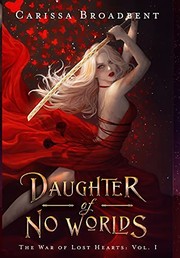
Daughter of No Worlds
A former slave with rare magic hires exiled warrior Max to train her for a daring rescue, sparking slow burn love and wider war in this big 520-page fantasy…
2,529-word summary · 11 min read
The Tombs of Atuan
Priestess Arha guards dark Tombs until wizard Ged comes to steal back ring.
2,043-word summary · 9 min read

The Amulet of Samarkand
Boy magician Nathaniel summons djinn Bartimaeus to steal the Amulet and stop Lovelace's coup in London.
2,350-word summary · 10 min read
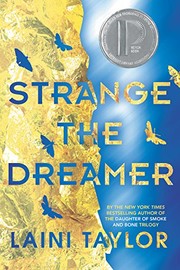
Strange the Dreamer
Orphan librarian Lazlo Strange joins a quest to the lost city of Weep, where blue-skinned godspawn haunt dreams.
2,221-word summary · 10 min read
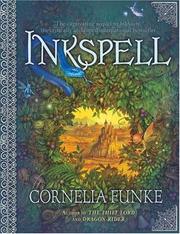
Inkspell
Meggie and Farid read themselves into the Inkworld, where Mo is wanted as the Bluejay and words can wound.
2,406-word summary · 11 min read
Alanna: The First Adventure
Twins swap roles so Alanna trains as boy page Alan for knighthood while Thom studies sorcery.
2,107-word summary · 9 min read

Abhorsen
Lirael as Abhorsen-in-Waiting must bind the Destroyer Orannis with Sam, Dog, and Mogget.
2,214-word summary · 10 min read

The Kiss of Deception
Princess Lia flees an arranged marriage and hides in a village, unaware one stranger is a prince and the other an assassin.
2,196-word summary · 10 min read

The Alchemyst
Twins Sophie and Josh learn their boss is Flamel as Dee steals the Codex minus two pages.
2,085-word summary · 9 min read

Poison Study
Sentenced to die, Yelena becomes the Commander's poison taster and learns survival in Ixia has a daily price.
2,501-word summary · 11 min read
To Kill a Kingdom
A siren princess turned human must steal a siren-hunting prince's heart to win back the sea.
2,248-word summary · 10 min read
The Shadows Between Us
Alessandra plans to woo the Shadow King, marry him, and kill him for his throne, then finds someone else wants him dead first.
2,571-word summary · 11 min read