

Poison Study
2,501-word summary 11 min read 361 pages in the book
- First published
- 2005
- Publisher
- LUNA
- Pages
- 361
- ISBN
- 9780373802302
- Series
- Study (#1)
Reading options
What's inside (8 sections)
I picked this one up after seeing it on romantasy shelves for years, always with the same promise attached: poison taster, gruff assassin mentor, slow burn. I expected something light with a sharp hook. What I got instead was stranger and better, a book that opens in a dungeon with a hanging already scheduled and then turns into a patient story about learning a trade most people would rather die than practice. It was first published in 2005 by LUNA, running 361 pages in that first edition, and it opens the Study series. That history matters because you can feel the era in it, before romantasy had its current formula, when a fantasy romance could still spend forty pages on how you taste for arsenic.
The setup is brutally simple. Yelena has been locked in the palace dungeon for killing a man named Reyad, and in Ixia murder means execution no matter the reason. She has made her peace with the noose. Then Valek, the Commander's chief of security, walks into her cell with a different sentence: become the Commander's food taster, eat the best meals in the castle, sleep in real rooms, and risk being murdered by poison every single day. She takes it. Of course she takes it.
One warning before the rest, given plainly. The reason Yelena killed Reyad unfolds slowly and it is ugly: sexual abuse going back to her childhood. Snyder does not linger on it for shock, but she does not look away either, and the memories surface in nightmares across the whole book. If you came here expecting cozy court intrigue with goblets, know that the spine of this story is a survivor trying to live inside the same walls as the family that broke her.
The worst job offer in fantasy
Ixia itself needs explaining, because the country is practically a second character. Fifteen years before the book opens, Commander Ambrose overthrew the monarchy and rebuilt the nation around military order. The Code of Behavior governs everything: uniforms by rank and district, curfews, work assignments, and a flat ban on magic, which the Commander blames for the corruption of the old regime. Magicians are executed. There is no appeal and no sentimentality about it. What surprised me is how livable Snyder makes this sound at first. The roads are safe. The markets run. People who keep their heads down eat regularly, which is more than the old king's reign offered them. The order is real, and so is the steel underneath it.
Valek embodies both sides of that bargain. He is the Commander's top assassin and spymaster, compact, watchful, unreadable, the man who killed his way through the takeover at Ambrose's side and never left it. When he offers Yelena the taster post, it is not mercy. The previous taster died. The Commander eats from common kitchens to make assassination harder, which means someone has to test every plate, and Valek needs that someone to be expendable. He tells her the terms without dressing them up. She will be watched constantly. She will have no freedom worth the name. And to make sure she does not simply run, he feeds her a poison called Butterfly's Dust on the first day, a slow toxin that kills within days unless she reports for the daily antidote, which only he can give her.
That leash shapes the entire book. Every morning Yelena must walk to Valek for the antidote, hating him, and every morning he hands it over and watches her drink, and something human starts growing in that ritual against both their wishes. I found it a cleverer chain than a locked door. It lets her move through the castle, learn its corridors and kitchens, make friends, even train, while never being free for a second. Readers who dislike captor romances should know this dynamic stays uneasy for a long stretch. He poisoned her. She never forgets it, and the book is better for letting her stay angry about it.
Salt, sour, and things that stop your heart
The middle of the book is essentially a trade apprenticeship, and I mean that as praise. Valek sets out to teach Yelena poisons the way a fencing master teaches blades: names, smells, symptoms, antidotes, and above all the discipline of the tasting ritual itself. She learns to smell each dish before touching it, to take small separate tastes of every component rather than hungry mouthfuls, to wait and note the first wrong sign, numbness, bitterness where sweetness belongs, a pulse that climbs for no reason. Snyder clearly did her homework, or faked it with real confidence, because these scenes have the texture of actual craft. There is a sequence where Yelena works through the kitchen's stores, jar by jar, learning which powders clump in damp air and which ones smell faintly of almonds, that I read twice.
The attempts on the Commander's food come irregularly, which keeps the routine from going flat. Sometimes weeks pass with nothing and Yelena starts to wonder if the whole post is theater. Then a breakfast tray nearly kills her and the castle snaps alert. She survives one attempt partly by luck and partly by the training kicking in, and the way Valek debriefs her afterward, cold, exact, faintly pleased, tells you more about him than any speech could. He respects competence the way other men respect birth. It is the first crack in his armor, and Yelena notices it before he does.
What keeps this stretch breathing is the supporting cast, especially two soldiers named Ari and Janco who befriend her against all sense. They are bantering, loyal, a little reckless, and they appoint themselves her self-defense instructors when they realize the taster post has painted a target on her back. The training yard scenes gave me some of my favorite pages: Yelena, half starved from her dungeon months, learning to fall, to break holds, to use a knife without cutting her own fingers. The friendship earns its keep in plot terms too. When the castle politics turn sharp later, these are the people who choose her over orders, and that choice lands because Snyder put in the hours beforehand instead of declaring them loyal in a single line.
What Yelena did and why she cannot say it
For a long time Yelena tells no one the truth about Reyad, and the book parcels out her past in fragments rather than one big confession scene. As a child she grew up in the orphanage run by General Brazell, one of the Commander's district governors, and Brazell's son Reyad fixed on her early. What followed was years of abuse that ended the night she fought back and killed him. She was tried, condemned, and left in the dungeon to wait for the rope. The law in Ixia draws no distinction between murder and self-defense after the fact, and the book never pretends otherwise. Her guilt in the eyes of the state is settled. Her guilt in her own eyes is the live question.
I thought this was handled with unusual care for a 2005 fantasy. The nightmares come without warning, triggered by smells or a hand on her shoulder, and they cost her sleep and steadiness at exactly the moments she needs both. Her fear of Brazell is not abstract either, because Brazell governs a neighboring district and visits the castle, which means the father of the boy she killed sometimes dines a few tables away from the girl who tastes the Commander's food. Snyder stages one dinner where Yelena has to serve through a full courses-long panic while keeping her hands steady, and it is more frightening than any poison scene. Poisons you can train for. The past walks in wearing a general's uniform and smiles at you.
This is also where the book's moral engine sits. Yelena is not innocent and not a victim in any simple sense; she is a killer who believes her killing was justified and who must live in a system that cannot recognize that justification. Valek, himself an assassin many times over, understands this about her before anyone else does. Their conversations about killing, short, blunt, unhappy, are the philosophical core of the novel, though neither of them would call it that. The Commander built a nation on the claim that order matters more than motive. Yelena is the walking exception, and everyone around her senses it.
Magic in a country that hangs magicians
Layered over all of this is the problem Yelena cannot train her way out of: she has magic, and it is waking up. In Ixia that is a death sentence on its own. The Commander's ban is absolute because the old regime's magicians propped up a rotten king, and the public backs the ban. So Yelena starts noticing impossible things, a door she should not have been able to open, knowledge of a room she has never entered, moments where her fear reaches out and touches someone else's mind, and her first response is to bury every incident. She has already survived the dungeon and the Dust. She is not adding sorcery to the list.
The trouble is that her power keeps growing with use, and using it is becoming unavoidable. There is a stretch where she starts sleepwalking into strange perceptions of the castle, sensing guards through walls, tasting moods the way she tastes sauces, and Snyder writes these episodes with a light touch that I liked. The magic here has no school, no spells, no Latin. It feels like an extra sense she never asked for, flooding in at the worst times. A Sitian thread runs alongside this, because south of Ixia's border lies Sitia, where magic is legal and trained, and everything Yelena learns about her own past points in that direction. She was not born Ixian. Her family, her name, her power all come from across the mountains, and that inheritance is coming due whether she wants it or not.
This puts her in an impossible position between the two men who define her new life. Valek serves the Commander with total loyalty and enforces the ban on magic without flinching. The Commander himself, glimpsed at meals and councils, is controlled, courteous, and absolutely unyielding on this one point. Yelena owes them both her life and her daily antidote, and she is becoming the one thing they would both have to kill. The scenes where she sits across from Valek, drinking the antidote he hands her, while hiding a power that would make him her executioner, carry the whole second half. I kept thinking about how lonely that must be, and then the book showed me instead of telling me, which is the higher compliment.
Rebels at the table
While Yelena fights her private war, the generals start moving. Brazell, nursing his own ambitions alongside grief for his son, aligns with a faction that wants the Commander gone, and there is a magician woven into their plans, a man called Mogkan whose influence over Brazell feels wrong in ways Yelena's new senses can detect before her reason catches up. The conspiracy unfolds the way real ones do, through supply orders, guard rotations, small favors, and dinners that run slightly too long. Valek sees pieces of it. The Commander sees more than he says. Yelena, stationed at the intersection of kitchen, council, and training yard, sees the shape of it whole and cannot speak without exposing herself.
The last quarter moves fast, and I will keep the details light so the reveals keep their sting. The coup attempt centers on a gathering where the Commander's food and drink pass through Yelena's hands under maximum pressure, with Brazell watching and Valek stretched thin across too many threats. Everything she has learned, poisons, observation, self-defense, and the magic she has been denying, gets spent in one night. What I admired is that her victory, and it is a victory, solves nothing cleanly. Stopping the plot requires her to reveal what she is, in front of witnesses, under laws that leave no room for gratitude. Snyder refuses the easy scene where the Commander tears up the Code out of thankfulness. Order is order. The ending sends Yelena out of Ixia toward Sitia, alive, unpardoned, and changed, with her bond to Valek redefined rather than resolved. It sets up the next book without cheating this one, and I closed the cover feeling the story had earned its continuation.
What holds up and what creaks
The engine of this book still runs. Yelena's voice is wry without being cute, observant in the way of someone who survived by noticing things, and her progress from starved prisoner to competent professional is genuinely satisfying. The poison craft gives the novel a spine no amount of courtly flirting could provide. Valek remains one of the more convincing assassin love interests in the genre because the book never scrubs his edges; he is kind to Yelena in specific ways while remaining a man who kills on order, and that contradiction is the point rather than a flaw to be sanded down. The friendships with Ari and Janco, the kitchen staff, the training yard regulars, build a lived-in castle that makes the stakes feel local and real instead of abstract.
Fair criticism belongs here too. The romance accelerates faster than the setup strictly earns. A man feeds you daily poison to keep you captive, and within a few months you are bantering with him and noticing his forearms; Snyder writes it well enough that I went along, but readers allergic to captor dynamics will reasonably balk. The middle training stretch sags in one patch, roughly the third act of the apprenticeship, where another lesson and another quiet week blur together before the conspiracy reignites. The magic system, by design, is thin in this volume, more haunting than explained, so anyone wanting hard rules should wait for the sequels set partly in Sitia. And Brazell's villainy leans on grief twisted into cruelty in ways that occasionally flatten him into a function of Yelena's arc rather than a full person.
None of that dented my overall read much, because the book knows what it is and delivers it with conviction. This is for readers who like their fantasy procedural, who enjoyed the trial-by-ordeal structure of the early Hunger Games books or the guild-training arcs in older epic fantasy, and who want a romance that simmers inside a story rather than replacing it. It is not for readers who need their magic codified from page one, or who want their heroines unscarred, or who cannot abide a hero who does terrible things for a regime he loves. I went in expecting a nostalgia artifact and came out understanding why this series kept its readers for twenty years. Yelena earns her survival one tasted plate at a time, and by the end I believed every step of it.
FAQ
When was Poison Study published?
It was first published in 2005 by LUNA. The first edition runs 361 pages and the ISBN is 9780373802302.
Is Poison Study part of a series?
Yes. It is book one of the Study series, followed by Magic Study and Fire Study, all centered on Yelena and the land of Ixia.
Is Poison Study a romance or a fantasy?
Both. It is a fantasy with a strong romantic thread between Yelena and Valek, and it is widely read as a young adult crossover.
Similar books
More from Study first, then related titles.

The Rose & the Dagger
Shahrzad is pulled from her Caliph husband and left in a desert camp of rebels, needing to break his curse and end a war before it ends her.
2,520-word summary · 11 min read

We Hunt the Flame
In a fractured Arabia-inspired world, a disguised huntress and a prince-assassin race to find a magic-restoring book and confront an ancient evil.
2,195-word summary · 10 min read
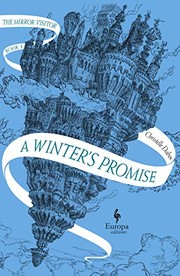
A Winter's Promise
Ophelia reads objects and is sent to marry Thorn on a cold ark.
2,502-word summary · 11 min read
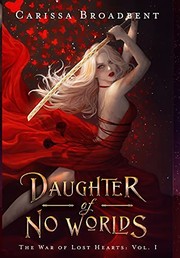
Daughter of No Worlds
A former slave with rare magic hires exiled warrior Max to train her for a daring rescue, sparking slow burn love and wider war in this big 520-page fantasy…
2,529-word summary · 11 min read
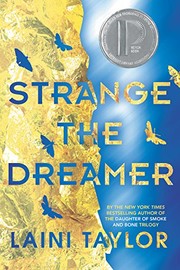
Strange the Dreamer
Orphan librarian Lazlo Strange joins a quest to the lost city of Weep, where blue-skinned godspawn haunt dreams.
2,221-word summary · 10 min read
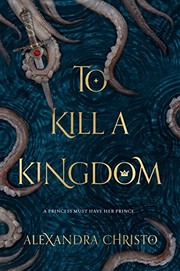
To Kill a Kingdom
A siren princess turned human must steal a siren-hunting prince's heart to win back the sea.
2,248-word summary · 10 min read

Fire
A human monster who reads minds is pulled into war in the Dells and must decide how to use her power.
2,727-word summary · 12 min read
Finale
Sisters face waking Fates with debts due, loving princes, and choices that break immortal math.
1,995-word summary · 9 min read
Graceling
Katsa, Graced with killing, breaks from her uncle's use of her and follows a kidnapped prince toward a hidden king.
2,517-word summary · 11 min read

Inkdeath
The final Inkworld novel sends Mo into the land of the dead, leaves Meggie choosing between two boys, and ends the Adderhead's immortality with three written…
2,062-word summary · 9 min read

Vow of Thieves
Kazi and Jase return to Tor's Watch to find it occupied, and their marriage is tested by captivity, betrayal, and a war for the town of Hell's Mouth.
2,059-word summary · 9 min read

Lioness Rampant
Alanna searches for the Dominion Jewel with the Shang Dragon, then returns to Tortall to face Duke Roger at Jonathan's coronation.
2,478-word summary · 11 min read

Archenemies
Nova steals for the Anarchists while Adrian hides his Sentinel identity, and a serum that erases prodigy powers puts them both at risk.
2,485-word summary · 11 min read

The Siren
Saved from a shipwreck in 1930, Kahlen becomes a siren who sings men to their deaths for the Ocean, until a boy in a college library makes her want a life she…
2,369-word summary · 11 min read

The Golem's Eye
Two years after The Amulet of Samarkand, Nathaniel is a rising bureaucrat, Bartimaeus is his unwilling servant again, and something made of clay is tearing…
2,299-word summary · 10 min read

The Queen of the Tearling
Nineteen-year-old Kelsea leaves the woods to take her throne, ends a shipment of human captives, and draws the Red Queen's revenge.
2,357-word summary · 10 min read
The Magician
Sophie and Josh flee to Paris with Nicholas Flamel, where John Dee, Machiavelli, and an awakened god close in on the missing pages of the Codex.
2,162-word summary · 10 min read

Lore
Lore Perseous, the last of a hunted bloodline, is pulled back into the Agon when a wounded Athena offers her revenge against the god who killed her family.
2,188-word summary · 10 min read

In the Hand of the Goddess
Alanna, still disguised as a boy, survives war, court plots, and a death duel as the Goddess's chosen warrior in the second Song of the Lioness book.
2,018-word summary · 9 min read

Blue Moon
Ever Bloom tries to save her immortal boyfriend, Damen, from a mysterious illness while a new student named Roman quietly takes control of her school and her…
1,998-word summary · 9 min read
An Enchantment of Ravens
Isobel, a mortal artist in the fairy town of Whimsy, paints a portrait of the autumn prince and falls in love with him, breaking the laws of her craft.
2,087-word summary · 9 min read
A Fate Inked in Blood
In Norse-inspired Skaland, a fish gutter hiding a goddess's blood is claimed by a jarl, bound by oath, and guarded by the son she cannot want.
1,971-word summary · 9 min read
Fable
Abandoned on a lawless island at fourteen, Fable spends four years diving for gems to buy passage off it, straight into the cutthroat trade of the Narrows.
2,320-word summary · 10 min read

The Indigo Spell
Sydney Sage hunts an aging witch, learns forbidden magic, and finally admits she loves Adrian, while the Alchemist tattoo on her cheek may be controlling her.
2,604-word summary · 12 min read

When the Moon Hatched
An assassin who hears air takes a job that throws her to dragons and a hunter.
2,083-word summary · 9 min read

The Winner's Curse
An aristocratic girl buys a slave who is secretly a prince plotting rebellion.
2,124-word summary · 9 min read

The Iron Queen
Meghan faces the Iron King past while Ash pays a winter price.
2,548-word summary · 11 min read
Furies of Calderon
Furyless Tavi defends Calderon Valley when the Marat return and lords scheme.
2,587-word summary · 11 min read

The Golden Lily
Sydney Sage guards Jill at Amberwood Prep in Palm Springs, studies forbidden magic, favors Adrian over Brayden, and faces Alchemist custody in this second…
2,988-word summary · 13 min read
Lirael
A Sightless Clayr girl and a prince afraid of Death join the Dog and Mogget to stop necromancers from waking the Destroyer Orannis at the Red Lake while old…
2,692-word summary · 12 min read