
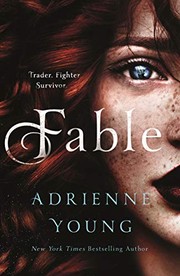
Fable
2,320-word summary 10 min read 368 pages in the book
- First published
- 2020
- Publisher
- Wednesday Books
- Pages
- 368
- ISBN
- 9781250254368
- Series
- The World of the Narrows (#1)
Reading options
What's inside (8 sections)
Fable has been alone on Jeval since she was fourteen, when the Lark went down at Tempest Snare and her mother Isolde drowned with it. Saint, the father she barely knows, is the reason she survived the sinking at all, and he is also the reason she is stuck. Before he sailed away and left her on that island, he carved a map into her forearm. Then he was gone. Four years later she is still there, diving the reefs for pyre, the gem shards the dredgers pull up and sell, stashing her coins in a hiding spot, and trusting nobody. The island runs on scavenging and spite. Divers guard their spots with knives, crews rob lone swimmers, and the ferry that brings buyers also brings trouble. The not trusting is not a personality trait. It is a survival skill, and it is exactly what Saint taught her. Adrienne Young published this book with Wednesday Books in September 2020, and it opens like a survival story before it turns into something closer to a heist at sea.
The rules of Jeval are simple: everyone is a scavenger, everything has a price, and the strong take from the weak. Fable follows those rules better than anyone. She dives alone, sells alone, and keeps her head down. When a group of men off the Koy ferry decides her latest haul belongs to them, she fights them off in the water, loses her skiff doing it, and surfaces still holding the bag they wanted. Fights like that one are weather on Jeval, common and survivable, until the day one is not. She has been saving toward passage off the island for years, and now she has an emergency on top of a plan. She gathers her coins, takes a skiff that belongs to a dredger named Speck, and rows out to the one ship in the harbor whose crew might sell her a ride.
The Marigold
West, the helmsman of the Marigold, does not want a passenger. Licensed trading crews do not make a habit of picking up castaways, and West in particular does not take on strays. Fable makes her offer anyway: every coin she has, fifty-two coppers, plus the two pieces of pyre she pulled that morning, in exchange for passage to Ceros. West studies her for a long moment, takes the payment, and tells her to get aboard before he changes his mind. He does not smile. He counts the coppers twice, asks her one flat question about why she is leaving Jeval, and does not seem to care about the answer. It is not a kindness. It is a transaction, and a transaction is a language Fable has been fluent in since she was a child.
The crew keeps its distance at first. Willa, the bosun, watches her like a problem to be solved. Hamish, the coin master, jokes too much and trusts too little. Paj talks enough for all of them. Auster barely speaks at all. They are a family made of people other families discarded, and they have learned to move through the world as one body. To test whether Fable is a passenger or cargo, someone tosses a copper coin into the sea and tells her to fetch it. She dives, finds it in dark water, and comes up with it between her teeth. The crew does not exactly welcome her after that, but they stop pretending she is not there. It is the closest thing to belonging she has had in four years, and she does not let herself trust it.
What happens on Dern
Their first stop is Dern, a trading post where crews sell cargo, drink, and settle debts. Dern smells like tar, salt, and fried fish, and business never fully stops, day or night. Zola is docked there with his own ship and his own crew. Zola is the kind of man who remembers every favor and every insult, and he has history with West that neither of them talks about. While the Marigold's business gets done, Fable notices things. She sees Willa staring through a pawnshop window at a dagger that clearly used to be hers, and nobody explains it. She sees a trader try to pass off emeralds that are not real. She says so out loud.
That moment changes how West sees her. He tests her with more stones afterward, fakes and real ones mixed together in his palm, and she calls every one of them correctly. Fable is a gem sage, the same as her mother was, and she has been hiding it on Jeval because a gift like that gets a person used, or sold. Knowing what a stone is worth without being told makes her either a fortune or a liability, depending on who is holding her leash. West does not celebrate the discovery. He goes quiet, the way people do when they realize the stray they picked up is carrying something valuable. Trust on the Marigold is its own currency, and Fable has just spent part of hers by being useful.
Zola's crew is a problem the whole time they are on Dern. The two crews drink in the same taverns, and the peace holds until it does not. By the time the Marigold sails, one of Zola's men is dead, sealed in a crate and put over the side, and nobody on board is willing to say out loud what happened or why. Fable does not ask. On the Narrows, a question like that is an invoice. A storm hits on the crossing and nearly takes the ship apart. The Marigold limps toward Ceros with patched sails and a crew that has stopped pretending to be strangers with Fable. Whatever comes next, they are in it together now.
Ceros and the meeting with Saint
Ceros is the biggest port in the Narrows, and it belongs to Saint. Ships fly his colors in the harbor, and traders lower their voices when his name comes up. Saint is the most powerful trader on the sea, a man with licenses, ships, and favors owed in every harbor. He is also Fable's father, though that word has never bought her anything. Fable's plan, if you can even call it a plan, is to make him look at her. She finds his office. On his desk, sitting where it has no business being, is her mother's sea dragon pendant, the one Isolde wore in every memory Fable has of her.
Saint does look at her, briefly. He confirms what she has suspected for years: the wreck of the Lark is still out there, and its cargo is her inheritance. The scar on her arm is the map to it. Then he does what he has always done. He dismisses her. He tells her she has no place in his trade and no claim on his time. Fable walks out of that office with the pendant in her pocket, because if he was going to treat her like a thief, she decided she might as well be one. Willa finds her later, drunk in a tavern, and hauls her back to the ship. Fable does not remember the walk back. She remembers the pendant, and she remembers deciding to build a life that did not require Saint in it.
If you have not read Adrienne Young before, the world takes a minute to learn. The Narrows is the sea between the Unnamed Sea and the mainland, and it runs on trade: licensed crews, gem dredgers, traders who deal in favors as much as cargo. There are no waving cutlasses here. The danger is debt, weather, and men like Zola, who collect what they are owed with interest. Saint controls enough of the coastline that crossing him costs a crew its route, which is the real reason nobody takes Fable's side. That restraint is what makes the book work. The stakes are never a treasure hunt in the usual sense, though there is a treasure and there is a map, and the map is carved into the main character's arm.
Zola's answer
Saint's rejection does not end the trip, it just changes it. Zola's response comes first. He slashes the Marigold's sails in the night and leaves West on the docks, beaten badly enough that Fable is not sure he will wake up. This is what happens when you cross Zola, or when he decides you have something he wants. She finds West with blood in his hair and a fury in his eyes that has nothing to do with her. Fable goes back to Saint to ask for a loan to replace the sails and gets refused to her face. Whatever door her father might have opened for her, she watches it close twice in one week.
So she makes her offer instead. Dredge the Lark at Tempest Snare, the wreck that took her mother, and split the haul with the crew. The site is deep, dangerous, and everyone knows what happened to the last ship that went down there. West, upright again and angry in a controlled way, agrees, with one condition: no romance between him and Fable. She agrees to that too, which tells you something about how much she wants this salvage to work. The pendant goes back to Saint to pay for sail cloth. Paj calls in an old debt from a tailor to get canvas cut and sewn, and the new sails are the crew's entire savings.
The night before the new sails go up, Zola's crew sets the Marigold on fire. The crew wakes to flames, beats them back with wet canvas and bare hands, cuts the burning sail free, and gets the ship out of the harbor with smoke still in their eyes. It was meant to be a warning. It would have been, if anybody on the Marigold were the kind of people who take warnings. Instead they sail for Tempest Snare with borrowed canvas and a plan that only works if the ocean cooperates.
Tempest Snare
The dive is the centerpiece of the book. Fable has spent four years dredging reefs, but the Lark is something else: deeper, darker, and personal. The descent takes longer than any dive she has ever made, and below a certain depth the light quits entirely. She navigates by the scar on her arm, matching its lines against the layout of the wreck below, while West works the salvage. They are good at this together, better than either of them expected. Underwater, where the no romance rule technically still applies and technically cannot be enforced, they kiss. It is a small scene, and the book does not linger on it, and that restraint is what makes it land.
The haul is everything they hoped for. The Lark's hold is full of cargo that has been waiting on the bottom for four years, and when they bring it up, the Marigold's crew goes from struggling to rich in a matter of days. Years of being the crew nobody backed, the one with debts and repairs and no patron, end with the weight of that salvage. Fable, who has been counting coppers for four years, now owns a share of something enormous. It is the moment the book has been promising since the first page, and Young lets the crew enjoy it before the bill comes due.
The price of it
The bill comes on Dern. The crew returns for a feast, the kind of night that follows a salvage like that one. Fable takes part of her share and buys something small and personal: a ring that West pawned, worth more to him than to anyone else. It is a gesture she can afford now and would not admit the meaning of even if asked. For a week the crew talks about nothing else: repairs, shares, the future that just became affordable. Then Zola walks into the room. He looks at Fable the way people have been looking at her her whole life, except this time he says it out loud: she has her mother's face. Isolde's daughter, alive. The feast ends with Fable beaten bloody by Zola's men and dragged onto Zola's ship, the Luna.
The final chapter is short and brutal, and it ends the book on a cliffhanger. Fable is bound to the mast of the Luna as it leaves the harbor, her future entirely out of her hands again, when she sees a face in Zola's crew that stops her cold. It is Clove, the friend who was like family to her, who she believed drowned with the Lark four years ago. She does not know how long the voyage will last, or where the Luna is headed, or what Zola wants with the daughter of a woman who has been dead for four years. Whatever story Zola is telling, one thing is clear in that instant: the wreck of the Lark was never the end of anything. Namesake picks the story up immediately, which is good, because stopping here would be cruel.
Young wrote Fable as the first half of a duology, and Namesake finished it in 2021. There is also Saint, a 2022 prequel about her father, and The Last Legacy, a companion set in the same world. I went in expecting sapphire seas and swagger and got a story about debt, inheritance, and the specific loneliness of being the daughter of a powerful man who decided you were not his problem. Fable is not a hero in the usual sense. She is stubborn, secretive, and willing to use people when she has to, and that is what makes her worth following. It is a quick read and a sharp one, and the sequel doubles down on everything this book sets up. Start it on a day when you can have the next one within reach.
FAQ
Does Fable end on a cliffhanger?
Yes. The story stops with Fable captured by Zola, and Namesake (2021) picks up immediately. Wednesday Books published Fable in 2020 as the first half of the duology.
Is Fable a pirate adventure?
It has ships and wreck salvaging rather than raids. The focus is the sea trade: licensed crews, gem dredgers, handshake deals, and debts that get collected.
What should I read after Fable?
Namesake finishes the duology. Saint (2022) is a prequel about Fable's father, and The Last Legacy is a companion novel set in the same world.
Similar books
More from The World of the Narrows first, then related titles.
Daughter of the Siren Queen
Alosa hunts the last map pieces toward Isla de Canta while defying her father Kalligan, facing her brother Draxen, and choosing her loyal crew and Riden at…
2,643-word summary · 12 min read
Daughter of the Pirate King
A pirate captain daughter lets herself be captured to find a map, then spars with a strict young pirate prince.
2,156-word summary · 10 min read

Vow of Thieves
Kazi and Jase return to Tor's Watch to find it occupied, and their marriage is tested by captivity, betrayal, and a war for the town of Hell's Mouth.
2,059-word summary · 9 min read
The Icebound Land
Captured and enslaved in Skandia, Will fights a drug that erases him while Halt and Horace cut a bloody road through Gallica to bring him home.
2,088-word summary · 9 min read

Archenemies
Nova steals for the Anarchists while Adrian hides his Sentinel identity, and a serum that erases prodigy powers puts them both at risk.
2,485-word summary · 11 min read

The Rose & the Dagger
Shahrzad is pulled from her Caliph husband and left in a desert camp of rebels, needing to break his curse and end a war before it ends her.
2,520-word summary · 11 min read

We Hunt the Flame
In a fractured Arabia-inspired world, a disguised huntress and a prince-assassin race to find a magic-restoring book and confront an ancient evil.
2,195-word summary · 10 min read

Lore
Lore Perseous, the last of a hunted bloodline, is pulled back into the Agon when a wounded Athena offers her revenge against the god who killed her family.
2,188-word summary · 10 min read
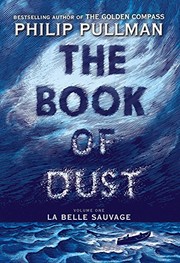
La Belle Sauvage
Philip Pullman's prequel to His Dark Materials follows eleven-year-old Malcolm Polstead as a secret message, a hunted baby, and the flood of the century carry…
2,530-word summary · 11 min read

The Winner's Curse
An aristocratic girl buys a slave who is secretly a prince plotting rebellion.
2,124-word summary · 9 min read

The Iron Queen
Meghan faces the Iron King past while Ash pays a winter price.
2,548-word summary · 11 min read

A Winter's Promise
Ophelia reads objects and is sent to marry Thorn on a cold ark.
2,502-word summary · 11 min read
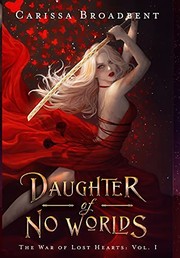
Daughter of No Worlds
A former slave with rare magic hires exiled warrior Max to train her for a daring rescue, sparking slow burn love and wider war in this big 520-page fantasy…
2,529-word summary · 11 min read

The Iron Daughter
Exiled with Ash after the scepter theft, Meghan hunts the Iron stronghold as iron magic wakes inside her.
2,995-word summary · 13 min read
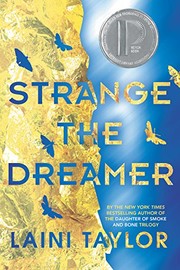
Strange the Dreamer
Orphan librarian Lazlo Strange joins a quest to the lost city of Weep, where blue-skinned godspawn haunt dreams.
2,221-word summary · 10 min read
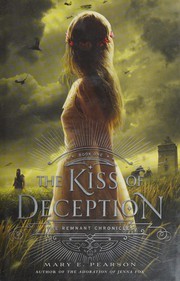
The Kiss of Deception
Princess Lia flees an arranged marriage and hides in a village, unaware one stranger is a prince and the other an assassin.
2,196-word summary · 10 min read
Dance of Thieves
Queen's thief Kazi infiltrates Ballenger lands while young leader Jase plays her right back.
2,005-word summary · 9 min read

Poison Study
Sentenced to die, Yelena becomes the Commander's poison taster and learns survival in Ixia has a daily price.
2,501-word summary · 11 min read
To Kill a Kingdom
A siren princess turned human must steal a siren-hunting prince's heart to win back the sea.
2,248-word summary · 10 min read

Fire
A human monster who reads minds is pulled into war in the Dells and must decide how to use her power.
2,727-word summary · 12 min read
The Iron King
Meghan Chase follows her stolen brother into the Nevernever and bargains with a Winter prince to face the Iron King.
2,720-word summary · 12 min read
Finale
Sisters face waking Fates with debts due, loving princes, and choices that break immortal math.
1,995-word summary · 9 min read
City of Heavenly Fire
Clary and Jace face Sebastian's dark army while Emma and Julian's story begins in Los Angeles.
2,039-word summary · 9 min read
Graceling
Katsa, Graced with killing, breaks from her uncle's use of her and follows a kidnapped prince toward a hidden king.
2,517-word summary · 11 min read
Clockwork Princess
Tessa chooses between Jem and Will as Mortmain's clockwork army closes on the London Institute.
3,289-word summary · 15 min read
City of Glass
Clary follows Jace to Alicante in Idris where Valentine plans to use the Soul-Sword on Shadowhunters and the Clave splits under pressure.
3,645-word summary · 16 min read
City of Ashes
Clary risks the Clave trial while Valentine raises demons and Jace pulls away in New York.
4,684-word summary · 21 min read

City of Bones
City of Bones retold: Clary sees Shadowhunters, Jace and the Cup, Valentine, and the Institute attack.
2,535-word summary · 11 min read
A Court of Thorns and Roses
Sarah J. Maas's A Court of Thorns and Roses retold: Feyre, Tamlin's Spring Court, the curse, and the trials Under the Mountain.
2,442-word summary · 11 min read
A Court of Mist and Fury
ACOTAR book 2 retold: Feyre in the Spring Court, the bargain with Rhysand, Velaris, and war with Hybern.
2,218-word summary · 10 min read