
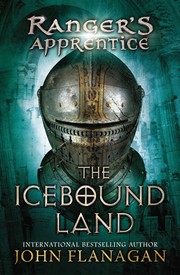
The Icebound Land
2,088-word summary 9 min read 266 pages in the book
- First published
- 2005
- Publisher
- Philomel Books
- Pages
- 266
- ISBN
- 9780399244568
- Series
- Ranger's Apprentice (#3)
Reading options
What's inside (8 sections)
The third Ranger's Apprentice book is where the series stops being a cheerful apprenticeship story and becomes something colder. I picked it up expecting another round of Will Treaty sneaking through castles and outsmarting adults. Instead, the first hundred pages put him in a slave yard in Skandia, half-starved and addicted to a drug that erases his personality. That choice is either brave or reckless depending on your patience for middle-grade fiction that refuses to protect its hero. Flanagan commits to it, and the book is better for the commitment, even when the pacing sags under the weight of two separate journeys.
The story picks up exactly where The Burning Bridge stopped. Will and Evanlyn, who is really Princess Cassandra of Araluen in disguise, have been captured by the Skandian raiders led by Jarl Erak. They are taken north to Hallasholm, the Skandian capital, and sold into slavery. Will is sent to the yard, the worst place for a small, inexperienced boy. Evanlyn, thanks to Erak's quiet intervention, is assigned to the kitchens. The separation is the point. Each of them has to survive without the other, and each of them does it in a different way.
The yard and the warmweed
Flanagan does not soften the slave yard. Will is beaten by Tirak, the supervisor, for something as small as smiling at Evanlyn. The enslaved workers sleep in freezing conditions and fight over scraps of blanket. A group of long-term slaves called the Committee controls the worst assignments and punishes anyone who challenges them. When Will interferes in a beating, he is sent to the paddles, the most exhausting job in the compound, four-hour shifts cranking the machinery that keeps the well from freezing. He is whipped when he slows down and sprayed with icy water when he stops.
This is where the book introduces warmweed. An older slave offers it to Will as a way to survive the cold and the pain. It works, at first. Then it takes over. Will becomes docile, empty, and obedient. He stops recognizing Erak. He stops recognizing himself. The drug is not a metaphor for anything subtle. It is addiction written in the plainest terms a young reader can handle, and Flanagan is careful to show that the first dose is a reasonable choice made under unbearable conditions. That is what makes it frightening. Will does not become an addict because he is weak. He becomes one because the yard is designed to break people and the drug is the only available relief.
Erak is the most interesting character in this strand. He is a raider and a slaver, and he does not pretend otherwise. He also has a code. He wanted to keep Will and Evanlyn together, and he is disgusted that Borsa, the Oberjarl's deputy, lets a boy who fought honorably be destroyed for profit. Erak's guilt is not sentimental. He does not suddenly become a good man. He becomes a man who cannot stand one specific injustice, and that is enough to make him act. He gives Evanlyn silver, a dagger, a pony, and supplies, including a carefully measured amount of warmweed so she can wean Will off it instead of killing him with withdrawal. The plan is practical, risky, and entirely in character.
Evanlyn is the one who carries the escape. She spends five days complaining loudly about being assigned to serve Erak so nobody suspects they are working together. She waits for the midnight horn, bribes Egon, and stabs him lightly when he pushes for more. She gets Will out of the barracks by slapping him awake and lying about firewood. Then she keeps him alive on the road, rationing the drug, hiding in a hunting hut in the mountains, and hunting with a sling while the thaw comes. For a character who spent the previous book being rescued, she gets a real arc here. She is scared and occasionally reckless, but she is not passive.
Halt's long road
The second strand follows Halt, Will's mentor, who does not take the news of the capture well. He insults King Duncan, his old friend, and is banished from Araluen for a year. The punishment is meant to be severe, but Halt treats it as a formality. He is going to Skandia anyway. Horace, Will's friend and a warrior apprentice, insists on coming. The two of them make an odd pair: a legendary Ranger who prefers silence and a teenage swordsman who has more courage than patience.
Their route takes them through Gallica, which is in a state of low-grade anarchy. The countryside is full of petty warlords and inexperienced knights who have learned that a bridge and a threat can earn them a toll. Horace, enjoying himself more than he should, starts defeating these knights in challenges and earns the nickname the Oakleaf Knight. The reputation grows. It also attracts the wrong attention. Deparnieux, the warlord of Castle Montsombre, is not a comic obstacle. He is a sadist who keeps prisoners in cages and enjoys humiliating people before he kills them.
The inn scene is the best single sequence in the book. Deparnieux enters, insults Horace, and tries to slap him with a glove. Halt shoots the glove out of his hand and pins it to a beam across the room. It is a perfect demonstration of who Halt is: quiet, precise, and absolutely unwilling to let a bully have the first move. Deparnieux understands immediately that he is dealing with something he did not expect. He backs off, but he does not forget.
The ambush comes later, at a bridge, with a shabby knight as bait. Horace charges, a net drops, and Halt finds himself surrounded by crossbowmen. Deparnieux takes them to Montsombre as "guests," which means prisoners in a comfortable tower room with no handle on the inside. The book spends several chapters here, and this is where the pacing becomes uneven. Halt and Horace wait. They eat dinner with Deparnieux. They watch him toy with a young knight who comes to challenge him. Halt builds a new bow for Will. Horace grows restless. The waiting is deliberate, because Halt is waiting for Deparnieux to relax, but it does not make the middle of the novel move quickly.
Two kinds of rescue
The structure is clear once you see it. Will is rescued by Evanlyn through patience, improvisation, and a drug taper. Halt is rescued by his own patience, followed by a carefully staged challenge. Both rescues depend on someone refusing to act too soon. Evanlyn cannot force Will to get better. She can only reduce the dose and keep him moving. Halt cannot kill Deparnieux in a tower room without starting a fight he might lose. He has to wait until the warlord is confident enough to accept a public challenge.
The duel is worth the wait. Deparnieux is bigger, armored, and mounted. Halt is a middle-aged man with a bow and three arrows in his boot. The fight is not a contest of strength. It is a contest of assumptions. Deparnieux blocks the first arrow, then the second. He closes in, changes from lance to broadsword, and believes he has learned Halt's pattern. Halt shoots two more arrows. The second one is aimed at the helmet, or so Deparnieux thinks, and he lifts his shield. The heavy arrow takes him in the breastplate, through the ribs. It is a clever kill, and it lands because Flanagan has spent the whole book establishing that Halt thinks several moves ahead.
What follows is more interesting than the kill. Halt does not take the castle. He gives it to Philemon, the captain of the guard, on two conditions: the cages come down and the servants are free to leave. He knows Philemon might become another tyrant. He also knows he cannot fix Gallica on his way to rescue a boy. The epilogue shows Halt and Horace riding away as the keep burns behind them, a fire Halt arranged with oil rags. It is a small, mean act of cleanup, and it fits the book's moral weather.
What the book is really about
Under the adventure, The Icebound Land is about what captivity does to a person and what loyalty costs. Will's addiction is the clearest example. He is not saved by a heroic burst of willpower. He is saved by Evanlyn's stubborn care, by Erak's guilty conscience, and by time. The book is honest that recovery is slow and unglamorous. Will does not come back as the same boy. He comes back thinner, quieter, and more aware of what he can survive.
Halt's strand is about the difference between revenge and rescue. He could kill Deparnieux for the pleasure of it. He waits until killing him is useful. That restraint is the Ranger's code in practice, and it is more convincing than any speech about honor. Horace learns something similar. He wants to be a hero, and the book lets him be brave without letting him be stupid. His challenge to Deparnieux is carefully worded, staged in front of witnesses, and backed by Halt's hidden glove. It is a performance, and he knows it.
Evanlyn's strand is about the limits of disguise. She has spent two books pretending to be someone else. In Skandia, her disguise does not protect her from slavery, but it does give her a way to act. She uses the manners and the education that come with being a princess, not to claim privilege, but to read Erak, negotiate with Egon, and keep her head. The book does not make a grand speech about this. It just shows her doing it.
Where it strains
The biggest problem is that Will spends most of the novel unconscious, drugged, or being led by the hand. That is the point, but it also means the protagonist of the series is absent from his own book for long stretches. Readers who come for Will's cleverness will spend a lot of time with Halt and Horace instead. The Gallica section is entertaining, but it is a detour, and the chapters in Montsombre repeat the same beat: Deparnieux is cruel, Halt waits, Horace fumes. A tighter edit could have cut twenty pages without losing anything.
The violence is also more graphic than in the first two books. Will is whipped, enslaved, and drugged. Deparnieux keeps people in cages and kills a young knight in front of a crowd. Flanagan does not dwell on gore, but he does not look away either. This is the point where the series decides it is for older children, and parents should know that before handing it over.
There is also a structural cliffhanger. The book ends with Will and Evanlyn in a mountain hut and a rider in furs watching from a distance. Halt and Horace are still in Gallica, riding toward Skandia. Nothing is resolved. If you are reading the series in order, that is fine. If you are reading this one on its own, it will feel like the first half of a longer story.
Why it still works
For all its unevenness, The Icebound Land does something the first two books only hinted at. It makes the world feel large and indifferent. Araluen is not the center of everything. Skandia has its own politics, its own codes, and its own cruelties. Gallica is a place where the strong take what they want and the weak are left in cages. Will's training does not make him invincible. It makes him useful, and being useful is not the same as being safe.
The book also earns its ending. Will's recovery is not a triumph. It is a slow return, marked by confusion and weakness. Evanlyn's relief when he recognizes her is quiet and believable. Halt's rescue is still ahead, and the reader knows it will cost something. That sense of cost is what separates this series from simpler adventure stories. Flanagan is willing to let his heroes be damaged, and he is willing to make the damage matter.
I would not start here. Read The Ruins of Gorlan and The Burning Bridge first, or the emotional weight of Will's enslavement will not land. But if you have already spent two books with these characters, this is the one where the series grows up. It is colder, slower, and more serious than what came before, and it leaves the story in a place that makes the next book necessary.
FAQ
Is The Icebound Land a standalone novel?
No. It is the third book in Ranger's Apprentice and picks up directly from the capture at the end of The Burning Bridge. It also ends on a cliffhanger that continues in The Battle for Skandia.
Why is Will addicted to warmweed?
An older slave gives it to him to endure the cold and the beatings in the yard. The drug numbs him and makes him obedient, and Flanagan treats the addiction as a result of the conditions rather than a character flaw.
How old are the readers for this book?
The publisher lists it for ages ten and up, but this volume includes slavery, whipping, drug addiction, and an on-page killing, so it is darker than the first two books.
Similar books
More from Ranger's Apprentice first, then related titles.
The Ruins of Gorlan
Small orphan Will becomes Ranger Halt's apprentice and helps hunt the Kalkara at Gorlan.
2,109-word summary · 9 min read
The Burning Bridge
Will and Horace burn Morgarath's secret bridge, meet Evanlyn, and face capture and a duel that decides a war.
2,412-word summary · 11 min read
The Battle for Skandia
Will and Evanlyn are still hiding in the Skandian mountains when Halt and Horace arrive with word of a Temujai invasion that could roll on to Araluen next.
2,248-word summary · 10 min read
The Chalice of the Gods
Percy needs three recommendation letters from three gods to apply to college, so his first quest is recovering a stolen chalice from the god of old age.
2,106-word summary · 9 min read
The Thief
A boastful young thief is pulled from a prison to steal a legendary stone for the king's magus, and the story he tells about himself is not the whole story.
2,514-word summary · 11 min read
Secrets of the Dragon Sanctuary
Kendra is replaced by a plant copy and held by the Society, while Seth steals a unicorn horn so the family can enter a dragon sanctuary.
2,590-word summary · 12 min read

Lioness Rampant
Alanna searches for the Dominion Jewel with the Shang Dragon, then returns to Tortall to face Duke Roger at Jonathan's coronation.
2,478-word summary · 11 min read
The Ship of the Dead
Magnus and his crew sail to the edges of the Norse worlds to stop Loki from launching Naglfar, the ship of the dead.
2,426-word summary · 11 min read
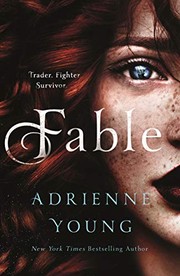
Fable
Abandoned on a lawless island at fourteen, Fable spends four years diving for gems to buy passage off it, straight into the cutthroat trade of the Narrows.
2,320-word summary · 10 min read
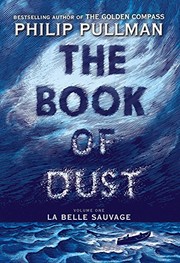
La Belle Sauvage
Philip Pullman's prequel to His Dark Materials follows eleven-year-old Malcolm Polstead as a secret message, a hunted baby, and the flood of the century carry…
2,530-word summary · 11 min read
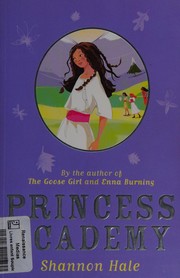
Princess Academy
Miri leaves her Mount Eskel quarry home for Princess Academy, where quarry songs, books, and a bandit siege shape her fight for fair trade, a school, and a…
2,441-word summary · 11 min read
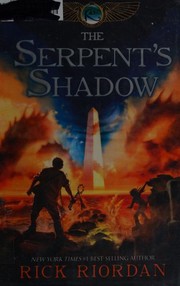
The Serpent's Shadow
Carter and Sadie Kane have three days to bind Apophis by his shadow before the serpent rises and unmakes the world.
2,941-word summary · 13 min read
The Throne of Fire
Carter and Sadie Kane have five days to wake the sun god Ra before the serpent Apophis breaks free and eats the world.
2,867-word summary · 13 min read
The Red Pyramid
Siblings Carter and Sadie Kane wake the Egyptian gods and must stop Set from destroying the world.
2,682-word summary · 12 min read
The House of Hades
Percy and Annabeth cross Tartarus while the five close the Doors of Death before Gaea wakes.
2,910-word summary · 13 min read
The Son of Neptune
Amnesiac Percy wakes at Camp Jupiter and quests to Alaska with Hazel and Frank to free Thanatos.
2,107-word summary · 9 min read
The Titan's Curse
Percy joins a winter quest to save Annabeth and Artemis with Thalia, Grover, Bianca and Zoe, facing Atlas and Luke under a hard Oracle prophecy on Mount…
2,229-word summary · 10 min read
The Sea of Monsters
Percy returns for a second summer as Camp Half-Blood loses its borders, Tyson is claimed as his brother, and the Golden Fleece waits past the Sea of Monsters.
2,056-word summary · 9 min read
The Last Olympian
Percy Jackson turns sixteen as Kronos marches on Manhattan, forcing Camp Half-Blood into a final stand for Olympus beside Annabeth as the old prophecy demands…
2,564-word summary · 11 min read
The Battle of the Labyrinth
Percy and Annabeth enter the shifting Labyrinth with Rachel Dare to stop Luke and Kronos from invading Camp Half-Blood.
2,924-word summary · 13 min read
The Lightning Thief
Rick Riordan's The Lightning Thief retold: Percy Jackson, Camp Half-Blood, the stolen bolt, and the road trip to the Underworld.
2,581-word summary · 11 min read

Inkdeath
The final Inkworld novel sends Mo into the land of the dead, leaves Meggie choosing between two boys, and ends the Adderhead's immortality with three written…
2,062-word summary · 9 min read
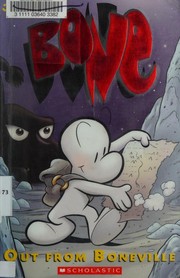
Bone, Vol. 1: Out from Boneville
Three cartoon cousins are run out of Boneville, separated by locusts, and dropped into a valley where rat creatures and an old grudge are waiting.
2,155-word summary · 10 min read

Vow of Thieves
Kazi and Jase return to Tor's Watch to find it occupied, and their marriage is tested by captivity, betrayal, and a war for the town of Hell's Mouth.
2,059-word summary · 9 min read

The Field Guide
Three siblings move into a creepy Maine estate, anger a brownie, and find a forbidden guide to the fairy world in the first Spiderwick book.
2,033-word summary · 9 min read

Archenemies
Nova steals for the Anarchists while Adrian hides his Sentinel identity, and a serum that erases prodigy powers puts them both at risk.
2,485-word summary · 11 min read
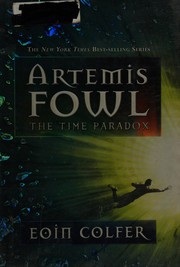
The Time Paradox
When his mother falls ill with a fairy disease, Artemis Fowl travels back in time to find the extinct lemur that can cure her and confronts his younger self.
2,601-word summary · 12 min read
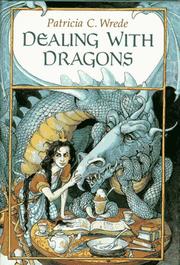
Dealing with Dragons
A princess who hates embroidery runs away to become the cook and librarian for a dragon, then has to outthink wizards, knights, and a plot against the dragon…
2,563-word summary · 11 min read
The Golem's Eye
Two years after The Amulet of Samarkand, Nathaniel is a rising bureaucrat, Bartimaeus is his unwilling servant again, and something made of clay is tearing…
2,299-word summary · 10 min read
Magician's Gambit
Garion and his companions cross haunted Maragor and the caves beneath Rak Cthol to recover the Orb of Aldur.
2,391-word summary · 11 min read