

The Field Guide
2,033-word summary 9 min read 107 pages in the book
- First published
- 2003
- Publisher
- Simon & Schuster Books for Young Readers
- Pages
- 107
- ISBN
- 9780689859366
- Series
- The Spiderwick Chronicles (#1)
Reading options
What's inside (9 sections)
The first time I handed this book to a nine-year-old, she finished it in one sitting and immediately asked for the next one. That is both the promise and the problem of The Field Guide. It is short, fast, and designed to pull a reader in. It is also barely a novel. At about a hundred pages, with illustrations on almost every spread, it reads like the opening chapter of a longer story, which is exactly what it is.
The Field Guide was published in 2003 by Simon & Schuster Books for Young Readers. It is the first of five books in The Spiderwick Chronicles, written by Holly Black and illustrated by Tony DiTerlizzi. Black went on to write The Cruel Prince and a long list of other fantasy novels. DiTerlizzi went on to illustrate and write a wide range of children's books. This series is one of the places where both of them were figuring out what they wanted to do.
The House
The story opens with the Grace family moving into the Spiderwick Estate in Maine. Helen Grace has just gone through a divorce, and she is starting over with her three children. Mallory is thirteen, a fencer with a temper. Jared and Simon are nine-year-old twins. Jared is the narrator's center of gravity, and he is also the family's designated problem child. Simon is gentler and more interested in animals. Jared gets angry, talks back, and is usually the one blamed when something goes wrong.
The estate is a wonderful setting. It is old, dusty, and full of things that have been left behind. There is a dumbwaiter, a secret library on the second floor, a hidden door in a hall closet, and an attic full of junk. The house feels like a place where a child could disappear for an afternoon and find something. DiTerlizzi's illustrations make it feel even more tactile. The wallpaper is peeling. The furniture is covered in sheets. The light comes through dirty windows.
The family is not happy to be there. Helen is tired and worried about money. Mallory is resentful about the move. Jared is angry about everything. Simon is trying to keep the peace. The book does not pretend that the divorce is over. It is the background noise of the story, and it gives the fantasy an emotional grounding that a lot of children's books lack.
The Noises in the Walls
The plot begins with small disturbances. Things go missing. There are scratching sounds inside the walls. Jared hears something moving at night. He is the only one who seems to notice, and when he tries to tell the others, he is dismissed. That is the pattern of his life. He is the kid who is always in trouble, so no one believes him when he is telling the truth.
The children find the secret library through the dumbwaiter. Inside, there are old books, papers, and a sense that someone lived there a long time ago. They also find a hidden door in a closet, which leads to the rest of the house in ways that do not quite make sense. The house is bigger on the inside than it should be. That is the first hint that the world of the book is not going to obey ordinary rules.
The disturbances turn out to be the work of a brownie named Thimbletack. He has lived in the house for years, and the children have destroyed his nest inside the walls. He is furious. He retaliates by trashing the kitchen, attacking Mallory, and frightening Simon. Jared is blamed for all of it, because Jared is always blamed.
The Thimbletack sections are the best part of the book. He is small, quick, and mean in the way that a household spirit can be mean. He is not evil. He is a creature whose home has been wrecked, and he wants the children to understand that they are not the only ones who live there. The book treats him with a kind of respect. He has rules, and the children have to learn them.
The riddle is also well handled. It is not a puzzle that the reader can solve without the characters, and it is not so obscure that it feels unfair. It points to the attic, to the trunk, and to the book. The discovery of the field guide is the moment the series becomes a series. Before that, the children are dealing with a noisy house. After it, they are dealing with a world.
The Riddle
Jared finds a riddle-poem that leads him to the attic. In a secret compartment in an old trunk, he finds Arthur Spiderwick's Field Guide to the Fantastical World Around You. The guide is handwritten and illustrated, and it describes the fairies, goblins, brownies, and other creatures that live in the woods around the estate. It is the kind of book that a child would desperately want to own and that an adult would immediately want to take away.
The guide is the series' central object. It is a source of knowledge, a source of danger, and a symbol of the previous generation. Arthur Spiderwick was Lucinda's father, and his disappearance is one of the mysteries that the later books explore. In this first book, the guide is mostly a promise. It tells the reader that there is a larger world out there, and that the children have only seen the edge of it.
The book ends with the children making amends with Thimbletack. They build him a new home out of an old birdhouse. He accepts it, more or less, and then warns them that the guide is dangerous and was never meant to be in the hands of mortals. That is the cliffhanger. The children have a book they should not have, and something is going to come looking for it.
What the Book Is Doing
The Field Guide is a master class in opening a series. It establishes the world, the characters, the central object, and the threat in about a hundred pages. It does not waste time on exposition. It lets the reader learn the rules by watching the children break them. It also ends at exactly the moment when the reader wants more, which is why so many kids go straight to The Seeing Stone.
The sibling dynamics are well drawn. Jared and Simon are twins, but they are not interchangeable. Jared is the one who acts first and thinks later. Simon is the one who wants to understand the creatures rather than fight them. Mallory is older, tougher, and often the one who has to rescue her brothers. The three of them argue, compete, and protect each other. The book does not sentimentalize the family. It shows them at a moment when they are all raw.
Helen is the most underdeveloped character in the book. She is tired, she is worried, and she is trying to hold the family together after a divorce. The story needs her to be distracted so that the children can get into trouble, and the book sometimes makes her conveniently absent. That is a structural problem, not a character flaw. A longer book would have given her more to do. A hundred-page book has to keep moving.
Black's later books are full of rules. The Cruel Prince has a whole etiquette of faerie power, and the Spiderwick books have a simpler version of the same idea. The creatures here are not generic. A brownie is not a fairy. A goblin is not a troll. Each one has its own habits, weaknesses, and sense of honor. That specificity is what makes the world feel real, and it is why the later books can keep expanding without losing the reader.
The divorce is handled with a light touch. Helen is not a villain, and the absent father is not a monster. The book simply shows that the family is under strain and that the children are dealing with it in different ways. Jared's anger is not explained away. It is part of who he is, and the fantasy gives him a place to put it.
The Design
DiTerlizzi's illustrations are not decoration. They are part of the storytelling. The book is designed to look like an artifact, with rough edges, handwritten notes, and drawings that seem to have been made by the characters. The field guide itself is reproduced in fragments, and the reader gets to see the creatures before the children do.
That design choice makes the book feel special. It also makes it accessible. A reader who is intimidated by a wall of text can turn the page and find a drawing that carries the story forward. The Spiderwick books are often recommended for reluctant readers, and the design is a big reason why. They look like something a child could have found in an attic.
The series was popular enough to become a film. The Spiderwick Chronicles came out in 2008, directed by Mark Waters, with Freddie Highmore playing both Jared and Simon. The movie compressed the five books into a single plot and added a more conventional villain arc. It is not a bad adaptation, but it loses the thing that makes the books work: the slow discovery, the small scale, the sense that the house itself is the mystery. The books are better.
What Doesn't Work
The book is too short to do everything it wants to do. The characters are sketched rather than developed. Helen is mostly a worried presence. Mallory is tough and not much else. Simon is kind and not much else. Jared gets the most interiority because he is the one who is accused and misunderstood, but even he is defined by a few traits.
The plot is also thin. The children find a book, annoy a brownie, and get warned. That is the whole story. The later books add goblins, a griffin, dwarves, and an ogre, but this one is mostly setup. A reader who wants a complete story in one volume will be frustrated. A reader who is willing to commit to the series will be hooked.
The prose is functional rather than beautiful. Black can write gorgeous sentences, but this book is written for speed. The sentences are short, the chapters are short, and the description is carried by the illustrations. That is appropriate for the audience, but it means the book does not have much to offer an adult reader who is looking for style.
Who It Is For
This is a book for a child who is just starting to read longer stories, or for a child who has been resistant to reading and needs something that looks exciting. It is also a good read-aloud book, because the chapters are short and the pictures give everyone something to look at. It is not a book for someone who wants a deep fantasy novel. It is a doorway.
The best way to read it is as the first episode of a serial. The five books were originally published in quick succession, and they were designed to be read together. The Field Guide sets up the mystery of Arthur Spiderwick, the danger of the guide, and the rules of the fairy world. The Seeing Stone raises the stakes. Lucinda's Secret deepens the family history. The Ironwood Tree and The Wrath of Mulgarath pay it off. If you stop after the first one, you have read a prologue. If you keep going, you get a complete story.
I still think about the moment when Thimbletack accepts the birdhouse. It is a small gesture, and it changes the relationship between the children and the house. They stop being intruders and start being residents. That is the emotional core of the book, and it is handled with more care than the plot deserves.
If you read it as an adult, read it in one sitting and then read the next one. The series is better as a whole than any single volume. The Field Guide is the invitation, not the party.
FAQ
How long is The Field Guide?
The 2003 Simon & Schuster edition runs 107 pages, with illustrations on most spreads.
Is it the first Spiderwick book?
Yes, it is book one of five, followed by The Seeing Stone.
What is the field guide?
It is Arthur Spiderwick's handwritten book about the fairy creatures around the estate, and it drives the series.
Similar books
More from The Spiderwick Chronicles first, then related titles.
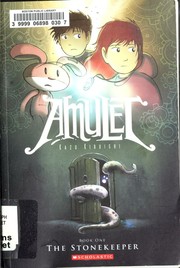
The Stonekeeper
After their father's death, Emily and Navin chase a monster into a hidden world to save their mother, and Emily's great-grandfather's amulet offers power at a…
2,753-word summary · 12 min read
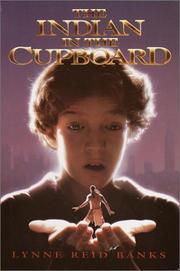
The Indian in the Cupboard
Omri learns a key turns plastic Little Bear into a live Iroquois man.
2,228-word summary · 10 min read
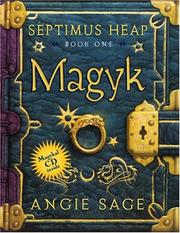
Magyk
A baby found in snow, a lost seventh son, and a run for the Marram Marshes as Marcia Overstrand shields two children from DomDaniel.
2,604-word summary · 12 min read

Secrets of the Dragon Sanctuary
Kendra is replaced by a plant copy and held by the Society, while Seth steals a unicorn horn so the family can enter a dragon sanctuary.
2,590-word summary · 12 min read
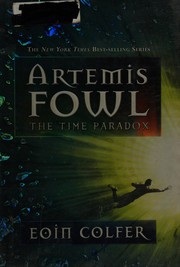
The Time Paradox
When his mother falls ill with a fairy disease, Artemis Fowl travels back in time to find the extinct lemur that can cure her and confronts his younger self.
2,601-word summary · 12 min read

Grip of the Shadow Plague
A plague turns Fablehaven's creatures of light into shadows while Kendra hunts an artifact in Arizona and Seth races to find the cause.
2,131-word summary · 9 min read
Into the Wild
Housecat Rusty joins ThunderClan and learns clan law before war.
2,597-word summary · 12 min read
Gregor the Overlander
Gregor follows Boots down a grate into the Underland and a war prophecy.
2,516-word summary · 11 min read
The Miraculous Journey of Edward Tulane
A china rabbit lost at sea learns to love through owners kind and cruel across many years.
2,002-word summary · 9 min read
The Demigod Files
Three Percy Jackson side quests plus camp maps, cabin guides, interviews, and god profiles set before the final battle.
2,498-word summary · 11 min read
Princess Academy
Miri leaves her Mount Eskel quarry home for Princess Academy, where quarry songs, books, and a bandit siege shape her fight for fair trade, a school, and a…
2,441-word summary · 11 min read
Rise of the Evening Star
Kendra and Seth return to Fablehaven as the Society of the Evening Star closes in, with a traitor inside the house and a demon prison key at stake.
2,874-word summary · 13 min read
Fablehaven
Kendra and Seth spend the summer with their grandfather and learn his woods hide Fablehaven, a preserve for fairies, satyrs and darker things.
2,949-word summary · 13 min read
The Silver Chair
Eustace and Jill retold: four signs, a lost prince, Puddleglum the Marsh-wiggle, giants at Harfang, and the Lady below.
2,940-word summary · 13 min read
The Witches
A boy and his grandmother face the Grand High Witch's plan to turn England's children into mice.
2,738-word summary · 12 min read
The Wonderful Wizard of Oz
Dorothy is carried to Oz by a cyclone and walks the yellow brick road with Scarecrow, Tin Woodman, and Lion.
3,297-word summary · 15 min read
The Lion, the Witch and the Wardrobe
C. S. Lewis's Narnia opener retold: four Pevensies, the White Witch's winter, Aslan's sacrifice, and the crowning at Cair Paravel.
2,502-word summary · 11 min read

The Blinding Knife
Kip trains to join the Blackguard while the Prism hides his true identity, loses his colors, and fights a war against a rogue drafter who wants to birth a god.
2,049-word summary · 9 min read

Inkdeath
The final Inkworld novel sends Mo into the land of the dead, leaves Meggie choosing between two boys, and ends the Adderhead's immortality with three written…
2,062-word summary · 9 min read
Dawnshard
Rysn sails toward forbidden Akinah to save her dying larkin and finds a Dawnshard guarded by the Sleepless.
3,229-word summary · 14 min read

Bone, Vol. 1: Out from Boneville
Three cartoon cousins are run out of Boneville, separated by locusts, and dropped into a valley where rat creatures and an old grudge are waiting.
2,155-word summary · 10 min read

The Icebound Land
Captured and enslaved in Skandia, Will fights a drug that erases him while Halt and Horace cut a bloody road through Gallica to bring him home.
2,088-word summary · 9 min read

Lioness Rampant
Alanna searches for the Dominion Jewel with the Shang Dragon, then returns to Tortall to face Duke Roger at Jonathan's coronation.
2,478-word summary · 11 min read
Witches Abroad
Three Lancre witches fly to Genua to stop a fairy godmother from forcing a servant girl into a storybook marriage, and find a city arranged around a happy…
2,651-word summary · 12 min read

The Golem's Eye
Two years after The Amulet of Samarkand, Nathaniel is a rising bureaucrat, Bartimaeus is his unwilling servant again, and something made of clay is tearing…
2,299-word summary · 10 min read

Magician's Gambit
Garion and his companions cross haunted Maragor and the caves beneath Rak Cthol to recover the Orb of Aldur.
2,391-word summary · 11 min read

Homeland
Drizzt Do'Urden is born into the cruel drow city of Menzoberranzan, where his father teaches him to fight and to doubt everything his family believes.
2,303-word summary · 10 min read
Enchanters' End Game
Garion marches toward Torak while Ce'Nedra leads the West's army in the final Belgariad volume, where prophecy and war meet.
2,557-word summary · 11 min read
The Chalice of the Gods
Percy needs three recommendation letters from three gods to apply to college, so his first quest is recovering a stolen chalice from the god of old age.
2,106-word summary · 9 min read
Nettle & Bone
Marra, a princess in a convent, leaves to save her abused sister, but first she must finish three impossible tasks: a bone dog, a nettle cloak, moonlight in a…
2,061-word summary · 9 min read