
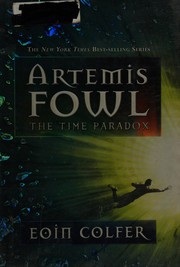
The Time Paradox
2,601-word summary 12 min read 391 pages in the book
- First published
- 2008
- Publisher
- Hyperion Books for Children
- Pages
- 391
- ISBN
- 9781423108368
- Series
- Artemis Fowl (#6)
Reading options
What's inside (9 sections)
The Time Paradox is the sixth Artemis Fowl book, and by this point the series has earned a more personal kind of story. Artemis is no longer just a pint-sized criminal mastermind. He has fought beside Holly Short, lost people, gained twin brothers, and spent three years in Limbo while his parents thought he was dead. The Lost Colony left him with magic he barely understands and a family that has already been through too much. Now his mother, Angeline, is dying, and the only cure is an animal he personally helped wipe out.
That is a strong hook for a children's fantasy novel: the hero's greatest achievement is also the thing that might kill his mother. Eoin Colfer uses it to send Artemis back in time, where he has to outsmart the worst version of himself. The result is funny and fast, and more emotional than the premise suggests. It is also crowded, and the plot has a habit of solving its problems with one more set piece.
Spelltropy and the lie
Angeline is gravely ill at Fowl Manor. Dr. Hans Schalke, a specialist in rare diseases, tells Artemis that her organs are failing at once and that she has days, not weeks. Artemis does what he always does: he tries to fix it with science and magic. He uses fairy magic stolen during his time in Limbo to heal her, and the magic makes things worse. A clear gel oozes from her pores, the room smells of lilies, and Artemis's own magic is spent.
Holly Short arrives alone. Foaly, the centaur technical adviser, syncs with the manor remotely and runs a scan. He identifies the illness as Spelltropy, a fairy disease spread through magic. The only known cure comes from the brain fluid of the silky sifaka lemur of Madagascar. The lemur is extinct. Artemis confirms it. Almost eight years earlier, when he was a desperate child trying to fund an Arctic expedition to find his missing father, he stole the last silky sifaka from a private reserve and sold it to the Extinctionists for a hundred thousand euros.
The confession changes the room. Holly and Foaly want nothing to do with time travel. Artemis proposes it anyway. When Holly still refuses, he tells her that she infected Angeline years ago when she used healing magic on her. It is a lie. Artemis knows the illness came from the magic he used to adjust his parents' memories, and he uses Holly's guilt to get her help. She agrees because she believes she owes him. That lie sits under the whole adventure, and Colfer does not let Artemis off easily when it comes out.
No. 1, the young demon warlock from The Lost Colony, opens the time stream. He warns them that the link will hold for three days and that he has to stay in the present as a beacon. Artemis and Holly step through. The plan is simple: arrive in the study, get the lemur from the past Artemis before it is sold, and leave. Nothing about the plan survives contact with the past.
Eight years earlier
The time stream changes them. Artemis comes out older and much hairier, with bristles on his chin that were not there before. Holly comes out younger, physically reduced to adolescence. The changes are played for comedy, but they matter later. Holly is an adult elf with centuries of experience in the body of a teenager, and Artemis is a teenager who suddenly looks like a man.
They arrive in the study and wait for Butler to bring the lemur in. Artemis is sure the handoff will be quiet. Instead, Butler detects them during a security sweep, tranquilizes them both, and locks them in the trunk of the Fowl Bentley. The younger Artemis is not stupid, and he is not sentimental. He has a plan, and two strangers in his house are a problem to be solved.
Mulch Diggums gets them out. The dwarf is a career thief, and the older Artemis sent a note back in time offering him a reward. Mulch complains about the work and helps them follow the younger Artemis to Rathdown Park, a private animal reserve. This is where the book becomes a chase. The younger Artemis is always a step ahead, and the older Artemis keeps expecting his past self to behave like a reasonable person.
The animal park set piece has one of the book's best images. Mulch's tunnel comes up in the wrong cage, and a gorilla gets hold of Artemis. Holly heals him with magic, and the relief and fear of the moment make her kiss him. It is a strange beat. Holly is centuries old and currently looks like a teenager; Artemis is a teenager who has just almost died. Colfer plays it as a rush of feeling, and the series later treats it as a real thread. Readers who think too hard about the age math will find it uncomfortable. Readers who roll with the series will find it sweet and a little ridiculous, which is the usual Artemis Fowl tone.
They do get the lemur, briefly. The animal escapes to the top of an electricity pylon, and the older Artemis puts on a protective suit and crawls along the high-voltage cables to coax it onto his shoulder. It is a good demonstration of how far he will go. Then the younger Artemis arrives and orders Butler to shoot the lemur rather than let it get away. The older Artemis surrenders the animal to save it. That is the moment he sees his younger self clearly: brilliant and frightened, and capable of anything.
Tara, Root, and the road to Fez
On the way to the fairy shuttleport at Tara, Artemis confesses that he lied about Holly infecting his mother. Holly is furious, and the anger is earned. Artemis tries to make it right by giving her something he cannot get back. He uses a hologram projector to let her speak with Commander Julius Root, her old mentor, who is dead in their present. The conversation is short and quiet and one of the few moments in the book where the jokes stop. Holly comes out of it steadier. She thanks him, and the partnership is repaired enough to continue.
They commandeer a shuttle and fly to Fez, Morocco. The younger Artemis is there to sell the lemur to Dr. Damon Kronski, the president of the Extinctionists, a group devoted to wiping out species it considers useless. The money is meant to fund the Arctic expedition that might find Artemis's father. It is a cold calculation, and it is exactly the kind of thing the younger Artemis would do.
The exchange happens in a leather souk. Holly causes a distraction, and Mulch tries to take the lemur from below. The younger Artemis expected that. Butler is on the floor in disguise, and he captures Holly. The younger Artemis immediately sees a better deal: instead of one lemur, he can sell the Extinctionists a living, sentient fairy. Kronski is delighted. Holly is put on trial at a banquet, with a pit below the floor and flames that are supposed to be the execution method.
Artemis infiltrates the banquet as a fictional Extinctionist named Malachy Pasteur. He defends Holly by turning her pointed ears into a medical trick, using sleight of hand and fabricated evidence to argue that she is a surgically altered human. The room turns on Kronski for trying to pass off a fake specimen. It is a con, and a good one, and it gives Holly enough time to get free. Kronski tackles Artemis into the execution pit.
The pit and Opal
The flames are holograms. The pit is a door into a hidden laboratory. Opal Koboi is waiting there, and she is the reason the Extinctionists have been collecting rare animals. She has mesmerized Kronski and is harvesting biological material from endangered species to strengthen her own magic. Opal has been out of the picture since The Opal Deception, and her return is the book's big villain reveal.
Artemis fights the sedation, frees himself, and opens every cage in the facility. The stampede is chaos: extinct animals, ordinary animals, and at least one quagga that Artemis ends up riding. Holly arrives in the shuttle and pulls him out. It is a fun sequence, and it is also where the book starts to feel like a series of levels. The animal park, the souk, the trial, the lab: each one is well staged, but they do not build on each other so much as line up.
Opal escapes the stampede and reads Mulch's memories. She learns that the time travelers have to return to Fowl Manor to reopen the link. She follows them into the time stream, which means the villain gets to the present before they do. That is a good cliffhanger, and it sets up the second half.
The manor, the possession, and the chase
In the present, Opal arrived two days early. She has been possessing Angeline through an extreme form of the mesmer, simulating the symptoms of Spelltropy while her real body poses as Dr. Schalke's assistant. Opal has been making the illness worse and using it to get what she wants. She wants the lemur's brain fluid for herself, and she has been using Artemis's love for his mother to get it.
She reveals herself when Artemis is about to inject the cure. What follows is a good twist: the Artemis standing in front of Opal is the younger one, brought forward from the past. The older Artemis comes up behind her real body and tranquilizes it. Opal's control of Angeline breaks, but not before she has mesmerized Butler. He traps Holly and No. 1 in a barrel of rendered animal fat, which suppresses fairy magic, and the effort of resisting her orders gives him a heart attack.
Artemis revives Butler with a defibrillator. It is a blunt, physical scene, and it works because Butler is the one character the series has always treated as unkillable. Opal recovers, flees, and then comes back when she realizes how weakened the household is. Artemis takes the lemur and flies away in a solar-powered Cessna, drawing her off. She follows, destroys sections of the plane with her fists, and forces him to crash on the coast.
Artemis runs across a rope bridge to a sea stack called Little Sister. Opal follows and takes the lemur, only to discover that it is Professor Primate, Beckett's toy monkey, fitted with a heat pack to fool her. Artemis fires a laser into the boulder she is standing on and reveals it as the shell of a kraken. The methane inside explodes, and Opal is buried. The LEP digs through the rubble and finds an empty helmet. She is gone.
The paradox and the goodbye
No. 1 synthesizes the lemur's brain fluid and cures Angeline without harming the animal. That is the tidy part. The messy part is the time loop. No. 1 mind-wipes the ten-year-old Artemis and sends him back to his own time, even though the older Artemis promised not to. The younger Artemis wakes with red sparks fading from his vision and one thought left: fairies. Something about fairies. That thought is what will eventually make him kidnap Holly in the first book, which is what will eventually make him the person who goes back in time to save the lemur. The story is a closed circle, and the book calls attention to the fact that the circle has no starting point.
There are two paradoxes in the title, and Colfer explains them in the last few pages. The first is the small loop: Artemis goes back to save the lemur, and in doing so he sets up the chain of events that will eventually send him back. The second is the larger one: the younger Artemis's lingering interest in fairies starts the series, and the series is what makes the time travel possible. It is a neat idea, and it is more fun to think about than to watch being explained.
Angeline is left with all of Opal's memories. She knows about the fairy world, the time travel, and the son who has been lying to her for years. She demands the truth, and Artemis gives it to her. That is the real ending: not the kraken, not the cure, but a mother and son finally talking. Holly kisses Artemis on the cheek and leaves. It is a small gesture, and the book is smart enough not to make it more.
What holds up and what does not
The best parts of The Time Paradox are the ones that slow down. Artemis confessing his lie to Holly, Holly talking to Root, Butler's heart attack, Angeline demanding honesty: these scenes have weight because the series has spent five books earning them. The younger Artemis is also a great creation. He is not a cartoon villain. He is a smart, scared kid who has decided that the world is a transaction, and the older Artemis has to look at him and recognize the person he used to be.
The plot is the weak part. It is crowded, and the crowding is not always productive. The Extinctionists are broad satire, and Kronski is a cartoon with a cause. Opal's scheme is needlessly complicated: she is a genius who could have taken the lemur in the past, but instead she builds an elaborate fake illness, possesses Artemis's mother, and waits for him to bring the cure to her. The time-travel rules are convenient. The three-day limit creates urgency, but the aging and de-aging mostly create jokes, and the final mind-wipe works only because No. 1 happens not to know about a promise Artemis made.
The romance between Holly and Artemis is the thing most readers will either accept or bounce off. Holly is centuries old and physically de-aged to a teenager; Artemis is a teenager. The kiss after the gorilla attack is played as a surge of relief, and the series treats it lightly, but it is one of the stranger threads in a children's book. It does not ruin the story. It does make the later books' emotional geometry more complicated than Colfer seems to intend.
The ending is rushed. The kraken is a fine image, but it arrives as a solution rather than a discovery, and Opal's escape in the epilogue undoes the satisfaction of her defeat. The paradox explanation is delivered in a rush, and the ages do not add up: the younger Artemis is ten, the older one is a teenager, and the gap is described as nearly eight years. Colfer asks you not to check. Readers who want hard, consistent time-travel logic will find the rules frustrating, and readers who prefer a clean standalone adventure should start elsewhere.
None of that stops the book from being fun. It is a fast, funny middle-grade fantasy with a real emotional core, and it gives Artemis a chance to be more than the smartest person in the room. It is not the place to start the series. A new reader should begin with the first book and work forward, because so much of the pleasure here is in seeing old relationships pay off. For readers who have followed Artemis this far, The Time Paradox is a good, messy entry that swings for something more personal than usual and mostly gets there.
FAQ
Do I need to read the earlier Artemis Fowl books first?
Yes. The Time Paradox is book six and depends on relationships and events from the previous five books, especially The Lost Colony.
Why is the book called The Time Paradox?
Artemis's trip to the past creates the younger self whose interest in fairies eventually makes the trip possible, so the two events depend on each other.
What illness does Angeline have?
She is suffering from Spelltropy, a fairy disease that Artemis made worse by trying to heal her with magic.
Similar books
More from Artemis Fowl first, then related titles.
Artemis Fowl
Twelve-year-old crime heir Artemis Fowl kidnaps fairy officer Holly Short for gold, triggering a siege at Fowl Manor with time-stops, trolls, and a shifting…
2,692-word summary · 12 min read
The Arctic Incident
Artemis ransoms his father in Russia while Holly hunts goblin batteries.
1,952-word summary · 9 min read
The Eternity Code
Artemis shows fairy tech to Chicago tycoon Jon Spiro, loses Butler to a bullet, and must raid Spiro Needle with Holly to get it back.
2,949-word summary · 13 min read
The Opal Deception
Mind-wiped Artemis steals a Munich painting while escaped pixie Opal Koboi frames Holly Short for murder and plots exposure.
2,767-word summary · 12 min read
The Lost Colony
Artemis and Holly chase returning demons while a rival genius risks everything for fame.
1,903-word summary · 8 min read
The Field Guide
Three siblings move into a creepy Maine estate, anger a brownie, and find a forbidden guide to the fairy world in the first Spiderwick book.
2,033-word summary · 9 min read
Secrets of the Dragon Sanctuary
Kendra is replaced by a plant copy and held by the Society, while Seth steals a unicorn horn so the family can enter a dragon sanctuary.
2,590-word summary · 12 min read
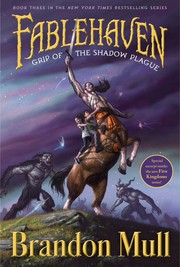
Grip of the Shadow Plague
A plague turns Fablehaven's creatures of light into shadows while Kendra hunts an artifact in Arizona and Seth races to find the cause.
2,131-word summary · 9 min read
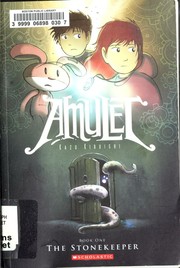
The Stonekeeper
After their father's death, Emily and Navin chase a monster into a hidden world to save their mother, and Emily's great-grandfather's amulet offers power at a…
2,753-word summary · 12 min read
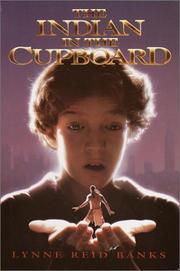
The Indian in the Cupboard
Omri learns a key turns plastic Little Bear into a live Iroquois man.
2,228-word summary · 10 min read
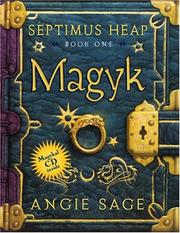
Magyk
A baby found in snow, a lost seventh son, and a run for the Marram Marshes as Marcia Overstrand shields two children from DomDaniel.
2,604-word summary · 12 min read
Rise of the Evening Star
Kendra and Seth return to Fablehaven as the Society of the Evening Star closes in, with a traitor inside the house and a demon prison key at stake.
2,874-word summary · 13 min read
Fablehaven
Kendra and Seth spend the summer with their grandfather and learn his woods hide Fablehaven, a preserve for fairies, satyrs and darker things.
2,949-word summary · 13 min read

The Blinding Knife
Kip trains to join the Blackguard while the Prism hides his true identity, loses his colors, and fights a war against a rogue drafter who wants to birth a god.
2,049-word summary · 9 min read

Inkdeath
The final Inkworld novel sends Mo into the land of the dead, leaves Meggie choosing between two boys, and ends the Adderhead's immortality with three written…
2,062-word summary · 9 min read
Dawnshard
Rysn sails toward forbidden Akinah to save her dying larkin and finds a Dawnshard guarded by the Sleepless.
3,229-word summary · 14 min read
Bone, Vol. 1: Out from Boneville
Three cartoon cousins are run out of Boneville, separated by locusts, and dropped into a valley where rat creatures and an old grudge are waiting.
2,155-word summary · 10 min read
The Icebound Land
Captured and enslaved in Skandia, Will fights a drug that erases him while Halt and Horace cut a bloody road through Gallica to bring him home.
2,088-word summary · 9 min read
Lioness Rampant
Alanna searches for the Dominion Jewel with the Shang Dragon, then returns to Tortall to face Duke Roger at Jonathan's coronation.
2,478-word summary · 11 min read
Witches Abroad
Three Lancre witches fly to Genua to stop a fairy godmother from forcing a servant girl into a storybook marriage, and find a city arranged around a happy…
2,651-word summary · 12 min read
The Golem's Eye
Two years after The Amulet of Samarkand, Nathaniel is a rising bureaucrat, Bartimaeus is his unwilling servant again, and something made of clay is tearing…
2,299-word summary · 10 min read
Magician's Gambit
Garion and his companions cross haunted Maragor and the caves beneath Rak Cthol to recover the Orb of Aldur.
2,391-word summary · 11 min read
Homeland
Drizzt Do'Urden is born into the cruel drow city of Menzoberranzan, where his father teaches him to fight and to doubt everything his family believes.
2,303-word summary · 10 min read
Enchanters' End Game
Garion marches toward Torak while Ce'Nedra leads the West's army in the final Belgariad volume, where prophecy and war meet.
2,557-word summary · 11 min read
The Chalice of the Gods
Percy needs three recommendation letters from three gods to apply to college, so his first quest is recovering a stolen chalice from the god of old age.
2,106-word summary · 9 min read
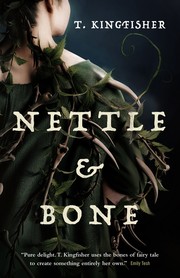
Nettle & Bone
Marra, a princess in a convent, leaves to save her abused sister, but first she must finish three impossible tasks: a bone dog, a nettle cloak, moonlight in a…
2,061-word summary · 9 min read

The Rose & the Dagger
Shahrzad is pulled from her Caliph husband and left in a desert camp of rebels, needing to break his curse and end a war before it ends her.
2,520-word summary · 11 min read
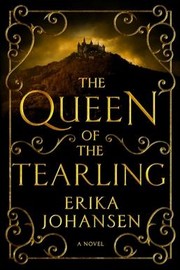
The Queen of the Tearling
Nineteen-year-old Kelsea leaves the woods to take her throne, ends a shipment of human captives, and draws the Red Queen's revenge.
2,357-word summary · 10 min read
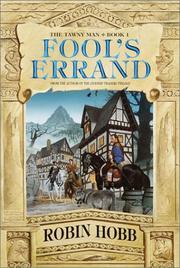
Fool's Errand
FitzChivalry Farseer has lived in exile for fifteen years. When Prince Dutiful vanishes before his betrothal, Fitz returns to Buckkeep to find him, with a wolf…
2,606-word summary · 12 min read

We Hunt the Flame
In a fractured Arabia-inspired world, a disguised huntress and a prince-assassin race to find a magic-restoring book and confront an ancient evil.
2,195-word summary · 10 min read