
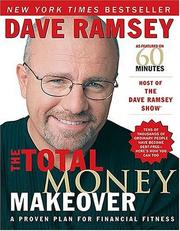
The Total Money Makeover: A Proven Plan for Financial Fitness
2,663-word summary 12 min read 240 pages in the book
- First published
- 2003
- Publisher
- Thomas Nelson
- Pages
- 240
- ISBN
- 9780785263265
Reading options
What's inside (9 sections)
I read The Total Money Makeover on a plane with a highlighter and a bad cup of coffee. I had heard Dave Ramsey's radio voice for years, the fast talk and the certainty, but I had never sat with the book. It came out in 2003 from Thomas Nelson, 240 pages, and it is part sermon, part worksheet, part infomercial. The plan is seven Baby Steps. The argument is that money is mostly behavior. I finished it in two sittings, underlined about a third of it, and spent the next week arguing with another third. That seems like the right way to read it.
The book opens by telling you what it is not. It is not sophisticated. It is not new. It is not politically correct. Ramsey says he has a finance degree and the licenses to prove it, but his real credential is that he has been broke. In his twenties he built a real estate portfolio on borrowed money, watched it collapse, and filed for bankruptcy. His marriage was under strain. He rebuilt, began counseling people, and turned the method into a radio show and a publishing business. The biography is not decoration. It is the proof of concept, and it is the source of the book's tone. A man who has been broke is allowed to be blunt with people who are broke.
The man in the mirror
The thesis arrives early: personal finance is 80 percent behavior and 20 percent head knowledge. Most people know they should spend less and save more. The problem is doing it. So the book spends less time on spreadsheets than on motivation, shame, marriage, and the stories of people who paid off debt. The chapter titles use a diet metaphor. Denial is "I'm Not That Out of Shape." The debt snowball is "Lose Weight Fast, Really." The mortgage chapter is "Be Ultrafit." The metaphor is not subtle, and it works, because debt payoff and weight loss are both behavior problems with math attached.
The cost of that approach is total confidence. Ramsey writes that the book is not wrong. He treats criticism as proof that he has touched a nerve. He tells readers not to take financial advice from broke people, a rule that sounds strange in a book written for people who are broke. Some of this is performance, the radio host warming up the crowd. Some of it is a genuine article of faith: if you follow the steps, the steps work. The book does not leave much room for the possibility that the steps are right and your circumstances are still impossible.
I found the confidence useful for about a hundred pages. It got me to write down my own numbers, which is the one thing the book asks before it asks for sacrifice. Then it started to wear. The anecdotes pile up, the same points return in new clothes, and the reader who is already convinced has to sit through a lot of preaching. The book could lose fifty pages and hit harder. It would also lose some of its revival tent energy, which is part of what makes people act.
Denial, myths, and the Joneses
The first movement is diagnosis. Chapter 2 is "Denial: I'm Not That Out of Shape." He asks you to list every debt and add up the balances, a simple exercise many readers avoid for years. Chapter 3 is "Debt Myths: Debt Is (Not) a Tool." His claim is that debt is not a wealth-building tool for ordinary households. It is risk. The payment that looks manageable at zero percent becomes a crisis when the rate resets or the income stops. He quotes Proverbs: the borrower is slave to the lender. Chapter 4 is "Money Myths: The (Non) Secrets of the Rich." Wealthy people, in his telling, do not get rich by borrowing. They get rich by keeping costs low, saving, and investing over time. Chapter 5 adds two more hurdles: ignorance and keeping up with the Joneses.
This part is persuasive to anyone who has been seduced by a car payment or a kitchen renovation. Ramsey is good at showing how a monthly payment hides a total price. He is also good at the social pressure angle: the car in the driveway, the house in the right school district, the vacation everyone else seems to take. His answer is to stop playing the comparison game and act your wage. The line is easy to mock and hard to argue with.
It is also where the book is thinnest. The myths are sometimes set up as straw men. He describes a sophisticated borrower who uses debt to build wealth, then knocks the example down with a story about a downturn. There are people who use debt well, and there are businesses that need credit. For a household with a mortgage and a stable income, the claim that all debt is dumb is a moral position as much as an economic one. He is welcome to it, but he presents it as arithmetic, and it is not only arithmetic.
Baby Step 1: $1,000 and a budget that hurts
The plan starts with a small number. Baby Step 1 is to save $1,000 in cash as a starter emergency fund. Not three months of expenses, not six. One thousand dollars. The point is to create a buffer so that a flat tire or a doctor's bill does not go on a credit card, and to prove to yourself that you can save. The chapter is called "Save $1,000 Fast: Walk Before You Run." The urgency is deliberate.
The budget is the other half of the step. Every dollar gets a job. He wants cash envelopes for groceries, gas, and eating out, because cash makes spending visible. He wants the budget to be tight enough to hurt, which is where rice and beans comes in. The phrase is shorthand for a stripped season: no restaurants, no vacations, no new clothes, no cable, no car payment. He jokes about selling so much stuff that the children think they are next. He wants gazelle intensity, his image for a gazelle that has to outrun a cheetah because the cheetah is only running for lunch. The gazelle is running for its life.
The $1,000 is intentionally inadequate. Ramsey knows it will not cover a real catastrophe. It is a starter fund, not a solution. The point is momentum. He would rather you have a small win and a boring budget than a perfect plan you never start.
The problem is that $1,000 is not a universal buffer. A transmission, a deductible, a security deposit, or a month of childcare can eat it in a day. For a household with a stable middle income, it is a useful psychological tool. For a household already behind on rent, it can be an impossible target. The book does not spend enough time on that difference. It treats the $1,000 as a first step for everyone, when for some people the first step is food and stable housing.
Baby Step 2: the debt snowball
Baby Step 2 is the part everyone remembers. List every debt except the mortgage. Order them from smallest balance to largest, ignoring interest rates. Pay the minimum on everything and throw every spare dollar at the smallest balance. When it is gone, take the payment you were making and add it to the next smallest. The snowball grows as each account closes.
The method is deliberately not mathematically optimal. The optimal method, usually called the avalanche, targets the highest interest rate first and saves more money. Ramsey knows this and does not care. He argues that debt payoff is a behavior problem, and the quick win of eliminating an account is worth more than the interest saved. If you have a $300 medical bill and a $6,000 credit card, the medical bill goes first even if the card costs more. The point is to create a visible finish line.
I think he is right about the psychology and too confident about the tradeoff. For small balances, the interest difference is trivial, and the momentum is worth it. For a $20,000 card at a high rate and a $1,500 medical bill at zero percent, the snowball can cost real money. He acknowledges the math in a sentence and then moves on. A reader with a large, high-interest balance should at least run both orders before committing. The book's answer, that behavior beats math, is true for many people and not true for all.
There is also a credit score problem. Closing accounts and carrying no cards can lower a score, and a lower score can raise insurance premiums or make renting harder. Ramsey's response is that a credit score is not a measure of wealth, which is true, and that you should not organize your life around it, which is a choice with consequences. The book is honest about the choice, but it does not spend much time on the consequences.
Baby Steps 3 to 5: the full fund, retirement, college
Baby Step 3 is the real emergency fund: three to six months of expenses, not income. He calls the chapter "Finish the Emergency Fund: Kick Murphy Out." Murphy is the law that says the water heater dies the week you get a raise. The fund is supposed to be boring and liquid, not invested. Baby Step 4 is retirement: invest 15 percent of household income. He favors tax-advantaged accounts, a Roth IRA and a pre-tax retirement plan, and growth stock mutual funds. Baby Step 5 is college: save for your children after your own retirement is on track, use cash, scholarships, and work, and avoid student loans.
The sequencing is the useful idea. Most people try to save for college, pay off debt, and invest at the same time, and do all three badly. Ramsey makes them take turns. Retirement before college is a hard sell to parents, and he makes the case plainly: you can borrow for college, but you cannot borrow for retirement. The line is a little too clean, since a student can borrow and a parent can also work longer, but the priority is sound.
The retirement chapter is where the book is most vulnerable. Ramsey uses a 12 percent average return in his projections and defends it with the long-run history of the S&P 500. Critics point out that an average is not an annual return, that fees and inflation reduce what you keep, and that a plan built on 12 percent can leave you short if the first decade of retirement is bad. He favors growth stock mutual funds, while a large body of research favors low-cost index funds. A reader can take the 15 percent savings rate and ignore the return assumption. That is probably the right split.
The college chapter is blunt in a useful way. He wants families to talk about price before the acceptance letter, to consider in-state public schools, to have the student work, and to refuse to co-sign loans. He is hard on parents who borrow for a dream school. Some of that hardness is necessary. Some of it assumes a family with enough income to cash-flow tuition, which is not most families. "Get scholarships" is not a plan for a B student with no savings.
Baby Steps 6 and 7: the house and the open hand
Baby Step 6 is pay off the home mortgage. He wants a 15-year fixed mortgage, no home equity loans, and extra principal payments. He calls a paid-off house the new status symbol. Baby Step 7 is build wealth and give. The order matters: the goal is not a pile of money for its own sake. The goal is freedom and generosity. This is where the book's Christianity is most explicit, and where the famous line comes from.
If you will live like no one else, later you can live like no one else.
The line is the whole promise in one sentence. Live on less than you make, drive the old car, skip the vacation, say no to the dinner out, and later you will have options that your neighbors do not. The later is doing a lot of work. It assumes the sacrifice is temporary and that the future arrives.
The mortgage advice is the most debated part of the plan. Paying off a 3 percent mortgage while a diversified portfolio might earn more is mathematically questionable. Paying off a 7 percent mortgage is a guaranteed return that looks much better. Ramsey treats all mortgage debt as urgent, which is a moral and emotional position as much as a financial one. For a risk-averse household, the sleep-at-night value is real. For a household with a low rate and a long horizon, the math may point the other way. He does not make that distinction.
The giving chapter is the part that surprised me. He is not asking readers to become minimalists who hoard. He wants them to become givers, and he ties giving to joy and to faith. A secular reader can take the behavioral point, that money spent on others often produces more satisfaction than money spent on yourself, without taking the theology. The book does not pretend the theology is optional, though. It is woven through the language of stewardship and blessing.
Rice and beans, and who the plan fits
The sacrifices are concrete. No restaurants. No new cars. A cheap phone. A bare-bones budget. Sell the extra car, the boat, the house you cannot afford. Take overtime, a second job, a side gig. The book's stories are full of people who did this and came out the other side. The winners of the Total Money Makeover Challenge are held up as evidence. The tone is a revival meeting, and for some readers that is exactly the push they need.
The limit is the assumption underneath it. The plan assumes a stable income, a household with enough surplus to attack debt, good health, a car that runs, and a landlord or lender who does not need a credit score. It assumes you can work more hours and that someone can watch the children. For a gig worker with variable pay, a disabled reader, a single parent with a medical crisis, or a family whose rent eats most of the paycheck, "cut the cable and sell the car" is not a plan. It is a sentence from a different life. The book has no means-tested version of the Baby Steps, and it does not spend enough time on the structural reasons people stay poor.
It also shows its age. The 2003 edition was written before the student debt boom of the 2010s, before the gig economy became a common way to pay rent, and before housing costs in many cities outran wages. Its assumptions about credit cards and online shopping feel dated now. The later editions update some numbers, but the worldview is the same.
None of that makes the book useless. It makes it a tool with a shape. If you have a steady paycheck and a pile of consumer debt, the combination of a $1,000 buffer, a written budget, and the snowball is a strong kick. If you are in acute crisis, the first call should be to a benefits counselor or a legal aid office, not a book that tells you to sell your car.
I finished with a list of things I would do and a list of things I would ignore. The list of things to do was longer. The list of things to ignore was mostly the investment chapter and the certainty. I kept the book on the shelf anyway, next to the budget binder, which is probably where Ramsey would want it.
FAQ
What are the seven Baby Steps in order?
Save $1,000, pay off all non-mortgage debt with the debt snowball, build a three to six month emergency fund, invest 15 percent, save for college, pay off the house, then build wealth and give.
Is the debt snowball better than paying the highest interest rate first?
Not mathematically. The avalanche method saves more interest, but Ramsey argues the snowball's quick wins keep people motivated, and he treats debt payoff as a behavior problem.
Does the book work if my income is not steady?
It is harder. The plan assumes a stable paycheck and enough surplus to absorb a $1,000 emergency and attack debt, so gig workers or families in crisis may need a different first step.
Similar books
The Millionaire Next Door
Stanley and Danko survey wealthy Americans and find frugal savers living next door, not big spenders, in this 1996 money study.
2,466-word summary · 11 min read
Made to Stick: Why Some Ideas Survive and Others Die
The Heath brothers break down why some ideas vanish on contact while others lodge in memory, tracing six traits that make a message stick.
2,527-word summary · 11 min read
Dare to Lead
Research on courage shows how leaders build trust through vulnerability and clear values.
2,442-word summary · 11 min read
The Black Swan
Taleb argues rare shocks shape history more than models admit, and urges safer exposure over prediction.
2,588-word summary · 12 min read
Essentialism
McKeown argues for less but better: discern the vital few, refuse the trivial many, and use buffers, small wins, and steady routines so key work gets done well…
2,421-word summary · 11 min read
SuperFreakonomics: Global Cooling, Patriotic Prostitutes And Why Suicide Bombers Should Buy Life Insurance
Levitt and Dubner apply incentives to prostitutes, suicide bombers, doctors, and climate fixes with cheeky data.
2,007-word summary · 9 min read
Predictably Irrational
Behavioral economist Dan Ariely shows why we overpay, procrastinate, and misjudge through simple experiments.
2,183-word summary · 10 min read
Emotional Intelligence
Goleman argues self awareness and empathy shape success more than IQ alone.
2,026-word summary · 9 min read
The Big Short: Inside the Doomsday Machine
Outsiders who read the bonds shorted subprime and watched the machine eat itself in 2008.
2,194-word summary · 10 min read
Influence: The Psychology of Persuasion
Six levers plus unity explain why people say yes, learned undercover in salesrooms and labs.
2,030-word summary · 9 min read
Think and Grow Rich
Hill teaches desire, faith and autosuggestion, distilling lessons from Carnegie interviews into thirteen principles for success.
2,458-word summary · 11 min read
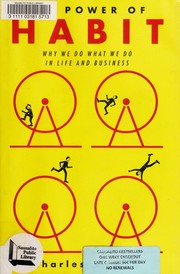
The Power of Habit
Why we do what we do: the cue routine reward loop, keystone habits, and how companies and movements use the same science, from toothpaste to the bus boycott.
2,207-word summary · 10 min read
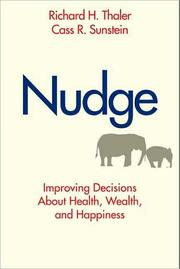
Nudge: Improving Decisions About Health, Wealth, and Happiness
Thaler and Sunstein show how defaults, framing, and social cues steer choices, and argue for choice architecture with an opt-out.
3,146-word summary · 14 min read
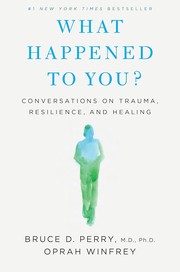
What Happened to You?
Oprah Winfrey and psychiatrist Bruce Perry explain how early experience shapes the brain, and why asking what happened to someone works better than asking what…
2,238-word summary · 10 min read
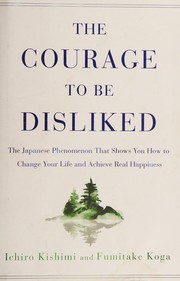
The Courage to Be Disliked: The Japanese Phenomenon That Shows You How to Change Your Life and Achieve Real Happiness
A philosopher and an angry young man argue over five nights about Adlerian psychology, trauma, approval, and the freedom to be disliked.
2,054-word summary · 9 min read
Moonwalking with Einstein: The Art and Science of Remembering Everything
A journalist spends a year training for the U.S. Memory Championship and discovers that extraordinary memory is mostly technique, attention, and a lot of…
2,027-word summary · 9 min read
Don't Sweat the Small Stuff ... and It's All Small Stuff: Simple Ways to Keep the Little Things from Taking Over Your Life
Richard Carlson’s 1997 bestseller offers one hundred short chapters on lowering the volume on daily irritations, and it is more pragmatic than its title…
2,502-word summary · 11 min read
Four Thousand Weeks: Time Management for Mortals
Oliver Burkeman turns the whole productivity project on its head, arguing that a human lifespan of roughly four thousand weeks is not a problem to optimize…
2,447-word summary · 11 min read
The Magic of Thinking Big
Schwartz's 1959 self-help classic argues that success follows from the size of your thinking, supported by sales anecdotes, vocabulary drills and goal setting.
2,579-word summary · 11 min read
The Road Less Traveled: A New Psychology of Love, Traditional Values and Spiritual Growth
M. Scott Peck argues that maturity begins with accepting difficulty, then builds discipline, love, and spiritual growth through honest, often painful work.
2,200-word summary · 10 min read

Attached
A psychiatrist and a psychologist explain adult attachment styles and show how anxious, avoidant, and secure patterns shape dating, conflict, and the search…
2,157-word summary · 10 min read
All About Love: New Visions
bell hooks borrows a definition of love as an action rather than a feeling, then spends thirteen chapters showing how hard it is to practice.
2,385-word summary · 11 min read
The World Is Flat: A Brief History of the Twenty-first Century
Thomas L. Friedman's 2005 bestseller argues that technology, trade, and open borders leveled the global playing field, and it names the ten forces that did it.
2,369-word summary · 11 min read
Liar's Poker
Michael Lewis recalls his years as a Salomon Brothers bond salesman in the 1980s, when bluffing paid better than analysis and the mortgage machine was just…
2,405-word summary · 11 min read
How to Stop Worrying and Start Living
Carnegie offers day-tight routines for worry built from interviews and worker stories.
2,505-word summary · 11 min read
10% Happier
An ABC newsman panics on air, then finds meditation without losing his edge.
2,590-word summary · 12 min read
Think Again
Adam Grant argues for holding views loosely and testing them like a scientist, moving past preacher, prosecutor, and politician habits at work and in debate.
3,204-word summary · 14 min read
Braving the Wilderness: The quest for true belonging and the courage to stand alone
Belonging to yourself first lets you stand alone and still stay close to others.
2,004-word summary · 9 min read
The Untethered Soul
Singer names the noisy inner voice and shows how watching thoughts, loosening old hurt, and keeping the heart open through surrender can ease daily suffering…
2,752-word summary · 12 min read
The Art of Happiness
The Dalai Lama and psychiatrist Howard Cutler link lasting happiness to training the mind, human warmth, compassion, and basic spiritual values for daily life.
3,394-word summary · 15 min read