
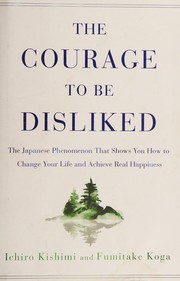
The Courage to Be Disliked: The Japanese Phenomenon That Shows You How to Change Your Life and Achieve Real Happiness
2,054-word summary 9 min read 288 pages in the book
- First published
- 2013
- Publisher
- Atria Books
- Pages
- 288
- ISBN
- 9781501197277
Reading options
What's inside (11 sections)
I picked this up expecting a self-help book and found something closer to a philosophy seminar. The Courage to Be Disliked is built as a conversation between a philosopher and a young man who is angry at the world. The philosopher argues that people can change, that the past does not determine the future, and that most of our suffering comes from the way we handle other people. The young man argues back. He is skeptical, impatient, and sometimes rude. The book is the transcript of their argument over five nights.
It was first published in Japan in 2013 as Kirawareru Yūki, and it became a bestseller across Asia before the English translation appeared in 2018 from Atria Books. The authors are Ichiro Kishimi, a Japanese philosopher and Adler scholar, and Fumitake Koga, a writer. The book is based on the psychology of Alfred Adler, the Austrian psychologist who broke with Freud and founded individual psychology. Adler is less famous than Freud or Jung, and the book's project is partly to put him back on the map.
The Form
The dialogue form is a deliberate choice. Adler's ideas are not complicated in themselves, but they are counterintuitive, and the young man gives the reader permission to resist them. He says the things a normal person would say. He asks why he should forgive people who hurt him. He asks why he should stop seeking approval. He asks whether the philosopher has ever actually been unhappy. The philosopher answers with patience and, occasionally, with a sharpness that keeps the book from becoming a lecture.
The form has limits. The young man often concedes too quickly, and the philosopher sometimes answers a question by redefining the terms. But the back-and-forth gives the book a momentum that a straightforward exposition would lack. It reads like a play, and the two characters are distinct enough to carry it.
The First Night: Trauma Does Not Exist
The philosopher's first claim is the most controversial. He says trauma does not exist. What he means is not that terrible things do not happen. He means that the past does not cause the present in a simple, mechanical way. Freud, in Adler's view, looks for causes. Adler looks for purposes. The question is not "what happened to you" but "what are you using it for."
The example the book uses is a person who stays in his room and cannot go outside. Freud might look for a childhood trauma that caused the fear. Adler asks what the behavior accomplishes. Staying inside may protect the person from failure, from judgment, or from the pressure of a life he is afraid to live. The anxiety is real, but it is serving a purpose. Change the purpose, and the anxiety may change.
The young man is outraged by this. It sounds like blaming the victim. The philosopher insists that it is the opposite. If the past does not determine you, then you are free to change. If it does, you are trapped. The claim is meant to be liberating, and it is, but it is also easy to misuse. A person who has experienced real trauma may hear "your trauma does not exist" and feel dismissed.
The book does not handle that objection well. It acknowledges that terrible things happen, but it does not spend enough time on the difference between a useful reframe and a cruel one. The philosopher says trauma is not the cause of present suffering, not that the suffering is imaginary. That distinction matters, and the book could have made it more clearly.
The Second Night: All Problems Are Interpersonal
The second night turns to inferiority. The philosopher says that all problems are interpersonal relationship problems. This is an exaggeration, and he knows it. He means that the feelings that trouble us most, inadequacy, jealousy, loneliness, resentment, are shaped by other people.
He distinguishes between inferiority feelings and an inferiority complex. Inferiority feelings are normal. Everyone feels inadequate sometimes, and those feelings can motivate growth. An inferiority complex is when the feeling becomes an excuse. The person says, "I cannot succeed because I am short," or "I cannot be happy because I am poor," and uses the limitation to avoid the risk of trying.
The book also argues that life is not a competition. The young man sees other people as rivals. The philosopher says that if you see others as rivals, you will spend your life comparing yourself to them. If you see them as comrades, you can cooperate. The shift is not naive optimism. It is a choice about what kind of attention you pay to the world.
The Third Night: Separate Tasks
The third night is the most practical. The philosopher introduces the idea of the separation of tasks. Every situation involves tasks that belong to different people. You are responsible for your own tasks. You are not responsible for other people's tasks. You cannot make someone like you, and you should not try. You can only do your own work.
This is the basis of the book's advice on people-pleasing. If you spend your life trying to meet other people's expectations, you are taking on their tasks. You are trying to control their feelings. The philosopher says that this is exhausting and ultimately disrespectful. Other people are allowed to be disappointed. You are allowed to be disliked.
The phrase "the courage to be disliked" comes from this section. It does not mean being rude or cruel. It means accepting that some people will not approve of you, and choosing to live by your own values anyway. The young man finds this difficult. Most readers will. The need for approval is deep, and the book knows it.
The Fourth Night: Community Feeling
The fourth night expands the frame. The philosopher says that the goal of interpersonal relationships is a feeling of community. He means a sense that you belong, that you matter, and that you are connected to something larger than yourself. That feeling is not given to you. It is built through contribution.
The book is careful to say that contribution does not have to be grand. It can be small. What matters is the sense that you are useful to others. The philosopher also argues against praise and rebuke. Both are forms of vertical relationship, in which one person has the power to judge another. He recommends encouragement instead, which treats people as equals.
This section is where the book becomes most idealistic. The idea of a community of equals is attractive, but it is hard to apply in a workplace or a family where power is unequal. The philosopher does not have much to say about structures. He focuses on the individual's attitude, which is both the book's strength and its limitation.
The Fifth Night: Live in the Here and Now
The final night is about time. The philosopher says that life is a series of moments, not a line from past to future. You do not need to have a grand plan. You need to live each moment well. He uses the image of a dance: you do not dance to arrive at a destination. You dance because dancing is the point.
This is a familiar idea, but the book gives it a specific Adlerian twist. The philosopher says that people who focus on the future are often using it as an excuse. They say they will be happy when they achieve something, and in the meantime they do not live. The alternative is to treat each day as something complete in itself.
The young man pushes back. He says this sounds like a recipe for complacency. The philosopher answers that living in the present does not mean giving up on goals. It means not sacrificing the present to the future. The distinction is subtle, and the book does not always maintain it.
What Holds Up
The separation of tasks is genuinely useful. It gives a name to a pattern that many people recognize: the exhaustion of trying to manage other people's emotions. The idea that you are not responsible for someone else's disappointment is freeing, and it is stated clearly enough to remember.
The critique of praise is also interesting. Most people assume that praise is good. The philosopher argues that praise creates dependence and inequality. Encouragement, by contrast, acknowledges effort without making the other person a project. I do not agree with every part of this, but it made me think about the way I talk to people.
The book is also good at the psychology of excuses. The young man's objections are often the objections of someone who is afraid to change. The philosopher does not let him off the hook. That combative quality is part of why the book works. It is not a comfortable read, and it is not meant to be.
The "life tasks" section is where the book becomes practical. Adler identifies three tasks: work, friendship, and love. Each one requires a different kind of courage. Work is the easiest, because it is based on tasks and results. Friendship is harder, because it requires trust without a transaction. Love is hardest, because it requires vulnerability and the risk of being rejected. The young man resists all three, and the philosopher keeps pointing out that resistance is a choice.
The comparison with Freud is useful even if you do not accept Adler's conclusions. Freud looks backward, at what formed you. Adler looks forward, at what you are trying to achieve. Most people need both. A book that only looks forward can miss the ways the past lives in the body and the nervous system. A book that only looks backward can miss the ways people keep choosing the same patterns. The Courage to Be Disliked is a corrective, not a complete psychology.
What Doesn't
The denial of trauma is the biggest problem. Adler's teleology is a useful corrective to pure determinism, but the book states it too absolutely. People who have experienced abuse, violence, or deep loss may find the claim that trauma does not exist to be not just wrong but harmful. A more careful version would say that trauma is real and that it does not have to be the final word on your life. The book rarely makes that distinction.
The dialogue is also rigged. The young man is smart enough to raise objections, but he is not given the space to win an argument. The philosopher always has a response, and the response is usually a reframe. That makes the book feel like a debate in which one side has read the other's notes.
The individualism is another issue. The book puts a lot of weight on the individual's choices and not much on social conditions. If you are poor, sick, or discriminated against, the advice to change your perspective can feel like a denial of reality. Adlerian psychology has more to say about community than this book admits, and the book's focus on personal courage can shade into blaming people for their own suffering.
Who It's For
This is a book for people who are hard on themselves. It is for the person who cannot stop replaying conversations, who worries about what others think, who feels stuck in a job or a relationship because leaving would disappoint someone. The separation of tasks and the courage to be disliked are useful tools for those readers.
It is also a book for people who like to argue with a book. The philosopher is not always right, and the young man is not always wrong. The pleasure of the dialogue is that it gives both sides room. A reader who finishes it with a list of objections has read it correctly.
It is not a book for someone in crisis, and it is not a substitute for therapy. It is a philosophy book dressed as self-help, and it should be read as a set of arguments to test rather than a set of instructions to follow. The young man is the reader's stand-in. If you find yourself arguing with the philosopher, that is a good sign. The book is trying to make you think, not to make you agree.
FAQ
Is The Courage to Be Disliked based on Adlerian psychology?
Yes, it presents Alfred Adler's ideas through a dialogue between a philosopher and a young man.
Does the book really say trauma does not exist?
It says the past does not determine the present and that people use past wounds for present purposes; the claim is more absolute than most clinicians would accept.
Who wrote it?
Ichiro Kishimi and Fumitake Koga; the Japanese original appeared in 2013 and the English translation in 2018.
Similar books
Four Thousand Weeks: Time Management for Mortals
Oliver Burkeman turns the whole productivity project on its head, arguing that a human lifespan of roughly four thousand weeks is not a problem to optimize…
2,447-word summary · 11 min read
Don't Sweat the Small Stuff ... and It's All Small Stuff: Simple Ways to Keep the Little Things from Taking Over Your Life
Richard Carlson’s 1997 bestseller offers one hundred short chapters on lowering the volume on daily irritations, and it is more pragmatic than its title…
2,502-word summary · 11 min read
The Road Less Traveled: A New Psychology of Love, Traditional Values and Spiritual Growth
M. Scott Peck argues that maturity begins with accepting difficulty, then builds discipline, love, and spiritual growth through honest, often painful work.
2,200-word summary · 10 min read
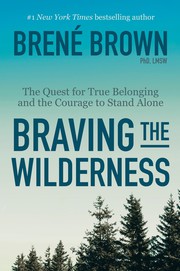
Braving the Wilderness: The quest for true belonging and the courage to stand alone
Belonging to yourself first lets you stand alone and still stay close to others.
2,004-word summary · 9 min read

The Untethered Soul
Singer names the noisy inner voice and shows how watching thoughts, loosening old hurt, and keeping the heart open through surrender can ease daily suffering…
2,752-word summary · 12 min read
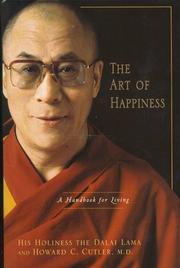
The Art of Happiness
The Dalai Lama and psychiatrist Howard Cutler link lasting happiness to training the mind, human warmth, compassion, and basic spiritual values for daily life.
3,394-word summary · 15 min read
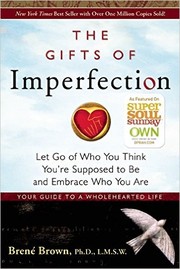
The Gifts of Imperfection
Shame research turned into ten guideposts for dropping perfectionism and living with courage and connection.
2,799-word summary · 12 min read

A New Earth
Tolle maps ego pain and shows how presence can loosen roles, thoughts, and suffering.
1,909-word summary · 8 min read

12 Rules for Life
Twelve essays on responsibility from posture to truth to petting cats.
2,045-word summary · 9 min read
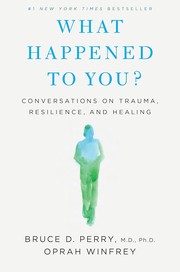
What Happened to You?
Oprah Winfrey and psychiatrist Bruce Perry explain how early experience shapes the brain, and why asking what happened to someone works better than asking what…
2,238-word summary · 10 min read
Moonwalking with Einstein: The Art and Science of Remembering Everything
A journalist spends a year training for the U.S. Memory Championship and discovers that extraordinary memory is mostly technique, attention, and a lot of…
2,027-word summary · 9 min read
The Total Money Makeover: A Proven Plan for Financial Fitness
Dave Ramsey lays out seven Baby Steps, from a $1,000 starter fund to a paid-off house, with the debt snowball at the center.
2,663-word summary · 12 min read
Made to Stick: Why Some Ideas Survive and Others Die
The Heath brothers break down why some ideas vanish on contact while others lodge in memory, tracing six traits that make a message stick.
2,527-word summary · 11 min read

Attached
A psychiatrist and a psychologist explain adult attachment styles and show how anxious, avoidant, and secure patterns shape dating, conflict, and the search…
2,157-word summary · 10 min read

All About Love: New Visions
bell hooks borrows a definition of love as an action rather than a feeling, then spends thirteen chapters showing how hard it is to practice.
2,385-word summary · 11 min read
How to Stop Worrying and Start Living
Carnegie offers day-tight routines for worry built from interviews and worker stories.
2,505-word summary · 11 min read
Dare to Lead
Research on courage shows how leaders build trust through vulnerability and clear values.
2,442-word summary · 11 min read
10% Happier
An ABC newsman panics on air, then finds meditation without losing his edge.
2,590-word summary · 12 min read
The Black Swan
Taleb argues rare shocks shape history more than models admit, and urges safer exposure over prediction.
2,588-word summary · 12 min read
Essentialism
McKeown argues for less but better: discern the vital few, refuse the trivial many, and use buffers, small wins, and steady routines so key work gets done well…
2,421-word summary · 11 min read
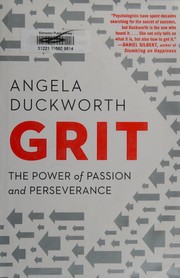
Grit
A psychologist argues sustained passion plus perseverance beats raw talent, and shows how grit can be grown.
2,432-word summary · 11 min read
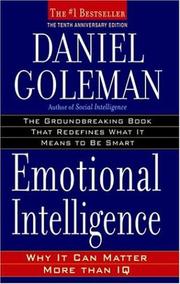
Emotional Intelligence
Goleman argues self awareness and empathy shape success more than IQ alone.
2,026-word summary · 9 min read
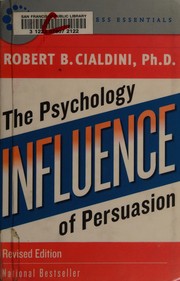
Influence: The Psychology of Persuasion
Six levers plus unity explain why people say yes, learned undercover in salesrooms and labs.
2,030-word summary · 9 min read
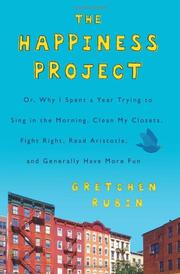
The Happiness Project
Gretchen Rubin spends a year testing monthly resolutions on energy, marriage, work, parenting, and play, tracking small habits to build a happier ordinary…
3,516-word summary · 16 min read
Think and Grow Rich
Hill teaches desire, faith and autosuggestion, distilling lessons from Carnegie interviews into thirteen principles for success.
2,458-word summary · 11 min read
Maybe You Should Talk to Someone
Therapist Lori Gottlieb counsels John, Julie and Rita while seeing her own therapist Wendell after a breakup.
2,234-word summary · 10 min read

The Four Agreements
Don Miguel Ruiz offers four Toltec agreements for personal freedom: impeccable word, detachment, curiosity, and effort.
2,289-word summary · 10 min read
Quiet
Cain traces the Extrovert Ideal from Harvard Business School to open offices and defends the power of quiet.
2,898-word summary · 13 min read
The Power of Habit
Why we do what we do: the cue routine reward loop, keystone habits, and how companies and movements use the same science, from toothpaste to the bus boycott.
2,207-word summary · 10 min read
The Subtle Art of Not Giving a F*ck
Blogger Mark Manson argues for fewer cares held better, through suffering, values, failure and saying no, with raw stories.
2,020-word summary · 9 min read