
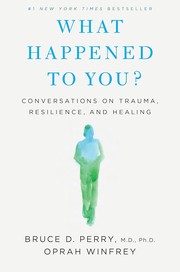
What Happened to You?
2,238-word summary 10 min read 304 pages in the book
- First published
- 2021
- Publisher
- Flatiron Books
- Pages
- 304
- ISBN
- 9781250223180
Reading options
What's inside (8 sections)
The first time someone asked me "what happened to you?" instead of "what is wrong with you?" I noticed how quickly the second question puts a person on trial. The first one invites a story. That difference is the whole engine of this book, which is built from a long conversation between Oprah Winfrey and the psychiatrist Bruce D. Perry. It is not a clinical manual and it is not a celebrity memoir, though it has pieces of both. It is an argument about how a person becomes who they are, told through two voices that have spent decades thinking about the same question from opposite ends of the room.
Winfrey opens with her grandmother's switch and the language of "whupping" that surrounded her childhood in Mississippi. She is careful not to turn that memory into a simple accusation. She is more interested in what it taught her body before she had words for it. Perry then takes that memory and explains what a developing brain does with repeated fear: it wires itself for the world it actually lives in. The book keeps returning to a line that sounds almost too simple to be useful. Your brain is doing exactly what you would expect it to do, considering what you lived through. The sentence is a door. Once you walk through it, a lot of behavior that looked like defiance or laziness starts to look like adaptation.
The question behind the question
Perry's core claim is that most of what we call mental health problems are better understood as the residue of experience. He is not denying biology or genetics. He is saying that experience gets under the skin and changes the systems that regulate fear, sleep, appetite, attention, and trust. A child who grows up in an unpredictable house learns to scan the room before she learns to read. A boy who is hit at random learns that adults are weather, not shelter. By the time either of them reaches a classroom or a doctor's office, the behavior is visible and the cause is not.
Winfrey's own story gives the argument a body. She describes being abused starting around age nine, running away as a teenager, becoming pregnant at fourteen, and losing the baby shortly after birth. She also describes the shame that came with all of it, the sense that she was the problem. The book does not linger on the details for their own sake. It uses them to show how a person can spend years asking the wrong question about herself. The shift from "what is wrong with me" to "what happened to me" is not an excuse. It is a way of getting accurate.
This matters because the wrong question leads to the wrong fix. If you think a person is bad, you punish. If you think a person is broken, you try to repair a defect. If you think a person adapted to something terrible, you start asking what the adaptation was for and whether it is still needed. Perry is blunt that many systems, schools, courts, child welfare agencies, police departments, are organized around the first two questions. They respond to the behavior and miss the history.
The brain builds itself from the bottom up
The science sections are the strongest part of the book. Perry explains that the brain develops sequentially, from the lower, more primitive regions to the cortex. The brainstem handles basic arousal and life support. The diencephalon handles appetite, sleep, and motor regulation. The limbic system handles emotion and attachment. The cortex handles language, planning, and abstract thought. Information travels upward through these layers. That means we feel before we think, and we act before we understand.
This is not a metaphor. Perry describes how early experiences shape the neural networks that later process stress. A baby who is soothed repeatedly learns that distress ends. A baby who is ignored learns that distress is pointless, or that it must be suppressed, or that it must be amplified to get anyone's attention. These are not conscious decisions. They are calibrations. By adulthood, the calibration feels like personality. The person who cannot sit still, the person who shuts down in conflict, the person who overreacts to a raised voice, all of them are running software written in a room they may not remember.
Perry uses a veteran named Mike Rosenman to show how this works in adults. A smell or a sound can trigger a full stress response before the thinking brain has a chance to check the date. He uses a boy named Samuel to show the same mechanism in a child who has been physically abused. Samuel is not choosing to be difficult. His system is responding to cues that remind it of danger. The book's phrase for this is "evocative cues," and it is a useful one. The cue does not have to be the original event. It only has to resemble it in some sensory way.
The implication is uncomfortable for anyone who believes that behavior is a matter of willpower. Perry is not saying willpower does not exist. He is saying it is expensive and unevenly distributed. A person whose stress system is constantly at red alert has less room for the kind of calm, deliberate choice that other people take for granted. That is why telling someone to "just calm down" so often fails. The instruction arrives at the cortex, but the alarm is coming from somewhere lower and older.
Regulation, relationship, reward
The second major idea is that humans are not designed to self-regulate in isolation. We borrow regulation from other people before we can produce it ourselves. A baby is calmed by a caregiver's voice, rhythm, and touch. Over time, that external regulation becomes internal. Perry calls the result a "Tree of Regulation," with roots in rhythm and relationship, a trunk in the core regulatory networks, and branches that reach into the cortex. The image is a little tidy for the complexity he is describing, but it does the job.
Rhythm matters more than most adults realize. Rocking, singing, walking, breathing, eating at roughly the same time, all of these repeated patterns tell the body that the world is predictable. Predictability is not a luxury. It is a biological signal of safety. When rhythm collapses, as it does in neglect, chaos, or chronic stress, the body loses one of its cheapest forms of regulation. People then look for substitutes. Perry lists the usual ones: food, alcohol, drugs, sex, spending, screens, risk. He is not moralizing about them. He is explaining that they work, at least for a while, because they change the body's state.
This is where the book becomes genuinely useful for readers who recognize themselves in the list. Addiction is often described as a failure of character. Perry describes it as an attempt at regulation that has gone wrong. The attempt makes sense. The cost is what makes it a problem. And the most powerful alternative, he argues, is relational reward. Connection with other people is not a soft add-on to recovery. It is the mechanism. He puts it plainly: connectedness counters the pull of addictive behaviors.
Winfrey's contributions keep the conversation from floating into abstraction. She asks the questions a reader might ask, and she pushes back when an idea sounds too neat. She talks about the church community that helped her survive, the teachers who noticed her, the books that gave her another world to live in. The book is careful to say that one loving adult does not undo everything, but it also insists that one loving adult can change the direction of a life.
Love, neglect, and the things that do not happen
One of the most important distinctions in the book is between trauma and neglect. Trauma is something that happens. Neglect is something that fails to happen. Both change the brain, but they do it differently. Trauma floods the system with fear and leaves a memory of threat. Neglect starves the system of the input it needs to build basic regulatory capacity. Perry argues that neglect is often harder to see because there is no event to point to. There is no bruise, no police report, no single night to blame.
He also explains that resilience is not a fixed trait. Children are not born resilient or fragile. They are born malleable. That word is doing a lot of work. It means the outcome depends on what happens next, not on some inner reserve that either exists or does not. A child who has been through hell can recover if the conditions for recovery are present. A child who has been through less can struggle for years if the conditions are absent. This is hopeful, but it is not sentimental. It puts the responsibility back on the environment, on families, schools, and communities.
The book also takes up the question of inheritance. Perry talks about epigenetics and the way stress can be transmitted across generations. He does not claim that trauma is encoded in a simple gene. He describes a more indirect process: a parent who is dysregulated has a harder time regulating a child, and the child's system adapts to that. Historical trauma works the same way at a larger scale. Winfrey connects this to the legacy of slavery and Jim Crow, not as a metaphor but as a chain of real stress passed through families.
Post-traumatic wisdom and the long road
The later chapters turn toward healing, and this is where the book is most vulnerable to the criticism that it promises more than it can deliver. Perry is careful to say that healing is not a straight line and that resilience cannot be rushed. He describes a "thrive to survive" continuum, and he argues that people move along it in both directions depending on what is happening around them. The phrase "post-traumatic wisdom" is his term for the knowledge that can come from surviving something terrible. It is not a consolation prize. It is a hard-won understanding of what matters.
The practical framework he offers is usually summarized as regulate, relate, reason. Before you can talk through a problem, you have to get the body into a state where talking is possible. Before you can reason with a child, you have to connect with the child. This sounds obvious, but a lot of parenting, teaching, and policing ignores it. We ask people to explain themselves while they are still in fight-or-flight. We demand insight from a system that is not currently capable of insight.
Perry also talks about "relational poverty." Modern life, with its mobility and its screens and its thin networks of support, leaves many people without the dense web of relationships that traditional communities provided. He describes time with Māori communities in New Zealand, where healing is understood as a collective process rather than an individual appointment. The contrast is not presented as a fantasy of noble simplicity. It is presented as evidence that the therapeutic web can be wider than a therapist's office.
Winfrey's account of forgiving her mother on her deathbed is the emotional center of the final section. She does not describe forgiveness as a tidy resolution. She describes it as a decision to stop carrying a weight that was never hers to carry. The book ends with an update on Jesse, the boy with the brain injury, and with a sense that healing is possible without being complete.
What the book does well, and where it strains
The book's greatest strength is its refusal to separate science from story. Perry's explanations are clear enough for a general reader, and Winfrey's willingness to use her own life keeps the material from becoming clinical. The conversational format also gives the book a humane texture. You can hear two people thinking, not a expert lecturing a patient.
The weaknesses are real, though. The dialogue can become repetitive. Ideas are introduced, circled, and restated, which is fine for a live conversation but slows down a book. Some of the science is simplified to the point of being misleading, particularly when complex findings are compressed into a single memorable line. The case studies are vivid, but they are selected to illustrate the argument, and the book rarely shows cases that complicate it. Readers who want a rigorous treatment of trauma should supplement this with more technical work.
There is also a tension in the self-help framing. The book is sold as a path to healing, and it offers genuine insight, but it cannot provide the conditions it describes. It can tell you that connection matters. It cannot manufacture a community for you. It can explain why your nervous system reacts the way it does. It cannot undo the years that shaped it. The book is honest about this in places, but the marketing around it is not always as careful.
Still, the central shift is worth the read. Most of us have been asked "what is wrong with you?" at some point, and most of us have asked it of ourselves. This book makes a case for a better question, and it gives you enough science to understand why the question matters. It does not absolve anyone of responsibility. It does something more useful. It replaces blame with a map.
FAQ
Who wrote What Happened to You?
It was written by Oprah Winfrey and Dr. Bruce D. Perry, a psychiatrist and trauma researcher, and published by Flatiron Books in 2021.
Is this book only for people who have experienced severe trauma?
No. It is aimed at general readers and covers ordinary stress, neglect, and family patterns as well as extreme events. The authors argue that understanding the question benefits parents, teachers, and anyone trying to make sense of their own reactions.
Does the book offer a step-by-step cure?
Not exactly. It explains the science of trauma and describes principles such as regulate, relate, reason, but it does not provide a structured treatment program. The authors repeatedly say that healing depends on relationships and conditions that a book cannot supply.
Similar books
Reasons to Stay Alive
Matt Haig's memoir of the breakdown that nearly killed him at twenty four and the three years of unglamorous recovery that followed.
2,065-word summary · 9 min read
The Body Keeps the Score
A psychiatrist explains how trauma lives in the body and what helps people recover, from EMDR to movement and connection.
2,172-word summary · 10 min read

Sybil
A 1973 case study of a woman treated for multiple personalities, and the book that made dissociative identity disorder a household phrase.
2,054-word summary · 9 min read

The Courage to Be Disliked: The Japanese Phenomenon That Shows You How to Change Your Life and Achieve Real Happiness
A philosopher and an angry young man argue over five nights about Adlerian psychology, trauma, approval, and the freedom to be disliked.
2,054-word summary · 9 min read

Moonwalking with Einstein: The Art and Science of Remembering Everything
A journalist spends a year training for the U.S. Memory Championship and discovers that extraordinary memory is mostly technique, attention, and a lot of…
2,027-word summary · 9 min read
The Total Money Makeover: A Proven Plan for Financial Fitness
Dave Ramsey lays out seven Baby Steps, from a $1,000 starter fund to a paid-off house, with the debt snowball at the center.
2,663-word summary · 12 min read
Don't Sweat the Small Stuff ... and It's All Small Stuff: Simple Ways to Keep the Little Things from Taking Over Your Life
Richard Carlson’s 1997 bestseller offers one hundred short chapters on lowering the volume on daily irritations, and it is more pragmatic than its title…
2,502-word summary · 11 min read
Made to Stick: Why Some Ideas Survive and Others Die
The Heath brothers break down why some ideas vanish on contact while others lodge in memory, tracing six traits that make a message stick.
2,527-word summary · 11 min read

Four Thousand Weeks: Time Management for Mortals
Oliver Burkeman turns the whole productivity project on its head, arguing that a human lifespan of roughly four thousand weeks is not a problem to optimize…
2,447-word summary · 11 min read
Columbine
Ten years of reporting on the 1999 school massacre, including a journalist's correction of the myths he helped create in the first hours.
2,232-word summary · 10 min read
The Road Less Traveled: A New Psychology of Love, Traditional Values and Spiritual Growth
M. Scott Peck argues that maturity begins with accepting difficulty, then builds discipline, love, and spiritual growth through honest, often painful work.
2,200-word summary · 10 min read

Attached
A psychiatrist and a psychologist explain adult attachment styles and show how anxious, avoidant, and secure patterns shape dating, conflict, and the search…
2,157-word summary · 10 min read
All About Love: New Visions
bell hooks borrows a definition of love as an action rather than a feeling, then spends thirteen chapters showing how hard it is to practice.
2,385-word summary · 11 min read
The Choice
Auschwitz survivor and therapist turns prison into a guide for healing.
2,472-word summary · 11 min read
How to Stop Worrying and Start Living
Carnegie offers day-tight routines for worry built from interviews and worker stories.
2,505-word summary · 11 min read
Dare to Lead
Research on courage shows how leaders build trust through vulnerability and clear values.
2,442-word summary · 11 min read
10% Happier
An ABC newsman panics on air, then finds meditation without losing his edge.
2,590-word summary · 12 min read
Essentialism
McKeown argues for less but better: discern the vital few, refuse the trivial many, and use buffers, small wins, and steady routines so key work gets done well…
2,421-word summary · 11 min read
Braving the Wilderness: The quest for true belonging and the courage to stand alone
Belonging to yourself first lets you stand alone and still stay close to others.
2,004-word summary · 9 min read

The Untethered Soul
Singer names the noisy inner voice and shows how watching thoughts, loosening old hurt, and keeping the heart open through surrender can ease daily suffering…
2,752-word summary · 12 min read
The Art of Happiness
The Dalai Lama and psychiatrist Howard Cutler link lasting happiness to training the mind, human warmth, compassion, and basic spiritual values for daily life.
3,394-word summary · 15 min read
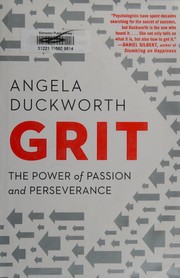
Grit
A psychologist argues sustained passion plus perseverance beats raw talent, and shows how grit can be grown.
2,432-word summary · 11 min read
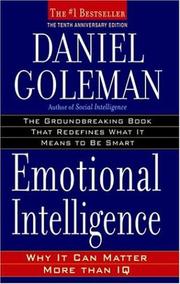
Emotional Intelligence
Goleman argues self awareness and empathy shape success more than IQ alone.
2,026-word summary · 9 min read
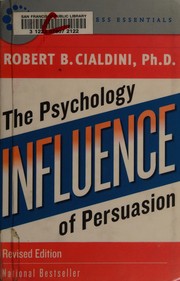
Influence: The Psychology of Persuasion
Six levers plus unity explain why people say yes, learned undercover in salesrooms and labs.
2,030-word summary · 9 min read
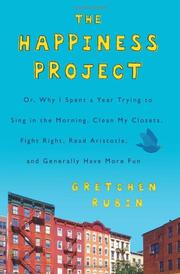
The Happiness Project
Gretchen Rubin spends a year testing monthly resolutions on energy, marriage, work, parenting, and play, tracking small habits to build a happier ordinary…
3,516-word summary · 16 min read
The Gifts of Imperfection
Shame research turned into ten guideposts for dropping perfectionism and living with courage and connection.
2,799-word summary · 12 min read
A New Earth
Tolle maps ego pain and shows how presence can loosen roles, thoughts, and suffering.
1,909-word summary · 8 min read
12 Rules for Life
Twelve essays on responsibility from posture to truth to petting cats.
2,045-word summary · 9 min read
Think and Grow Rich
Hill teaches desire, faith and autosuggestion, distilling lessons from Carnegie interviews into thirteen principles for success.
2,458-word summary · 11 min read
Maybe You Should Talk to Someone
Therapist Lori Gottlieb counsels John, Julie and Rita while seeing her own therapist Wendell after a breakup.
2,234-word summary · 10 min read