
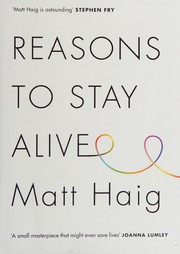
Reasons to Stay Alive
2,065-word summary 9 min read 272 pages in the book
- First published
- 2015
- Publisher
- Canongate Books
- Pages
- 272
- ISBN
- 9781782115083
Reading options
What's inside (9 sections)
The first time I read Reasons to Stay Alive I was on a train and I finished it before my stop, which tells you something about its size and speed, and not enough about its weight. It is short. It is also the most quietly useful book I have read about depression, and I say that as someone who has read the clinical manuals and the famous literary case studies. Matt Haig is not a doctor and does not pretend to be. He is a novelist who nearly died at twenty four and then spent years learning how to live, and the book is his account of what that learning was like from the inside.
He published it in 2015 with Canongate, and the timing matters. In 2015 the public conversation about mental health in Britain was still mostly a conversation about scandal, funding and crime statistics. Haig wrote a book that was funny in places, angry in others, and organized its whole architecture around one idea: that the depressed mind is not broken, it is ill, and like most illnesses it can be survived. The book sold over a million copies and spent forty six weeks in the top ten; its title became a hashtag where strangers posted their own reasons. That reception is part of what the book is now.
September 1999
The story starts in Ibiza in September 1999. Haig is twenty four, living in Spain with his girlfriend Andrea, and his mind caves in for reasons he never fully explains, which is honest, because depression often does not have a reason you can point to. He stops sleeping and eating. Three days pass. He becomes certain that living means pain and that the only sane response is to stop. He reaches a cliff edge and stands there, and what stops him is not hope in the usual sense. Part of it is fear that he would survive the fall and be trapped in a broken body. Part of it is what the death would do to the people who loved him. He turns around. The book treats that turn as the beginning, not the climax.
The next three years are the climb. He is diagnosed with depression and anxiety. He is prescribed diazepam, which he dislikes and fears, and later he writes that the pills felt like part of the problem for him personally. He is careful to say this is his experience and not advice, which matters, because the book's worst reviews accused it of being anti medication. It is not. It is a specific person describing a specific recovery, and Haig flags constantly, sometimes in the same paragraph, that other people need other routes.
What the illness is
The middle of the book is Haig's attempt to describe depression from inside, and this is where he earns his keep. He writes that depression lies, that the flat voice telling you that nothing matters and no one cares is a symptom and not a verdict. He offers the image of the tunnel with light at the end that you cannot yet see, and the line that the bottom of the valley never gives the clearest view. The most quoted metaphor is about anxiety: adding anxiety to depression is like adding cocaine to alcohol, pressing fast forward on the whole experience. Panic attacks get their own treatment, and the point he keeps making is that the first one and the thousandth one are different animals. The first is terror. The thousandth is a chore.
He also insists on the unglamorous biology of it. Sleep, food, movement. He describes the two year count of painless seconds turning into painless minutes, then hours, then days. Recovery in this book is measured in seconds earned, which is the least cinematic and most accurate thing I have read about getting better. There is no montage. There is a man on a sofa counting.
The panic attack passages are the ones people quote back at him, and for good reason. Haig writes the first attack as a genuine belief that he is dying, then the slow education of the body as it learns the attack is survivable, then the terrible familiarity of the thousandth, which arrives like an unwelcome relative and leaves the same way. He is specific about what a panic attack does to time, to hearing, to the floor under your feet, and about the shame that comes after, the embarrassment of having been seen in that state. The descriptions are neither clinical nor romanticized, which is a harder balance than it sounds.
The two voices
The book's formal trick is that it talks back to itself. The recovered Haig addresses the hopeless Haig in pages of call and response, then me and now me, one voice remembering and one voice afraid. Sometimes the then voice gets the last word in a chapter, which keeps the book from turning into a victory lap. These dialogues are the emotional center of the whole project. They are also a little engineered, in the way that any good essay structure is engineered, and if you are allergic to literary devices doing therapeutic work, you will feel it. I felt it twice and moved on.
Around the dialogues are the lists, very short chapters with titles like things you think during your thousandth panic attack, and Jenga days, which is his word for the days when every small task is a block pulled from a wobbling tower. The lists are the most copied thing about the book, and they are also the most useful. A person in the middle of a bad week can read a list. A person in the middle of a bad week cannot always read an essay.
This is the design decision that made the book travel. Treatments and memoirs tend to hand the reader a narrative and hope the narrative does some of the therapeutic work, but a chapter structure built from fragments means the book can be opened anywhere, at any stage of a bad night, and a page or two can be consumed without asking the reader for continuity he or she does not have. Readers who are not depressed sometimes complain that the fragments feel choppy. Readers who are depressed tend to describe them the way soldiers describe rations: small, reliable, exactly sized. The form serves the illness, not the other way around, and that is why it works as a gift and as a companion in a way that more polished depression memoirs do not.
Climbing out
The rising and living sections cover the years after the worst of it: exposure exercises that sound trivial and were not, walking to the corner shop alone, a trip to Paris, staying alone overnight while Andrea visited her sick mother. He starts running. He starts writing seriously, and the book is honest that work, marriage, and fatherhood became reasons without ever becoming cures. He writes about yoga and meditation with the skepticism of a man who grew up in a house that did not do those things, and he keeps them because they help, not because he had a conversion.
The honest engineering of those chapters is what keeps them from becoming a TED talk. Haig does not pretend the corner shop stopped being hard. He describes doing things while the illness is still loud, which turns small errands into acts of stubbornness and gives a reader something achievable to imitate. He is equally honest that running became compulsive for a while, that writing turned back into a trigger when deadlines piled up, and that a routine which helps can slide into a cage if you let it. The book never sells the recovery as a finished state. It stays a practice, with relapses, which is the correct ending for a book that is meant to be believed.
Then there is the argument that made the book famous beyond its sales. Haig writes that the modern world is built to make us unhappy, because contentment does not sell anything, and the same economic machine that profits from your dissatisfaction is then happy to sell you the remedy. It is the kind of claim that sounds like a bumper sticker until you notice the way he uses it, not as an excuse but as a relief. If the world is engineered against your peace, then your unhappiness is not proof of your failure.
Being
The final section, Being, is the one people cite at funerals and in comments sections. Gratitude for existence, still phrased carefully, without a promise that things will be fine. The lotus image, growth out of mud, is the closest the book comes to mysticism. And then, at the end, the how to live list, forty pieces of advice Haig says he finds helpful and does not always follow. Be kind. Sip, don't gulp. Three in the morning is never the time to sort out your life. If the sun is shining and you can be outside, be outside. Listen more than you talk. The list ends the book the way advice should end, honestly and with the disclaimer attached.
What works and what does not
What works is the honesty about specifics: the exact texture of a panic attack, the terror of a hospital waiting room, the boredom of recovery. What works even better is the tone. Haig is very funny in the middle of it, and the humor never feels like a performance or a betrayal of the subject.
What does not work as well is the book's thinness at the edges. Kirkus called it vibrant and encouraging but sometimes facile, and comparing it to William Styron's Darkness Visible, it is more eclectic and less tidy. Some chapters end with a flourish that oversells a small insight. The book is also deliberately not a clinical guide, so if you want treatment information, warning signs, or advice on medication, you are in the wrong room. The Sunday Times ran a review under the headline that the pills do not help, which is a reading of the book that Haig himself does not endorse, and it is worth knowing the difference between the book and its reception.
The reception history is its own small case study in how books about illness get sorted. Television and radio producers treated it as a general argument rather than one man's record, and the resulting pickup had a flattening effect on a book whose whole safety is in its specificity. Haig did himself no favors there by being quotable at exactly the length that television loves. Meanwhile the grassroots response, the hashtag and the letters he describes receiving, kept the book honest. Readers voted it the non-fiction winner of the Books Are My Bag awards in 2016, and it was shortlisted for Waterstones Book of the Year in 2015, which is the kind of list usually reserved for novels. English Touring Theatre turned it into a stage production in 2019, adapted by April De Angelis and directed by Jonathan Watkins, in a version built from movement and music rather than a single narrator on a stool. The book has now been absorbed into the small canon of depression texts that get handed from person to person, next to Styron and Andrew Solomon and The Noonday Demon, and it earns the company while being very much its own thing.
Who it is for
It is for people in the middle of it, first. It is also for the people standing outside wondering what to say, because few books describe the interior so clearly to an outsider. It is not a substitute for treatment, and Haig says so. His recovery included therapy and, later, medication on his own terms, and the book refuses to prescribe either. If you are in crisis, this book can be a companion but not a clinician.
The legacy is odd and good. Stage version in 2019 by English Touring Theatre, an award from readers, and a permanent place on the shelf of books people give each other when someone they love is struggling. A million copies is a statistic. The hashtag, strangers posting reasons, day after day, is the real thing. I keep a copy and lend it out, and I have never gotten one back, which I choose to read as evidence.
FAQ
Is Reasons to Stay Alive a self-help book?
It is a memoir first, told in short chapters, lists and dialogues, with practical reflections but no clinical program or treatment plan.
What happened to Matt Haig in Ibiza?
He suffered a breakdown at twenty four in 1999, went days without sleep or food, and stood at a cliff edge considering suicide before turning back.
Does Matt Haig recommend avoiding medication?
He describes his own recovery without trusting medication while saying repeatedly that every person needs their own route, and the book is not medical advice.
Similar books
What Happened to You?
Oprah Winfrey and psychiatrist Bruce Perry explain how early experience shapes the brain, and why asking what happened to someone works better than asking what…
2,238-word summary · 10 min read
Year of Yes: How to Dance It Out, Stand in the Sun and Be Your Own Person
Shonda Rhimes takes her sister’s accusation seriously and spends a year saying yes to the things that frighten her, from live television to her own reflection.
2,585-word summary · 11 min read

Dear Girls: Intimate Tales, Untold Secrets & Advice for Living Your Best Life
Ali Wong's debut collects fourteen letters to her daughters, covering sex, money, work, marriage, Vietnam, and being a working Asian American mother.
2,266-word summary · 10 min read
Bird by Bird
Anne Lamott's 1994 book on writing and life: shitty first drafts, the one-inch picture frame, and quieting the inner critic so you can take it bird by bird.
2,592-word summary · 12 min read
The Choice
Auschwitz survivor and therapist turns prison into a guide for healing.
2,472-word summary · 11 min read
10% Happier
An ABC newsman panics on air, then finds meditation without losing his edge.
2,590-word summary · 12 min read

Tiny Beautiful Things: Advice on Love and Life from Dear Sugar
Dear Sugar answers letters on love, grief, and work with tough empathy drawn from her own losses.
2,253-word summary · 10 min read
The Happiness Project
Gretchen Rubin spends a year testing monthly resolutions on energy, marriage, work, parenting, and play, tracking small habits to build a happier ordinary…
3,516-word summary · 16 min read
Big Magic
Gilbert on creative living past fear: ideas that visit, permission without credentials, daily work, finished over perfect, and trust in curiosity.
2,984-word summary · 13 min read
Maybe You Should Talk to Someone
Therapist Lori Gottlieb counsels John, Julie and Rita while seeing her own therapist Wendell after a breakup.
2,234-word summary · 10 min read
Eat, Pray, Love
Eat, Pray, Love retold: divorce, Italy for pleasure, India for practice, Bali for balance.
1,962-word summary · 9 min read

Long Walk to Freedom
Mandela's account of a Thembu childhood, a law practice, a banned movement, twenty-seven years in prison, and the negotiation that ended apartheid.
2,454-word summary · 11 min read
The Courage to Be Disliked: The Japanese Phenomenon That Shows You How to Change Your Life and Achieve Real Happiness
A philosopher and an angry young man argue over five nights about Adlerian psychology, trauma, approval, and the freedom to be disliked.
2,054-word summary · 9 min read

In Order to Live: A North Korean Girl's Journey to Freedom
A young North Korean girl crosses the Yalu, survives trafficking in China, and rebuilds her life in Seoul in this unsparing memoir.
2,027-word summary · 9 min read

Too Much and Never Enough: How My Family Created the World's Most Dangerous Man
Mary L. Trump's 2020 memoir traces how a cold, zero-sum Queens household shaped her uncle, and uses family tax documents to challenge his self-made story.
2,059-word summary · 9 min read
Same Kind of Different as Me
An art dealer and a formerly homeless sharecropper tell the story of the friendship that began at a Fort Worth mission and the woman who insisted on it.
2,023-word summary · 9 min read
Moonwalking with Einstein: The Art and Science of Remembering Everything
A journalist spends a year training for the U.S. Memory Championship and discovers that extraordinary memory is mostly technique, attention, and a lot of…
2,027-word summary · 9 min read

Infidel
Ayaan Hirsi Ali's memoir of a Somali childhood, a forced marriage, a Dutch asylum claim, and the political fight that followed the murder of Theo van Gogh.
2,041-word summary · 9 min read
The Total Money Makeover: A Proven Plan for Financial Fitness
Dave Ramsey lays out seven Baby Steps, from a $1,000 starter fund to a paid-off house, with the debt snowball at the center.
2,663-word summary · 12 min read

Down and Out in Paris and London
Orwell's account of washing dishes in Paris hotels and tramping through London does not ask for pity, only for a clear look at how poverty actually works.
2,282-word summary · 10 min read

The Girl with Seven Names: A North Korean Defector's Story
Hyeonseo Lee crossed the frozen Yalu River at seventeen, spent years hidden in China, escaped to South Korea, and later returned to rescue her family.
2,404-word summary · 11 min read
Love Does
A lawyer and activist tells stories of saying yes, showing up, and loving people through ordinary, often ridiculous actions.
2,411-word summary · 11 min read
Don't Sweat the Small Stuff ... and It's All Small Stuff: Simple Ways to Keep the Little Things from Taking Over Your Life
Richard Carlson’s 1997 bestseller offers one hundred short chapters on lowering the volume on daily irritations, and it is more pragmatic than its title…
2,502-word summary · 11 min read
Made to Stick: Why Some Ideas Survive and Others Die
The Heath brothers break down why some ideas vanish on contact while others lodge in memory, tracing six traits that make a message stick.
2,527-word summary · 11 min read
Four Thousand Weeks: Time Management for Mortals
Oliver Burkeman turns the whole productivity project on its head, arguing that a human lifespan of roughly four thousand weeks is not a problem to optimize…
2,447-word summary · 11 min read
Breath: The New Science of a Lost Art
Journalist James Nestor investigates how modern humans learned to breathe badly, and what researchers, athletes, and breathwork practitioners have found about…
2,011-word summary · 9 min read
Beautiful Boy: A Father's Journey Through His Son's Addiction
David Sheff recounts watching his son Nic slide into meth addiction, and his own desperate, humbling search for how to help without destroying them both.
2,076-word summary · 9 min read
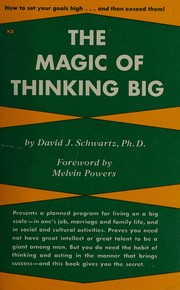
The Magic of Thinking Big
Schwartz's 1959 self-help classic argues that success follows from the size of your thinking, supported by sales anecdotes, vocabulary drills and goal setting.
2,579-word summary · 11 min read

The Magnolia Story
How Chip and Joanna Gaines met, closed their first shop, nearly lost everything in a housing development, and built Fixer Upper.
2,994-word summary · 13 min read
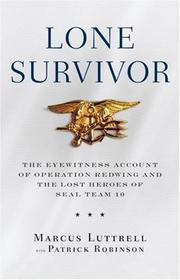
Lone Survivor: The Eyewitness Account of Operation Redwing and the Lost Heroes of SEAL Team 10
Marcus Luttrell's account of the 2005 SEAL mission in Afghanistan that killed three of his team and left him alone.
2,144-word summary · 10 min read