

Infidel
2,041-word summary 9 min read 353 pages in the book
- First published
- 2007
- Publisher
- Free Press
- Pages
- 353
- ISBN
- 9780743289689
Reading options
What's inside (10 sections)
I read Infidel expecting a political book and found a childhood first. Ayaan Hirsi Ali's memoir, published by Free Press in 2007, begins in Mogadishu and moves through Saudi Arabia, Kenya, the Netherlands, and finally the security detail that surrounds her after a filmmaker is murdered in Amsterdam. It is a book about leaving one world and not entirely arriving in another. It is also a book that made its author famous, controversial, and, for a time, unable to live normally in the country that gave her citizenship.
The clan and the grandmother
Hirsi Ali was born in Mogadishu in 1969, into the Darod clan, Osman Mahamud subclan. Her earliest memories are of her grandmother Ayeeyo, who makes her recite a bloodline going back three hundred years. The clan is not a hobby in this world. It is a survival system, a court, a welfare state, and a prison. Your name tells people who your people are, and your people are expected to protect you and avenge you.
Her father, Hirsi Magan, is an anthropologist educated in the United States and an opponent of the dictator Siad Barre. In 1972 he is jailed in the old Italian prison known as the Hole, then escapes to Ethiopia. The family scatters. Ayaan, her mother Asha, and her siblings move between relatives and countries.
The book's central image of gendered violence arrives early. While her mother is away, Ayeeyo arranges excision for Ayaan and her younger sister Haweya. Ayaan is five. The scene is not sensationalized, which makes it worse. It is described as a family decision, carried out by women, justified by tradition and a distorted idea of purity. Her father, when he learns, is furious, which complicates the easy story of men as the only enforcers.
Saudi Arabia and Nairobi
The family moves to Jeddah and then Mecca, where the guardianship rules are strict and the children are watched. In 1979 they are deported and eventually settle in Nairobi. Ayaan attends Juja Road Primary, learns English, and devours Nancy Drew and Enid Blyton. She is a bright, argumentative girl in a world that does not reward argumentative girls.
At the Muslim Girls' Secondary School, a teacher named Sister Aziza draws her into devout Islam. Ayaan wears the hijab and the abaya. She also falls for a boy named Yusuf, her brother's friend, who turns out to be an atheist. That collision between desire and doctrine is her first real intellectual crisis. She does not resolve it. She buries it and keeps going.
A ma'alim beats her so badly that her skull cracks and she needs surgery. Her mother beats her too. The book is full of violence, and Hirsi Ali does not pretend it is exceptional. She presents it as the ordinary weather of her childhood, which is the point. The reader is meant to feel how a girl can grow up thinking that pain is normal.
The marriage and the train
In Mogadishu she marries her cousin Mahmud in a secret ceremony. A hotel refuses them a room without a marriage certificate. The wedding night is painful and loveless. He leaves for Russia, and she resolves to dissolve the marriage.
Then her father arranges a marriage to Osman Moussa, a Somali living in Canada. Ayaan does not want it. In July 1992 she travels to Germany, then takes a train to the Netherlands on July 24, a date she calls her new birthday. She applies for asylum at Zeewolde, changes her name from Ayaan Hirsi Magan to Ayaan Hirsi Ali, alters her birth date, and adds a persecution story based on other refugees' experiences. Fleeing a forced marriage, she says, was not enough to qualify.
That admission has followed her ever since. Her critics use it to call her a liar. Her defenders say it shows how the asylum system forced a frightened young woman to perform a story it would accept. Both are partly true. The book does not hide the lie. It also does not fully reckon with what it means for her later career as a truth-teller.
The Netherlands
She receives a pink A-status refugee card, learns Dutch, and volunteers as a translator. The work brings her into contact with women who have suffered the same kinds of violence she did. She studies political science at Leiden University, dates a journalist named Marco, and works for the Wiardi Beckman Institute, the research bureau of the Labor Party.
The translator years are the hinge between the private and public halves of the book. She is not yet a politician. She is a young woman with a clipboard, sitting in clinics and police stations, listening to other women describe what was done to them. The job gives her a language for her own past and a cause for her future. It also gives her a reputation. She is the Somali woman who will say the unsayable, and the Dutch left does not always know what to do with her.
Her sister Haweya joins her in Holland, suffers severe psychosis, and dies in 1998 at twenty-six. Ayaan's faith collapses. She becomes an atheist. The loss of her sister and the loss of God happen together, and the book is honest about how much she needed both.
After 9/11 she argues that the attacks are rooted in Islam, not in a fringe distortion of it. The Labor Party tries to soften her articles. She writes for Trouw, leaves the PvdA, and joins the liberal VVD. In January 2003 she is elected to Parliament.
Parliament and the film
In Parliament she pushes for registration of honor killings and for independent residency for abused immigrant women. She makes a remark about the Prophet that triggers death threats and round-the-clock security. She is not a careful politician. She is a woman with a mission, and the mission is to say out loud what she believes the Dutch consensus is too polite to say.
Then she makes Submission, a short film with Theo van Gogh. It shows verses from the Quran projected onto the bodies of abused women. The film is deliberately provocative. On November 2, 2004, Mohammed Bouyeri shoots Van Gogh, slits his throat, and leaves a death threat to Ayaan stabbed into the body. The murder is the frame of the book. It is also the moment her argument becomes impossible to separate from her biography.
In 2006, the immigration minister Rita Verdonk briefly revokes her citizenship over the false asylum details, then restores it. Ayaan resigns from Parliament, moves to the United States, and continues writing and speaking. The book ends with a call for a Reformation in Islam, an Enlightenment project she believes is the only way out.
The Dutch context matters more than the book sometimes admits. The Netherlands in the 1990s and 2000s was renegotiating its self-image as a tolerant country, and Hirsi Ali became a symbol in that argument. Her story was used by politicians who wanted stricter immigration rules, by feminists who wanted to talk about religion, and by critics of multiculturalism who wanted a Muslim woman to say what they already believed. She was not a passive symbol. She chose her alliances. But the book rarely steps back to ask how those alliances shaped her message.
The murder of Van Gogh changed the terms of the debate. After it, criticizing Islam in the Netherlands was no longer an abstract argument. It was a security risk. Hirsi Ali lived with bodyguards, moved between safe houses, and eventually left the country. The memoir is honest about the fear. It is less honest about the loneliness. She had lost her family, her faith, her sister, and, in some ways, her country. The political certainty in the later chapters reads like armor over that loss.
What the book does well
The first half is extraordinary. Hirsi Ali has a novelist's eye for the detail that makes a world legible: the smell of the house, the hierarchy of the clan, the way a girl learns to read a room, the specific texture of a beating. She does not ask for pity. She asks you to see the system that produced her, and she shows how many people, women included, kept it running.
Her mother, Asha, is one of the most complicated figures in the book. She is harsh, exhausted, and capable of great cruelty, and she is also a woman who has been widowed, displaced, and abandoned by a husband who chose politics over family. Hirsi Ali does not excuse her. She also does not turn her into a monster. The portrait is unsentimental and recognizably human, which is more than most memoirs manage with a parent who hurt them.
The memoir is also brave in a way that is easy to forget now that she has become a fixture of anti-Islam polemics. She criticizes her family, her religion, her clan, and her adopted country. She admits to lying on her asylum application. She admits to wanting revenge. She is not a saint, and the book knows it.
What it does not do
The second half is thinner. Once Hirsi Ali becomes a public figure, the book turns into a political argument, and the argument is less interesting than the childhood. She describes the Netherlands as a country that refuses to name the problem, and she has little patience for Dutch Muslims who say their faith is compatible with liberal democracy. The nuance is not her project. Her project is clarity, and clarity has costs.
Critics have pointed out that she generalizes from her own experience to Islam as a whole, that she aligns with politicians who use her story for their own ends, and that she rarely considers the agency of women who choose to remain Muslim. Those criticisms are fair. The book is a memoir, not a sociology, and it should be read as one person's account.
There is also the question of the asylum lie. Hirsi Ali presents it as a desperate act, which it was. She does not pretend it was harmless. But the book does not fully explore how that act shaped her later insistence on telling the truth at all costs. It is a contradiction at the center of the story, and she leaves it there.
The book was written with an anonymous collaborator, which was necessary for security but makes it hard to know whose sentences are whose. The voice is consistent and controlled, and the childhood scenes have a novelistic texture that suggests reconstruction. That does not make them false. It does mean the memoir is a shaped narrative, and readers should treat the dialogue as approximate.
Her later career has made the book harder to read neutrally. She has allied with politicians and commentators who use her story to argue for policies she may or may not support, and her own positions on Islam have hardened. The memoir is more interesting than the later polemics because it shows the experiences that produced them. It is also a reminder that a person's life does not come with a thesis. The girl in Mogadishu and the woman on American television are the same person, and the distance between them is the book's real subject.
Should you read it
Read it for the first half, which is one of the best accounts I know of what it is like to grow up female in a clan society and then a fundamentalist household. Read it for the portrait of a mind waking up. Read it for the murder of Theo van Gogh, which is described with restraint and still manages to be terrifying.
Read it critically. It is a polemic as well as a memoir, and its author has strong opinions that are not always supported by the evidence she offers. That does not make the book dishonest. It makes it a document of a particular fight, fought by a particular woman, with all the blind spots that fighting produces.
I finished it with more sympathy for Hirsi Ali and more questions about her conclusions. That is a good result for a memoir. The childhood is unforgettable. The politics are arguable. The courage is real.
FAQ
Why is the book called Infidel?
The title refers to how Hirsi Ali was labeled by her own community after she left Islam, and it also describes her self-understanding as an unbeliever.
Did Ayaan Hirsi Ali lie on her asylum application?
Yes. She admits in the book that she changed her name and birth date and added a persecution story because fleeing a forced marriage was not considered sufficient grounds.
What happened to Theo van Gogh?
He was murdered in Amsterdam on November 2, 2004, by Mohammed Bouyeri, after making the short film Submission with Hirsi Ali.
Similar books

Long Walk to Freedom
Mandela's account of a Thembu childhood, a law practice, a banned movement, twenty-seven years in prison, and the negotiation that ended apartheid.
2,454-word summary · 11 min read
In Order to Live: A North Korean Girl's Journey to Freedom
A young North Korean girl crosses the Yalu, survives trafficking in China, and rebuilds her life in Seoul in this unsparing memoir.
2,027-word summary · 9 min read

The Girl with Seven Names: A North Korean Defector's Story
Hyeonseo Lee crossed the frozen Yalu River at seventeen, spent years hidden in China, escaped to South Korea, and later returned to rescue her family.
2,404-word summary · 11 min read

Too Much and Never Enough: How My Family Created the World's Most Dangerous Man
Mary L. Trump's 2020 memoir traces how a cold, zero-sum Queens household shaped her uncle, and uses family tax documents to challenge his self-made story.
2,059-word summary · 9 min read

Down and Out in Paris and London
Orwell's account of washing dishes in Paris hotels and tramping through London does not ask for pity, only for a clear look at how poverty actually works.
2,282-word summary · 10 min read
Life
The Rolling Stones guitarist tells his own story: a Dartford childhood, the band's first gigs, the drug raids, the tax years and Patti Hansen.
2,761-word summary · 12 min read

Dear Girls: Intimate Tales, Untold Secrets & Advice for Living Your Best Life
Ali Wong's debut collects fourteen letters to her daughters, covering sex, money, work, marriage, Vietnam, and being a working Asian American mother.
2,266-word summary · 10 min read

Why I'm No Longer Talking to White People About Race
Reni Eddo-Lodge traces black British history and shows how institutions, culture, and everyday assumptions keep producing racial inequality.
2,071-word summary · 9 min read
Red Notice
An American financier in Moscow exposes a $230 million tax fraud, watches his lawyer die in prison, and turns the case into an international human rights law.
2,008-word summary · 9 min read

The Letters of Vincent van Gogh
Vincent van Gogh's letters to his brother Theo, in a Penguin Classics selection edited by Ronald de Leeuw, trace a decade of work, faith, and obsession.
2,611-word summary · 12 min read
The Stranger Beside Me
Ann Rule's classic memoir of her friendship with Ted Bundy, written by the true-crime author who knew him long before the world learned what he had done.
2,481-word summary · 11 min read
How to Be a Woman
Moran mixes girlhood and work stories into plain feminist advice.
2,600-word summary · 12 min read
Wild Swans
Three generations of women survive warlords, revolution, and the Cultural Revolution in Jung Chang's family memoir.
2,356-word summary · 10 min read
Hunger
Roxane Gay traces how assault at twelve shaped her body, appetite, and daily life as a fat Black woman refusing shame.
2,583-word summary · 11 min read
Blue Like Jazz
Donald Miller leaves youth group faith in Texas for Portland and Reed College, where a confession booth and shared house life reshape his view of Christian…
2,366-word summary · 11 min read
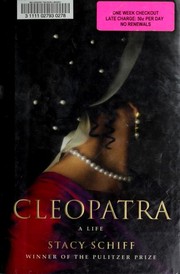
Cleopatra: A Life
Pulitzer winner Schiff restores Cleopatra as a capable ruler, from Ptolemy debts and Caesar to Antony, Actium, and her death in 30 BC, built from coins and…
3,586-word summary · 16 min read
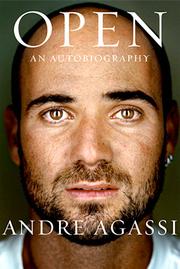
Open
Tennis star Andre Agassi recalls hating tennis, falling to No. 141, and rebuilding his life on his own terms.
2,352-word summary · 10 min read
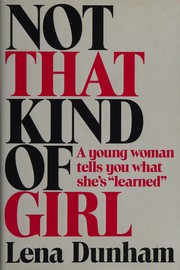
Not That Kind of Girl: A Young Woman Tells You What She's Learned
Girls creator Lena Dunham's essays on work, bodies, love, and family, frank and funny with uneven edges.
2,156-word summary · 10 min read
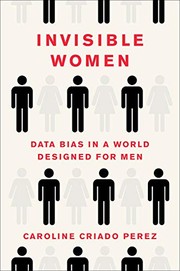
Invisible Women: Data Bias in a World Designed for Men
Data treating men as default harms women in medicine, work, transit, and design, with fixes from studies worldwide.
2,316-word summary · 10 min read
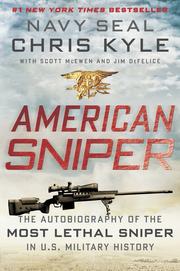
American Sniper: The Autobiography of the Most Lethal Sniper in U.S. Military History
Navy SEAL sniper Chris Kyle recounts Texas roots, SEAL training, four Iraq tours, and the strain combat placed on his marriage and health.
2,011-word summary · 9 min read
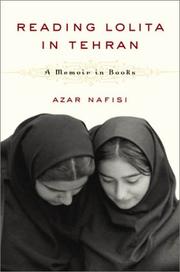
Reading Lolita in Tehran: A Memoir in Books
Seven women meet in secret in Tehran to read Lolita, Gatsby, and Austen while revolution presses in.
2,916-word summary · 13 min read
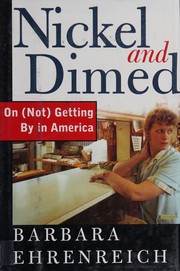
Nickel and Dimed: On (Not) Getting By in America
A journalist works waitress, cleaning, retail, and care jobs undercover to test whether full-time work keeps a person housed and fed.
2,328-word summary · 10 min read
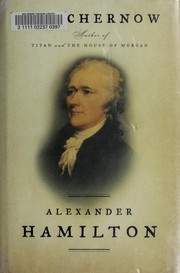
Alexander Hamilton
Orphaned Caribbean immigrant becomes Washington's aide and America's first Treasury secretary, then falls in a duel.
2,004-word summary · 9 min read
Know My Name
Chanel Miller reclaims her story after the Stanford assault case, tracing family support, trial strain, her viral 2016 statement, and leaving Emily Doe for her…
3,092-word summary · 14 min read
A Promised Land
First-volume memoir from Iowa 2008 through the 2011 bin Laden raid, crisis management and doubt.
2,243-word summary · 10 min read
We Should All Be Feminists
Adichie turns her 2012 TEDx talk into a short sharp essay on gender, using stories from Lagos and America to argue equality helps everyone.
2,625-word summary · 12 min read
The Autobiography of Malcolm X
Malcolm X traces his life from Michigan childhood through Harlem, prison, and the Nation of Islam to Mecca in this 1965 memoir told to Alex Haley.
2,816-word summary · 13 min read
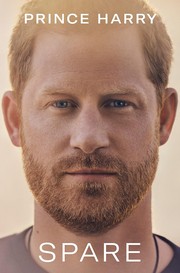
Spare
Prince Harry recalls Diana's death in 1997, two tours in Afghanistan, and stepping back from royal life with Meghan in this frank 2023 memoir of grief, love…
2,586-word summary · 11 min read
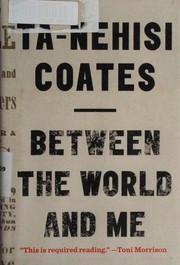
Between the World and Me
Coates writes to his son about the Black body in America, from Howard to the loss of Prince Jones.
2,234-word summary · 10 min read
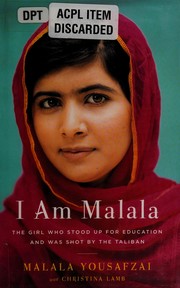
I Am Malala: The Story of the Girl Who Stood Up for Education and Was Shot by the Taliban
Malala grows up in Swat, blogged for school under ban, and survives a bus shooting.
2,015-word summary · 9 min read