
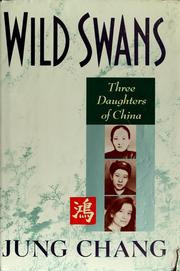
Wild Swans
2,356-word summary 10 min read 530 pages in the book
- First published
- 1991
- Publisher
- HarperCollins
- Pages
- 530
- ISBN
- 9780007463404
Reading options
What's inside (8 sections)
A friend pressed Wild Swans on me and said, if you want to feel what China lived through, start here. I had seen the spine for years and assumed dutiful history. Then I opened it on a train and missed my stop. Jung Chang follows her grandmother Yu-fang and her mother Bao Qin and herself, roughly 1909 to 1978. My copy is the HarperCollins edition from 1991. It runs 530 pages. ISBN 9780007463404. It won the NCR Book Award. It sold over 10 million copies in translation. It is banned in mainland China. All of that made sense once I had lived inside it.
I am no historian of China. I came as a reader who likes memoirs where small facts stick. What held me was the sense that one family kept remaking itself because the country kept changing the rules.
Bound feet and General Xue
Chang begins with Yu-fang, born in 1909. At two, Yu-fang had her feet bound. Chang does not look away. Toes folded under. Arch broken. Cloths pulled tighter as the girl grew. Pain treated as normal. For a poor family, tiny feet were currency. A daughter who could barely walk might marry up because she proved obedience to custom.
Yu-fang's father spent that currency. While she was still in her teens he arranged for her to become the concubine of General Xue Zhi-heng, a warlord in the northeast with a wife and several concubines already. I had seen the word concubine and pictured silk. Chang makes it lonely. Yu-fang was installed in the general's house in Jinzhou in Manchuria with rooms and servants and fine clothes. Then she was left waiting. The general came when it suited him. The wife watched her. Other concubines kept clear. Servants carried tales.
After six years there came one conjugal visit that left her pregnant. One night in six years. That single fact tells you how sidelined she was. She bore a daughter, the child who would become Bao Qin, later called De-hong, the future mother of the author. The main household wanted control of the child. Yu-fang refused to hand her over.
When General Xue lay dying he freed her. She was twenty four with feet that never healed right and a small daughter to protect. She took the girl home. Later she married Dr. Xia, an older doctor in Jinzhou. The match offered steadiness rather than romance. It gave Bao Qin a freer start than Yu-fang had, a house where a girl could attend school and think beyond being picked by a powerful man.
I thought about those feet for days after. Yu-fang could not walk far. She could not run. When the family moved in later years, plans had to bend around her pace. Even after foot binding faded, her body kept the record. That is Chang's method through the book. Power first shows in the body.
Bao Qin chooses the Party and Wang Yu
Bao Qin grew up under occupation and civil war. As a schoolgirl in Jinzhou she took the name De-hong and joined the Communist underground. She was fifteen when she began carrying messages and organizing students and learning to speak in meetings without shaking. Chang shows why the Party felt like rescue to a bright girl with a tainted background. It promised to end the world that made girls into concubines. It promised schools and jobs for women. To Bao Qin that was personal.
She rose because she worked without rest. Chang describes eighteen hour days and nights writing reports by poor light and marches between villages. Bao Qin became trusted with sensitive tasks. She met Wang Yu, a young officer of peasant stock who had joined the revolution early and held to it with a soldier's discipline. To marry they needed Party permission. After permission they were often told where to live and when duty must split them. They walked for weeks to new posts with bedding rolls and cooking pots on their backs.
One stretch stayed with me. Bao Qin drilled and traveled while pregnant because stopping felt like betrayal. She miscarried on the road. Wang Yu was stricken and vowed to guard her health from then on. For a time the revolution seemed to keep its side of the bargain. After 1949 the couple received posts of responsibility in Sichuan. They had a home and rank and the belief that hunger and shame were ending. Chang does not mock that hope. She lets you feel how reasoned it was.
Then loyalty curdled into suspicion. Campaigns followed campaigns. To keep a post you studied the new line and denounced the old one. Bao Qin learned to weigh each sentence. She had been prized for bluntness. Now bluntness could ruin her. Wang Yu had been prized for steadiness. Now steadiness could read as lukewarm fervor. They climbed while the ground softened. Chang does not paint them as secret doubters. They believed. That faith makes the later break cut deeper.
Growing up shouting for Mao
Jung Chang was born in 1952 in Yibin in Sichuan and grew up inside privilege that felt ordinary to a child. Courtyard house. Help with chores. Enough food when many went short. At school she learned sayings and songs and meant them. When the Cultural Revolution started she joined the Red Guards at fourteen with a full heart. She is frank about the lure. Armband. Marches. Posters. Thousands shouting as one. For an earnest girl, belonging felt electric.
I recognized that hunger from my own teens, the wish to be part of something vast. Chang shows how fast belonging turned to policing. One term you judged teachers for weak zeal. Next term you judged friends. Language shrank until doubt sounded like treason. She traveled to Beijing to see Mao from afar and came home hoarse and glowing. She does not claim she stood apart. She was in it.
Her father broke the spell without meaning to. Wang Yu, by then a senior official, said openly that Mao's campaigns were harming the country. It was mild and honest, the remark of a tired man who had given his adult life to the cause. In 1966 that was enough to mark him. He was denounced as a capitalist roader. Chang watched schoolmates turn on her house. The same movement she had cheered now treated her family as poison.
This reversal drives the memoir. A willing Red Guard watches her father broken by the cause she praised. Chang does not reach for theory here. She records confusion and shame and slow sight. It would be easier if she claimed early doubt. She says the reverse. She believed, then saw what belief cost when tied to unchecked power.
When suspicion came for her parents
I had to put the book down during the persecution chapters. Wang Yu was subjected to struggle sessions. That meant forced bows on stage. Forced confessions to invented crimes. Hours standing while crowds yelled. Beatings followed. Detention followed. His health failed. He wept and could not sleep and tried to trust that the Party would correct its error. It did not.
Bao Qin was seized too. The organizer who once ran districts was paraded and interrogated and locked away. Chang shows her mother trying to keep order in herself by staying neat and answering with care and refusing to invent guilt. Refusal brought harsher treatment. The couple were kept apart for long spells with only brief supervised contact. Notes were smuggled. Parcels of clothes were sent and sometimes refused. The children learned to read refusal as news.
The house emptied socially. Colleagues crossed the street. Friends who had eaten at their table wrote denunciations to save their own posts. The children were pressed to denounce their parents in public. Chang bent under that pressure at school while holding love for them at home. That split runs through these pages. Open scorn outside. Quiet tenderness inside.
What moved me most was the marriage under strain. Bao Qin and Wang Yu had begun as comrades sharing packs on long marches. Now each was a liability to the other in official eyes. Still they clung on. A kept coat. A shared bit of food. A reminder to rest. Chang lets those acts stand plain. You see that suspicion ended careers. It tried to end trust in a home. The home refused.
Short break here. I needed air before going on. The book earns that pause.
Rice paddies, wards, and a plane to England
With her parents disgraced, Chang was sent to the countryside for hard labor and thought reform. She planted rice standing in cold water that gnawed her legs. She carried manure. She slept where wind found every seam. Hunger dulled thought. Cold doubled the time each chore took. Alongside that she notes small mercies. A shared sweet potato. A mended shoe. Cover for a sick girl when cadres counted heads.
Later she trained briefly as a barefoot doctor. She gave injections and cleaned rashes and tried to sound sure while feeling green. Then came shifts as a steelworker and as an electrician. Picture a bookish teen handling heavy gear with numb hands. Through it she kept a private nook in her mind. She mouthed English words while planting, though English was suspect. She copied phrases on scraps and hid them. That picture held me. A girl ankle deep in a paddy sounding out foreign verbs.
After Mao died in 1976 the freeze eased. Exams returned. Chang studied with frantic focus and won a place for English at Sichuan University. She writes of the strangeness of real teaching after years of slogans, of books that were not denunciation manuals. English became her path out. In 1978 she gained a scholarship to Britain to study linguistics. She has lived in England since.
Her arrival pages are subdued. No fanfare. She was cold in the wrong coat. She stared at full supermarket shelves. She heard people argue in public without glancing over shoulders. She visited China when she could, but distance gave safety to write what those inside could not yet print. That safety had a price. She worked from letters and calls and memory, from what her parents dared to set down. You feel both the freedom and the ache.
Kitchens, memory, and why this book traveled
What lifts Wild Swans above a textbook is household texture. Chang tracks meals and bedding and shoes and the way fear rearranged rooms. Yu-fang learned to fill empty days without books while servants watched. Bao Qin learned to cook over a portable stove between postings and to wash in cold streams and to stretch grain when the state took too much. During the Cultural Revolution the family learned to speak low and burn letters and keep a bag packed.
Food marks the seasons. In kind months there is pork and greens with enough oil to shine. In cruel months there is thin gruel and talk of swollen bellies in the village. Chang remembers who took the scorched rice and who claimed to be full so a sibling could eat. When Wang Yu was held, parcels told the tale. If guards took the food, hope held. If the bowl came back untouched, hearts sank. Politics lived in those bowls.
Feet return as measure. Yu-fang could not queue for hours or flee fast when troops moved. Years later Chang marched as a Red Guard and prized blisters as proof of zeal. One generation was maimed to show obedience to custom. The next wore pain to show obedience to politics. Chang never preaches this parallel. She lays the facts side by side and lets you feel it.
Bedrooms tell it too. Yu-fang slept alone for years waiting for summons that seldom came. Bao Qin and Wang Yu, though wed, passed long stretches apart in dormitories and cells. As a sent down youth Chang washed and dressed without privacy. The state decided who might marry and when a couple might cohabit and which portrait must hang on a wall. Read in sequence, those intrusions explain more than any slogan. They show how policy entered kitchens and sleep.
A fair reader should keep limits in mind. This is family memory more than archive. Talk from fifty years back is rebuilt. Motives are given to men who left no reply. Much of the early material comes through her parents, and parents shape even as they try to be plain. Scholars have argued with reason that the story can flatten tangled fights into villains and victims. I felt that tilt in the high Party chapters. I also found those chapters dense with names and campaigns that blurred for me. I kept a timeline on my phone. That helped.
The publishing frame matters. HarperCollins issued the book in Britain in 1991. The edition I cite runs 530 pages. That timing counts. Western readers after 1989 craved a human account rather than an official line. Chang, settled in England since 1978, could give it. The book won the NCR Book Award and took British Book of the Year in its season. Readers passed it along as my friend did. Later came a stage version and long film talk. People wanted a century told through three women rather than committees.
It is banned in mainland China. That fact shaped my reading of the detention scenes. Chang writes against a machine that forced neighbors to inform, not against ordinary people. The ban keeps that account from open shelves there, though copies move hand to hand.
I will lend my copy next to a friend who loves long family stories. I will warn her that the middle slogs in places with meetings and mottos. I will promise the lift of the exam rooms and the flight in 1978. Then I want to sit and compare notes on which small scene stuck. Mine remains Yu-fang at twenty four leaving the warlord house with her girl beside her, feet hurting with each step, stepping into a narrow freedom that barely had a name.
FAQ
When was Wild Swans published?
HarperCollins published it in 1991 in Britain. The edition cited here runs 530 pages, ISBN 9780007463404.
Whose lives does Wild Swans follow?
Her grandmother Yu-fang, her mother Bao Qin (De-hong), and Jung Chang herself, covering roughly 1909 to 1978.
Is Wild Swans available in China?
No. It is banned in mainland China though widely read elsewhere, with over 10 million copies sold in translation.
Similar books

Long Walk to Freedom
Mandela's account of a Thembu childhood, a law practice, a banned movement, twenty-seven years in prison, and the negotiation that ended apartheid.
2,454-word summary · 11 min read
The Letters of Vincent van Gogh
Vincent van Gogh's letters to his brother Theo, in a Penguin Classics selection edited by Ronald de Leeuw, trace a decade of work, faith, and obsession.
2,611-word summary · 12 min read
American Sniper: The Autobiography of the Most Lethal Sniper in U.S. Military History
Navy SEAL sniper Chris Kyle recounts Texas roots, SEAL training, four Iraq tours, and the strain combat placed on his marriage and health.
2,011-word summary · 9 min read

Infidel
Ayaan Hirsi Ali's memoir of a Somali childhood, a forced marriage, a Dutch asylum claim, and the political fight that followed the murder of Theo van Gogh.
2,041-word summary · 9 min read
Down and Out in Paris and London
Orwell's account of washing dishes in Paris hotels and tramping through London does not ask for pity, only for a clear look at how poverty actually works.
2,282-word summary · 10 min read
The Girl with Seven Names: A North Korean Defector's Story
Hyeonseo Lee crossed the frozen Yalu River at seventeen, spent years hidden in China, escaped to South Korea, and later returned to rescue her family.
2,404-word summary · 11 min read
The Wright Brothers
David McCullough tells the story of two self-taught Ohio brothers, working largely alone and out of a bicycle shop, who solved the problem of flight before…
2,027-word summary · 9 min read
Lone Survivor: The Eyewitness Account of Operation Redwing and the Lost Heroes of SEAL Team 10
Marcus Luttrell's account of the 2005 SEAL mission in Afghanistan that killed three of his team and left him alone.
2,144-word summary · 10 min read
Life
The Rolling Stones guitarist tells his own story: a Dartford childhood, the band's first gigs, the drug raids, the tax years and Patti Hansen.
2,761-word summary · 12 min read
The Stranger Beside Me
Ann Rule's classic memoir of her friendship with Ted Bundy, written by the true-crime author who knew him long before the world learned what he had done.
2,481-word summary · 11 min read
Catherine the Great: Portrait of a Woman
A German princess survives a miserable marriage and a coup to rule Russia for thirty-four years, torn between Enlightenment ideas and absolute power.
2,065-word summary · 9 min read
The Warmth of Other Suns
Three migrants ride north out of Jim Crow toward Chicago and LA.
2,561-word summary · 11 min read
The Emperor of All Maladies
A biography of cancer from Galen to chemo through one doctor cases.
2,255-word summary · 10 min read
Killing Lincoln
Booth plots as Lincoln pushes war end and reunion in 1865.
2,486-word summary · 11 min read
Hidden Figures
Black women computers at Langley launch rockets past Jim Crow.
2,385-word summary · 11 min read
Twelve Years a Slave
Free violinist Solomon Northup tells how Brown and Hamilton lured him south into twelve years of Louisiana bondage until Bass letters brought rescue in January…
2,931-word summary · 13 min read
The Surgeon of Crowthorne
James Murray built the Oxford dictionary with Broadmoor inmate William Minor, whose thousands of slips shaped this 1998 HarperCollins story of murder, madness…
2,775-word summary · 12 min read
Cleopatra: A Life
Pulitzer winner Schiff restores Cleopatra as a capable ruler, from Ptolemy debts and Caesar to Antony, Actium, and her death in 30 BC, built from coins and…
3,586-word summary · 16 min read
The Splendid and the Vile
Larson follows Churchill circle through Blitz year with diaries and bombing nights.
2,038-word summary · 9 min read
Open
Tennis star Andre Agassi recalls hating tennis, falling to No. 141, and rebuilding his life on his own terms.
2,352-word summary · 10 min read
A Beautiful Mind
Mathematician John Nash's brilliant game theory rise, schizophrenia collapse, and Nobel return, with wife Alicia's care.
2,142-word summary · 10 min read
Cosmic Music
The first full biography of Alice Coltrane, from Detroit church piano to ashram guru.
2,048-word summary · 9 min read
Autobiography of Cotton
A Pulitzer winner traces her cotton-worker grandparents and a 1934 border strike through archives, memory, and damaged land.
2,213-word summary · 10 min read
Einstein: His Life and Universe
Isaacson traces Einstein from patent clerk to world fame using newly opened papers, through 1905, relativity, exile, and the long unified theory search.
2,773-word summary · 12 min read
A Long Way Gone: Memoirs of a Boy Soldier
A Sierra Leone boy flees rebels, becomes a child soldier at thirteen, and fights his way back through rehab.
2,434-word summary · 11 min read
In the Garden of Beasts
Ambassador Dodd takes his family to 1933 Berlin and watches charm curdle into terror.
1,927-word summary · 9 min read
A Promised Land
First-volume memoir from Iowa 2008 through the 2011 bin Laden raid, crisis management and doubt.
2,243-word summary · 10 min read
1776
Washington's amateur army from Boston siege to Trenton through mud and doubt.
2,139-word summary · 10 min read
The Autobiography of Malcolm X
Malcolm X traces his life from Michigan childhood through Harlem, prison, and the Nation of Islam to Mecca in this 1965 memoir told to Alex Haley.
2,816-word summary · 13 min read

Spare
Prince Harry recalls Diana's death in 1997, two tours in Afghanistan, and stepping back from royal life with Meghan in this frank 2023 memoir of grief, love…
2,586-word summary · 11 min read