
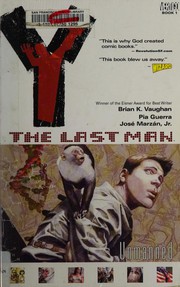
Y: The Last Man, Vol. 1: Unmanned
2,525-word summary 11 min read 128 pages in the book
- First published
- 2003
- Publisher
- Vertigo
- Pages
- 128
- ISBN
- 9781563899805
- Series
- Y: The Last Man (#1)
Reading options
What's inside (8 sections)
I bought this one on a dare from a coworker who kept saying comics could carry a real end of the world story. She handed me this thin Vertigo trade and said if I did not care about the monkey by page thirty, I could give it back. I cared by page ten. It is only 128 pages, collecting issues one through five, and it reads fast, but it stuck with me longer than a lot of thick novels about the apocalypse.
What pulled me in was how small it starts. No splash of burning cities. Just a goofy guy in New York in a straitjacket, hanging upside down, trying to get a phone call right. Then everything stops. That contrast is the whole trick of Vol. 1. One minute Yorick Brown is worrying about proposing to his girlfriend. The next he is the only man alive and he has no idea why.
This collection came out from Vertigo in 2003. Brian K. Vaughan wrote it. Pia Guerra drew it with inks by Jose Marzan Jr. It is the opening act for a long series that ran to sixty issues, but it works as its own piece. You get the plague, the first walk through dead cities, the first people who want to protect Yorick and the first people who want to kill him, and a plane going down at the end.
The plague that kills every Y
The opening issue is called Unmanned and it earns the title in a brutal way. Vaughan sets the date as July 17, 2002. Yorick is twenty two, white, lanky, working as an escape artist. Not a superhero. He does kids parties and street gigs. He is on the phone with Beth Deville, his girlfriend, who is in Australia on an anthropology trip. He has an engagement ring tied to his helper monkey and he is trying to pop the question while hanging from a building.
Mid sentence, everything with a Y chromosome dies. At once. Men drop in the street. Boys drop in schools. Male dogs and cats and zoo animals drop. Pilots die at the controls. Drivers die at the wheel. Planes fall. Cars pile up. The art does not linger on gore. Pia Guerra shows bodies slumped over desks and crumpled on sidewalks, phones still in hands. The quiet is worse than blood.
Yorick lives. So does Ampersand, his Capuchin monkey. The monkey had just brought the ring and now he is screeching on a rooftop while Yorick dangles and realizes the woman on the phone has gone silent. Beth is alive because she is a woman, but the line cuts and Yorick does not know that yet. All he knows is screaming and sirens and then a strange lack of sirens.
I found that first fifteen pages tough to shake. Vaughan does not explain the plague. No lab leak scene. No prophecy. One second the world is full. The next half of mammals are dead. Guerra draws New York emptied in a way that feels real because it is boring and practical. Food rotting. Dogs barking in apartments with no owners. A subway car stopped in a tunnel with dead hands on the poles.
Yorick wanders at first like a lot of us would, calling out, checking hospitals, looking for anyone to tell him what to do. He finds looters and fires and women trying to drag bodies out of intersections so trucks can pass.
Yorick Brown and Ampersand
Yorick is easy to dislike for about five minutes and then hard to drop. He makes jokes when he should shut up. He quotes Houdini. He studied Shakespeare and cannot get a real job. He is the kind of guy who learned escape tricks to impress girls and then kept doing them after the girls stopped being impressed. Vaughan writes him as brave in flashes and selfish the rest of the time, which feels honest for twenty two.
Ampersand is more than a cute sidekick. He is a male mammal who should be dead. That makes him proof that Yorick is not a fluke. Yorick stole him, sort of. He was training Ampersand to help with a trick where the monkey would deliver a ring during an escape. Ampersand bites, throws food, pees where he should not, and clings to Yorick when gunfire starts. Guerra draws him small and wiry, tail curled tight, eyes wide. You believe this animal could get them both killed by chattering at the wrong moment, and you also believe Yorick would risk his life to go back for him.
The Beth thread gives Yorick a reason to move. Right before the plague, Beth basically tells him she needs space. Yorick hears that as rejection and then the world ends and he feels guilty for caring about his love life while millions are dead. He keeps trying her number. He keeps the ring. He tells himself Beth is alive in Australia and he has to get to her.
His family fills out the rest. His mother, Jennifer Brown, is a US representative from Ohio. She is in Washington when the plague hits. His sister, Hero Brown, is a paramedic in Boston, engaged and sharp tongued and furious at Yorick for coasting. Vaughan cuts between them during the die off. Jennifer watches the House chamber empty. Hero watches her ambulance partner die in the driver seat and has to climb out through broken glass. Those two pages told me more about the scale than any narration could.
Washington in ruins and Agent 355
Issue two and three shift to Washington, and the tone gets colder. Yorick makes his way south because his mother is there. Bodies are everywhere. Power flickers. Women who worked logistics, nursing, policing, and fire service are trying to hold streets together with no fuel and no chain of command.
Jennifer Brown survives because she is a woman in Congress, and suddenly that matters in a raw political way. With the President dead and most of the line of succession dead, a junior congresswoman from Ohio is close to power. She is tired, grieving her husband, worried about her kids, and trying to count who is left to form a quorum. There is an ugly scene in the Capitol where survivors shout about martial law while the dead are still being carried out.
This is where Agent 355 walks in. She works for the Culper Ring, a shadow group that claims to go back to George Washington. She is Black, calm, lethal, funny in a dry way, and dressed to disappear. Her job becomes Yorick. Someone high up figured out there is a living male and decided he is either an asset or a threat. 355 finds Yorick before the mobs do and basically tells him to stop talking, stop showing his face, and do what she says.
I like 355 more each time I reread. She is not warm. She checks exits. She sleeps light. She kills a looter who tries to take Yorick apart in an alley and she does not give a speech about it. But she also reads Yorick fast. She sees he will run toward danger to help a stranger, so she stops trying to lock him down and starts steering him. Their banter carries the middle of the book. He asks dumb questions. She answers with half answers. He tries to flirt because he is nervous. She shuts it down without cruelty.
Guerra draws Washington as empty in a different way than New York. Wide avenues with abandoned cars. A crashed airliner smoking near the Mall. There is one panel of Yorick in a gas mask staring at a wall of missing persons notes that hit me harder than the death scenes. Women looking for daughters, for mothers, for wives.
Dr. Allison Mann and what might have happened
By issue three Yorick and 355 reach Dr. Allison Mann, and she changes the question from how do we survive to why did Yorick survive. Mann is a geneticist, young, Chinese American, blunt to the point of rudeness, working in a Washington lab when the plague hits. She survives and immediately starts testing tissue, saving samples, writing notes while the building burns around her.
Mann does not coddle Yorick. She calls him a loser to his face. She wants blood and skin and sperm samples. She thinks his body might hold an answer. She also has a theory she will not fully share yet, something about morphology and cloning and why a monkey and a man with no connection both lived. She is prickly because she is scared, and because every armed group in the city wants her notes.
Their first meeting is played for awkward comedy that cuts the tension. Yorick walks in expecting a grey haired professor and finds a woman his age in a stained coat holding a shotgun. She orders him to strip for examination. Under the jokes, Mann lays out the stakes. If Yorick dies, whatever quirk kept him alive dies with him.
Vaughan is smart to keep the science vague here. Mann talks about the Y chromosome and notes that fetuses and sperm and even lab samples with male DNA died too. That last detail chilled me. It suggests maleness itself failed at a chemical level. But she admits she does not know the trigger. Was it a virus. Was it something in the air. Why did Ampersand live. She needs a better lab, and she thinks she needs to get to old facilities in San Francisco, if they still exist.
I appreciated that Mann is not written as a rescue prize. She argues with 355 about routes. She refuses to leave notes behind. She injects Yorick with a tracker against his will and tells him straight she does not trust the government people who sent 355.
Amazons and Hero and the plane going down
Issue four and five bring the threat that will hang over the whole series. The Daughters of the Amazon, called Amazons for short, are a group of women who see the plague as cleansing. Their leader, Victoria, is a former prison guard with a shaved head. She teaches that men caused war and ruin, that women should not try to rebuild the old world, that they should let male things rot. New members cut off one breast in imitation of myth and burn male clothing in piles.
Hero falls in with them, and that hurt to read. Before the plague she was competent, engaged to a decent man named Joe, working long shifts. After, she watches Joe die in front of her, watches Boston choke on bodies, gets attacked while trying to help, and gets pulled out by Victoria. Victoria gives her food and a clear story. Men are gone because nature fixed itself. Hero, grieving and angry, listens.
Yorick does not know his sister is with them when he first sees Amazons. He and 355 and Mann run into a roadblock where women in overalls and war paint are smashing a statue and shooting any male animal they find. Yorick has to hide Ampersand under his coat and keep his mouth shut while 355 talks them down. He almost gets them killed by arguing.
The volume ends on the move. Mann says Washington cannot protect them. The lab is compromised. Looters have her address. Amazons are spreading. The Culper Ring wants Yorick in custody. Jennifer Brown wants him hidden but also wants to use his existence to steady the new government. The compromise is a small plane. 355 can fly, sort of. Mann has coordinates. Yorick just wants to head west and then somehow get to Australia, which is absurd and touching.
They take off with Ampersand in a carrier and almost no fuel and no real plan. The plane takes fire or loses an engine. Alarms. Smoke. 355 yelling to brace. Yorick clutching the monkey and thinking of Beth. Then trees. A hard crash. The last pages show survivors crawling out into rain while figures move in the tree line. One of them looks like Hero with a shaved head and a rifle. Cliffhanger. End of Vol. 1.
On first read I groaned at the crash as a trick. On second read it felt right. These five issues are all about false safety. Apartment, Capitol, lab, road, plane. Every shelter fails. Of course the plane goes down.
Pia Guerra art and the gender framing that shows its age
Guerra carries this book. Vaughan gives her crowds, corpses, empty highways, Senate chambers, and cramped labs, and she keeps people readable. Faces are plain and specific. Jennifer looks tired in the eyes. 355 looks still even when moving. Yorick looks young, mouth open a beat too long. A New York deli with milk souring. A highway rest stop with a dead trucker slumped over the wheel and a baby crying in the back seat. She never draws death as sexy. Bodies are heavy.
Her action is clean too. Fights are short and messy. No posing. When 355 takes down two attackers in an alley, it is elbows and knees and a gun butt, three panels, done. When the plane crashes, you get tilted frames, broken lines, smoke that obscures faces. Jose Marzan Jr inks keep lines sharp without making everything glossy. Colors by Pamela Rambo stay muted, grey greens and washed out blues.
Now the criticism I cannot skip. This is a 2002 story about gender written mostly by men, and it shows. The premise invites curiosity about how women would rebuild power grids and farms and hospitals, and Vaughan does touch that. But a lot of page time still goes to Yorick ogling, to jokes about his anatomy, to separatists drawn as villains and to straight women pining for boyfriends. Trans people barely register in these first issues except as a punchline or a puzzle, which feels thin now.
Some of that is Yorick being twenty two and self centered. The book knows he is ignorant. 355 and Mann call him out. But the camera still follows his gaze a lot. Amazons get to make speeches, then they get shot. I kept wanting Vaughan to stay longer with Jennifer trying to govern, or with Hero deciding what she believes, instead of cutting back to Yorick hiding in a closet.
Still, for 2003 Vertigo, this felt bold. It treats reproduction as politics without turning women into symbols. Mann wants data, not motherhood. Jennifer wants order, not martyrdom. 355 wants mission success, not romance. And Yorick, for all his jokes, is often the least competent person in the room.
If you only know Vaughan from Saga or Paper Girls, Unmanned will feel rougher and funnier and more blunt. Dialogue snaps. It is a thin book that does a lot. Read it in one sitting if you can, then sit with the crash pages. The question that follows you is not how did the plague happen. It is what would you rebuild if you lived, and who would you trust to help you build it.
FAQ
When was Vol. 1: Unmanned published and what does it collect?
It was published by Vertigo in 2003 as a 128-page trade with ISBN 9781563899805. It collects issues 1 to 5, the opening arc that starts with the plague on July 17, 2002.
Who survives with Yorick in Vol. 1?
Yorick Brown is a young escape artist and Ampersand is his Capuchin helper monkey. They travel with Agent 355 and Dr. Allison Mann while Yorick looks for Beth in Australia, his mother Jennifer Brown, and his sister Hero.
Is Y: The Last Man, Vol. 1 graphic or suitable for young teens?
It has dead bodies in streets, gunfights, a breast removal rite among the Amazons, and frank talk about sex and reproduction. It fits older teens and adults rather than young readers.
Similar books
More from Y: The Last Man first, then related titles.
Saga, Volume 3
Marko, Alana, and Hazel hide on the planet Quietus with the reclusive author who inspired their romance, while assassins and a prince close in.
1,989-word summary · 9 min read
Never Fade
Ruby, now a leader in the Children's League, must track down the boy whose memories she erased, because he holds the only proof of what caused the disease that…
2,188-word summary · 10 min read
Severance
Candace keeps office routine as fever empties New York, then joins survivors.
2,340-word summary · 10 min read
Under the Never Sky
Exiled from her Pod, Aria crosses a storm-scarred wilderness with Outsider Perry to find family and the fabled Still Blue.
2,572-word summary · 11 min read
Saga, Volume 2
Alana and Marko flee with baby Hazel while exes, princes, and ghosts close the net.
2,028-word summary · 9 min read
Seveneves
Stephenson 880-page William Morrow epic, May 2015: the Moon shatters, the Cloud Ark fails, seven women restart humanity, and heirs meet survivors on Earth.
2,389-word summary · 11 min read

Ready Player Two
Wade finds the ONI headset and seven new shards, reuniting the High Five against Anorak for the OASIS future.
2,157-word summary · 10 min read
Morning Star
Broken in a box by the Jackal, Darrow rises with Howlers to open Mars mines to sky.
2,009-word summary · 9 min read
The City of Ember
Two twelve-year-olds trade jobs and chase a chewed-up note to save their fading underground city before its lights fail.
2,998-word summary · 13 min read
The Death Cure
Thomas refuses WICKED's final test, remembers too much, and runs with the Gladers toward a last cure and a ship north.
2,955-word summary · 13 min read

The Host
Stephenie Meyer imagines Earth settled by Souls, where Wanderer wakes inside Melanie Stryder and hears her voice refuse to fade, sparking a desert flight to…
2,288-word summary · 10 min read
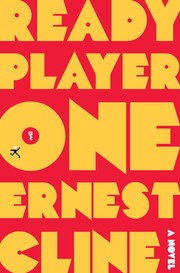
Ready Player One
In 2045 Wade Watts hunts Halliday's three keys inside the OASIS, racing IOI with Art3mis, Aech, Daito and Shoto for the Jade Key onward.
1,971-word summary · 9 min read
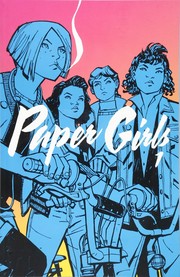
Paper Girls, Volume 1
Four paper girls in 1988 Ohio chase a stolen walkie-talkie into a basement and stumble into a time war, flying dinosaurs, and an older version of themselves.
2,235-word summary · 10 min read
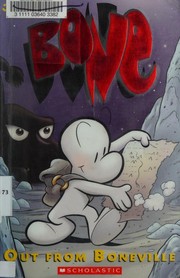
Bone, Vol. 1: Out from Boneville
Three cartoon cousins are run out of Boneville, separated by locusts, and dropped into a valley where rat creatures and an old grudge are waiting.
2,155-word summary · 10 min read
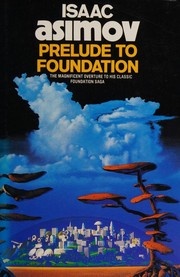
Prelude to Foundation
A young Hari Seldon arrives on Trantor with a theory he cannot yet prove, and a hunt through the planet-city forces him to turn psychohistory into a real…
2,013-word summary · 9 min read
Iron Widow
Wu Zetian enlists to avenge her sister, kills her pilot, and becomes an Iron Widow in a mecha Huaxia where the machines are built to kill women.
2,444-word summary · 11 min read

Archenemies
Nova steals for the Anarchists while Adrian hides his Sentinel identity, and a serum that erases prodigy powers puts them both at risk.
2,485-word summary · 11 min read
Carve the Mark
On a planet divided between conquered and conqueror, the tyrant's sister and a kidnapped oracle's son discover that their gifts make them useful to everyone…
2,340-word summary · 10 min read
The House of the Scorpion
A clone raised in a drug lord's poppy fields learns what he was made for and chooses what to do with the life he was given.
2,527-word summary · 11 min read
The Age of Miracles
A California girl grows up while the Earth's rotation slows, and ordinary adolescence continues alongside slow catastrophe.
2,417-word summary · 11 min read
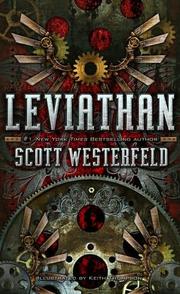
Leviathan
In an alternate 1914, a prince on the run and a girl disguised as a soldier meet aboard a living airship.
2,406-word summary · 11 min read
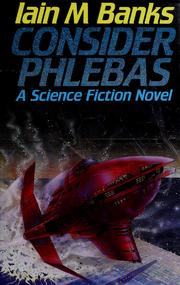
Consider Phlebas
The first Culture novel follows a spy for the opposing side, a man hired to hunt a fugitive through a war between an anarchist post-scarcity utopia and a…
2,350-word summary · 10 min read
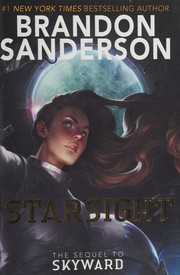
Starsight
Spensa Nightshade goes undercover aboard the Superiority space station Starsight to steal a hyperdrive, and finds a frightened bureaucracy where she expected…
2,568-word summary · 11 min read
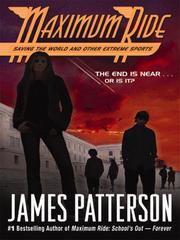
Saving the World and Other Extreme Sports
Max and the flock split in two to take down the lab behind their lives, one half in California and the other in Europe.
2,175-word summary · 10 min read
Network Effect
Murderbot's contract job turns into a rescue mission when a hijacked research ship and a colony of corrupted colonists appear.
2,256-word summary · 10 min read
Heir to the Empire
Grand Admiral Thrawn returns from the Unknown Regions and outmaneuvers the New Republic while Luke, Leia, Han and smuggler Talon Karrde race him toward…
2,323-word summary · 10 min read
Divergent: Official Illustrated Movie Companion
An oversize behind-the-scenes guide to the 2014 Divergent film, with casting stories, costume and set design, and scores of photos.
2,524-word summary · 11 min read

The Bone Clocks
A teenage runaway, a Cambridge con artist, a war reporter and a dying novelist circle a hidden war between immortals across sixty years, with Holly Sykes at…
2,125-word summary · 9 min read