
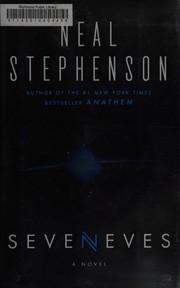
Seveneves
2,389-word summary 11 min read 880 pages in the book
- First published
- 2015
- Publisher
- William Morrow
- Pages
- 880
- ISBN
- 9780062190376
Reading options
What's inside (7 sections)
I put off Seveneves for years because of its size. The William Morrow first edition runs 880 pages, published on May 19, 2015, and my copy has the kind of spine that cracks loudly when you open it. I finally carried it on a long train trip, telling myself I would read the first hundred pages and decide. I finished the whole thing with sore wrists and a notebook full of orbital diagrams. This is a book that wants you to do math in the margins. Sometimes that is thrilling. Sometimes you want to throw it out the window.
The premise is brutally simple. One day the Moon breaks apart. No warning, no villain speech, no last minute save. An unknown force, called the Agent in early news chatter, shatters Earth's companion into chunks that grind against each other and fill the sky with white streaks. Astronomer and television science host Doc Dubois Harris, known as Doob, runs the numbers and gives the verdict on live television. The fragments will keep colliding. In about two years they will start falling as a ceaseless meteor storm, the Hard Rain, that will heat the air, boil the seas, and make the surface unlivable for thousands of years. Humanity has two years to get off the planet or die with it.
Stephenson, who spent time around rocket engineers and likes his physics on the page, treats that sentence as an engineering problem rather than a metaphor. How many people can we launch? Where do they live? What do they eat? Who decides?
The Hard Rain and the Cloud Ark
The first third of the book lives in those two years. Governments sign a pact to build a Cloud Ark around the International Space Station. The station itself, bolted to an iron-rich asteroid called Amalthea towed into orbit as a shield and anchor, becomes the hub. Around it will swarm hundreds of small craft, arklets, each built by a different nation, each able to link and separate. The plan is messy by design. If one arklet fails, the rest survive.
We meet the people who will have to make it work. Dinah MacQuarie is a robotics engineer who lives on the station already, running a swarm of small robots she uses for exterior repairs. She grew up in mining camps and knows how to fix things with short supplies and cold fingers. Ivy Xiao is the station commander, a former Navy pilot with a physics doctorate, steady under pressure, liked by crews who do not like easily. Doob comes up later as science advisor, bringing a kind face the public trusts and a body already marked by illness. On the ground, the American president, Julia Bliss Flaherty, tries to hold a coalition together while billionaire Sean Probst pushes a private plan to fetch water and fuel from a comet. Markus Leuker, a Swiss pilot turned station veteran, takes command when politics force Ivy aside for a time.
Stephenson writes launches, dockings, and supply tallies with loving detail. He tells you how urine is recycled, how radiation degrades solar panels, how a tether flexes, how a rendezvous burns fuel you cannot replace. I found those passages gripping at first. The countdown to the Hard Rain gives every checklist a pulse. A classroom lottery selects ordinary people to join the Ark, the Casting of Lots, and the scenes of families saying goodbye at launch sites are blunt and sad. The president insists no government leaders will fly, then finds a way up anyway. That hypocrisy is noted by everyone and forgiven by no one, and it poisons the Ark from the start.
By day 701 after the Moon broke, about fifteen hundred people are in orbit. Then the sky turns white. The Hard Rain begins. Viewed from the station, Earth glows. Fires merge. Oceans steam. Radio voices go silent one by one. Stephenson does not linger on the ground. He keeps the camera upstairs, with people watching their planet die through glass, which is somehow worse.
Mutiny, ice, and the long fall
The middle of the book is where the survival plan starts to tear.
Flaherty, now in orbit, argues that the Cloud Ark should scatter into a loose swarm at higher altitude rather than cling to the station. Many arklets follow her. The split proves fatal when debris strikes the station and kills hundreds. Trust, already thin, snaps. Meanwhile Markus and Dinah lead a desperate side mission to meet a comet fragment Probst has hauled toward Earth orbit to serve as ice for propellant and shielding. Probst and his crew are dying of radiation sickness from a damaged reactor on their own ship. They deliver the ice at terrible cost. Dinah is the only member of the retrieval crew to make it back alive.
Stephenson renames the patched station and ice shard Endurance and points it at a distant refuge. Doob has argued for hiding inside the Cleft, a canyon-like gash on the exposed iron core of the shattered Moon. Bare rock will block the small strikes and soften the radiation. The trip will take years. Food will run short. Tempers will run shorter.
What follows is grim politics in close quarters. The scattered swarm, led after Flaherty's fall by a tough Italian arklet leader named Aida, has suffered hunger and cold and has resorted to eating the dead to stay alive. They ask to rejoin Endurance. Talks curdle. Fearing trial or exile, Aida and her people try to seize the larger ship during the chaos of a solar storm. The fight fails. More people die from wounds, from exposure outside thin shelters, from strikes that punch through hulls like nails through cans.
I admired the cold logic here even as I hated living in it. Stephenson shows how small decisions compound. A vote to separate, a refusal to share ice, a rumor on a shared feed, each one narrows the future a little more. By the time Endurance reaches the Cleft, only eight people are left alive. All are women. One is past childbearing age. Seven can still have children.
It is a gutting place to end the near-future story. Fifteen hundred down to eight. Earth sterilized below. A hollow in cold iron as the only home.
Seven women and seven choices
Those seven fertile survivors become the Eves of the title. Dinah the builder, Ivy the commander, Tekla the disciplined Russian cosmonaut who ran security, Aida the swarm leader who carries the weight of what her people did, Camila the young activist who survived an attack on Earth and carries scars and calm, Moira the geneticist who holds the lab that can restart humanity, and Julia the former president who talks her way back into any room.
Moira has tools and frozen material to rebuild a population without fathers, using a form of assisted reproduction that lets each woman carry daughters built from her own line with chosen tweaks. The group agrees that each Eve will shape her descendants as she sees fit. Dinah favors leadership and courage. Ivy favors sharp study and memory. Tekla favors strength and order. Camila favors gentleness suited to tight quarters. Moira favors adaptability, bodies able to shift with new pressures. Julia favors social skill, reading rooms and swaying choices. Aida, expecting her line to be judged for cannibalism and revolt, asks for variety itself, many subtypes to answer the strengths of the other lines.
The scenes where they set these choices are quiet and strange after so much death. They argue about what a person is for. Is it better to be strong or kind? Obedient or clever? They know they are writing traits into children who cannot consent, and they do it anyway because extinction is the alternative. Stephenson does not preach. He lets Luisa, the older eighth survivor who cannot bear children and serves as counselor and memory keeper, ask the questions the reader wants to ask. What will these engineered preferences cost? How long before a strength becomes a cage?
Doob does not live to see the answer. Sick from radiation, he dies soon after reaching the Cleft, content that shelter exists but aware of how narrow the path has become. His death is one of the few soft moments in the middle book, a man who told the world the truth on television going to sleep in a cave while young women plan a species.
Five thousand years later
Then Stephenson jumps. Five thousand years pass in a page break.
Earth has cooled. The Moon's iron has been mined to build a vast ring of habitats circling the planet. Three billion people live up there in linked cities, farms, labs, and docks. They trace descent from the seven Eves and form seven peoples with distinct looks and habits. Dinans lead and take risks. Ivyns study and teach. Teklans hold lines and keep order. Camites soothe and endure. Moirans change, sometimes markedly, when stressed or moved. Julians charm and scheme. Aidans split into many subtypes, including brawny Neoanders built with old Neanderthal code in the mix, made to match Teklan force with cunning.
Politics has returned in orbital form. Two large blocs, Red and Blue, hold a cold peace while both push to remake Earth below. Terraforming has coaxed oceans and air back, though the surface is still raw in places. Treaties forbid settling the ground, and settlers go anyway.
A survey team is formed with one member from each line, led by an aging geneticist known as Doc Hu Noah, to investigate sightings of people on the surface where no people should be. The team drops down and finds two surprises. Some humans survived the Hard Rain all along in deep mines and bunkers. They are called Diggers, stocky, plain spoken, led by memory keepers who hoard old books, including a prized encyclopedia volume. Others survived under the sea in sealed boats and trenches. They are called Pingers, adapted to pressure and dark water, descended in part from a secret underwater program and a Navy captain who chose to dive rather than burn.
The last third becomes a first contact story folded into a road trip. The Seven travel by boat and on foot, meet Digger towns that distrust spacers, trade for metal, learn hand signs for the Pingers, and puzzle over ancient relics like a buried truck, a photograph, a gun in a museum. The old tech hits harder than any battle. A paper photo of a submarine captain, a wedding ring, a child's toy, these small things cross five thousand years and land like proof that the Eves were once just people on a station arguing about ice.
I liked this section most when it slowed for culture. How Moirans shift under stress. How Teklans drill. How Julians smile while counting exits. How Diggers keep law in tunnels. Stephenson has fun inventing customs, food, jokes, and insults for each group. The ring itself, with tethers that dip toward Earth and trains that climb skyward, is imagined with care.
The math is thrilling until it is not
Here is the fair criticism, and it matters because the book asks so much time.
Stephenson explains everything. Orbital mechanics, reactor design, genetics, mining, closed loop farming, voting systems, tether dynamics, reentry heat, radiation shielding, population math. Often the explanations thrill. The early launches, the ice haul, the Cleft maneuver, those chapters earn their detail because lives hang on each number. Often, though, the story stalls while a character lectures. A crisis pauses so two people can debate propellant ratios. A mutiny waits while someone outlines shelter math. I skimmed passages in the middle where the same point about fuel or shielding returned for a third pass.
Character work is thin for a book this long. Dinah and Ivy emerge clearly because we spend hours with their hands on tools and controls. Doob has warmth. Aida has edge. Most others blur into roles. The president schemes. The billionaire broods. The pilot leads. The geneticist explains. In the final third, with seven new travelers to track plus Digger and Pinger hosts, faces blur further. I kept flipping back to remember who belonged to which line. The romance threads feel dutiful rather than felt.
Pacing is uneven by design, and design does not always save it. The first part rushes with countdown energy. The second part grinds, which fits starvation and siege but tests patience. The third part, after the huge jump, rushes again. Five thousand years of history arrive as summary, then a new plot starts with new people and new rules. Just as I bonded with the survey Seven, the book ended. The return to Earth, the treaty breaking, the meeting of spacer, Digger, and Pinger, all of it deserved more room. Instead we get a brisk tour and a closing gesture toward coexistence.
Violence and bleak choices may also limit who enjoys this. Cannibalism in the swarm, suicides, executions, children engineered for traits, these are not garnish. They are the plot. Stephenson treats them gravely, but he does not look away.
None of that erased what the book does well. The opening image, the Moon splitting on a clear night, is one of the strongest starts in modern science fiction. The Cloud Ark is a believable mess, political and technical at once. The jump to seven peoples is bold, and the Digger and Pinger reveals reframe the whole survival story. If humanity in space feels too clean elsewhere, here it feels welded, patched, and argued over, which is closer to how we actually build things.
I closed the 880 pages admiring its nerve. Few writers would kill Earth on page one, kill most of the Ark in the middle, then skip five millennia and ask you to learn seven cultures from scratch. Stephenson does all three and makes most of it readable. Read it when you have time and patience, with a pencil nearby. Forgive the lectures. Watch Dinah's robots, Ivy's calm calls, Doob's tired honesty, and the small relics that survive from our time to theirs. The book was nominated for the Hugo Award for Best Novel in 2016, and whatever its flaws, it earns that kind of attention by taking the hardest question seriously. If the sky broke tomorrow, what would we actually do?
FAQ
When was Seveneves published?
William Morrow published it on May 19, 2015 at 880 pages. It was nominated for the 2016 Hugo Award for Best Novel.
Is Seveneves one story or several?
It has three parts: the Hard Rain exodus, the Endurance bottleneck, and a jump five thousand years ahead to ring habitats, Diggers, and Pingers.
Is Seveneves very technical?
Yes. Orbital mechanics, reactors, and genetics fill many chapters. Readers who like hard science fiction enjoy it; others may skim the lectures.
Similar books
Prelude to Foundation
A young Hari Seldon arrives on Trantor with a theory he cannot yet prove, and a hunt through the planet-city forces him to turn psychohistory into a real…
2,013-word summary · 9 min read
Starsight
Spensa Nightshade goes undercover aboard the Superiority space station Starsight to steal a hyperdrive, and finds a frightened bureaucracy where she expected…
2,568-word summary · 11 min read
Network Effect
Murderbot's contract job turns into a rescue mission when a hijacked research ship and a colony of corrupted colonists appear.
2,256-word summary · 10 min read
Out of the Silent Planet
A Cambridge philologist is kidnapped and taken to Mars, where the natives are civilized and the humans are the dangerous invaders.
2,612-word summary · 12 min read
We Are Legion (We Are Bob)
A dead software engineer wakes up as a self-replicating space probe, clones himself into a squabbling fleet of Bobs, and tries to keep a ruined Earth alive.
2,357-word summary · 10 min read
Never Fade
Ruby, now a leader in the Children's League, must track down the boy whose memories she erased, because he holds the only proof of what caused the disease that…
2,188-word summary · 10 min read
Nemesis Games
The Rocinante crew scatters across the solar system just as Marco Inaros and the Free Navy bombard Earth. The Expanse reaches its turning point.
2,506-word summary · 11 min read
Children of the Mind
Ender's children split across worlds as Jane faces shutdown and Lusitania flees.
2,532-word summary · 11 min read
Ancillary Justice
A ship mind trapped in one human body hunts the emperor who betrayed her across frozen worlds.
2,595-word summary · 12 min read
Y: The Last Man, Vol. 1: Unmanned
Yorick Brown and his monkey Ampersand survive a plague that kills every Y-chromosome mammal and cross a collapsed America.
2,525-word summary · 11 min read
Saga, Volume 2
Alana and Marko flee with baby Hazel while exes, princes, and ghosts close the net.
2,028-word summary · 9 min read
Exit Strategy
Murderbot returns to help its humans as corporate hunters close in and old friends risk all.
2,088-word summary · 9 min read
Cibola Burn
Settlers and a company fight over a new world while Holden tries to stop a war.
2,011-word summary · 9 min read
The Moon Is a Harsh Mistress
In 2076 Lunar colonists led by Mannie, Wyoh, Prof, and computer Mike revolt against Earth with rocks and rhetoric.
2,003-word summary · 9 min read
The Fall of Hyperion
Keats persona Severn dreams pilgrims to the Time Tombs as Hegemony falls and TechnoCore war breaks the farcasters.
2,115-word summary · 9 min read
Rogue Protocol
Murderbot hunts GrayCris evidence on a dead colony world and befriends a trusting pet robot in this third Murderbot Diaries novella.
2,213-word summary · 10 min read
Ringworld
Bored Louis Wu joins alien crew to explore a vast ring habitat around a star.
2,370-word summary · 11 min read
Hell's Heart
Queer whalers hunt god-monsters over Jupiter in this bloody Moby Dick riff.
2,200-word summary · 10 min read

The Lost World
Malcolm lives after all and returns to Site B where engineered herds eat themselves and Dodgson steals eggs.
2,075-word summary · 9 min read
Caliban's War
Ganymede burns, Bobbie survives it, Avasarala curses through politics, and Prax hunts daughter Mei.
2,080-word summary · 9 min read

Cell
A cell signal turns callers into violent phoners, and a father walks north through ruins to find his son.
2,103-word summary · 9 min read
All Systems Red
A self aware security robot just wants soap operas, but its survey team keeps walking into corporate murder.
2,119-word summary · 9 min read
The War of the Worlds
A Surrey writer watches Martians land in cylinders, march on London in tripods, and fall to Earth's smallest life.
2,667-word summary · 12 min read
The Fifth Season
A hiding orogene hunts her missing daughter across a breaking continent while three lives turn out to be one.
3,876-word summary · 17 min read
2001: A Space Odyssey
A black slab nudges apes to tools, calls Floyd to the Moon, and pulls Bowman past HAL toward Saturn and a strange rebirth.
2,982-word summary · 13 min read
The Death Cure
Thomas refuses WICKED's final test, remembers too much, and runs with the Gladers toward a last cure and a ship north.
2,955-word summary · 13 min read
Project Hail Mary
A teacher wakes alone on a ship with dead crewmates and must solve why the sun is dimming to save Earth.
2,293-word summary · 10 min read
The Martian
Mark Watney is stranded on Mars after his crew leaves him for dead, and survives with botany, repairs, and stubborn humor.
2,271-word summary · 10 min read
Cryptonomicon
Codebreakers in World War II and hackers in the 1990s chase gold, ciphers, and a secret data haven.
2,280-word summary · 10 min read
The Icebound Land
Captured and enslaved in Skandia, Will fights a drug that erases him while Halt and Horace cut a bloody road through Gallica to bring him home.
2,088-word summary · 9 min read