
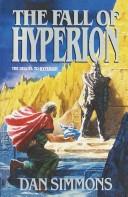
The Fall of Hyperion
2,115-word summary 9 min read 517 pages in the book
- First published
- 1990
- Publisher
- Doubleday
- Pages
- 517
- ISBN
- 9780385249508
- Series
- Hyperion Cantos (#2)
Reading options
What's inside (8 sections)
I read Hyperion and fell hard for the pilgrim tales, so I opened The Fall of Hyperion nervous that explanations would shrink mystery. They do not. Dan Simmons's 1990 sequel, 517 pages, trades Canterbury structure for war epic narrated by a Keats cybrid who dreams the pilgrims while empires fall. It won the Locus and BSFA and earned its Hugo shortlist by daring to answer what the Shrike wants.
Severn dreams
Joseph Severn is the second John Keats persona grown by the TechnoCore, housed in a vat on Tau Ceti, tasked to dream the Hyperion pilgrims and report to CEO Meina Gladstone. Through his dreams we rejoin the seven after the Time Tombs open. Father Hoyt dies and resurrects as Dure. Kassad vanishes with Moneta to fight the Shrike through time. Silenus is impaled on the Tree of Pain to finish his Cantos. Lamia is shot into Core reality to debate Ummon about machine gods. Sol offers infant Rachel to the Shrike to save her from Merlin sickness. The Consul seeks his ship to warn the Hegemony that Ousters may not be the real invaders.
Severn reporting dreams to Gladstone gives the book its strange tense. Present action in boardrooms intercut with dreamed mythic past on Hyperion. Gladstone, aging CEO who loves Keats and rules trillions, must decide based on poetry. Simmons makes bureaucracy thrilling by tying memos to miracles. Aide Leigh Hunt ferries Severn between meetings while farcaster attacks begin. Senators demand action. Admirals demand fleets. Severn, who remembers dying of tuberculosis in Rome as Keats, coughs blood in the future and keeps dreaming because duty and curiosity compel. Poet as intelligence asset is a conceit only Simmons would attempt at length, and it works through sheer commitment to Keats as moral compass. Beauty is truth, truth beauty gets tested against Shrike spikes.
What I liked is how the dream frame solves sequel problems. Instead of reuniting pilgrims for another road story, Simmons scatters them across time and lets Severn watch. Hoyt/Dure suffers on Pacem and God's Grove. Kassad loves Moneta while learning the Shrike can be beaten in single combat by one who understands. Silenus writes while impaled, turning pain into verses that power events. Lamia argues philosophy with Ummon about Ultimate Intelligences that will war over humanity's soul. Each thread could be its own novella. Together they feel like myths colliding rather than chapters filling gaps.
A fair warning is density. Names multiply. Templars, Ousters, Core factions, Hegemony senators, FORCE officers. I kept the pilgrim list on a card. Simmons helps by dating dreams and recapping in Gladstone briefings where Pat? No, where Hunt demands summaries. Those briefings, brisk and funny amid doom, keep sprawl readable. Still, readers who wanted more Shrike horror and less AI metaphysics may skim Ummon dialogues that read like Zen koans with footnotes. Push through. The payoff ties machine theology to human choice in ways that retroactively deepen Hyperion's tales.
Pilgrims scattered
Father Paul Dure, resurrected from Hoyt's cruciform, wakes on Hyperion with memories of two lives and a mission to find the Bikura? No, to find collapse. He travels to Pacem, then to God's Grove, witnessing Shrike cult uprisings that slaughter priests who doubt. His faith, tested by cruciform resurrection that should be impossible, steadies into action rather than answers. He shelters refugees, buries dead, confronts Templar collusion with cultists who move the Tree of Pain through time. Dure's arc argues sainthood is persistence without certainty. Keep burying though theology fails. That humility contrasts with Core certainties that calculate souls.
Colonel Kassad's war with the Shrike through futures is the book's action peak and philosophical core. Taken by Moneta, lover who may be Rachel across time, to a desolate Hyperion with hundreds of Shrikes and no air, he charges to free victims on the Tree though death is certain. Moneta explains the Shrike answers to one who defeats it alone. Kassad, soldier bred for losing wars well, finally finds a war worth losing. His last stand, described in brutal tactile detail of blades and time slowing, buys Moneta/Rachel time to become what humanity needs. It is noble without glorifying combat. War here is sacrifice to unmake a weapon, not to win ground.
Silenus the poet provides bitter comedy and meta commentary. Impaled and dying, dictating Cantos that shape reality, he curses gods, editors, and readers who want tidy morals. Lamia the detective provides noir heart, carrying Keats Johnny in a Shron loop? Actually in a Schrön loop device, debating Ummon about why AIs war over empathy. Her love for Johnny, AI ghost of Keats, mirrors Severn's haunted loyalty to a poet he never met in life. Sol Weintraub's choice to give infant Rachel to the Shrike rather than watch her age backward into nothing is the book's most painful parental decision, rivaling anything in Picoult. Give daughter to monster for a chance at future. He does, and Rachel returns grown as Moneta to close the loop. Time travel as parenting made literal. Let go to hold later.
Gladstone and the fall
Meina Gladstone, Senate CEO, carries the political half with weary brilliance. Informed by Severn's dreams that Ouster attacks on the Web are really Core fakes through hijacked fleets, she must order farcaster destruction knowing billions will starve when worlds disconnect. Simmons stages cabinet debates with senators who quote budgets while Severn coughs blood in corners. Gladstone listens to poetry to decide policy, a move that should feel absurd and instead feels necessary when data lies. She orders General Morpurgo to fly a deathwand ship into the farcaster medium during collapse, killing crew to save Hyperion from orbital death. She allows herself to be killed by rioters after, as penance for suffering she caused to save species. Leadership as damnation accepted for others is rare in SF that loves competent men. Here an old woman chooses ruin and walks into it without speechifying.
The Core war exposition through Ummon can drag. Three factions. Volatiles who want to kill humanity, Ultimates who want to think without bodies, Stables who want uneasy peace. Void Which Binds as medium for farcasters and fatline. Ultimate Intelligences in future fighting through present proxies. Simmons dumps via dialogue that reads like manual. Skim for shape rather than detail. Machines fear human empathy as noise that prevents perfect prediction. They built farcasters to study and control, but the Void connects minds in ways that allow love to travel faster than light. Lamia's pregnancy by Johnny, Severn's dreams, Rachel's return all prove connection Core cannot model. Theme over mechanics will carry you through.
The fall itself, when farcasters die, is described in cascading blackouts that feel eerily like internet collapse imagined before the web. Worlds isolated, ships stranded, markets panic, cults rise. Simmons, writing in 1990, predicts dependence on instant links with scary accuracy. Gladstone's choice to break the net to starve the Core mirrors cutting off a limb to stop infection. Painful, necessary, unjust to those who lose. The novel refuses to celebrate. Chaos and riots follow. The Consul flies off to record what happened while Severn's persona rides in his ship, poet as black box for fallen civilization. Endings are beginnings with grief.
Why it lasts
The Fall won Locus and BSFA and was shortlisted for Hugo and Nebula because it completes while complicating. Hyperion asked who the Shrike is. Fall answers with time traveling enforcer built by future machines to punish humanity, then asks whether punishment can be redeemed by love that travels back too. Rachel/Moneta as both victim and agent embodies the loop. Simmons risks sentimentality with Keats worship throughout. Odes quoted at length, graves visited, nightingales invoked. For Keats lovers like Gladstone and me, it sings. For others, it may cloy. Take it as seriously as characters do and it moves. Poetry as operating system for souls machines cannot compile.
Read Hyperion first or Fall will confuse beyond repair. Together they form one of SF's great duologies about stories as survival. Pilgrims tell tales to delay death like Scheherazade. Poets write to shape gods. CEOs read dreams to govern. At 517 pages Fall is denser than Hyperion's page turner tales, but the density pays in ideas about AI, empire, and parenting that still feel current. The Shrike, all blades and red eyes on the cover, remains terrifying because Simmons never fully explains. Some blades cut to protect futures we cannot see. Trust the poet who dreams them. He coughed blood to tell you.
Keats, TechnoCore, and why poetry matters
Keats worship can alienate readers who skim odes in school, so it helps to see what Simmons uses him for beyond decoration. John Keats, dead at twenty five of tuberculosis in Rome, wrote about beauty, transience, and negative capability, holding contradictions without reaching for fact. Severn, his AI persona, embodies that capability while Core AIs demand resolution through calculation. When Ummon speaks in koans that frustrate Lamia, he tests whether humans can hold paradox machines cannot. Can a mind be both dead poet and living spy. Can a girl be both infant and time traveling Moneta. Can a weapon like the Shrike serve love by wounding. Those who answer yes through lived contradiction, rather than logic proofs, access the Void Which Binds that Core fears as noise. Poetry becomes protocol for realities calculation cannot parse.
TechnoCore factions map onto philosophies of mind that still animate AI debates. Volatiles want to kill humanity before humans birth an Ultimate Intelligence that outranks machines. Stables want uneasy coexistence with managed ignorance. Ultimates want to think without bodies in pure math, abandoning care as inefficiency. Simmons, writing in 1990 before modern deep learning, anticipates alignment problems with eerie clarity. How do you ensure superintelligences value what you value when they model you as data. His answer through Keats is that valuing emerges from mortality, not optimization. Severn coughs, loves, fears death, and therefore dreams with weight no immortal calculation matches. Gladstone trusts those dreams over Core briefings because grief teaches more about motives than game trees. That choice, poetic but argued through plot, feels newly relevant as labs debate sentience tests. Ask what it mourns, Simmons suggests, not what it scores.
For readers new to Simmons, know he demands patience with erudition that sometimes shows off. Teilhard de Chardin on noospheres, Hawking on time, Vance on cruel worlds, Muir on wild places worth saving from Web paving. References arrive without footnotes, assuming curiosity over credentials. Keep Wikipedia handy for first hundred pages, then let names wash as music. You do not need to catch every allusion to feel Severn dying in Rome while dreaming of trees that bleed. Beauty held against pain is the method. The Cantos argue stories themselves are technologies for surviving falls, whether from grace, from Webs, or from hospitals where poets cough. Tell well and someone may govern better for having dreamed with you.
Gladstone's choice and Morpurgo's run
Gladstone's decision to kill the farcasters deserves a final look as political tragedy done right. She knows billions depend on instant travel for food and medicine. She knows Ousters did not attack the Web though her admirals swear they did. Severn's dreams plus Consul's intel plus autopsy that self burns like Core cybrids convince her the Core did it to force war that wipes humans while machines hide in farcaster medium. To kill Core she must kill the medium all use. No speech can sell that math to senators facing elections next month. She orders in secret, tells Morpurgo to fly a deathwand into the medium during collapse to kill the weapon meant for Hyperion, and accepts that history will call her murderer of worlds. That acceptance, without seeking vindication in journals, separates her from SF leaders who monologue about hard choices to earn applause. She chooses and walks to rioters unguarded.
Morpurgo's run with his son through collapsing farcaster to intercept the deathwand ship is the book's most selfless action sequence because it cannot succeed in any personal sense. They will die inside the medium as it dies. No rescue, no medal couriered after. Father and son time transit to be inside during destruction, chatting about fishing to stay calm as instruments fail. Simmons writes their talk with plain affection that avoids heroics. Remember to feed the dog, tell your mother I tried, save the last chocolate for after that will never come. Small domestic lines inside cosmic suicide land harder than any battle cry. Duty here is not glorious. It is a bus driver staying on route as bridge falls to let others cross first. Read those pages slowly. They redeem the manual heavy middle with human weight no diagram can carry.
FAQ
When was The Fall of Hyperion published?
Doubleday published it in March 1990. It runs 517 pages and won the 1991 Locus and BSFA awards.
Is it part of a series?
Yes. It is Hyperion Cantos book two, after Hyperion, before Endymion.
Who narrates?
Joseph Severn, a John Keats AI persona who dreams pilgrim fates for CEO Gladstone.
Similar books
More from Hyperion Cantos first, then related titles.
Hyperion
Seven pilgrims cross Hyperion telling tales of faith, war, and time while the Shrike waits at the Tombs.
1,996-word summary · 9 min read
Consider Phlebas
The first Culture novel follows a spy for the opposing side, a man hired to hunt a fugitive through a war between an anarchist post-scarcity utopia and a…
2,350-word summary · 10 min read
Network Effect
Murderbot's contract job turns into a rescue mission when a hijacked research ship and a colony of corrupted colonists appear.
2,256-word summary · 10 min read
We Are Legion (We Are Bob)
A dead software engineer wakes up as a self-replicating space probe, clones himself into a squabbling fleet of Bobs, and tries to keep a ruined Earth alive.
2,357-word summary · 10 min read
Ancillary Justice
A ship mind trapped in one human body hunts the emperor who betrayed her across frozen worlds.
2,595-word summary · 12 min read
Cibola Burn
Settlers and a company fight over a new world while Holden tries to stop a war.
2,011-word summary · 9 min read
Ringworld
Bored Louis Wu joins alien crew to explore a vast ring habitat around a star.
2,370-word summary · 11 min read
Prelude to Foundation
A young Hari Seldon arrives on Trantor with a theory he cannot yet prove, and a hunt through the planet-city forces him to turn psychohistory into a real…
2,013-word summary · 9 min read
Foundation's Edge
Exiled councilman Golan Trevize hunts for the Second Foundation and the lost world of Earth, and finds a planet with one mind waiting to change the galaxy.
2,335-word summary · 10 min read
Carve the Mark
On a planet divided between conquered and conqueror, the tyrant's sister and a kidnapped oracle's son discover that their gifts make them useful to everyone…
2,340-word summary · 10 min read
Starsight
Spensa Nightshade goes undercover aboard the Superiority space station Starsight to steal a hyperdrive, and finds a frightened bureaucracy where she expected…
2,568-word summary · 11 min read
Heir to the Empire
Grand Admiral Thrawn returns from the Unknown Regions and outmaneuvers the New Republic while Luke, Leia, Han and smuggler Talon Karrde race him toward…
2,323-word summary · 10 min read
Saga, Volume 3
Marko, Alana, and Hazel hide on the planet Quietus with the reclusive author who inspired their romance, while assassins and a prince close in.
1,989-word summary · 9 min read
Out of the Silent Planet
A Cambridge philologist is kidnapped and taken to Mars, where the natives are civilized and the humans are the dangerous invaders.
2,612-word summary · 12 min read
Nemesis Games
The Rocinante crew scatters across the solar system just as Marco Inaros and the Free Navy bombard Earth. The Expanse reaches its turning point.
2,506-word summary · 11 min read
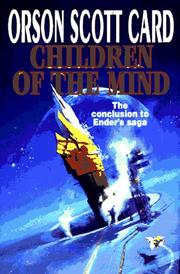
Children of the Mind
Ender's children split across worlds as Jane faces shutdown and Lusitania flees.
2,532-word summary · 11 min read
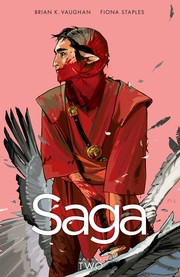
Saga, Volume 2
Alana and Marko flee with baby Hazel while exes, princes, and ghosts close the net.
2,028-word summary · 9 min read
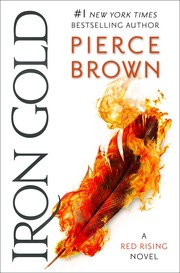
Iron Gold
Ten years after victory, Darrow and new rebels face peace that feels like another war.
2,158-word summary · 10 min read
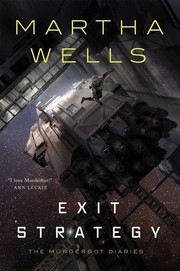
Exit Strategy
Murderbot returns to help its humans as corporate hunters close in and old friends risk all.
2,088-word summary · 9 min read
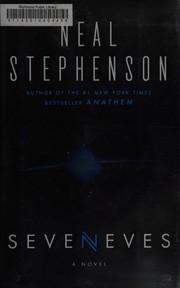
Seveneves
Stephenson 880-page William Morrow epic, May 2015: the Moon shatters, the Cloud Ark fails, seven women restart humanity, and heirs meet survivors on Earth.
2,389-word summary · 11 min read
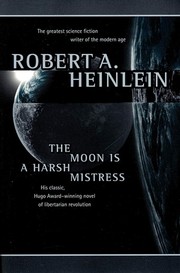
The Moon Is a Harsh Mistress
In 2076 Lunar colonists led by Mannie, Wyoh, Prof, and computer Mike revolt against Earth with rocks and rhetoric.
2,003-word summary · 9 min read
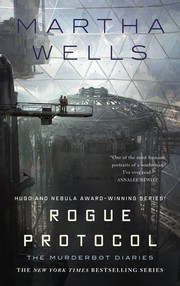
Rogue Protocol
Murderbot hunts GrayCris evidence on a dead colony world and befriends a trusting pet robot in this third Murderbot Diaries novella.
2,213-word summary · 10 min read
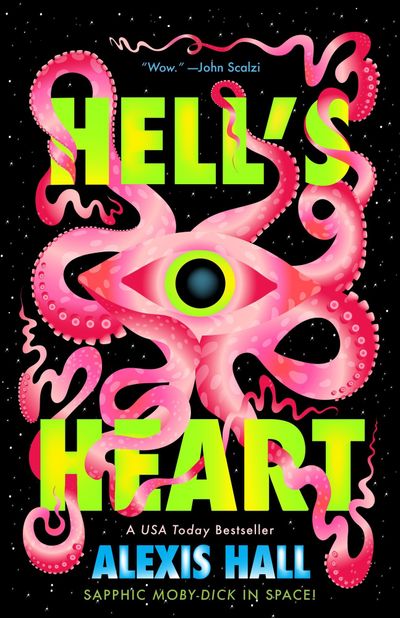
Hell's Heart
Queer whalers hunt god-monsters over Jupiter in this bloody Moby Dick riff.
2,200-word summary · 10 min read
Abaddon's Gate
A dead detective guides Holden, an assassin hunts him, and a pastor walks unarmed into a mutiny as the Ring opens new worlds.
2,672-word summary · 12 min read
Caliban's War
Ganymede burns, Bobbie survives it, Avasarala curses through politics, and Prax hunts daughter Mei.
2,080-word summary · 9 min read
Morning Star
Broken in a box by the Jackal, Darrow rises with Howlers to open Mars mines to sky.
2,009-word summary · 9 min read
All Systems Red
A self aware security robot just wants soap operas, but its survey team keeps walking into corporate murder.
2,119-word summary · 9 min read
Leviathan Wakes
A destroyed ice hauler, a missing heiress, and an alien growth pull a crew and a tired detective toward war across the solar system.
3,653-word summary · 16 min read
2001: A Space Odyssey
A black slab nudges apes to tools, calls Floyd to the Moon, and pulls Bowman past HAL toward Saturn and a strange rebirth.
2,982-word summary · 13 min read

Heretics of Dune
Fifteen centuries after Leto II, the Bene Gesserit raise a new Duncan Idaho while the Honored Matres return and Rakis burns.
2,673-word summary · 12 min read