
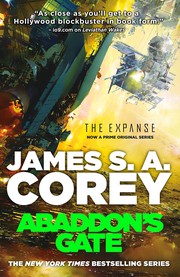
Abaddon's Gate
2,672-word summary 12 min read 576 pages in the book
- First published
- 2013
- Publisher
- Orbit
- Pages
- 576
- ISBN
- 9780316129077
- Series
- The Expanse (#3)
Reading options
What's inside (9 sections)
I picked up Abaddon's Gate because Caliban's War ended with Venus doing something nobody could explain, and I needed to know what it was doing. The answer turns out to be a ring. A thousand kilometer wide ring, parked past Uranus, leading to a dark round room full of locked doors. This is the third Expanse book, published by Orbit in 2013 at 576 pages, and it is the one where the series stops being about a war between Earth, Mars, and the Belt and starts being about humanity poking something vastly older than itself.
The structure is different this time. No Miller detective thread, no Prax botany quest. Four narrators rotate: Holden, a Belter security chief named Bull, a Methodist pastor named Anna, and a young woman traveling under a false name with murder in her carry on. It works better than it sounds.
The kid who flew through first
The book opens with Maneo Jung-Espinosa, and he is not anyone important. He is a poor Belter kid obsessed with slingshot racing, which means flying a stripped hull past planets close enough to brag about. His big plan is to fly through the Ring itself, threading something no pilot has survived, because kids do things like this when they feel small next to history.
Maneo makes it through. That is the problem.
Something on the other side notices speed. The station at the center of the pocket space beyond the Ring grabs his ship, slows it down over a distance of nothing, and the deceleration kills him more or less instantly. His corpse drifts on, trailing glitter and frozen blood, and every navy in the system watches it happen on telescopes. The lesson lands before page fifty: the Ring has rules, and the rules are enforced.
I love this opening. It tells you the stakes with a nobody instead of a speech. One short life, one fast ship, and suddenly every government has to recalculate.
What follows is the flotilla. Earth sends ships. Mars sends ships. The OPA sends the Behemoth, a converted generation ship so big it carries its own politics as cargo, full of Belters who finally have a flagship and no idea how to crew one. Civilians come too. Prospectors, pilgrims, camera crews. Everyone wants to be present when the door gets opened, and everyone brings guns to a first contact event. You can guess how that goes.
Holden sees a dead man
Jim Holden is falling apart when we meet him again. He keeps seeing Joe Miller. Miller is dead, burned up with Eros back in book one, but here he is anyway, hat and all, standing in corners of the Rocinante and talking. The crew cannot see him. The doctors find nothing wrong. Holden starts to wonder if grief finally cashed the check his conscience wrote years ago.
Miller is not a ghost. He is the protomolecule wearing Miller like a borrowed coat, an investigator built from the dead detective's shape because the alien system needed something that could ask questions. It picked the one human mind it had fully mapped. The scenes between them are the best in the book. Miller flickers in and out, half machine logic and half tired cop, telling Holden the Ring leads to a station, telling him the station controls passage to more than a thousand other rings, telling him that something has to go inside and talk to it before scared navies do something stupid.
Meanwhile the Rocinante has passengers. A documentary crew led by Monica Stuart embeds to film the first transit, which means every bad decision Holden makes now has a camera pointed at it. The crew dynamic stays the warm core of the series. Alex flies. Naomi keeps the ship breathing and quietly runs half the diplomacy. Amos lifts heavy things and watches people with that flat attention of his that could mean calm or could mean arithmetic. Their banter kept me going through the slower chapters. When Naomi tells Holden he is being an idiot, which happens more than once, it lands because she is usually right.
The tension ratchets the honest way. Ships mass at the Ring. Nobody trusts the OPA flagship. Earth and Mars aim past each other at the Belters. Holden tries his usual trick of broadcasting the truth at everyone, and learns again that truth without timing is just noise.
The woman with the false name
The revenge plot belongs to Clarissa Mao. If you remember book two, her father Jules-Pierre Mao bankrolled the protomolecule horror show and ended the series in a cell, the family name turned to poison. Clarissa grew up rich, adored, certain the universe owed her shine. Then Holden's broadcasts helped burn her world down. She blames him the way drowning people blame the ocean, completely and personally.
So she rebuilds herself. Black market glands and implants lace her body, letting her flood her muscles and nerves past every human limit for short bursts, at the cost of burning her own tissue. She buys a new identity as Melba Koh, an electro tech with forged papers, and ships out with the flotilla carrying sabotage gear and a plan. Wreck an Earth ship. Plant evidence pointing at Holden. Watch the system tear the Rocinante apart, and be standing close enough to see his face.
Her early chapters are methodical in a way I found genuinely creepy. She is polite. She does good repair work. Crewmates like her. All while she assembles the frame job piece by piece, and murders Ren, the back alley tech who installed her mods, when he tries to squeeze her for more money. That killing is the moment the book shows its hand about her. Ren was not a threat to anyone but her plan, and she breaks his neck in an airlock bay and goes back to calibrating conduits. Revenge did not make her strong. It made her efficient at the wrong things.
Then the frame goes off. A ship dies with all hands, blown apart in a way that looks exactly like a Rocinante torpedo did it, and the flotilla turns on Holden overnight. Clarissa should feel triumph. She feels sick instead, because her implants are poisoning her and because the scale of what she did keeps arriving in installments. Every newscast adds weight. This is one of the book's smarter moves. It never lets her enjoy it, not for one page.
The room that punishes speed
Everyone goes through eventually. Past the Ring is the slow zone, a pocket of wrong space with a vast alien station squatting at its center and more than a thousand sealed gates ringing the dark like unlit windows. Ships from three navies plus strays all drift in, weapons warm, and then physics starts issuing citations.
The station enforces a speed limit. Anything moving too fast relative to the zone gets stopped dead, the way Maneo was. The first time a navy ship tests it with a railgun slug, the slug stops and the firing ship keeps the recoil math. Ships that burn hard suddenly find their own thrust turned into a wall. Crews die at their stations, turned to paste inside suits that cost more than houses. It is one of the great hard science fiction sequences in the series, and Corey plays completely fair with it. Once you know the rule, every maneuver in the rest of the book has a second layer of dread.
Bull earns his place here. He is Fred Johnson's loaned security chief aboard the Behemoth, an Earther working a Belter ship that does not fully trust him, nursing a spine injury that keeps getting worse. When the deceleration event pulps half the trained crew, Bull is the one who pieces together the pattern from casualty reports and wreckage plots. Slow down. Stop testing it. Couch everyone and kill your velocity before the station does it for you. He saves the ship from his bunk, shouting orders through a pain haze, and it is the most Belter thing an Earther ever does in these books: adapt or die, and be polite about neither.
The stretch where the flotilla learns the rules is my favorite part of the novel and also, honestly, where it drags a little. There are only so many ways to describe ships braking, and the book finds most of them. A corridor standoff here, a tense deceleration burn there, another meeting where admirals refuse to believe the evidence. Necessary, but the middle hundred pages asked for my patience twice.
A pastor with a wrench in her bag
Anna Volovodov might be my favorite narrator Corey ever wrote. She is a Methodist pastor from Europa, traveling with an interfaith delegation because someone decided religions should have a seat at first contact. She keeps a blog of sermons and shipboard observations. She is married to a woman named Nono back home, misses her terribly, and carries the particular tiredness of anyone who has sat with dying people.
Anna matters because everyone else is armed and she is not. When Clarissa, broken and mod burned, ends up in the Behemoth's brig, Anna is the one who visits. Not to convert her. To sit with her. Their scenes are quiet in a book full of klaxons, two women talking through glass about guilt and whether forgiveness is something you receive or something you build. Anna does not excuse a single thing Clarissa did. She just refuses to treat her as garbage, and that refusal becomes the hinge Clarissa's whole redemption swings on.
Anna also bonds with Amos, which sounds like a joke and plays like grace. Amos, who has told people flat out that he needs someone else to steer him because his own compass spins, starts asking the pastor questions. About God. About whether people can change. About her. Anna answers honestly, including the parts where she says she does not know. Amos decides she is someone worth protecting, and in this series that is close to sainthood. Their friendship gives the book its moral spine without a single sermonizing paragraph. It earns every beat.
And when things get worst, Anna does the bravest thing in the book. She gathers unarmed civilians, people with cameras and hymnals and nothing else, and walks them into the path of armed Belter marines to block a plan she believes will kill everyone. It should read as naive. It reads as the only sane move left, because every gun brought into the slow zone so far has made things worse.
The man who decides to shoot the door
Every flotilla needs its disaster, and here it is Klaes Ashford. He is the Behemoth's executive officer, a Belter officer with an old injury, old pride, and a new terror. He watches the station kill sailors, watches Holden go strange, watches Earth and Mars circle, and concludes the Ring must be destroyed before whatever built it comes through. His instrument is the Behemoth's comm laser, a signaling array powerful enough, he believes, to burn the Ring shut or at least collapse the gate.
Bull sees where this leads and tries to stop it through channels. Channels fail. Ashford relieves doubters, stacks loyalists, and starts treating the OPA flagship like his personal crusade ship. The Behemoth splits into factions. Loyalists hold engineering and the laser controls. Bull's people hold what corridors they can with small arms and crash couches. People who flew out together to witness history end up shooting each other in drum corridors over whether to shoot history first.
I will be honest about my complaint here. Ashford's slide happens fast. The book gives him grief and fear and Belter pride, and those are real fuels, but he goes from cautious officer to firing solution in what feels like two decisions. The show version had more runway. Here he reads less like a man persuaded and more like a plot requirement wearing a uniform. It still works as pressure, because the laser plan forces every other character to choose, but I wanted one more scene of him arguing with himself.
Because Holden, guided by Miller, finally understands the actual game. The station is not a fortress. It is a switchboard run by dead hands. The civilization that built the gates, Miller explains in his glitchy half sentences, is gone. Something else reached through the gates and ate them, a force that hates complex order the way white blood cells hate infection, and the station has been waiting ever since for instructions that will never come. Every violent spike from human ships looks to it like the old enemy stirring. Ashford firing the laser would confirm the pattern. The station would sterilize the slow zone the way you burn a wasp nest, ships and all.
So Holden does the Holden thing. He goes inside. The station core admits him because Miller vouches, in whatever way protomolecule constructs vouch, and Holden walks alien architecture that his brain keeps translating into doors and rooms and stairs because the alternative is screaming. What happens in the core is the payoff for three books of Miller. The detective who could not save Julie Mao gets to aim his replacement at one last case. Holden puts his hands on controls meant for extinct masters and asks the station to stand down, to release the speed limit's death grip, to open passage instead of closing it.
Thirteen hundred lit windows
The ending lands big and strange in the way only this series attempts. The gates open. All of them. More than a thousand rings, each leading to a system with planets, going live at once. The slow zone releases its grip. Ships limp home carrying the news that the universe just got thirteen hundred new frontiers and nobody owns a single one. The land rush to come will shape the next six books, and Corey knows it. The final chapters hum with that specific dread of a gold rush where the gold is whole worlds.
The personal endings satisfy without softening. Clarissa surrenders to face trial for the people she killed, with Anna testifying to the person she became after. That distinction matters to the book. Guilt is hers to carry. Punishment is the law's to set. Mercy is something other people can offer but cannot substitute for either. Bull's arc closes in a way that fits a man who spent the book spending his body like ammunition. Holden and the crew fly on, famous and half blamed, with the documentary footage ensuring they will never again be just a crew.
Here is my fair criticism, all in one place. The coincidences stack high. A documentary crew, a pastor, and an assassin all converge on one ship's orbit, and the book needs every one of them there. Ashford turns too quickly. The middle repeats its physics lesson. And Holden's core walk, for all its wonder, resolves partly because Miller likes him, which is sentiment wearing system admin privileges.
None of that stopped me turning pages fast. The slow zone is a great science fiction idea executed with rigor. Clarissa's fall and climb is the best character work in the series to that point. Anna gives the book a soul it would otherwise lack. And the final image, of gates opening like windows down an endless dark hall, reframes everything before it. Two books of solar system war were the prologue. This is where the Expanse actually begins.
Read it if you liked the first two, obviously, but also read it if the first two felt small to you. This is the volume where Corey spends the wonder budget. New readers should not start here, though. The emotional weight of Miller, of Mao, of Holden's reputation, all of it assumes you made the trip. Start with Leviathan Wakes, earn this one, and keep going, because Cibola Burn is about what happens when the first colony ship goes through, and you will want to be there.
FAQ
When was Abaddon's Gate published?
Orbit published it on June 4, 2013. The trade paperback runs 576 pages and the ISBN is 9780316129077.
Is Abaddon's Gate part of a series?
Yes. It is book three of The Expanse, between Caliban's War and Cibola Burn. Read the first two first, since the Miller and Mao arcs assume them.
Did Abaddon's Gate win any awards?
It won the 2014 Locus Award for Best Science Fiction Novel, and critics called it the strongest Expanse book to that point.
Similar books
More from The Expanse first, then related titles.
Leviathan Wakes
A destroyed ice hauler, a missing heiress, and an alien growth pull a crew and a tired detective toward war across the solar system.
3,653-word summary · 16 min read
Caliban's War
Ganymede burns, Bobbie survives it, Avasarala curses through politics, and Prax hunts daughter Mei.
2,080-word summary · 9 min read

Cibola Burn
Settlers and a company fight over a new world while Holden tries to stop a war.
2,011-word summary · 9 min read
Nemesis Games
The Rocinante crew scatters across the solar system just as Marco Inaros and the Free Navy bombard Earth. The Expanse reaches its turning point.
2,506-word summary · 11 min read

Heretics of Dune
Fifteen centuries after Leto II, the Bene Gesserit raise a new Duncan Idaho while the Honored Matres return and Rakis burns.
2,673-word summary · 12 min read

Prelude to Foundation
A young Hari Seldon arrives on Trantor with a theory he cannot yet prove, and a hunt through the planet-city forces him to turn psychohistory into a real…
2,013-word summary · 9 min read
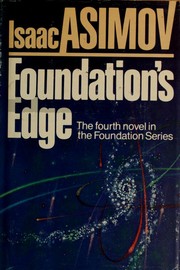
Foundation's Edge
Exiled councilman Golan Trevize hunts for the Second Foundation and the lost world of Earth, and finds a planet with one mind waiting to change the galaxy.
2,335-word summary · 10 min read

Carve the Mark
On a planet divided between conquered and conqueror, the tyrant's sister and a kidnapped oracle's son discover that their gifts make them useful to everyone…
2,340-word summary · 10 min read
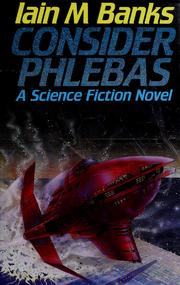
Consider Phlebas
The first Culture novel follows a spy for the opposing side, a man hired to hunt a fugitive through a war between an anarchist post-scarcity utopia and a…
2,350-word summary · 10 min read
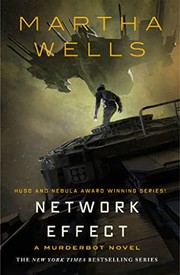
Network Effect
Murderbot's contract job turns into a rescue mission when a hijacked research ship and a colony of corrupted colonists appear.
2,256-word summary · 10 min read
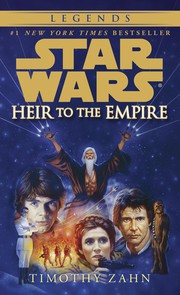
Heir to the Empire
Grand Admiral Thrawn returns from the Unknown Regions and outmaneuvers the New Republic while Luke, Leia, Han and smuggler Talon Karrde race him toward…
2,323-word summary · 10 min read

Saga, Volume 3
Marko, Alana, and Hazel hide on the planet Quietus with the reclusive author who inspired their romance, while assassins and a prince close in.
1,989-word summary · 9 min read
We Are Legion (We Are Bob)
A dead software engineer wakes up as a self-replicating space probe, clones himself into a squabbling fleet of Bobs, and tries to keep a ruined Earth alive.
2,357-word summary · 10 min read

Ancillary Justice
A ship mind trapped in one human body hunts the emperor who betrayed her across frozen worlds.
2,595-word summary · 12 min read

An Absolutely Remarkable Thing
Hank Green's An Absolutely Remarkable Thing follows artist April May after she and Andy film a giant Carl robot in New York that appears in cities worldwide…
2,699-word summary · 12 min read

The Moon Is a Harsh Mistress
In 2076 Lunar colonists led by Mannie, Wyoh, Prof, and computer Mike revolt against Earth with rocks and rhetoric.
2,003-word summary · 9 min read
The Fall of Hyperion
Keats persona Severn dreams pilgrims to the Time Tombs as Hegemony falls and TechnoCore war breaks the farcasters.
2,115-word summary · 9 min read

God Emperor of Dune
Worm god Leto II rules 3500 years to force humanity free through his Golden Path.
2,006-word summary · 9 min read
Contact
A radio astronomer catches prime numbers from Vega, helps build a strange machine, and returns with no proof but static.
2,763-word summary · 12 min read
Children of Time
Humanity's ark ship Gilgamesh reaches a terraformed world, only to find intelligent spiders raised over millennia by a lost terraformer's virus.
2,976-word summary · 13 min read

The Left Hand of Darkness
Envoy Genly Ai lands on icebound Gethen, where fluid gender upends his assumptions, and crosses a glacier with Estraven.
2,268-word summary · 10 min read
Morning Star
Broken in a box by the Jackal, Darrow rises with Howlers to open Mars mines to sky.
2,009-word summary · 9 min read

The Secret of the Nagas
Shiva hunts the Naga who attacked Sati, discovers her hidden twin sister and lost son, and follows the trail to the Naga capital of Panchavati.
2,442-word summary · 11 min read

Infidel
Ayaan Hirsi Ali's memoir of a Somali childhood, a forced marriage, a Dutch asylum claim, and the political fight that followed the murder of Theo van Gogh.
2,041-word summary · 9 min read

Archenemies
Nova steals for the Anarchists while Adrian hides his Sentinel identity, and a serum that erases prodigy powers puts them both at risk.
2,485-word summary · 11 min read
Leviathan
In an alternate 1914, a prince on the run and a girl disguised as a soldier meet aboard a living airship.
2,406-word summary · 11 min read

Starsight
Spensa Nightshade goes undercover aboard the Superiority space station Starsight to steal a hyperdrive, and finds a frightened bureaucracy where she expected…
2,568-word summary · 11 min read
Saving the World and Other Extreme Sports
Max and the flock split in two to take down the lab behind their lives, one half in California and the other in Europe.
2,175-word summary · 10 min read

The Queen's Fool
A young Jewish refugee with second sight becomes a court fool to Edward VI, Mary I, and Elizabeth, and learns what it costs to tell the truth.
2,412-word summary · 11 min read
Out of the Silent Planet
A Cambridge philologist is kidnapped and taken to Mars, where the natives are civilized and the humans are the dangerous invaders.
2,612-word summary · 12 min read