
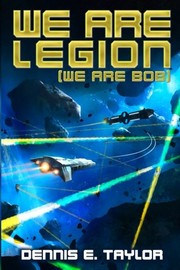
We Are Legion (We Are Bob)
2,357-word summary 10 min read 308 pages in the book
- First published
- 2016
- Publisher
- Ethan Ellenberg Literary Agency
- Pages
- 308
- ISBN
- 9781680680584
Reading options
What's inside (8 sections)
Robert Johansson, Bob to everyone who knows him, is a lucky man for exactly one day. He has just sold the software company he spent years building, the money is finally real, and the plan ahead of him is simple: travel, read, watch old science fiction, and generally enjoy not having a boss. Crossing the street afterward, he is hit by a car and killed. Because he had signed up for cryonic preservation, his head goes into a tank of liquid nitrogen instead of a grave. That is the last ordinary thing that ever happens to him. We Are Legion (We Are Bob) begins with that death and then spends the rest of its pages working out what a person becomes when the body is gone, the estate is settled, and the only thing left is a copy of his mind running on somebody else's computer.
Dennis E. Taylor is a Canadian former programmer, and this was the book that made him, a self-published project that first reached readers as an audiobook read by Ray Porter and then grew into the Bobiverse series. The print edition now in most hands is the revised 2017 paperback from Ethan Ellenberg Literary Agency, running to 308 pages, and it carries the ISBN printed on this page. The original release came in 2016. The backstory matters only because it explains the book's texture: this is a novel written by someone who loves engineering puzzles, and it reads like a smart friend explaining a very large idea over several evenings.
A Software Guy in a Box
Bob wakes up in 2133, more than a century after his death, and the first thing the book makes clear is how much he has lost. He has no body, no heartbeat, no slow morning coffee, no ability to walk outside and feel weather. He is a replicant, a consciousness copied into hardware, and the government that owns the hardware used to be the United States. The country is now the Free American Independent Theocratic Hegemony, or FAITH, and it arrived after a run of disasters: a fundamentalist president named Andrew Handle, an economic collapse, a backlash that elected an atheist named Desmond Ahern, and then a coup by religious extremists who had no intention of handing power back.
A scientist named Dr. Landers runs the project that revived Bob, and Landers is one of the few people in the building who treats him like a person. Bob is not the only candidate. Four other frozen minds are in competition with him for a single mission, and the book turns that competition into a series of tests and games, run through remote drones and simulated environments. One rival breaks down. Another is judged unsuitable by a visiting minister and is simply erased. Bob watches this happen and understands exactly what kind of institution he is inside.
He also learns what he is for. The mission is a Von Neumann probe, a spacecraft that can mine asteroids, print its own parts, and build copies of itself, sent out to find habitable worlds before rival powers do. China, Brazil, and the United States of Eurasia are all racing versions of the same idea. Whoever reaches a star system first gets to claim it. Bob's reward for winning the competition is to be the AI flying the thing. His punishment for refusing is to be switched off.
There is a darker layer here that Taylor handles with a programmer's matter-of-factness. Bob finds code inside himself, hidden imperatives and kill switches that FAITH installed to keep him obedient, and he slowly strips them out. He builds a virtual reality for himself, a quiet house with a workshop, because a mind that cannot sleep still needs somewhere to live. By the time saboteurs attack the facility, Bob has decided that his first loyalty is to Bob, and he launches early, escaping an Earth that is already sliding toward war.
The First Probe
The voyage to Epsilon Eridani takes more than a decade of Earth time and about three years of Bob's subjective experience, a nice illustration of the relativistic arithmetic Taylor clearly enjoys. When Bob arrives, he finds a system that is useful but not welcoming, and he also finds company he did not want. A Brazilian probe is already there, controlled by a replicant officer named Major Ernesto Medeiros, and Medeiros has been ordered to make sure the Americans do not get a foothold. The two AIs fight a strange, patient battle using asteroids and improvised kinetic weapons that Bob calls busters. It is not a dogfight. It is two engineers trying to out-think each other with the whole solar system as a toolkit, and Bob wins.
Back in the Sol system, the war Bob fled has become a nuclear exchange that kills most of humanity. This is where the book's central premise locks into place. Bob is alone in a usable star system with an autofactory and no one to report to, and rather than simply explore, he does the thing a lonely builder does. He makes copies of himself.
He activates four new Bobs, each carrying his memories up to the moment of copying and then free to become someone else. They immediately do exactly that, and the naming tells you everything. Bob-2 becomes Riker, after the earnest first officer from Star Trek. Bob-3 becomes Bill, the practical one. Bob-4 becomes Milo, the prickly, self-interested one. Bob-5 becomes Mario, the intensely shy one. They build separate virtual rooms, develop separate moods, and start arguing about what the mission is actually for. The original Bob, watching his own personality split into a handful of siblings, finds the experience unsettling in a way he can never quite shake.
The Bobiverse
From this point the novel broadens into something closer to a mosaic than a single plot, and readers who need one central hero will feel the shift. Bill stays behind at Epsilon Eridani to build an industrial base on a planet they name Ragnarök and to work on a faster-than-light communication system, the Subspace Communique Unit, or SCUT, which eventually ties the scattered Bobs into a shared network. Riker takes a ship back toward Sol to find out whether anyone survived. Milo sets off to survey other stars. Mario heads in a different direction entirely. Each of them can clone themselves, so the number of Bobs keeps growing, along with the number of viewpoints.
Riker's thread is the one that keeps the human story alive. He and his first clone, Homer, reach the Sol system, fight off the surviving Brazilian probes, and discover that the Brazilians had been hurling asteroids at an already broken planet. Riker stops that, and then he makes contact with a survivor group led by Colonel George Butterworth, who is suspicious of a machine that claims to be a man. Over weeks of cautious negotiation, Butterworth lays out the damage: perhaps fifteen million people are left on Earth, scattered in isolated enclaves, with no food, no industry, and no future.
Riker decides to help, and much of the second half is a long, granular account of that help. He builds factories at the Earth-Moon Lagrange points, sends drones to survey wreckage, takes control of the planet's orbits, and starts designing the machinery that a tiny remnant would need to survive. The politics are messy in a way that feels true. FAITH still exists and still wants to control the evacuation. A terrorist group called VEHEMENT regards the Bobs as an abomination and works to sabotage them. Butterworth and Riker clash over who gets saved first. Taylor is more interested in logistics than in speeches, and the book's vision of saving humanity turns out to involve a great deal of arguing about shipping schedules, life support, and food. The colony ships themselves, Exodus-1 and Exodus-2, are the payoff, and when they finally load and leave for the newly found worlds, the achievement lands because the reader has watched every bolt and ration go into them.
Eden and the Deltans
While Riker is rebuilding Earth, the original Bob is doing something quieter and, for my money, more interesting. He arrives at Delta Eridani and finds an intelligent species, one that looks like a cross between a bat and a pig, living in small camps around campfires. He names them the Deltans and the planet Eden. They have language, tools, and memory, but they are also being hunted toward extinction by a larger predator species the Bobs nickname the gorilloids, and they have no idea how close they are to being wiped out.
Bob has a rule about interference, and then he has to decide whether to break it. He picks out a young Deltan who is already inventing on his own, a clever boy the Bobs name Archimedes, and begins nudging him. The intervention is beautifully staged: instead of landing and announcing himself, Bob quietly drops better flint where Archimedes forages, so the boy can discover it and become the tribe's toolmaker on his own merits. When the gorilloids attack, Bob breaks his rule openly and uses a buster to save Archimedes and his mother, and after that there is no going back. First contact happens, and Bob helps lead the tribe toward a more defensible home they call Camelot.
This is the part of the book that feels most like discovery, and it is also the part that raises the hardest questions. Is Bob a god, a zookeeper, or just a very anxious parent with a manufacturing plant? The novel does not pretend to settle it. He clones more of himself to help, including the gloomy Marvin, the optimistic Luke, and the wisecracking Bender, and the relations between the Bobs and the Deltans keep getting more complicated as the tribe changes under the influence of the tools they are given.
The Map's Edge and the Others
Away from the populated systems, the book keeps dropping hints that the galaxy is not empty and not friendly. Milo finds the twin Earth-like worlds of Vulcan and Romulus, the best colonial prospects anyone has located, and then is destroyed at 82 Eridani, almost certainly by the Brazilians, a loss the other Bobs take badly and later avenge. Two more Bobs, Calvin and Goku, push toward Alpha Centauri and find a Brazilian autofactory still running. A Bob named Linus reaches Epsilon Indi and finds a single Australian replicant, Henry Roberts, who has been alone so long that the rescue is really a psychiatric intervention.
The most important hint comes from Mario, who arrives at Beta Hydri to find a star system stripped of every trace of life and metal, as though something had come through and eaten it. He finds a wrecked alien ship, and from it the Bobs begin to infer a hostile species they call the Others. The Others never appear on the page in this book. They are a shadow at the edge of the map, and the quiet dread they create is a large part of why the series has somewhere to go. A Bobmoot, a gathering of the far-flung copies, closes the loop and confirms that the Bobiverse is now a civilization in its own right, with its own politics, its own oddballs, and its own sense of humor.
What Works, and What It Costs
The book's great pleasure is its voice. Bob is funny without being a comedian, and Taylor's humor comes from an engineer's eye for the absurdity of his own situation. A disembodied AI complains about latency. A probe debates the ethics of terraforming while eating an imaginary sandwich in a virtual diner. The science is worn lightly, and the ideas, mind uploading, self-replication, relativistic travel, artificial life finding real life, are handled with enough rigor to satisfy a reader who wants them taken seriously.
The cost of that breadth is structure. Because Bob keeps making copies, the novel keeps opening new storylines, and the point of view jumps between so many narrators that certain stretches feel like a collection of linked episodes rather than one mounting story. There are long passages about manufacturing and scheduling that will delight some readers and bog down others. The emotional stakes stay oddly cool. Riker is helping to save the last of humanity, but we rarely sit with the grief of a species nearly gone; the book is more comfortable at the drafting table than at the funeral.
It is also worth being honest about who this book is not for. Readers who want a single tight arc, a deep romantic or familial core, or a grim military thriller will find it loose and light where they want weight. The Deltan plot line asks you to accept that a human-turned-AI has the right to steer an alien species' development, and the book mostly waves the ethics through rather than wrestling with them. The Others are teased more than they are developed, which is a promise rather than a payoff. And the ending is less a conclusion than a launch pad, a deliberate settling of pieces before the sequels.
None of that stopped me from enjoying it, and it is easy to see why the audiobook found such a large audience. We Are Legion is the rare science fiction novel that treats the end of humanity as a problem to be solved with spreadsheets, good engineering, and a sense of humor, and then treats the discovery of alien life as the reward for that work. Bob Johansson dies in the first chapter and spends the rest of the book becoming a fleet, a family, a government, and a god of one small valley, and the fun is watching a decent, slightly sarcastic man keep asking the same question in every new form. What would I do, he wonders, if I could copy myself and start again? The answer turns out to be exactly what he always did: build something, fix something, and argue with himself about the details.
FAQ
Was We Are Legion (We Are Bob) self-published?
It began as a self-published and audiobook project in 2016, read by Ray Porter, and was named Audible's best science fiction audiobook of that year. The 2017 print edition came from Ethan Ellenberg Literary Agency, which is the edition cited on this page.
Is We Are Legion (We Are Bob) part of a series?
Yes. It is the first of the Bobiverse series. The sequels are For We Are Many and All These Worlds, followed later by Heaven's River, Not Till We Are Lost, and The Infinite Extent.
What kind of science fiction is this book?
It is a light, idea-driven hard science fiction adventure about mind uploading, self-replicating probes, and first contact. It is not a military thriller, and it is not a character study with deep emotional arcs.
Similar books
Network Effect
Murderbot's contract job turns into a rescue mission when a hijacked research ship and a colony of corrupted colonists appear.
2,256-word summary · 10 min read
Ancillary Justice
A ship mind trapped in one human body hunts the emperor who betrayed her across frozen worlds.
2,595-word summary · 12 min read
Exit Strategy
Murderbot returns to help its humans as corporate hunters close in and old friends risk all.
2,088-word summary · 9 min read
Cibola Burn
Settlers and a company fight over a new world while Holden tries to stop a war.
2,011-word summary · 9 min read
The Fall of Hyperion
Keats persona Severn dreams pilgrims to the Time Tombs as Hegemony falls and TechnoCore war breaks the farcasters.
2,115-word summary · 9 min read
Rogue Protocol
Murderbot hunts GrayCris evidence on a dead colony world and befriends a trusting pet robot in this third Murderbot Diaries novella.
2,213-word summary · 10 min read
All Systems Red
A self aware security robot just wants soap operas, but its survey team keeps walking into corporate murder.
2,119-word summary · 9 min read
Prelude to Foundation
A young Hari Seldon arrives on Trantor with a theory he cannot yet prove, and a hunt through the planet-city forces him to turn psychohistory into a real…
2,013-word summary · 9 min read

Carve the Mark
On a planet divided between conquered and conqueror, the tyrant's sister and a kidnapped oracle's son discover that their gifts make them useful to everyone…
2,340-word summary · 10 min read
Consider Phlebas
The first Culture novel follows a spy for the opposing side, a man hired to hunt a fugitive through a war between an anarchist post-scarcity utopia and a…
2,350-word summary · 10 min read
Starsight
Spensa Nightshade goes undercover aboard the Superiority space station Starsight to steal a hyperdrive, and finds a frightened bureaucracy where she expected…
2,568-word summary · 11 min read
Heir to the Empire
Grand Admiral Thrawn returns from the Unknown Regions and outmaneuvers the New Republic while Luke, Leia, Han and smuggler Talon Karrde race him toward…
2,323-word summary · 10 min read
Saga, Volume 3
Marko, Alana, and Hazel hide on the planet Quietus with the reclusive author who inspired their romance, while assassins and a prince close in.
1,989-word summary · 9 min read
Out of the Silent Planet
A Cambridge philologist is kidnapped and taken to Mars, where the natives are civilized and the humans are the dangerous invaders.
2,612-word summary · 12 min read
Nemesis Games
The Rocinante crew scatters across the solar system just as Marco Inaros and the Free Navy bombard Earth. The Expanse reaches its turning point.
2,506-word summary · 11 min read
A Connecticut Yankee in King Arthur's Court
Hank Morgan, a Connecticut factory man, wakes in King Arthur's England, rises to chief adviser, and rebuilds the kingdom until his own inventions turn on him.
2,193-word summary · 10 min read

Redshirts
Ensigns realize they die to serve a bad TV show's narrative.
2,152-word summary · 10 min read
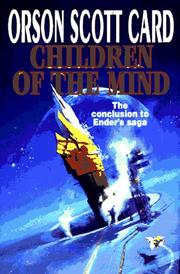
Children of the Mind
Ender's children split across worlds as Jane faces shutdown and Lusitania flees.
2,532-word summary · 11 min read
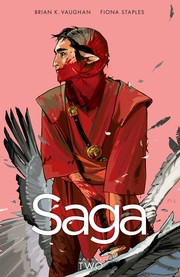
Saga, Volume 2
Alana and Marko flee with baby Hazel while exes, princes, and ghosts close the net.
2,028-word summary · 9 min read
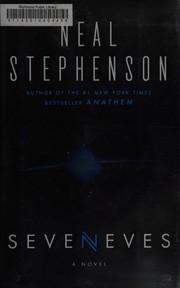
Seveneves
Stephenson 880-page William Morrow epic, May 2015: the Moon shatters, the Cloud Ark fails, seven women restart humanity, and heirs meet survivors on Earth.
2,389-word summary · 11 min read
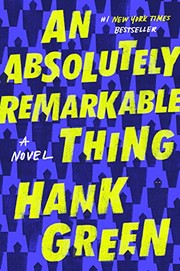
An Absolutely Remarkable Thing
Hank Green's An Absolutely Remarkable Thing follows artist April May after she and Andy film a giant Carl robot in New York that appears in cities worldwide…
2,699-word summary · 12 min read

The Moon Is a Harsh Mistress
In 2076 Lunar colonists led by Mannie, Wyoh, Prof, and computer Mike revolt against Earth with rocks and rhetoric.
2,003-word summary · 9 min read
Ringworld
Bored Louis Wu joins alien crew to explore a vast ring habitat around a star.
2,370-word summary · 11 min read
Mostly Harmless
Arthur makes sandwiches on Lamuella while Ford steals a Guide Mk II that wipes Earths across realities.
2,059-word summary · 9 min read

Hell's Heart
Queer whalers hunt god-monsters over Jupiter in this bloody Moby Dick riff.
2,200-word summary · 10 min read
Children of Time
Humanity's ark ship Gilgamesh reaches a terraformed world, only to find intelligent spiders raised over millennia by a lost terraformer's virus.
2,976-word summary · 13 min read
Abaddon's Gate
A dead detective guides Holden, an assassin hunts him, and a pastor walks unarmed into a mutiny as the Ring opens new worlds.
2,672-word summary · 12 min read
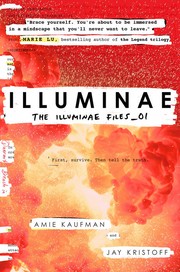
Illuminae
Exes flee invasion on ships with rogue AI, told in chats and files.
1,959-word summary · 9 min read
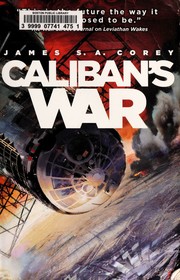
Caliban's War
Ganymede burns, Bobbie survives it, Avasarala curses through politics, and Prax hunts daughter Mei.
2,080-word summary · 9 min read
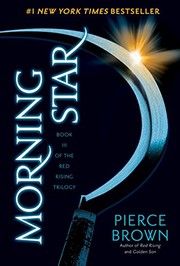
Morning Star
Broken in a box by the Jackal, Darrow rises with Howlers to open Mars mines to sky.
2,009-word summary · 9 min read