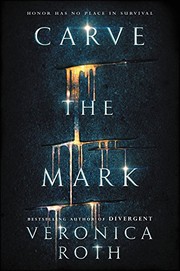
Carve the Mark
2,340-word summary 10 min read 480 pages in the book
- First published
- 2017
- Publisher
- Katherine Tegen Books
- Pages
- 480
- ISBN
- 9780062348630
- Series
- Carve the Mark (#1)
Reading options
What's inside (10 sections)
Cyra Noavek cannot be touched. Not because she is royal, though she is. Not because she is dangerous, though she is. Because her skin is a weapon. Anyone who touches her feels pain, and not the ordinary kind. The pain comes through her currentgift, the power that every person on her planet develops in adolescence. Cyra's gift is agony. She feels it all the time, a low fire under her skin, and she can pass it to anyone she touches. Her brother uses her to torture people.
That is the first thing you need to know about this book. It is not a story about a girl with a cool power. It is a story about a girl whose power has made her untouchable, in every sense. She has been used by her family, feared by her people, and isolated by the one thing that makes her special. The romance, when it comes, is about a boy who can touch her without hurting. That is a very good hook.
Veronica Roth published Carve the Mark in 2017, after the Divergent series made her famous. It is the first book in a duology, followed by The Fates Divide. It is set on a planet called Thuvhe, shared by two peoples: the Thuvhesit, who are settled and peaceful, and the Shotet, who are nomadic, scavenging, and ruled by the Noavek family. The planet is bathed in a galactic current that flows through every living thing and shows in the sky as bands of color. The current gives people gifts. It also gives them fates.
The world of the current
The currentgift system is the book's best invention and its biggest problem. Everyone gets a gift. Some are useful, like the ability to heal or to see the future. Some are strange, like the ability to speak any language. Some are curses, like Cyra's pain. The gifts are not chosen. They are tied to a person's nature, or to the current's plan, or to something the book never fully explains.
The fates are even more arbitrary. At birth, or at some point in childhood, a person's fate is declared by an oracle. Cyra's fate is to "cross the Divide," the barrier between Shotet and Thuvhesit space. Akos's fate is to "die in the service of the family Noavek." Everyone knows these prophecies. They hang over the characters like signs they cannot read. The book is interested in whether a person can choose a life that the current has already written.
The Shotet carve marks into their skin for every season they survive. The marks are a record of endurance, a public statement that they are still here. The Thuvhesit do not carve. They find the practice barbaric. The difference tells you almost everything about the two cultures. The Shotet have been hardened by scarcity and violence. The Thuvhesit have been softened by comfort and a belief in their own virtue. Neither side is innocent.
Roth is good at the physical details of the world. The Shotet capital, Voa, is a city of dark stone and sharp edges. The sojourn ship, where the Shotet travel between scavenging seasons, is cramped and loud. The Thuvhesit capital is brighter, cleaner, and more hypocritical. The planet feels lived in, even when the politics are confusing.
Akos
Akos Kereseth is the other half of the story. He is Thuvhesit, the son of the current oracle, and he lives in a poor community with his parents and siblings. His family is not important in the way the Noaveks are important. They are important because of what they can see. Akos's brother Eijeh is expected to be the next oracle. Akos is expected to be nothing in particular.
Then the Shotet soldiers come. They kill Akos's father and take Akos and Eijeh prisoner. Ryzek Noavek, the ruler of the Shotet, wants an oracle. He wants to control his future. He wants to know what the current has planned for him, and he is willing to kidnap children to find out.
Akos discovers his gift during the capture. He can interrupt the current. He can stop the flow of a currentgift, which means he can neutralize other people's powers. It is a negative gift, a gift of stopping rather than doing. It is also the only thing that can touch Cyra without pain. When he puts his hand on her, the current under her skin goes quiet. For the first time in years, she feels nothing.
That is the setup for the romance, and Roth knows it. Akos is not a warrior or a chosen one. He is a boy who wants to save his brother. Cyra is not a princess who needs rescuing. She is a weapon who has been used so often that she has forgotten she is a person. They are both prisoners, in different ways. The book is about what happens when two prisoners decide to trust each other.
The court of Ryzek Noavek
Ryzek is a good villain because he is not a monster. He is a politician. He rules a people who have been pushed to the edge of survival, and he has decided that the only way to keep them alive is to be feared. He uses Cyra to torture his enemies. He uses Eijeh to see the future. He uses his own gift, which lets him exchange memories with another person, to shape the people around him.
The court scenes are tense and claustrophobic. Cyra is surrounded by people who fear her, use her, or want her dead. Her only ally is Akos, and he is supposed to be her enemy. Their friendship develops slowly. He teaches her how to make a pain reliever that actually works. She teaches him how to fight. They talk about their families. They argue about politics. They learn to read each other's silences.
The boot camp sections are less successful. Akos is sent to train with the Shotet soldiers, and the book spends a lot of time on drills, hierarchies, and minor characters who never become important. The pacing sags. Roth is better at intimate scenes than at military ones. The training montage is necessary, but it is not the reason anyone reads the book.
The relationship between Akos and Eijeh is the emotional spine. Akos promised his father he would bring Eijeh home. Eijeh is being tortured into manifesting his oracle gift, and then Ryzek begins to change him. The brother Akos finds is not the brother he remembers. He is colder, stranger, and more loyal to Ryzek than to his own family. Akos has to decide whether saving Eijeh is still possible, and what he is willing to sacrifice to try.
The rebels and the torture
Cyra's loyalty to her brother begins to crack when she meets a group of Shotet rebels. They want to assassinate Ryzek. They believe he is leading their people into a war they cannot win. Cyra is not a natural revolutionary. She has spent her life obeying orders. But the rebels offer her something no one else has: a version of herself that is not a weapon.
The plan goes wrong. Ryzek captures Cyra and Akos and forces them to torture each other for information. It is the darkest sequence in the book. Cyra has to hurt the one person who can touch her without pain. Akos has to endure it. The scene is graphic, and it is meant to be. Roth is showing what abuse does to people who have been told that love is a weakness.
Cyra survives by learning to control her gift. She can pull the pain back into herself. She can stop her own heart for a moment, which is a kind of suicide, and then start it again. The trick saves her life, but it also scares her. She has more power than she knew. She has more choice than she was allowed.
The rebels get Akos out. He wakes up in a hospital in Thuvhe, where he meets Ori and her twin sister Isae. Ori is his childhood friend. Isae is the Chancellor of Thuvhe, and she is not happy to see a Shotet prisoner in her hospital. The political situation is complicated. The Thuvhesit are not the good guys. They have their own history of violence, their own prejudices, and their own reasons to want the Shotet destroyed.
The nemhalzak
Ryzek's revenge is cruel and clever. He releases the true story of how his mother died. Cyra killed her accidentally during a fit, when she was a child. The public has always been told a different story. Now they know the truth, and they hate Cyra for it. Ryzek strips her of her title in a ritual called nemhalzak. She becomes the lowest person in Shotet society. Anyone can challenge her to a fight to the death.
What follows is a gauntlet. Cyra fights challenger after challenger. She wins because she is skilled and because she has nothing left to lose. Then Vas Kuzar, Ryzek's right-hand man, challenges her. Vas cannot feel pain. Cyra's gift is useless against him. He nearly kills her. She is rescued at the last moment by Akos and the rebels.
The nemhalzak sequence is the best action writing in the book. It is brutal, fast, and clear. Roth knows how to stage a fight. She also knows how to make the violence mean something. Cyra is not fighting for honor or glory. She is fighting because the alternative is to lie down and let her brother erase her. Every opponent is a person with a reason. Every death costs something.
The escape from Voa is chaotic. The rebels try to rescue Ori, who has been captured by Ryzek. The plan falls apart. They leave with a few prisoners and a few dead. The city is in chaos. The book ends not with a victory but with a getaway. The sequel is set up in the last few pages.
The romance
The romance between Cyra and Akos is slow, careful, and mostly physical in the smallest ways. A hand on a shoulder. A moment of quiet. A shared meal. They do not fall in love because they are fated to. They fall in love because they choose each other, again and again, in a world that keeps telling them they are enemies.
Roth is good at the tension between desire and fear. Cyra has never been touched without causing pain. Akos has never touched someone who needed his gift so badly. Their intimacy is not just about sex. It is about permission. It is about learning that touch can be safe. That is a more interesting idea than the usual YA romance, and the book earns it.
The love triangle is minimal. There is no third person competing for Cyra's heart. The conflict is internal: Cyra does not believe she deserves to be loved, and Akos does not know if he can save his brother and love Cyra at the same time. The book resolves the romance before the politics, which is a choice. Some readers will find it satisfying. Others will find it too neat.
What works and what does not
The worldbuilding is ambitious and uneven. The current, the gifts, the fates, the two cultures, the scavenging economy, the political factions: there is a lot to keep track of. Roth throws the reader in without much explanation. Some readers will love the immersion. Others will spend the first hundred pages confused about who is fighting whom and why.
The pacing is also uneven. The first third is slow. The middle is tense. The last third is a rush of action and reveals. The ending feels like a pause rather than a conclusion. That is partly because it is the first book in a duology, but it also because Roth withholds too much. The sequel has a lot of work to do.
The violence is graphic. Torture, murder, public execution, self-harm, and child abuse are all on the page. The book is marketed as young adult, but it is darker than Divergent. Readers should know what they are getting into.
The representation of chronic pain is one of the book's strengths. Cyra's pain is not a metaphor. It is a constant physical fact that shapes her moods, her relationships, and her sense of self. She is angry, tired, and sometimes cruel. She is not inspirational. She is a person in pain. That is rare in YA fantasy, and it is worth noting.
The politics are less successful. The conflict between the Shotet and the Thuvhesit is a colonial allegory, but the book does not push it far enough. The Thuvhesit are hypocrites, but they are also the victims of Shotet raids. The Shotet are oppressed, but they are also oppressors. The book wants to complicate both sides, and it does, but it also wants a clear villain. Ryzek fills that role, and the larger system gets less attention.
Who should read it
Read this if you liked Divergent and want something darker and stranger. Read it if you like slow-burn romance with a lot of political tension. Read it if you are interested in stories about chronic pain, captivity, and the ethics of power. Read it if you want a book that takes its villains seriously.
Do not read it if you need a standalone. Do not read it if you are sensitive to graphic violence. Do not read it if you want a fully coherent magic system. The current is a metaphor as much as a rule. It does what the plot needs it to do.
What remains is a bold, messy book with a memorable heroine and a romance that earns its heat. Cyra is not a chosen one. She is a girl who was told her whole life that her body was a weapon, and she decides, slowly and painfully, that it is hers. That is the real story. The space opera is the wrapping.
FAQ
Is Carve the Mark appropriate for younger teens?
It is marketed as young adult and contains torture, violence, and references to abuse. It is darker than Divergent.
Do I need to read Divergent first?
No. Carve the Mark is set in a different universe with different characters.
Is Carve the Mark the first book in a series?
Yes. It is book one of a duology, followed by The Fates Divide.
Similar books
More from Carve the Mark first, then related titles.

Archenemies
Nova steals for the Anarchists while Adrian hides his Sentinel identity, and a serum that erases prodigy powers puts them both at risk.
2,485-word summary · 11 min read
Under the Never Sky
Exiled from her Pod, Aria crosses a storm-scarred wilderness with Outsider Perry to find family and the fabled Still Blue.
2,572-word summary · 11 min read
The Power of Six
John and Six run from the FBI and Mogs while Marina plots escape from a Spanish convent.
2,904-word summary · 13 min read
I Am Number Four
Alien teen Four hides in Ohio and develops Legacies with Sam and Sarah.
2,335-word summary · 10 min read
Insurgent
Insurgent retold: Tris guilty after war, Erudite hunts Divergent, Amity talks, Candor serum.
1,951-word summary · 9 min read
Divergent
Veronica Roth's Divergent explained: the five factions, Tris's choice of Dauntless, the aptitude test, and where the trilogy's premise starts to crack under…
2,494-word summary · 11 min read

Vow of Thieves
Kazi and Jase return to Tor's Watch to find it occupied, and their marriage is tested by captivity, betrayal, and a war for the town of Hell's Mouth.
2,059-word summary · 9 min read
Leviathan
In an alternate 1914, a prince on the run and a girl disguised as a soldier meet aboard a living airship.
2,406-word summary · 11 min read
Consider Phlebas
The first Culture novel follows a spy for the opposing side, a man hired to hunt a fugitive through a war between an anarchist post-scarcity utopia and a…
2,350-word summary · 10 min read

The Rose & the Dagger
Shahrzad is pulled from her Caliph husband and left in a desert camp of rebels, needing to break his curse and end a war before it ends her.
2,520-word summary · 11 min read
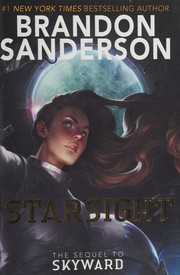
Starsight
Spensa Nightshade goes undercover aboard the Superiority space station Starsight to steal a hyperdrive, and finds a frightened bureaucracy where she expected…
2,568-word summary · 11 min read
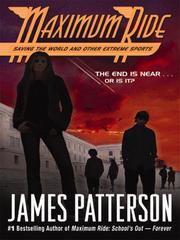
Saving the World and Other Extreme Sports
Max and the flock split in two to take down the lab behind their lives, one half in California and the other in Europe.
2,175-word summary · 10 min read
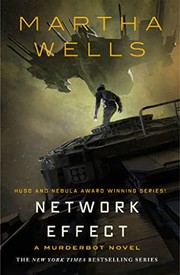
Network Effect
Murderbot's contract job turns into a rescue mission when a hijacked research ship and a colony of corrupted colonists appear.
2,256-word summary · 10 min read
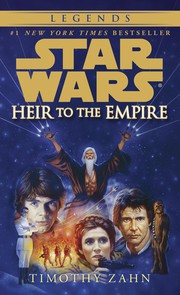
Heir to the Empire
Grand Admiral Thrawn returns from the Unknown Regions and outmaneuvers the New Republic while Luke, Leia, Han and smuggler Talon Karrde race him toward…
2,323-word summary · 10 min read

We Hunt the Flame
In a fractured Arabia-inspired world, a disguised huntress and a prince-assassin race to find a magic-restoring book and confront an ancient evil.
2,195-word summary · 10 min read

Stars Above: A Lunar Chronicles Collection
Nine Lunar Chronicles stories fill in the histories of Cinder, Wolf, Thorne, Cress, Winter, and Jacin, and end with a wedding after the war.
2,230-word summary · 10 min read
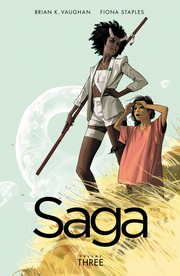
Saga, Volume 3
Marko, Alana, and Hazel hide on the planet Quietus with the reclusive author who inspired their romance, while assassins and a prince close in.
1,989-word summary · 9 min read
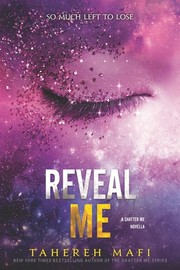
Reveal Me
A Shatter Me novella told by Kenji, set between Defy Me and Imagine Me, as the rebels learn Anderson has taken hostages and Juliette faces Emmaline.
2,098-word summary · 9 min read

Lore
Lore Perseous, the last of a hunted bloodline, is pulled back into the Agon when a wounded Athena offers her revenge against the god who killed her family.
2,188-word summary · 10 min read

Wither
In a future where women die at twenty, sixteen-year-old Rhine is sold as a bride to a wealthy stranger and plots an escape from a beautiful prison.
2,395-word summary · 11 min read
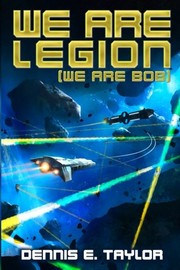
We Are Legion (We Are Bob)
A dead software engineer wakes up as a self-replicating space probe, clones himself into a squabbling fleet of Bobs, and tries to keep a ruined Earth alive.
2,357-word summary · 10 min read

Never Fade
Ruby, now a leader in the Children's League, must track down the boy whose memories she erased, because he holds the only proof of what caused the disease that…
2,188-word summary · 10 min read
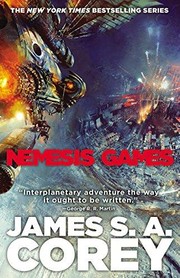
Nemesis Games
The Rocinante crew scatters across the solar system just as Marco Inaros and the Free Navy bombard Earth. The Expanse reaches its turning point.
2,506-word summary · 11 min read
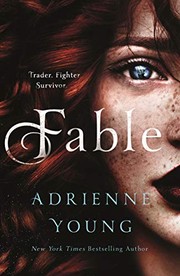
Fable
Abandoned on a lawless island at fourteen, Fable spends four years diving for gems to buy passage off it, straight into the cutthroat trade of the Narrows.
2,320-word summary · 10 min read

The Winner's Curse
An aristocratic girl buys a slave who is secretly a prince plotting rebellion.
2,124-word summary · 9 min read
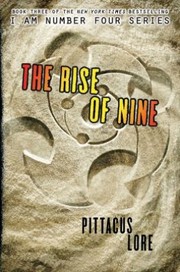
The Rise of Nine
John, Six and Nine race to India to find Eight before the Mogs strike.
2,321-word summary · 10 min read
The Iron Queen
Meghan faces the Iron King past while Ash pays a winter price.
2,548-word summary · 11 min read
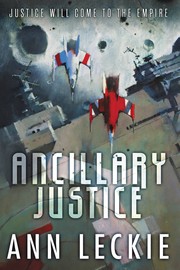
Ancillary Justice
A ship mind trapped in one human body hunts the emperor who betrayed her across frozen worlds.
2,595-word summary · 12 min read
A Winter's Promise
Ophelia reads objects and is sent to marry Thorn on a cold ark.
2,502-word summary · 11 min read