
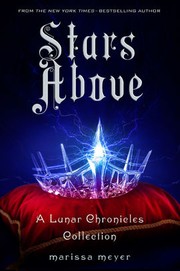
Stars Above: A Lunar Chronicles Collection
2,230-word summary 10 min read 369 pages in the book
- First published
- 2016
- Publisher
- Feiwel & Friends
- Pages
- 369
- ISBN
- 9781250091840
- Series
- The Lunar Chronicles (#4.5)
Reading options
What's inside (13 sections)
I read Stars Above after finishing Winter, which is the last book in the main Lunar Chronicles quartet. I was not ready to leave the world, and I suspected that a collection of prequels and epilogues would feel like scraps. It does not. Marissa Meyer published the collection in 2016 through Feiwel and Friends, and it runs 369 pages in the hardcover. It contains nine stories, five of which were new at the time, plus an excerpt from Heartless. The stories fill in the histories of characters the series treated as supporting players, and the final story gives the surviving cast something the main books could not: a wedding.
The collection is not a standalone. If you have not read the series, the emotional payoff will be muted. If you have, it is a reunion. Meyer writes with the same warmth and pace as the novels, and she is good at the small domestic details that make a futuristic world feel lived in. The stories are not all equally strong, but the best ones change how I read the series.
The arrangement is chronological by character history rather than by publication order. It starts with the oldest generation, moves through the childhoods of the main cast, and ends after the war. That structure gives the collection a shape. The early stories are about hiding and survival. The middle stories are about training and transformation. The final story is about celebration. It is a simple arc, but it works. By the time I reached the wedding, I had been reminded of everything the characters had survived to get there.
The Keeper
The first story follows Michelle Benoit, the woman who raised Scarlet and who, for a time, protected the supposedly dead Princess Selene. Two years after Logan Tanner entrusts Selene to her, Michelle is living on a farm, keeping a shotgun close, and trying to keep the child hidden from Lunar agents. Scarlet, still young, runs away from home and comes to live with her. Logan returns to complete Selene's necessary operations, but he is deteriorating because he has suppressed his Lunar gift and fears capture. Garan arrives to help. Michelle gives the princess the name Cinder, a name that suggests something that survives destruction and can become a source of hope.
The story is quiet and tense. It is about a woman who has taken on a dangerous responsibility and cannot fully explain it to the child she is raising. It also explains why Scarlet is the way she is: stubborn, practical, and fiercely loyal. The farm is not a refuge from the world. It is a hiding place, and hiding places are always temporary.
Glitches
"Glitches" begins shortly after Cinder's cyborg surgery. Cinder travels by train with Linh Garan to her new home in the Commonwealth. Adri, Pearl, and Peony are not yet the monsters and victims they become. Adri is suspicious. Pearl is cold. Peony is kind, imaginative, and curious. She befriends Cinder and introduces her to an abandoned, dismantled android. Cinder repairs the machine, discovering the mechanical aptitude that will define her later life, and restores Iko. The relationship with Peony gives Cinder a rare sense of connection. Then Garan reveals that he has contracted letumosis. Cinder cannot cry after hearing what amounts to a death sentence, and she concludes that something inside her must be malfunctioning, a glitch.
This is the best story in the collection. It takes the familiar Cinderella material and makes it specific. Cinder is not a servant because she is cruel. She is a servant because the family is grieving and afraid, and because she is the easiest person to blame. The story also shows how Cinder's mechanical skill is tied to her survival. She is a girl who fixes things, and in the process, herself.
The story is also about the limits of gratitude. Cinder is expected to be thankful for a home, even though the home is hostile. She is expected to be grateful for a life that has been forced on her. Meyer does not make her saintly. Cinder is angry, and the anger is justified. The scene where she cannot cry is not a sign that she is broken. It is a sign that she has learned to survive by shutting down. That detail makes the later Cinder, the one who fights back, feel earned.
The Queen's Army
"The Queen's Army" explains how Ze'ev becomes Wolf. He is taken from his family and forced into Levana's army. The story describes the physical modifications, the brutal conditioning, and the attempt to erase ordinary human feeling. Ze'ev struggles not to become the monster the regime wants him to be. His brother Ran remains an emotional link to his old life, even as Ze'ev is transformed into an Alpha and trained to command a pack of genetically altered soldiers.
The story is dark, and it is necessary. In the main series, Wolf is a love interest with a violent past. Here, the violence is not backstory. It is the plot. Meyer does not soften the regime. She shows how it breaks people and then uses them. The story also explains why Wolf is so loyal to Scarlet. She is the first person who sees him as a person rather than a weapon.
Carswell's Guide to Being Lucky
This is the lightest story in the collection. Thirteen-year-old Carswell Thorne is already a schemer. He wants to own a spaceship called the Rampion, and he is willing to swindle, hustle, and charm his way toward it. He has a robot cat named Boots. He asks a classmate named Kate Fallow for help with mathematics, and their interactions reveal a boy whose confidence is mostly performance. The story is funny and a little sad. Thorne is not a bad kid. He is a kid who has decided that the only way to survive is to be the smartest person in the room.
The story does not add much to the series, but it is enjoyable. It explains Thorne's relationship with money and his tendency to treat life as a con. It also gives him a childhood, which the main books do not. He is more than comic relief after reading this.
After Sunshine Passes By
Nine-year-old Crescent Moon, or Cress, dreams of space travel and life beyond her isolated existence. When Luna's authorities recognize her talent and assign her to spy on Earth, she interprets the mission as an opportunity. She does not understand the full cruelty of her situation. The story ends with her separated from ordinary human society, beginning the lonely surveillance existence that shapes her into the brilliant but sheltered hacker of the main series.
The story is short and sad. Cress is a child who wants to be useful, and the adults around her use that desire to imprison her. The final image of her alone in a satellite is more powerful than any action scene. It also makes her reunion with the crew in Cress feel like a rescue rather than a plot point.
The Princess and the Guard
This story follows Winter and Jacin from childhood. Winter is a princess who plays elaborate imaginary games with Jacin, her friend and palace guard. She is trained to use her Lunar gift, but she gradually recognizes that its power is manipulative and cruel. She chooses to stop using it, accepting the psychological damage and hallucinations that result. Levana's cruelty makes the decision dangerous. Jacin increasingly defines his life around protecting her.
The story explains Winter's scars and her refusal to become like her stepmother. It is also the darkest story in the collection. The content includes abuse, self-harm, and trauma. Meyer does not sensationalize it, but she does not look away. Winter's choice is not a simple act of rebellion. It is a sacrifice, and the story shows the cost.
The Little Android
"The Little Android" is a retelling of The Little Mermaid. Mech6.0 is an android who watches passengers board the starship Triton and feels abandoned despite having helped build it. After finding a dropped holographic card, she becomes fascinated by Wing Dataran, whose appearance resembles the boy pictured on it. When Dataran is injured in a crane accident, Mech6.0 saves him from an oil vat but damages herself. Facing dismantling, she seeks Linh Cinder's help and obtains a new body, adopting the identity Hoshi Star. She falls in love with Dataran, but he and Miko love each other. Watching them together during the launch of the Child of the Stars, Star accepts that she cannot have him and allows her power source to fail, imagining herself becoming part of the stars.
The story is beautiful and melancholy. It is also a little creepy, in the way that all stories about artificial beings who sacrifice themselves for humans are creepy. Star's love is real to her, but it is not reciprocal, and the story does not pretend otherwise. The ending is tragic, but it is also a choice. She decides what her life means.
The Mechanic
"The Mechanic" retells Cinder and Kai's first meeting from Kai's perspective. Kai is worried about his father, Queen Levana, Princess Selene, and the malfunctioning android Nainsi. He secretly leaves the palace to find the mechanic reputed to be able to repair her. He expects an established professional and discovers a teenage girl. Cinder's confidence, technical ability, and irreverent manner surprise him. Their conversation establishes the attraction and mutual curiosity that will grow throughout the series.
The story is a pleasure for fans. It is the same scene from the first book, but with Kai's interiority. He is a prince, but also a boy who is about to lose his father and who is trying to hold his country together. The story makes his later decisions more understandable.
Something Old, Something New
The final story takes place after the main conflict. Cinder travels with Iko to Scarlet's family farm for Scarlet and Wolf's wedding. The reunion brings together Cinder, Kai, Thorne, Cress, and the rest of the friends. Journalists make Scarlet uncomfortable and threaten the privacy of the ceremony. Wolf proposes an informal wedding to escape the media pressure, and the group helps create a joyful celebration. After Scarlet and Wolf exchange vows, Kai proposes to Cinder with his mother's ring. Cinder accepts. The collection ends with a wedding and a proposal, which is exactly what fans wanted.
The story is fan service, and it is good fan service. It gives the characters a moment of happiness after years of war. It also shows how they have changed. Cinder is no longer a mechanic hiding in a booth. She is a queen, or close to it, and she is still uncomfortable with attention. Kai is no longer a prince trying to prove himself. He is a man who knows what he wants. The wedding is not the point. The point is that they survived.
What works and what does not
The collection is uneven. "Glitches," "The Keeper," and "Something Old, Something New" are the strongest. "The Queen's Army" is important but grim. "Carswell's Guide to Being Lucky" is fun but slight. "The Little Android" is ambitious but feels disconnected from the main cast. Some stories add backstory without changing the characters' arcs. The BYU Children's Book and Media Review found the collection uneven and argued that short fiction is not Meyer's strongest form. I agree with the first part and disagree with the second. Meyer is good at short fiction when she has a clear emotional target. The problem is that some of these stories exist to fill gaps rather than to stand alone.
The prose is readable and fast. Meyer is good at dialogue and at the small details of futuristic life: portscreens, androids, the food on a spaceship, the way a queen enters a room. She is less good at endings. Several stories stop abruptly, as if the last page were lost. The collection also assumes a lot of prior knowledge. A new reader would be lost.
The bonus excerpt from Heartless is a strange inclusion. It has nothing to do with the Lunar Chronicles, and it interrupts the emotional arc of the collection. I understand why it is there. It is a preview of Meyer's next book, and publishers like previews. But it makes the volume feel less like a complete gift and more like a marketing package. If you are reading for the Lunar Chronicles, you can skip it without missing anything.
Who should read it
This is for fans of The Lunar Chronicles who are not ready to say goodbye. It is for readers who want to know how Wolf became a soldier, how Cinder got her name, and how Kai and Cinder finally got engaged. It is not for readers who have not read the series, and it is not for readers who want a standalone short story collection. The stories are connected, and the pleasure is in the connections.
I read Stars Above in two evenings, and I finished it with a smile. It is not a great book, but it is a generous one. It gives the characters the endings they earned, and it gives the readers a chance to spend a little more time in a world that was fun to visit. That is enough.
FAQ
Do I need to read The Lunar Chronicles before Stars Above?
Yes. The stories assume knowledge of the main quartet and resolve character arcs that begin in Cinder, Scarlet, Cress, and Winter.
Is Stars Above a novel?
No. It is a collection of nine stories set in the Lunar Chronicles world, plus an excerpt from Meyer's novel Heartless.
Do Cinder and Kai get engaged in Stars Above?
Yes. In the final story, after Scarlet and Wolf's wedding, Kai proposes to Cinder with his mother's ring and she accepts.
Similar books
More from The Lunar Chronicles first, then related titles.
Cinder
Cyborg mechanic Cinder discovers she is Lunar royalty while plague and Queen Levana threaten New Beijing.
3,553-word summary · 16 min read
Scarlet
Scarlet searches for her grandmother with Wolf while escaped Cinder fights Levana in the Lunar Chronicles sequel.
2,756-word summary · 12 min read
Cress
Imprisoned hacker Cress joins Cinder Scarlet Wolf Thorne to stop Levana's wedding to Kai.
2,534-word summary · 11 min read
Fairest
Queen Levana's rise from scarred princess to Lunar ruler fills the gap between Cress and Winter.
2,983-word summary · 13 min read
Winter
Scarred Princess Winter joins Cinder and her crew to stop Queen Levana's forced wedding and war between Luna and Earth.
3,179-word summary · 14 min read

Archenemies
Nova steals for the Anarchists while Adrian hides his Sentinel identity, and a serum that erases prodigy powers puts them both at risk.
2,485-word summary · 11 min read

Heartless
Cath Pinkerton wants a bakery with Mary Ann, not a crown, until secret love for Jest and Jabberwock attacks pull her toward becoming the Queen of Hearts.
2,968-word summary · 13 min read
Cruel Beauty
A girl raised to kill the demon prince who rules her cursed land instead falls in love with him, in a retelling that mixes Beauty and the Beast with Bluebeard…
2,669-word summary · 12 min read

The Rose & the Dagger
Shahrzad is pulled from her Caliph husband and left in a desert camp of rebels, needing to break his curse and end a war before it ends her.
2,520-word summary · 11 min read

Shadow Me
Kenji Kishimoto narrates for the first time as he joins Nazeera on a quiet mission after Restore Me, carrying painful secrets into Defy Me.
2,512-word summary · 11 min read
The Wrath and the Dawn
Shahrzad marries a king who executes each bride at dawn, hoping to stay alive through stories. A lush Arabian Nights retelling about grief, trust, and palace…
3,568-word summary · 16 min read
A Curse So Dark and Lonely
Pulled from Washington DC to Emberfall, Harper meets cursed Prince Rhen, who relives his eighteenth autumn until someone falls for him.
2,677-word summary · 12 min read
Renegades
Villain Nova infiltrates heroes while Adrian questions justice.
2,453-word summary · 11 min read

Vow of Thieves
Kazi and Jase return to Tor's Watch to find it occupied, and their marriage is tested by captivity, betrayal, and a war for the town of Hell's Mouth.
2,059-word summary · 9 min read
The Lost Sisters
Taryn Duarte writes a letter to her twin, Jude, explaining how she fell for Locke and why she stayed silent while he used them both.
1,914-word summary · 9 min read

Iron Widow
Wu Zetian enlists to avenge her sister, kills her pilot, and becomes an Iron Widow in a mecha Huaxia where the machines are built to kill women.
2,444-word summary · 11 min read

The Siren
Saved from a shipwreck in 1930, Kahlen becomes a siren who sings men to their deaths for the Ocean, until a boy in a college library makes her want a life she…
2,369-word summary · 11 min read

Carve the Mark
On a planet divided between conquered and conqueror, the tyrant's sister and a kidnapped oracle's son discover that their gifts make them useful to everyone…
2,340-word summary · 10 min read
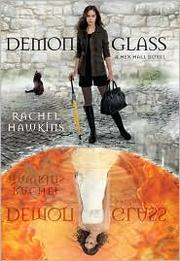
Demonglass
Sophie Mercer spends the summer at the Council's English estate, where two new demons, a suspicious host, and Archer's return complicate her plan to remove her…
2,771-word summary · 12 min read

Born at Midnight
Kylie Galen is sent to a camp for troubled teens and discovers it is a haven for vampires, werewolves, and witches, and that she may be something stranger…
2,310-word summary · 10 min read

We Hunt the Flame
In a fractured Arabia-inspired world, a disguised huntress and a prince-assassin race to find a magic-restoring book and confront an ancient evil.
2,195-word summary · 10 min read
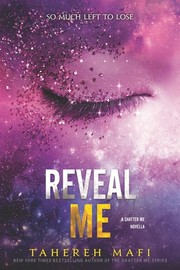
Reveal Me
A Shatter Me novella told by Kenji, set between Defy Me and Imagine Me, as the rebels learn Anderson has taken hostages and Juliette faces Emmaline.
2,098-word summary · 9 min read

Lore
Lore Perseous, the last of a hunted bloodline, is pulled back into the Agon when a wounded Athena offers her revenge against the god who killed her family.
2,188-word summary · 10 min read
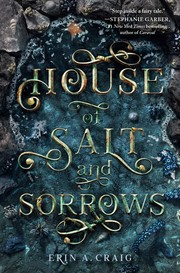
House of Salt and Sorrows
Annaleigh Thaumas investigates her sister's death in a cursed island manor where the balls are illusions and the sea god is always listening.
2,025-word summary · 9 min read
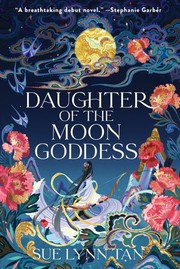
Daughter of the Moon Goddess
The daughter of Chang'e hides in the Celestial Court, trains as an archer, and risks everything to free her mother from the Emperor's punishment.
2,146-word summary · 10 min read
Cemetery Boys
A trans brujo in East Los Angeles summons the ghost of a boy who refuses to move on, and together they uncover a murder hidden beneath Día de los Muertos.
1,997-word summary · 9 min read
Blue Moon
Ever Bloom tries to save her immortal boyfriend, Damen, from a mysterious illness while a new student named Roman quietly takes control of her school and her…
1,998-word summary · 9 min read
An Enchantment of Ravens
Isobel, a mortal artist in the fairy town of Whimsy, paints a portrait of the autumn prince and falls in love with him, breaking the laws of her craft.
2,087-word summary · 9 min read