
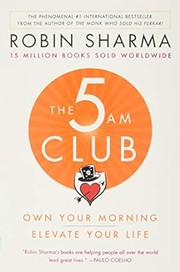
The 5 AM Club
2,205-word summary 10 min read 336 pages in the book
- First published
- 2018
- Publisher
- HarperCollins
- Pages
- 336
- ISBN
- 9781443456623
Reading options
What's inside (9 sections)
The 5 AM Club is a self-help book disguised as a novel, or a novel disguised as a self-help book, depending on how generous you are feeling. It has characters, dialogue, a private jet, and a billionaire mentor. It also has a formula, a set of rules, and a very clear promise: if you wake up at five in the morning and spend an hour on yourself, your life will improve. Robin Sharma is a former lawyer who became a motivational speaker and the author of The Monk Who Sold His Ferrari. He has been teaching the five o'clock habit for years. This book is his attempt to turn that habit into a story that people will remember.
The 5 AM Club was published in 2018 by HarperCollins. The edition I used runs 336 pages and carries the ISBN 9781443456623. The book is a bestseller, and it has a devoted following. It is also easy to make fun of. The characters are not characters so much as positions in an argument. The dialogue is full of slogans. The research is presented as settled when it is often contested. And the advice assumes a level of control over your mornings that many people do not have. None of that makes the book useless. It makes it a useful example of what self-help can do well and where it tends to go wrong.
A fable about a morning
The story begins with an unnamed entrepreneur who is thinking about killing herself. Her company has turned against her, her father died by suicide when she was eleven, and she has run out of ways to cope. She decides to attend a seminar by a famous speaker known as the Spellbinder as a last resort. At the seminar she meets an unnamed artist who is struggling with his creativity, and an older man named Stone Riley, who looks like he might be homeless but is wearing a very expensive watch.
The Spellbinder gives a speech about greatness and suffering. He is in his eighties, and he collapses on stage during the talk. The entrepreneur and the artist are shaken. Riley invites them to his private retreat on the island of Mauritius. They are suspicious, but the entrepreneur has nothing left to lose, and the artist wants to believe that his best work is still ahead of him. They go.
Riley is a billionaire. He made his fortune in business, and he learned the five o'clock routine from the Spellbinder. He is eccentric, energetic, and fond of dropping to the floor to do push-ups. He is also ill. The novel reveals that he had prostate cancer in his thirties and that he lost his wife, Vanessa, to an illness. He has spent years trying to pass on what he learned. The entrepreneur and the artist become his students.
The fable structure is not subtle. Riley is the wise mentor, the Spellbinder is the wise mentor's mentor, and the two young people are the readers who need to be convinced. The story exists to string the lessons together, and Sharma is not trying to write a realistic novel. The question is whether the lessons are good enough to justify the scaffolding. Some of them are.
Mauritius and the four empires
The first lessons take place in Mauritius. Riley talks about what he calls the four interior empires: mindset, heartset, healthset, and soulset. The terms are a little awkward, but the idea is straightforward. Personal development is not just about thinking better. It is also about emotional health, physical health, and a sense of meaning. A morning routine that only trains the mind is incomplete.
Riley also introduces the idea of the five o'clock club as a "mother of all routines." The first hour of the day, which he calls the victory hour, is the time when your willpower is strongest and the world is quietest. If you use that hour well, you set the tone for everything that follows. If you give it away to email and news and other people's demands, you spend the rest of the day reacting.
The book is careful to say that waking up early is not a moral achievement. The point is not to be awake at five for its own sake. The point is to have a block of time that belongs to you, before the day begins, when you can work on the things that matter. That distinction is important, and it is easy to lose in the hype around the book.
The habit installation protocol is a sixty-six-day process with three stages: deconstruction, installation, and integration. Deconstruction means breaking the old patterns. Installation means practicing the new routine until it becomes familiar. Integration means making it part of your identity. Sharma uses the image of a space shuttle burning more fuel in the first minute after liftoff than during an entire orbit. The point is that beginnings are hard, and that the difficulty is not evidence that you are doing it wrong.
Rome and the 20/20/20 formula
The group travels to Rome, and Riley introduces the book's most famous idea. The victory hour is divided into three twenty-minute blocks, which Sharma calls the 20/20/20 formula. The first twenty minutes are for movement. You exercise hard enough to sweat. The second twenty minutes are for reflection. You meditate, pray, journal, or sit in silence. The third twenty minutes are for growth. You read, listen to a podcast, or study something that makes you better at your work.
The formula is simple, which is part of its appeal. It gives the morning a shape. It also covers three things that most people neglect: the body, the mind, and the soul. Sharma argues that exercise in the morning lowers cortisol and releases brain-derived neurotrophic factor, that reflection produces what he calls residual wisdom, and that learning before the day begins compounds over time. Some of the science is oversimplified, and the book presents correlation as if it were causation. The basic advice is still sound. Moving, reflecting, and learning are good ways to spend an hour.
The Rome chapters also include practical advice about waking up. Keep technology out of the bedroom. Use an old-fashioned alarm clock. Set the clock ahead by half an hour and set the alarm for five-thirty, so that you trick yourself into waking up earlier than you think. Prepare your clothes and your workspace the night before. Go to bed early enough to get seven and a half hours of sleep. None of this is revolutionary, and much of it is borrowed from other habit books. It is also the kind of advice that works only if you actually do it.
Riley's health is failing throughout the Rome section. He takes pills, winces, and has coughing fits. The novel is setting up his death, and the effect is maudlin. It also gives the lessons a sense of urgency. Riley knows he does not have much time, and he wants to pass on what he knows. The entrepreneur and the artist are not just students. They are inheritors.
The ten tactics
The second half of the book expands the morning routine into a set of tactics for the rest of the day. Sharma calls them the ten tactics of lifelong genius. They are a mixed bag, but several are useful.
The tight bubble of total focus is a period of deep work with no interruptions. The 90/90/1 rule says that for ninety days, you should spend the first ninety minutes of your workday on the one activity that will make the biggest difference. The 60/10 method says to work for sixty minutes and then take a ten-minute break. The daily five is a short list of five small actions that move you toward your goals. The second wind workout is a second exercise session at the end of the day. The two massage protocol recommends two ninety-minute deep-tissue massages per week. Traffic university means using your commute to learn. The dream team technique means surrounding yourself with people who are better than you. The weekly design system is a planning ritual. The sixty-minute student is a commitment to daily learning.
Some of these are excellent. The 90/90/1 rule is a clear way to prioritize. The tight bubble is a practical response to distraction. The 60/10 method is a reasonable rhythm for knowledge work. Others are less accessible. Two ninety-minute massages a week is not a realistic prescription for most people, and presenting it as a tactic for elite performance makes the book feel out of touch. The same is true of the private jets, the island retreat, and the billionaire mentor. The advice is wrapped in a fantasy of wealth that many readers will never experience.
The book's treatment of sleep is better than its treatment of massage. Sharma has the Spellbinder explain that sleep is not a luxury and that seven and a half hours is the target. He recommends a pre-sleep ritual, no screens before bed, and a cool, dark room. This is standard advice, but it is important, and it balances the book's emphasis on waking up early. You cannot wake up at five and function well if you are going to bed at midnight. The book knows that, even if some of its readers will ignore it.
Death and the epilogue
The final sections take the group to South Africa, where Riley talks about legacy and mortality. The trip is framed as a visit to the dead. Riley is dying, and he knows it. He wants the entrepreneur and the artist to understand that the morning routine is not an end in itself. It is a way to build a life that matters, and a life that matters is one that is useful to other people.
The epilogue is set five years later. The entrepreneur and the artist have built successful lives. Riley has died, five months after the final lesson. The Spellbinder is still alive and still giving seminars. The novel ends with the suggestion that the lessons have been passed on, and that the reader is now part of the chain.
The ending is sentimental, and it works if you are willing to meet the book on its own terms. It also reveals the book's real genre. The 5 AM Club is not a novel. It is a parable, and parables are designed to be remembered rather than analyzed. The characters are flat because they are examples. The dialogue is preachy because the book is a sermon. The question is whether the sermon is worth hearing.
What works and what does not
The best thing about The 5 AM Club is the core routine. Waking up an hour earlier and spending that hour on exercise, reflection, and learning is a good idea. It is not magic, and it will not solve every problem, but it is a reliable way to become a slightly better version of yourself. The book's enthusiasm is genuine, and its structure makes the advice easy to remember.
The worst thing is the padding. The fable is too long, the characters are thin, and the dialogue is full of lines that sound like they were written for a motivational poster. The research is presented selectively. The book cites studies when they support the routine and ignores the fact that many of the claims about cortisol, BDNF, and morning productivity are more complicated than they appear. The two-massage protocol and the private-jet lifestyle are not realistic for most readers, and they make the book feel like it was written for people who already have everything.
The book also ignores structural constraints. Not everyone can control their mornings. Parents with young children, people working two jobs, people with chronic illness, and people with depression do not always have the luxury of an uninterrupted hour at five in the morning. Sharma acknowledges that life is hard, but he does not engage with the ways that hardship makes his advice difficult to follow. The result is a book that can inspire people who are already close to the routine and frustrate people who are not.
Who should read it
The 5 AM Club is for readers who like their self-help in story form and who want a simple, memorable routine. It is not for readers who want rigorous science, complex characters, or a realistic portrait of how most people live. If you can accept the fable for what it is, the book has real value. If you cannot, the slogans will wear you down.
I read it in a few sittings and came away with two things: a renewed interest in waking up early, and a frustration with how much of the book is filler. The 20/20/20 formula is worth trying. The ten tactics are worth skimming. The story is forgettable. That is not a bad ratio for a self-help book. It is also not a great one. The 5 AM Club is a useful tool wrapped in a mediocre novel, and the tool is the part that lasts.
FAQ
What is the 20/20/20 formula in The 5 AM Club?
It is a way of dividing the first hour of the day into twenty minutes of exercise, twenty minutes of reflection or meditation, and twenty minutes of learning or personal growth.
Do I have to wake up at exactly 5 AM to follow the book?
No. The book uses 5 AM as the ideal, but the point is to protect an uninterrupted hour before the demands of the day begin.
Is The 5 AM Club fiction or nonfiction?
It is a self-help book written as a fable, with fictional characters and a story designed to teach a morning routine.
Similar books
Don't Sweat the Small Stuff ... and It's All Small Stuff: Simple Ways to Keep the Little Things from Taking Over Your Life
Richard Carlson’s 1997 bestseller offers one hundred short chapters on lowering the volume on daily irritations, and it is more pragmatic than its title…
2,502-word summary · 11 min read
The Magic of Thinking Big
Schwartz's 1959 self-help classic argues that success follows from the size of your thinking, supported by sales anecdotes, vocabulary drills and goal setting.
2,579-word summary · 11 min read
How to Stop Worrying and Start Living
Carnegie offers day-tight routines for worry built from interviews and worker stories.
2,505-word summary · 11 min read
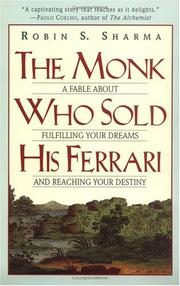
The Monk Who Sold His Ferrari
A burned-out lawyer learns seven Sivana virtues in the Himalayas, from mind gardens to purpose, time, and service.
2,881-word summary · 13 min read
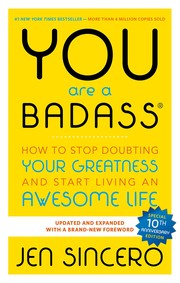
You Are a Badass
Broke writer to coach shares money beliefs, rate raises, and daily actions with humor and homework.
2,000-word summary · 9 min read
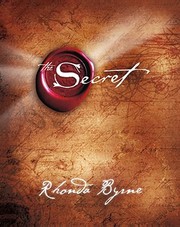
The Secret
Byrne argues like attracts like and teaches ask, believe, and receive for money, health, and love.
3,228-word summary · 14 min read

The 7 Habits of Highly Effective People
Covey's famous framework for living by principle: seven habits that move from private victory to working well with others.
2,259-word summary · 10 min read
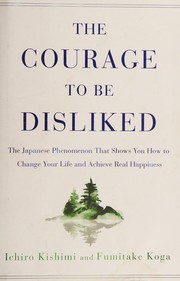
The Courage to Be Disliked: The Japanese Phenomenon That Shows You How to Change Your Life and Achieve Real Happiness
A philosopher and an angry young man argue over five nights about Adlerian psychology, trauma, approval, and the freedom to be disliked.
2,054-word summary · 9 min read
Four Thousand Weeks: Time Management for Mortals
Oliver Burkeman turns the whole productivity project on its head, arguing that a human lifespan of roughly four thousand weeks is not a problem to optimize…
2,447-word summary · 11 min read
The War of Art
Pressfield names Resistance and urges daily professional work.
2,565-word summary · 11 min read
Essentialism
McKeown argues for less but better: discern the vital few, refuse the trivial many, and use buffers, small wins, and steady routines so key work gets done well…
2,421-word summary · 11 min read
Braving the Wilderness: The quest for true belonging and the courage to stand alone
Belonging to yourself first lets you stand alone and still stay close to others.
2,004-word summary · 9 min read
The Power of Positive Thinking
Peale's 1952 guide to faith, affirmations, picturing success, prayer, and worry control, retold chapter by chapter with stories, limits, and small daily habits…
2,742-word summary · 12 min read
Grit
A psychologist argues sustained passion plus perseverance beats raw talent, and shows how grit can be grown.
2,432-word summary · 11 min read
The One Minute Manager
A young seeker learns three one minute habits from a plainspoken boss: clear goals, quick praise, and fast fair correction.
2,997-word summary · 13 min read
Make Your Bed: Little Things That Can Change Your Life...And Maybe the World
SEAL lessons from bed making to never ringing the bell, from McRaven's 2014 Texas speech and 144 page book.
2,974-word summary · 13 min read
Getting Things Done: The Art of Stress-Free Productivity
Capture all, clarify next moves, sort by context, review weekly, and engage calmly like water.
2,030-word summary · 9 min read
The Happiness Project
Gretchen Rubin spends a year testing monthly resolutions on energy, marriage, work, parenting, and play, tracking small habits to build a happier ordinary…
3,516-word summary · 16 min read
The Gifts of Imperfection
Shame research turned into ten guideposts for dropping perfectionism and living with courage and connection.
2,799-word summary · 12 min read
12 Rules for Life
Twelve essays on responsibility from posture to truth to petting cats.
2,045-word summary · 9 min read

Girl, Wash Your Face
Twenty lies, twenty stories, twenty small habits on body, approval, motherhood, faith, and work.
1,995-word summary · 9 min read
Can't Hurt Me
Abused kid to SEAL to ultrarunner shares mirror, counting, and crew with warnings to adapt.
2,065-word summary · 9 min read
The Purpose Driven Life
Rick Warren's 40-day guide to Christian purpose, from worship and fellowship to growth, service and mission.
2,846-word summary · 13 min read
The 4-Hour Workweek
Ferriss's 2007 manual for escaping the nine to five: define the dream, cut fake work, automate a small income, and travel now.
2,986-word summary · 13 min read
Think and Grow Rich
Hill teaches desire, faith and autosuggestion, distilling lessons from Carnegie interviews into thirteen principles for success.
2,458-word summary · 11 min read
The Four Agreements
Don Miguel Ruiz offers four Toltec agreements for personal freedom: impeccable word, detachment, curiosity, and effort.
2,289-word summary · 10 min read
The Power of Habit
Why we do what we do: the cue routine reward loop, keystone habits, and how companies and movements use the same science, from toothpaste to the bus boycott.
2,207-word summary · 10 min read
The Subtle Art of Not Giving a F*ck
Blogger Mark Manson argues for fewer cares held better, through suffering, values, failure and saying no, with raw stories.
2,020-word summary · 9 min read
Atomic Habits
A practical walkthrough of Atomic Habits: why tiny changes compound, how identity shapes behavior, and the four laws Clear uses to build good habits and break…
2,170-word summary · 10 min read
The E-Myth Revisited
Gerber argues that most small businesses are run by technicians who own a job rather than a business, and that the fix is a system that runs without them.
2,169-word summary · 10 min read