
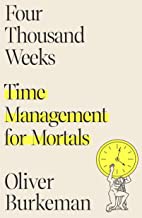
Four Thousand Weeks: Time Management for Mortals
2,447-word summary 11 min read 288 pages in the book
- First published
- 2021
- Publisher
- Farrar, Straus and Giroux
- Pages
- 288
- ISBN
- 9780374159122
Reading options
What's inside (11 sections)
- Productivity as a way of not facing the music
- The limits, and why they are the good news
- The attention economy, and the war you did not start
- The present, and the problem of living in it
- The tyranny of the checklist
- The book's own style, which is part of the argument
- What it does not do
- The argument about death
- Where it lands
- Key takeaways
- FAQ
The title is the argument, and Burkeman puts it in the title on purpose. If you live to be eighty, you will get roughly four thousand weeks. Four thousand. He says he arrived at the number by multiplying eighty by fifty-two, and that when he first wrote it down he had to sit down, because the figure made something he had always known abstract suddenly concrete. You do not have time to do everything. You barely have time to do a few things. And yet a great deal of modern life is organized around the implicit promise that if you find the right system, you eventually will get to everything.
I picked this up in the middle of a stretch where I had become very good at managing my tasks and no better at feeling caught up than I had been five years earlier. That is the exact condition this book addresses, which is either a coincidence or a sign that the publisher's marketing knows what it is doing. Either way, the book turned out to be less a set of techniques than a sustained argument that the techniques are, in a specific sense, the problem.
Productivity as a way of not facing the music
Burkeman's central move is a diagnosis. He argues that the modern obsession with productivity, the apps, the morning routines, the optimizing, is not really about getting things done. It is about managing the anxiety that comes from being finite. As long as you are tuning your system, you can maintain the feeling that one day you will reach a state of having caught up, of having cleared the decks, and that life can properly begin then. The catch is that this state is unreachable, and the belief that it is reachable is what keeps the anxiety simmering.
He calls this the feeling of being on permanent standby, and the phrase fits. You are waiting for the moment when you can finally give your full attention to what matters, and that moment is always scheduled for later, because the backlog of things that also demand attention is structurally infinite. There is no system that will empty it. The inputs are effectively unlimited and you are not.
This rang true enough to be slightly insulting, which is usually a sign a book has found something real. I have spent an enormous amount of energy on the machinery of organization, and Burkeman's point is that much of that energy is better understood as a form of avoidance. The person building a second brain is, at least sometimes, a person who does not want to face the fact that they must choose, and that every choice is a loss.
The limits, and why they are the good news
The strange twist of the book is that its conclusion is not despair but relief. If you accept that you will never get to everything, the pressure to organize your way out of finitude stops being necessary. You are freed to simply decide what to do now, without needing the decision to be optimal, and without needing to believe it is a step toward some future state of completeness.
Burkeman is careful to distinguish this from giving up. Accepting finitude is not the same as refusing to commit, and he argues the opposite, that people who accept their limits make stronger commitments than people who are still holding out for a better arrangement. The person who believes they will eventually fit everything in has no reason to sacrifice anything now. The person who knows they will not fit everything in has to choose, and choosing is what gives a life its shape.
There is a philosophical lineage here that the book draws on explicitly, mostly from the existentialists and from a certain strand of Christian and Buddhist thought about impermanence. Burkeman is not a philosopher and does not pretend to be one, but he reads widely and the synthesis is his own. What he borrows is the insistence that death is not a morbid subject but a structuring one, and that a life that has not reckoned with its own end is a life organized around a fantasy.
The attention economy, and the war you did not start
The most concrete section of the book is the one on attention, where Burkeman moves from philosophy to a fairly clear-eyed description of the material conditions. He invokes Herbert Simon, who saw coming in 1971 that the wealth of information would create a poverty of attention, and treats that observation as the founding document of the present situation.
His argument is that we are finite creatures confronted with effectively infinite claims on our focus, and that this is not a fair fight. No amount of discipline resolves a mismatch of that magnitude. You can get better at resisting, and he offers some counsel for doing so, but the fundamental asymmetry remains, and blaming yourself for losing it is like blaming yourself for getting tired.
This framing was genuinely useful to me. The sense that I was failing at focus, that other people had some quality of attention I lacked, was doing a lot of quiet damage, and Burkeman's reframe, that the game is rigged and the appropriate response is structural rather than moral, took some of the shame out of it. You cannot win this by trying harder. You can only decide, deliberately, what you are willing to lose.
The advice that follows is modest and mostly unoriginal, which is a strength rather than a weakness here. Decide in advance what you will let go. Accept that most of the emails will not be answered. Let the backlog be a backlog. None of this is novel, but delivered after the argument about finitude it lands differently, as a consequence rather than a trick.
The present, and the problem of living in it
Another recurring theme is the strange human habit of treating the present as preparation. Burkeman gives this the name the waiting room of life, and describes how reliably we defer our attention to a future that, when it arrives, turns out to contain its own backlog and its own deferrals. The promotion will free you up. The holiday will be the time you finally read the thing. The weekend will be when you get to it. It never is, because the structure does not change.
He is interested in what this does to experience. If you are permanently in transit, you are not anywhere, and a life of permanent transit is not a life. The book's quieter pages make the case for something like presence, and while the word has been worn smooth by a certain kind of writing, Burkeman earns it by connecting it to the argument about limits. You pay attention to what is in front of you because there is not enough time to pay attention to everything, so the attention you have is, in a real sense, the whole of your life.
There is a section on the phenomenon of becoming absorbed, drawn partly from the psychologist Mihaly Csikszentmihalyi and the idea of flow, that I found the most practically useful in the book. Burkeman notes that the activities we find most meaningful are usually the ones where we stop watching the clock, and that this is not a coincidence. The self that monitors time is the self that is anxious about finitude, and when that self goes quiet, something better takes its place.
The tyranny of the checklist
Burkeman has a sharp eye for the specific pathologies that productivity culture produces, and his account of the inbox is the best writing on the subject I have encountered. He describes the fantasy of reaching inbox zero, and then dismantles it by pointing out that the inbox is not a to-do list waiting to be cleared but an intake valve that will never stop delivering. Reaching zero is not an achievement. It is a temporary state produced by the arrival of no new mail, and it says nothing about whether you did anything worthwhile.
He extends this to the to-do list itself, and here his critique is more pointed. A to-do list that contains only tasks you feel able to do will, over time, crowd out the work that actually matters, because the work that matters is rarely easy to convert into a task with a checkbox. It is diffuse, ambitious, and uncomfortable, and it loses every competition with the pleasantly executable. His suggestion is to pick a small number of things that genuinely matter and protect them from the list rather than working down it, which sounds obvious and is almost never done.
I found this section worth the price of the book on its own, partly because it named something I had been doing for years without seeing it. The satisfaction of completing tasks is real and it is also, in large quantities, a way of avoiding the harder question of whether the tasks were the right ones.
The book's own style, which is part of the argument
Burkeman wrote a column for The Guardian for years called Notes from a Failure, and that self-deprecating habit survives into the book. He is candid throughout about his own relapses into the productivity mindset, and about the fact that writing a book against optimization did not stop him from optimizing. This candor is not decorative. It is the book's method, because a reader who was given a clean system to replace the old one would simply have moved the problem.
The prose is light and frequently funny, which matters in a book about a subject that could easily become funereal. Burkeman is good at the deflating aside, and he uses humor to keep the argument from tipping into sermon. There are passages where the register slips toward the confessional, and a reader allergic to that may find them excessive, but I did not. The book is making a case that our private anxieties about time are shared and structural, and the personal register is doing that work.
The structure is loose, which suits the material but will frustrate anyone hoping for a manual. The chapters circle the same insight from different angles, and there is considerable overlap between them. This is either a flaw or a deliberate echo of the book's theme, depending on your mood, and I found myself mostly forgiving it.
What it does not do
The book's limitations are worth stating plainly because they are real. It is addressed to a reader with considerable privilege, someone whose problem is that they have too many worthwhile options rather than too few, and it does not acknowledge this much. The person working three jobs to keep the lights on is not in a waiting room. They are in a fire. Burkeman's counsel to accept your limits and choose what matters assumes you have meaningful choices to make, and that assumption is not universal.
There is also a gendered dimension that goes unexamined. The person doing the unpaid labor of a household, the childcare and the eldercare and the emotional management, has less control over their attention than the book's implied reader, and the advice to accept finitude and commit to what matters can sound a little breezy from inside that life. This is not a fatal objection, but the silence is noticeable.
The other gap is practical. A reader who finishes the book wanting to know what to do on Monday morning will find less than they hoped. The book is diagnosis more than treatment, and while the diagnosis is excellent, the treatments it offers are mostly variations on accept that you cannot have it all, which is a truth rather than a technique.
The argument about death
The book's deepest layer, and the one I expect divides readers most, is its treatment of mortality. Burkeman draws on the existentialist tradition, particularly Heidegger's notion of being-toward-death, though he reaches it through more readable sources, and argues that awareness of death is not a source of gloom but the thing that makes a finite life vivid.
His reasoning is that if you had unlimited time, nothing would need to be done now, and every deferral would be costless. It is precisely because time runs out that choices matter. The person who postpones the important work in favor of the urgent work is making a bet that there will be time later, and the bet has a known answer. This is not a new thought, but Burkeman makes it feel urgent rather than academic.
He is careful not to be grim about it. The tone is closer to cheerful than to somber, and he suggests more than once that the appropriate response to finitude is gratitude rather than panic. The weeks are few, and they are also a gift, and the fact that they end is what makes them matter. This could have been saccharine. In his hands it is not, because the argument has been earned over two hundred pages.
Where it lands
I finished Four Thousand Weeks and then did something unusual, which was to stop making lists for a few days. Not as a principled stand, exactly, but because the book had made the activity feel slightly absurd, like polishing the windows of a house that is on fire. That feeling has faded, and I make lists again, but I make them differently now, shorter and with more room in them for the things that do not fit into boxes.
The book's real achievement is that it changes the question. Instead of asking how to get more done, it asks what you are willing to not do, and it insists that the second question is the one that actually shapes a life. That reframing has stayed with me longer than any specific piece of advice, and it has made me more forgiving of my own inefficiency, which turns out to be a byproduct of being a person rather than a failing to be corrected.
If there is a single sentence worth stealing, it is Burkeman's observation that the average human lifespan is obscenely, terrifyingly short, and that you will never get to read all the great books or see all the great films or meet all the people you would like to meet. That is not a reason to despair. It is a reason to stop pretending you are going to fit it all in, and to start deciding what you are actually going to do with the four thousand weeks you have been given.
FAQ
Is Four Thousand Weeks a practical productivity book?
Not in the usual sense. It is a philosophical argument against productivity culture, and while it offers stances to adopt, it deliberately avoids giving you a scheduling system to follow.
Who is Four Thousand Weeks for?
People who feel behind no matter how much they get done. It is aimed at readers who have already tried the productivity apps and found that the feeling of overload never actually goes away.
What does Burkeman mean by the waiting room of life?
It is his term for treating the present as a rehearsal for some future moment when you will finally be on top of things. He argues that future never arrives, because the backlog is structural.
Similar books
The Courage to Be Disliked: The Japanese Phenomenon That Shows You How to Change Your Life and Achieve Real Happiness
A philosopher and an angry young man argue over five nights about Adlerian psychology, trauma, approval, and the freedom to be disliked.
2,054-word summary · 9 min read
Don't Sweat the Small Stuff ... and It's All Small Stuff: Simple Ways to Keep the Little Things from Taking Over Your Life
Richard Carlson’s 1997 bestseller offers one hundred short chapters on lowering the volume on daily irritations, and it is more pragmatic than its title…
2,502-word summary · 11 min read
The Road Less Traveled: A New Psychology of Love, Traditional Values and Spiritual Growth
M. Scott Peck argues that maturity begins with accepting difficulty, then builds discipline, love, and spiritual growth through honest, often painful work.
2,200-word summary · 10 min read
Braving the Wilderness: The quest for true belonging and the courage to stand alone
Belonging to yourself first lets you stand alone and still stay close to others.
2,004-word summary · 9 min read

The Untethered Soul
Singer names the noisy inner voice and shows how watching thoughts, loosening old hurt, and keeping the heart open through surrender can ease daily suffering…
2,752-word summary · 12 min read
The Art of Happiness
The Dalai Lama and psychiatrist Howard Cutler link lasting happiness to training the mind, human warmth, compassion, and basic spiritual values for daily life.
3,394-word summary · 15 min read
The Gifts of Imperfection
Shame research turned into ten guideposts for dropping perfectionism and living with courage and connection.
2,799-word summary · 12 min read
A New Earth
Tolle maps ego pain and shows how presence can loosen roles, thoughts, and suffering.
1,909-word summary · 8 min read
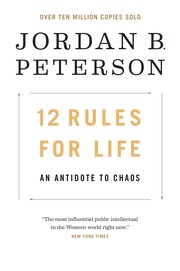
12 Rules for Life
Twelve essays on responsibility from posture to truth to petting cats.
2,045-word summary · 9 min read
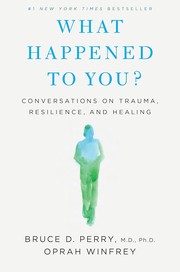
What Happened to You?
Oprah Winfrey and psychiatrist Bruce Perry explain how early experience shapes the brain, and why asking what happened to someone works better than asking what…
2,238-word summary · 10 min read
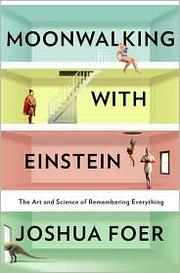
Moonwalking with Einstein: The Art and Science of Remembering Everything
A journalist spends a year training for the U.S. Memory Championship and discovers that extraordinary memory is mostly technique, attention, and a lot of…
2,027-word summary · 9 min read
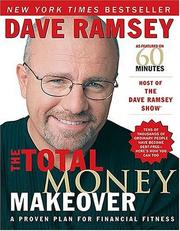
The Total Money Makeover: A Proven Plan for Financial Fitness
Dave Ramsey lays out seven Baby Steps, from a $1,000 starter fund to a paid-off house, with the debt snowball at the center.
2,663-word summary · 12 min read
Made to Stick: Why Some Ideas Survive and Others Die
The Heath brothers break down why some ideas vanish on contact while others lodge in memory, tracing six traits that make a message stick.
2,527-word summary · 11 min read

Attached
A psychiatrist and a psychologist explain adult attachment styles and show how anxious, avoidant, and secure patterns shape dating, conflict, and the search…
2,157-word summary · 10 min read
All About Love: New Visions
bell hooks borrows a definition of love as an action rather than a feeling, then spends thirteen chapters showing how hard it is to practice.
2,385-word summary · 11 min read
How to Stop Worrying and Start Living
Carnegie offers day-tight routines for worry built from interviews and worker stories.
2,505-word summary · 11 min read
Dare to Lead
Research on courage shows how leaders build trust through vulnerability and clear values.
2,442-word summary · 11 min read
10% Happier
An ABC newsman panics on air, then finds meditation without losing his edge.
2,590-word summary · 12 min read
The Black Swan
Taleb argues rare shocks shape history more than models admit, and urges safer exposure over prediction.
2,588-word summary · 12 min read
Essentialism
McKeown argues for less but better: discern the vital few, refuse the trivial many, and use buffers, small wins, and steady routines so key work gets done well…
2,421-word summary · 11 min read
Grit
A psychologist argues sustained passion plus perseverance beats raw talent, and shows how grit can be grown.
2,432-word summary · 11 min read
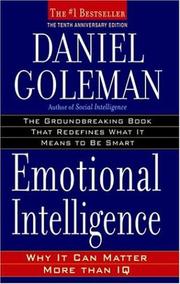
Emotional Intelligence
Goleman argues self awareness and empathy shape success more than IQ alone.
2,026-word summary · 9 min read
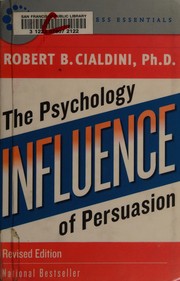
Influence: The Psychology of Persuasion
Six levers plus unity explain why people say yes, learned undercover in salesrooms and labs.
2,030-word summary · 9 min read
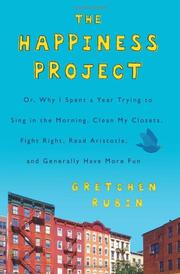
The Happiness Project
Gretchen Rubin spends a year testing monthly resolutions on energy, marriage, work, parenting, and play, tracking small habits to build a happier ordinary…
3,516-word summary · 16 min read
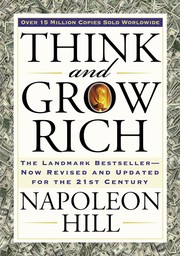
Think and Grow Rich
Hill teaches desire, faith and autosuggestion, distilling lessons from Carnegie interviews into thirteen principles for success.
2,458-word summary · 11 min read
Maybe You Should Talk to Someone
Therapist Lori Gottlieb counsels John, Julie and Rita while seeing her own therapist Wendell after a breakup.
2,234-word summary · 10 min read
The Four Agreements
Don Miguel Ruiz offers four Toltec agreements for personal freedom: impeccable word, detachment, curiosity, and effort.
2,289-word summary · 10 min read
Quiet
Cain traces the Extrovert Ideal from Harvard Business School to open offices and defends the power of quiet.
2,898-word summary · 13 min read
The Power of Habit
Why we do what we do: the cue routine reward loop, keystone habits, and how companies and movements use the same science, from toothpaste to the bus boycott.
2,207-word summary · 10 min read
The Subtle Art of Not Giving a F*ck
Blogger Mark Manson argues for fewer cares held better, through suffering, values, failure and saying no, with raw stories.
2,020-word summary · 9 min read