
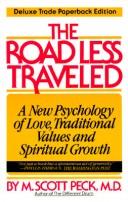
The Road Less Traveled: A New Psychology of Love, Traditional Values and Spiritual Growth
2,200-word summary 10 min read 312 pages in the book
- First published
- 1978
- Publisher
- Simon & Schuster
- Pages
- 312
- ISBN
- 9780671240868
Reading options
What's inside (8 sections)
I bought The Road Less Traveled at an airport bookstore because I wanted something to read on a flight and because the title sounded like a promise. I had heard it called a self-help classic, which made me suspicious. I am not a big reader of self-help. What I found instead was a book by a psychiatrist who had spent years listening to people describe their own suffering, and who had decided that the work of growing up is not a trick or a technique. It is a practice. The book is uneven, dated in places, and much stranger than its reputation. It is also full of lines that have stayed with me for years.
The famous opening is three words: "Life is difficult." Peck says that once we truly understand and accept that fact, it ceases to matter in the same way. The problem is not that life is hard. The problem is that we spend enormous energy pretending it should be easy, or that our particular difficulty is an outrage the universe should fix. That insight is not original. Buddhists said it first, and every stoic said it too. What Peck adds is a clinician's attention to the ways people avoid the truth: by blaming others, by staying busy, by choosing partners who confirm their worst fears, by refusing to revise the maps they use to navigate the world.
Discipline
The first section is about discipline, which Peck treats as the set of tools that allows a person to face problems rather than escape them. He has four main tools: delaying gratification, accepting responsibility, dedicating oneself to truth, and balancing. None of them are glamorous. Delaying gratification means doing the difficult thing first and the pleasant thing later, even when no one is watching. Accepting responsibility means recognizing that you are the one who has to act, even if someone else caused the mess. Dedication to truth means being willing to change your mind when evidence demands it. Balancing means holding two truths at once without collapsing into one.
Peck is good on the stories people tell themselves. He describes a patient who cannot leave a bad marriage because she is waiting for her partner to change, and another who cannot take a job because he is afraid of failing. He calls the maps people use to understand reality "outdated" when they no longer fit. Transference, in his telling, is the habit of responding to a new person as if they were an old one, of seeing a boss where there is a father, or a lover where there is a mother. The map was accurate once. Now it is a wall.
The chapter on the "sins of the father" is one of the book's most humane passages. Peck argues that many psychological difficulties are inherited, not in a genetic sense, but in the sense that families pass down ways of seeing the world. He distinguishes neurosis from character disorder. The neurotic person takes too much responsibility and feels guilty for everything. The person with a character disorder takes too little and blames the world. Both are ways of avoiding the truth, but they look opposite. That distinction helped me understand people in my own life, including myself. I am more likely to over-blame myself than to under-blame myself, and Peck's description of that habit made me wince in recognition.
He also writes about depression as a healthy signal. That sounds absurd until you read the argument. Depression can be the experience of a map breaking, of an old way of life no longer working. It hurts because something is dying. If you can stay with it rather than numb it, you may come out the other side with a more honest life. Peck does not romanticize depression. He is clear that it can be dangerous and that some people need medication and professional help. But he refuses to treat all pain as a malfunction. Some pain is information.
The style takes getting used to. Peck moves between case history, philosophical argument, and personal confession without much warning. One page he is describing a patient's dream, the next he is talking about the nature of evil. The book was written in the late nineteen seventies, and it has the confidence of a man who believes he has found something important. Sometimes that confidence is inspiring. Sometimes it is irritating. He repeats himself, and he loves a neat formulation. But the repetition is part of the book's method. Peck wants the reader to internalize a few difficult ideas, and he is willing to say them more than once.
What love is not
The second section is about love, and it is the part that made the book famous. Peck defines love as "the will to extend one's self for the purpose of nurturing one's own or another's spiritual growth." That definition is awkward, and he spends many pages unpacking it. The key word is will. Love is not a feeling that happens to you. It is a decision you make and keep making, often when the feeling has gone quiet.
He spends a lot of time on what love is not. It is not falling in love, which he calls a temporary collapse of boundaries. Falling in love is wonderful, but it is not sustainable, and it is not a foundation for a marriage. It is a state of ego dissolution that makes two people feel whole, and then it fades, and the real work begins. Love is not dependency, either. A dependent person needs the other person to feel complete, which is not the same as caring about their growth. Love is not self-sacrifice, at least not the kind that makes a person resentful and then calls the resentment virtue. And love is not cathexis, the investment of emotional energy in an object. You can be attached to someone and still not love them.
The distinction between dependency and love is one of the most useful things in the book. Peck says that genuine love respects separateness. It wants the other person to become more themselves, not more useful to you. That means allowing them to disagree, to have friendships you do not control, to change in ways you did not plan. It also means being willing to confront them when they are hurting themselves or others. Love is not niceness. Sometimes love is a hard conversation.
Peck's examples from his practice are vivid, though I cannot verify every case and I suspect some are composites. He writes about couples who mistake intensity for intimacy, and about parents who confuse control with care. He writes about the risk of love: if you love someone, you can lose them. If you let them be separate, they may leave. If you tell them the truth, they may not want to hear it. The book does not promise that love will make you safe. It promises that love will make you more alive, which is a different bargain.
Growth and religion
The third section is about religion, and it is where the book starts to lose some readers. Peck was a Christian, and he does not hide it. He argues that spiritual growth is a natural part of psychological development, and that the rejection of religion can be as rigid as the embrace of it. He criticizes what he calls the "religion of science," the assumption that only measurable things are real. He also criticizes religious communities that demand belief without questioning. His ideal is a faith that is open to evidence and a science that is open to mystery.
He uses three case studies, patients he calls Kathy, Marcia, and Theodore, to show different relationships between psychology and belief. I found these sections slower than the earlier chapters. Peck is a better storyteller than he is a theologian, and his generalizations about "Eastern" and "Western" religion feel broad. He is also writing in the late nineteen seventies, and some of his assumptions about gender and family have not aged well. He talks about mothers and fathers in ways that will feel dated to many readers. I noticed it, and I kept reading, because the core of his argument still holds. People need a framework for meaning, and that framework should be able to survive contact with reality.
The phrase "the baby and the bath water" comes up here. Peck warns against throwing away spiritual insight because some religious institutions are corrupt or outdated. He also warns against keeping the bath water because it is familiar. The metaphor is a cliche, but the advice is sound. A mature person has to sort through what they were taught, keep what is true, and let the rest go. That process is painful, and it is never finished.
Grace
The final section is about grace, which Peck defines as a force that supports human growth beyond conscious effort. He is careful not to claim that he can prove it. He points to experiences that seem to exceed ordinary cause and effect: the way people survive trauma, the way a helpful stranger appears at the right moment, the way the unconscious produces a dream that changes a life. He calls these "miracles" in a loose sense, not violations of nature but events that feel like gifts.
He connects grace to evolution, arguing that the movement from simpler to more complex forms of life might be a model for spiritual development. He also writes about entropy and original sin, the problem of evil, and the nature of power. These chapters are ambitious, and they are the most speculative in the book. Peck is not a systematic philosopher. He is a clinician who has seen enough to believe that something is at work in human growth that cannot be reduced to willpower. You can accept that claim or leave it. The book does not collapse if you do not believe in God, but it does become a different book. The first two sections are practical psychology. The last two are a theology of growth.
The limits
The Road Less Traveled has sold millions of copies, and it has been criticized from several directions. Some therapists find Peck's case material too neat. Some religious readers find his God too vague. Some secular readers find the later chapters too mystical. The book also has a tendency to universalize Peck's own experience. He writes as if the path he found is the path everyone should find, and he can sound impatient with people who do not want to take it. His discussion of gender roles is dated. His confidence in his own clinical judgment is high.
I think those criticisms are fair, and I still recommend the book. The reason is that Peck is honest about difficulty. He does not promise that discipline will make you happy. He promises that it will make you free enough to choose. He does not promise that love will solve your loneliness. He promises that it will ask more of you than infatuation does. That is a sober message, and it is more useful than the cheerful slogans that dominate the self-help shelves.
The book also has a quality that is rare in its genre: it is willing to be unpopular. Peck tells readers that they are responsible for their lives, that their parents may have hurt them, and that they still have to grow up. He tells them that love is work, that marriage is work, and that spiritual growth is work. He does not offer a shortcut. He offers a map, and he admits that the map is incomplete.
Who it is for
This is a book for people who are tired of being told that everything is fine. It is for readers who want a serious, if imperfect, account of how character changes. It is not for readers who want a quick fix, and it is not for readers who are allergic to religious language. If you are in crisis, it is not a substitute for therapy. It is a companion, not a cure. I read it slowly, a chapter at a time, and I underlined more than I expected. The lines that stayed with me were not the grand claims about grace. They were the small ones: that life is difficult, that love is an action, that the truth is worth the pain of revising your map. Those are enough.
I have recommended this book to friends who were going through divorces, career changes, and the long slow work of understanding their parents. Some of them loved it. Some of them found it preachy. Both reactions make sense. The book is a product of its time, and it asks the reader to tolerate a certain amount of certainty. But it also offers something that many modern self-help books do not: a vision of adulthood as a moral practice. Peck believes that how you treat other people matters, and that the way you face your own pain shapes the kind of person you become. That is an old idea, but it is not a small one.
FAQ
Is The Road Less Traveled a religious book?
It becomes one in its later sections. Peck spends the first half on psychology and discipline, then argues that spiritual growth and grace are part of human development.
What is M. Scott Peck's definition of love?
He defines love as the will to extend oneself for the purpose of nurturing one's own or another's spiritual growth, which makes love an action rather than a feeling.
Do I need to be religious to read it?
No. The practical chapters on discipline and love stand on their own, though readers who dislike religious language may find the final sections harder to accept.
Similar books
The Untethered Soul
Singer names the noisy inner voice and shows how watching thoughts, loosening old hurt, and keeping the heart open through surrender can ease daily suffering…
2,752-word summary · 12 min read
The Art of Happiness
The Dalai Lama and psychiatrist Howard Cutler link lasting happiness to training the mind, human warmth, compassion, and basic spiritual values for daily life.
3,394-word summary · 15 min read
A New Earth
Tolle maps ego pain and shows how presence can loosen roles, thoughts, and suffering.
1,909-word summary · 8 min read

The Courage to Be Disliked: The Japanese Phenomenon That Shows You How to Change Your Life and Achieve Real Happiness
A philosopher and an angry young man argue over five nights about Adlerian psychology, trauma, approval, and the freedom to be disliked.
2,054-word summary · 9 min read

Four Thousand Weeks: Time Management for Mortals
Oliver Burkeman turns the whole productivity project on its head, arguing that a human lifespan of roughly four thousand weeks is not a problem to optimize…
2,447-word summary · 11 min read
10% Happier
An ABC newsman panics on air, then finds meditation without losing his edge.
2,590-word summary · 12 min read
12 Rules for Life
Twelve essays on responsibility from posture to truth to petting cats.
2,045-word summary · 9 min read
What Happened to You?
Oprah Winfrey and psychiatrist Bruce Perry explain how early experience shapes the brain, and why asking what happened to someone works better than asking what…
2,238-word summary · 10 min read

Moonwalking with Einstein: The Art and Science of Remembering Everything
A journalist spends a year training for the U.S. Memory Championship and discovers that extraordinary memory is mostly technique, attention, and a lot of…
2,027-word summary · 9 min read
The Total Money Makeover: A Proven Plan for Financial Fitness
Dave Ramsey lays out seven Baby Steps, from a $1,000 starter fund to a paid-off house, with the debt snowball at the center.
2,663-word summary · 12 min read
Don't Sweat the Small Stuff ... and It's All Small Stuff: Simple Ways to Keep the Little Things from Taking Over Your Life
Richard Carlson’s 1997 bestseller offers one hundred short chapters on lowering the volume on daily irritations, and it is more pragmatic than its title…
2,502-word summary · 11 min read
Made to Stick: Why Some Ideas Survive and Others Die
The Heath brothers break down why some ideas vanish on contact while others lodge in memory, tracing six traits that make a message stick.
2,527-word summary · 11 min read
Attached
A psychiatrist and a psychologist explain adult attachment styles and show how anxious, avoidant, and secure patterns shape dating, conflict, and the search…
2,157-word summary · 10 min read
All About Love: New Visions
bell hooks borrows a definition of love as an action rather than a feeling, then spends thirteen chapters showing how hard it is to practice.
2,385-word summary · 11 min read
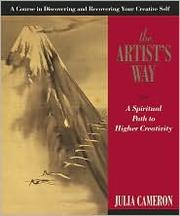
The Artist's Way: A Spiritual Path to Higher Creativity
A twelve week course with morning pages and artist dates to recover creativity.
2,345-word summary · 10 min read
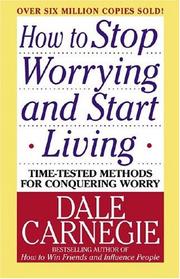
How to Stop Worrying and Start Living
Carnegie offers day-tight routines for worry built from interviews and worker stories.
2,505-word summary · 11 min read
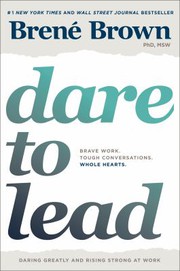
Dare to Lead
Research on courage shows how leaders build trust through vulnerability and clear values.
2,442-word summary · 11 min read
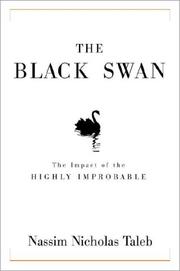
The Black Swan
Taleb argues rare shocks shape history more than models admit, and urges safer exposure over prediction.
2,588-word summary · 12 min read
Essentialism
McKeown argues for less but better: discern the vital few, refuse the trivial many, and use buffers, small wins, and steady routines so key work gets done well…
2,421-word summary · 11 min read
Braving the Wilderness: The quest for true belonging and the courage to stand alone
Belonging to yourself first lets you stand alone and still stay close to others.
2,004-word summary · 9 min read
The Power of Positive Thinking
Peale's 1952 guide to faith, affirmations, picturing success, prayer, and worry control, retold chapter by chapter with stories, limits, and small daily habits…
2,742-word summary · 12 min read
The Tao of Pooh
Hoff explains Taoism through Pooh, Piglet, and Eeyore in gentle chats.
2,006-word summary · 9 min read
Grit
A psychologist argues sustained passion plus perseverance beats raw talent, and shows how grit can be grown.
2,432-word summary · 11 min read
Emotional Intelligence
Goleman argues self awareness and empathy shape success more than IQ alone.
2,026-word summary · 9 min read
Tao Te Ching: Annotated & Explained
Eighty one brief verses on the Way and effortless action, with Lin's translation and facing notes.
2,140-word summary · 10 min read
Influence: The Psychology of Persuasion
Six levers plus unity explain why people say yes, learned undercover in salesrooms and labs.
2,030-word summary · 9 min read
The Happiness Project
Gretchen Rubin spends a year testing monthly resolutions on energy, marriage, work, parenting, and play, tracking small habits to build a happier ordinary…
3,516-word summary · 16 min read
The Gifts of Imperfection
Shame research turned into ten guideposts for dropping perfectionism and living with courage and connection.
2,799-word summary · 12 min read
Think and Grow Rich
Hill teaches desire, faith and autosuggestion, distilling lessons from Carnegie interviews into thirteen principles for success.
2,458-word summary · 11 min read
The Power of Now
Tolle argues pain comes from mind chatter and peace from full attention to now.
2,354-word summary · 10 min read