
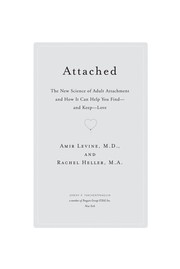
Attached
2,157-word summary 10 min read 304 pages in the book
- First published
- 2010
- Publisher
- TarcherPerigee
- Pages
- 304
- ISBN
- 9781585429134
Reading options
What's inside (8 sections)
I picked up Attached because I had heard it described as a relationship book that was not really a relationship book, and that turned out to be accurate. It is a popular science book about attachment theory, the branch of psychology that began with John Bowlby and Mary Ainsworth and was later applied to adult romance by researchers such as Cindy Hazan and Phillip Shaver. The authors, Amir Levine and Rachel Heller, are not trying to teach you tricks for texting. They are trying to explain why people behave the way they do when they feel close to someone, and why some couples seem to handle conflict easily while others collapse into the same fight every few weeks.
The central claim is simple and, once you accept it, hard to unsee. Human beings are wired to depend on other people. We are not designed to be self-sufficient islands. The need for closeness is not childish, and it does not go away when you become an adult. It is a survival system, and it operates whether you want it to or not. When that system is calm, you can be generous, curious, and independent. When it is activated, you become focused on the relationship, sometimes to the point of obsession. When it is deactivated, you pull away and tell yourself you do not need anyone. Those three responses are the core of the book.
The three styles
Levine and Heller describe three main attachment styles. Secure people are comfortable with intimacy and with independence. They expect their partners to be available, and they are usually available themselves. They do not panic when a partner needs space, and they do not disappear when a partner asks for closeness. Anxious people want a lot of closeness and worry that they will not get it. They notice small changes in a partner's tone and spend a lot of time interpreting them. Avoidant people equate closeness with a loss of freedom. They pull back when things get serious, find flaws in partners who were recently wonderful, and insist that they are fine on their own.
The authors estimate that just over half of adults are secure, around a quarter are avoidant, and around a fifth are anxious, with a small remainder falling into a mixed anxious-avoidant category. Those numbers are rough, and the book uses them to make a practical point rather than a scientific one. If you are dating, you are going to meet people from all three groups. If you understand the groups, you can stop taking certain behaviors personally and start asking whether the person you are with is capable of giving you what you need.
The anxious style is described with a lot of sympathy. Anxious people are often told they are too needy, too sensitive, or too much. The book argues that their needs are normal and that the problem is not the need itself but the way they express it. When an anxious person feels distance, they may call repeatedly, send a series of messages, withdraw to see if the other person notices, keep score of who reached out last, or threaten to leave. Levine and Heller call these protest behaviors. They are attempts to reestablish contact, but they often push the other person further away. The book is good at showing how protest behavior is a strategy that makes sense in the moment and fails in the long run.
The avoidant retreat
Avoidant people get a chapter that is just as specific. They do not usually announce that they are afraid of intimacy. Instead they say things like "I'm not ready for a relationship right now" or "I need to focus on myself." They focus on small imperfections in a partner. They fantasize about an ex. They keep secrets, leave plans vague, and avoid defining the relationship. They may be warm and engaging at a distance and then become distant when the relationship starts to feel real. The book calls these deactivating strategies. The point is not that avoidant people are villains. The point is that they are protecting themselves from a feeling of being engulfed, and they often do not know they are doing it.
The most useful section for me was the description of the anxious-avoidant trap. An anxious person and an avoidant person can have a powerful initial attraction. The avoidant person's distance feels like a challenge, and the anxious person's intensity feels like passion. Then the cycle starts. The anxious person seeks closeness, the avoidant person pulls back, the anxious person protests, the avoidant person withdraws further, and then, when the anxiety becomes unbearable, the avoidant person offers just enough warmth to restart the cycle. The book describes this as a roller coaster. The highs are intense, and the lows are exhausting. Neither person is acting in bad faith, but the pattern is stable because each person's behavior confirms the other's fear.
Levine and Heller are careful to say that people can change. Attachment styles are not fixed categories. A secure partner can help an insecure person become more secure, and a person can learn to recognize their own strategies and choose differently. The book recommends "priming security" by spending time with secure role models and by practicing secure behaviors, such as being direct about needs and responding consistently to a partner. It also recommends that anxious people date with their eyes open. Do not assume that a person will change because the connection is strong. Look at how they handle plans, conflict, and small requests for reassurance. Those ordinary moments are the data.
The dependency paradox
The idea I keep coming back to is the dependency paradox. The book argues that the more securely attached you are, the more independent you can be. If you know your partner is there for you, you do not have to spend energy monitoring the relationship. You can take risks, travel, work, and spend time apart. If you are insecure, you either cling or flee, and both responses take up a lot of mental space. The authors use the example of couples saying goodbye at an airport. The secure couples are not the ones who make a scene. They are the ones who can let go because they trust the connection will still be there when they return.
That argument cuts against a lot of advice about relationships. We are told to be independent, to not need anyone, to keep one foot out the door. Attached says that stance is often a defense, not a strength. It is possible to be strong and dependent at the same time. The book is not arguing for losing yourself in another person. It is arguing that healthy dependence is a two-way street, and that asking for what you need is not a weakness. That is a simple idea, but it is surprisingly hard to practice.
The communication chapter is practical. The authors recommend stating your need clearly and specifically, without blaming the other person. Instead of saying "You never make time for me," say "I feel anxious when we go days without talking, and I would like us to check in at night." Then watch how the person responds. Do they take the concern seriously? Do they try to understand it, or do they dismiss it? Do they offer a solution, or do they make you feel foolish for asking? The response matters more than the words. A secure person can hear a need without treating it as an accusation. An avoidant person may hear any need as a demand. An anxious person may apologize for having needs at all.
The relationship inventory
One of the book's better exercises is the relationship inventory. The idea is to look back at your past relationships and write down what you felt, what you did when you were anxious, and what you did when you felt trapped. The goal is not to assign blame. It is to notice patterns. Did you choose people who were consistently unavailable? Did you mistake anxiety for chemistry? Did you keep choosing partners who needed rescuing? The inventory is a way of turning vague dissatisfaction into specific information. It is also a way of seeing that your behavior makes sense given what you were trying to protect. That does not excuse harm, but it makes the pattern easier to change.
The authors also spend time on the secure base. A secure partner is not someone who never disagrees. It is someone who makes the relationship feel like a place you can return to after a hard day. They are consistent, they are not afraid of closeness, and they do not punish you for needing them. If you grew up without that kind of base, it can feel strange at first. People who are used to chaos sometimes find calm boring. The book warns about that. It says that if you are anxious or avoidant, a secure partner may feel less exciting than the people who trigger your system. That is not a sign that the secure person is wrong for you. It may be a sign that your body is not used to safety.
What the book is not
Attached is a self-help book, and it has the limits of its genre. The case studies are memorable, but they are selected to illustrate the theory. The authors write in a friendly, direct style, and they sometimes make the research sound more settled than it is. Attachment theory is a real and well-developed field, but adult attachment is complicated, and the three-category model is a simplification. The book says as much, though not always loudly enough. It also has little to say about trauma, neurodivergence, culture, or the ways that money, race, and gender shape relationships. Its couples are mostly middle-class and straight, and the advice assumes a level of choice that not everyone has.
The other criticism is that the book can encourage people to diagnose their partners instead of talking to them. It is easy to read the avoidant chapter and decide that your boyfriend is a case study. It is harder to ask him what he is feeling and to listen to the answer. The authors do try to prevent this. They say that the goal is understanding, not labeling. But the labels are sticky, and the book's examples are vivid. A reader who is already inclined to overanalyze may come away with a new vocabulary for doing it.
Still, the book earns its popularity. It gives people language for experiences they have had but could not explain. The anxious reader who has spent years being told she is too much will find a description that does not blame her. The avoidant reader who has spent years being told he is commitment-phobic will find a description that does not make him a villain. The secure reader will find a model for what good looks like. That is a lot to get from a paperback with a subway map on the cover.
Who should read it
I would recommend Attached to anyone who has been confused by the gap between what they want in a relationship and how they act when they get close to it. It is especially useful for people who are dating and keep finding themselves in the same pattern. The book will not tell you whether to stay with a specific person. It will give you a way to ask better questions. Is this person available? Do they respond when I ask for something? Am I choosing people who make me feel safe, or am I choosing people who make me feel excited and anxious? Those are not the same thing.
The book is also useful for people who are already in a relationship and want to understand why a small disagreement turns into a large fight. The answer is often not about the dishes. It is about whether each person feels secure enough to be honest. Once you see the attachment system at work, you can stop treating every conflict as evidence that the relationship is failing. Sometimes it is just two people with different strategies trying to protect themselves at the same time.
What stays with me is the book's basic claim that needing people is normal. That sounds obvious, but a lot of us were raised to believe the opposite. We were told to be independent, to not rely on anyone, to keep our options open. Attached argues that those lessons can make us lonely. The alternative is not to become clingy or lose your identity. The alternative is to build relationships where you can be honest about what you need and trust that the other person will not use it against you. That is harder than it sounds, and the book is a useful map for the attempt.
FAQ
What are the three attachment styles in Attached?
The book describes secure, anxious, and avoidant styles, plus a smaller mixed anxious-avoidant category.
Is Attached based on real research?
Yes. It draws on attachment theory going back to John Bowlby and Mary Ainsworth, as well as later studies of adult romantic attachment.
Does Attached say anxious and avoidant people should never date?
No. It warns that the pairing often produces a painful cycle, but it also says people can become more secure and that secure partners can help.
Similar books
All About Love: New Visions
bell hooks borrows a definition of love as an action rather than a feeling, then spends thirteen chapters showing how hard it is to practice.
2,385-word summary · 11 min read

Moonwalking with Einstein: The Art and Science of Remembering Everything
A journalist spends a year training for the U.S. Memory Championship and discovers that extraordinary memory is mostly technique, attention, and a lot of…
2,027-word summary · 9 min read
Emotional Intelligence
Goleman argues self awareness and empathy shape success more than IQ alone.
2,026-word summary · 9 min read

What Happened to You?
Oprah Winfrey and psychiatrist Bruce Perry explain how early experience shapes the brain, and why asking what happened to someone works better than asking what…
2,238-word summary · 10 min read

The Courage to Be Disliked: The Japanese Phenomenon That Shows You How to Change Your Life and Achieve Real Happiness
A philosopher and an angry young man argue over five nights about Adlerian psychology, trauma, approval, and the freedom to be disliked.
2,054-word summary · 9 min read

The Total Money Makeover: A Proven Plan for Financial Fitness
Dave Ramsey lays out seven Baby Steps, from a $1,000 starter fund to a paid-off house, with the debt snowball at the center.
2,663-word summary · 12 min read
Don't Sweat the Small Stuff ... and It's All Small Stuff: Simple Ways to Keep the Little Things from Taking Over Your Life
Richard Carlson’s 1997 bestseller offers one hundred short chapters on lowering the volume on daily irritations, and it is more pragmatic than its title…
2,502-word summary · 11 min read

Made to Stick: Why Some Ideas Survive and Others Die
The Heath brothers break down why some ideas vanish on contact while others lodge in memory, tracing six traits that make a message stick.
2,527-word summary · 11 min read
Four Thousand Weeks: Time Management for Mortals
Oliver Burkeman turns the whole productivity project on its head, arguing that a human lifespan of roughly four thousand weeks is not a problem to optimize…
2,447-word summary · 11 min read
Breath: The New Science of a Lost Art
Journalist James Nestor investigates how modern humans learned to breathe badly, and what researchers, athletes, and breathwork practitioners have found about…
2,011-word summary · 9 min read
The Road Less Traveled: A New Psychology of Love, Traditional Values and Spiritual Growth
M. Scott Peck argues that maturity begins with accepting difficulty, then builds discipline, love, and spiritual growth through honest, often painful work.
2,200-word summary · 10 min read
How to Stop Worrying and Start Living
Carnegie offers day-tight routines for worry built from interviews and worker stories.
2,505-word summary · 11 min read
Dare to Lead
Research on courage shows how leaders build trust through vulnerability and clear values.
2,442-word summary · 11 min read
10% Happier
An ABC newsman panics on air, then finds meditation without losing his edge.
2,590-word summary · 12 min read
Essentialism
McKeown argues for less but better: discern the vital few, refuse the trivial many, and use buffers, small wins, and steady routines so key work gets done well…
2,421-word summary · 11 min read
Braving the Wilderness: The quest for true belonging and the courage to stand alone
Belonging to yourself first lets you stand alone and still stay close to others.
2,004-word summary · 9 min read
The Untethered Soul
Singer names the noisy inner voice and shows how watching thoughts, loosening old hurt, and keeping the heart open through surrender can ease daily suffering…
2,752-word summary · 12 min read
The Art of Happiness
The Dalai Lama and psychiatrist Howard Cutler link lasting happiness to training the mind, human warmth, compassion, and basic spiritual values for daily life.
3,394-word summary · 15 min read
Tiny Beautiful Things: Advice on Love and Life from Dear Sugar
Dear Sugar answers letters on love, grief, and work with tough empathy drawn from her own losses.
2,253-word summary · 10 min read
Predictably Irrational
Behavioral economist Dan Ariely shows why we overpay, procrastinate, and misjudge through simple experiments.
2,183-word summary · 10 min read
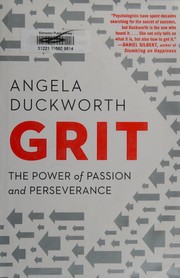
Grit
A psychologist argues sustained passion plus perseverance beats raw talent, and shows how grit can be grown.
2,432-word summary · 11 min read
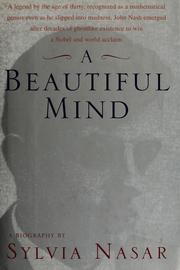
A Beautiful Mind
Mathematician John Nash's brilliant game theory rise, schizophrenia collapse, and Nobel return, with wife Alicia's care.
2,142-word summary · 10 min read
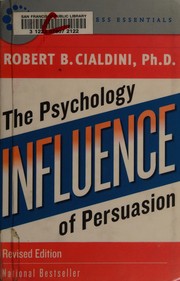
Influence: The Psychology of Persuasion
Six levers plus unity explain why people say yes, learned undercover in salesrooms and labs.
2,030-word summary · 9 min read
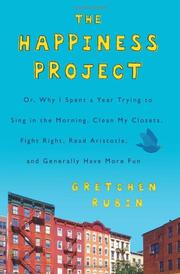
The Happiness Project
Gretchen Rubin spends a year testing monthly resolutions on energy, marriage, work, parenting, and play, tracking small habits to build a happier ordinary…
3,516-word summary · 16 min read
Why We Sleep: Unlocking the Power of Sleep and Dreams
A Berkeley sleep scientist explains how sleep shapes memory, mood, and health, and what happens when we miss it.
2,755-word summary · 12 min read
The Gifts of Imperfection
Shame research turned into ten guideposts for dropping perfectionism and living with courage and connection.
2,799-word summary · 12 min read
Men Are from Mars, Women Are from Venus
Gray's Mars-and-Venus guide to why men withdraw and women talk, and how small daily acts of care keep a relationship working.
2,073-word summary · 9 min read
Factfulness
A doctor shows why we misread global trends and offers ten habits for seeing progress clearly.
2,247-word summary · 10 min read
A New Earth
Tolle maps ego pain and shows how presence can loosen roles, thoughts, and suffering.
1,909-word summary · 8 min read
12 Rules for Life
Twelve essays on responsibility from posture to truth to petting cats.
2,045-word summary · 9 min read