
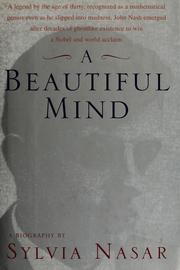
A Beautiful Mind
2,142-word summary 10 min read 460 pages in the book
- First published
- 1998
- Publisher
- Simon & Schuster
- Pages
- 460
- ISBN
- 9780684819068
Reading options
What's inside (9 sections)
I came to A Beautiful Mind after seeing the film years ago and wanting the fuller, messier truth. Sylvia Nasar's 1998 biography of John Nash follows a mathematical genius from West Virginia childhood to Princeton equilibrium, through schizophrenia and hospitals, to a Nobel in 1994. At 460 pages it is thorough, admiring, and willing to show unlikable edges.
Bluefield to Princeton
John Forbes Nash Jr. grows up in Bluefield, West Virginia, odd and bright, reading encyclopedias, doing chemistry experiments alone, socially awkward but not unkind. His mother, a teacher, pushes schooling. His father, an engineer, teaches practical tinkering. Nash wins a scholarship to Carnegie Tech, then to Princeton for math in 1948, carrying a recommendation that calls him a genius.
Princeton math in those years glows. Einstein at the Institute, von Neumann building computers, Tucker, Gale, Shapley arguing games in the common room. Nash, arrogant and shy at once, wants the big problem that makes a name. He finds it in bargaining and equilibrium. His thesis shows that in any finite game there is a stable point where no player gains by switching alone. It is elegant, short, and world changing for economics, though mathematicians at the time shrug.
Nasar explains the math without dumbing too far. She uses poker, traffic, and arms races as examples, walks through zero sum versus cooperative games, and admits where Nash's proofs were thin and later fixed by others. I followed most of it with patience and skimmed a few proofs without losing thread. What matters is Nash's style. Seek the deep, simple move others miss, then defend it rudely.
Socially he is difficult. Brags about IQs, leaves parties mid sentence, writes love letters that read like theorems. Friends tolerate because brilliance entertains. He cruises for anonymous encounters while denying he is gay, an episode that later costs him a RAND job and clearance when arrested for indecent exposure. Nasar reports this plainly, noting Nash did not see himself as homosexual while behavior put him at risk in a homophobic security state.
RAND, MIT, and Alicia
After Princeton Nash works summers at RAND in Santa Monica, playing war games for the Air Force while dreaming of pure math breakthroughs. He solves the embedding problem for manifolds, work mathematicians rate even higher than equilibrium, and lands at MIT as instructor. Cambridge brings prestige, cold halls, and a brilliant student named Alicia Larde, physics major from El Salvador, who falls for his strange confidence.
Courtship is awkward and sweet. Nash shows off by solving problems on napkins, forgets birthdays, proposes with logic about comparative advantage. Alicia, Catholic, family minded, ambitious herself, sees the mind and decides to manage the man. They marry in 1957, have a son, buy a house with almost no furniture because Nash sees decorating as irrational. Friends warn. She laughs and stays.
Work pressure builds. Nash chases Riemann, brags he will solve it, grows paranoid about communists and hidden codes in newspapers. Colleagues notice lectures turning to rants about world government. He resigns from MIT with a letter full of delusions, sails to Europe seeking asylum as a world citizen, is deported back. First hospitalizations follow with insulin comas and Thorazine that dull thought. Alicia, pregnant and then nursing, tries to hold job, house, and husband together while her own family disapproves.
Nasar is good on how genius and illness intertwine without romanticizing. Nash's pattern seeking helped math and fed paranoia. Colleagues who admired confidence now fear it. Students who copied his board now avoid his stare. MIT grants leave that become exile. The fall from rising star to ward patient takes barely two years, and Nasar times it with pay stubs, letters, and nurse notes that hurt to read.
Illness years and codes
The middle chapters cover decades of schizophrenia with care and some controversy. Nash hears voices, believes aliens recruit him, sees conspiracies in the New York Times, writes endless letters to embassies with numerology, wanders Princeton in shorts and sandals scribbling on blackboards. He is hospitalized repeatedly, escapes, is found, returns. Alicia divorces to save finances and house, then takes him in as boarder because no one else will.
Nasar details treatments of the era. Insulin shock, antipsychotics with shakes and drool, talk therapy that helps little when delusions fix. Nash refuses meds for long stretches, preferring reason to manage voices. Sometimes he succeeds enough to sit in libraries quietly. Often he mails accusing postcards to former friends. Princeton tolerates him as the Phantom, a familiar ghost allowed coffee and chalk. Students learn not to mock, mostly.
Family strain is stark. Son John Charles shows early brilliance and later schizophrenia himself, a double blow Alicia bears with fierce privacy. Nash's sister Martha sends money and worries. Alicia works as a programmer to pay bills, keeps house spotless as control against chaos, and loves Nash without excusing cruelty. He can be cold, grandiose, unfaithful in mind if not body. She stays in orbit because vows and pity and stubborn love tangle.
Critics, including mathematicians like Milnor and Osborne, fault Nasar for relying on gossip, garbling math names, and invading privacy as unauthorized biographer without Nash's cooperation. The complaints have merit. Some anecdotes come from single interviews. Game theory glosses wobble. Nash's sex life gets more pages than some theorems. I noticed errors in small details while trusting the overall arc built from records. Read with that filter. Brilliant reporting with human smudges.
What the book does well is show community responsibility. Princeton janitors who save Nash a seat, librarians who keep his mail, a few professors who invite him to seminars though he rambles. No cure happens here, just shelter that lets a mind settle enough to stop running. That shelter matters as much as pills in Nasar's telling.
Princeton shelter and son
Princeton's tolerance in later years deserves praise as quiet heroism. Mathematicians leave chalk for Nash, invite him to teas though he rambles, assign no classes but allow office air. Students learn the Phantom leaves notes worth reading if you filter paranoia. Librarians keep his mail in boxes. The Institute lets him wander. No one cures, but many shelter. Nasar shows how institutions can carry ill geniuses without exploiting or expelling when they choose patience over prestige.
Son John Charles, called Johnny, breaks and mends hearts in turn. Bright as a child, troubled as a teen, diagnosed with schizophrenia as a young man, he cycles through hospitals while parents age. Alicia cares for both Johns with fierce scheduling. Pills sorted, appointments kept, money sent. Nash, ill himself, tries to advise a son who mirrors his worst years and resents the mirror. Their joint attendance at seminars, two shambling men sharing pencils, is among the book's most tender images. Illness shared does not halve, but company helps.
Alicia's work as a programmer, often overlooked in film praise, funds survival. She codes through nights while Nash paces, buys a house with a yard for calm, drives to hospitals at 2 a.m. without complaint that sticks. Friends help with groceries and gossip that wounds. Church offers meals and platitudes. She accepts help while guarding privacy, refusing to make Nash a lesson. Her anger flares rarely and then with cause. Why must brilliance cost those who love it most.
Nobel and reckoning
By the late 1980s Nash quiets. Voices fade or he learns to ignore them as background noise. He stops mailing embassies, starts attending math teas, proves small results, accepts that equilibrium work from youth now runs economics. Colleagues nominate for the Nobel. Committees hesitate over illness and past behavior, then award the 1994 Economics prize shared with Harsanyi and Selten. Nash, bewildered in a rented tux, gives a short speech thanking Alicia for saving his life.
Nobel chapters move fast and shine. Stockholm lights, reporters asking about madness and genius link, Alicia crying in the hall. Money eases debts. Princeton offers office. Son's illness tempers joy. Nash tells interviewers he thought with reason rather than pills, a claim doctors dispute. Nasar presents his view and medical consensus side by side without settling. Recovery remains mystery of age, care, and stubborn intellect.
Later years, beyond the book's close, brought more honors and a tragic car crash in 2015 that killed John and Alicia together. The book does not cover that, ending at the prize. Knowing the end while reading the middle adds ache. The couple who survived schizophrenia and fame die ordinary highway death. I mention it only because most readers know and will feel the shadow.
The film simplifies drastically. No arrest, little RAND homophobia, composite friends, Alicia as saint, schizophrenia as visual hallucinations Nash never had (his were auditory and delusional). The book is tougher on both Nashes and richer on math politics. If you liked the movie's love story, read for the harder marriage and the department meetings where careers are made by chalk.
Read it if you like science lives, if you teach game theory and want human context, or if you care for someone with psychosis and want company without false hope. It argues, without preaching, that minds break and persist, that wives and universities can shelter without curing, and that prizes come late and incomplete. Nash's equilibrium holds in markets. In life, Nasar shows, balance is daily work with no stable point, only continued play.
Math explained simply
Equilibrium needs a plain example because Nasar circles it in jargon. Picture two drivers approaching a narrow bridge from opposite sides. If both speed, they crash. If both wait, both lose time. If one waits while the other goes, the waiter loses a little and the crosser gains. Stable points are where neither wants to switch alone given what the other does. Nash proved such points exist in any finite game with mixed strategies. Traffic lights, auctions, and nuclear standoffs all use the idea. Poker players bluff at frequencies that make opponents indifferent. That indifference is equilibrium in felt form.
Nasar shows Nash finding it by asking what everyone else will think you will do. Second guessing as math. He loved bargaining games where talk is cheap and threats must be credible. His thesis, barely thirty pages, sketched proofs others tightened. Economists who once ignored it now teach it first week. Students who find the notation dense get the intuition through stories Nasar provides. A department splitting offices, roommates splitting chores, nations splitting seas. The math holds across scales because incentives rhyme.
The embedding work, which mathematicians rank higher, gets a clear gloss too. Can a curved shape fit in flat space without tearing. Nash showed yes with enough dimensions and clever folding. Picture crumpling paper without creasing to fit a cup. Impossible in three dimensions, possible with more room to maneuver. The proof technique, Nash smoothing, later helped physics and engineering. Nasar admits she leans on interviews for this part and sometimes garbles names. Still, the wonder comes through. A young man sees room where others see wall and proves the room exists by building stairs no one imagined.
Alicia's cost and care
Alicia Larde Nash deserves a book of her own, and Nasar gives her nearly half of this one. Physics student from El Salvador who chose an odd American genius, she manages money, medicine, and motherhood with fierce competence. She works as a programmer when women in computing are rare, buys a house for stability, and keeps it clean as order against chaos. She divorces Nash to protect finances and a son, then houses her ex husband as boarder because asylums harm more than home. Friends call it saintly. She calls it practical. Someone must pay bills and ensure pills are taken or refused consciously.
Her love includes anger that the film softens. She shouts when Nash wastes money on numerology tracts, locks doors when he rants at night, leaves for days to breathe. She dates little because trust is thin. She relies on her own family sparingly from pride. When Johnny shows illness, she grieves without collapsing, arranging care while coding by day. Nasar interviews coworkers who recall Alicia crying quietly at her desk then wiping eyes to debug. That image stayed with me more than Nobel spotlights. Endurance at a terminal, not at a podium.
The marriage's later years, beyond the prize, held more calm. Nash attends conferences, takes students for coffee, walks Princeton with Alicia without incident. They travel to award events as a pair, bickering about ties and speeches. The 2015 taxi crash that killed both on the New Jersey Turnpike after returning from Norway ends the story with brutal randomness. No illness, no prize, just road. Nasar could not cover it in 1998, but readers now carry it through earlier hospital chapters. Survival then makes sudden loss harder. Love that endured paranoia ends in traffic. Remember that while reading the Nobel joy. Hold both.
FAQ
When was A Beautiful Mind published?
Simon and Schuster published it in 1998. It runs 460 pages and won the National Book Critics Circle Award.
Did Nash cooperate with the book?
No. It is an unauthorized biography written without Nash's cooperation, from interviews and records.
Is the film accurate?
Yes. Ron Howard's 2001 film with Russell Crowe simplifies the math and illness into a love story.
Similar books
The Emperor of All Maladies
A biography of cancer from Galen to chemo through one doctor cases.
2,255-word summary · 10 min read
Hidden Figures
Black women computers at Langley launch rockets past Jim Crow.
2,385-word summary · 11 min read
Einstein: His Life and Universe
Isaacson traces Einstein from patent clerk to world fame using newly opened papers, through 1905, relativity, exile, and the long unified theory search.
2,773-word summary · 12 min read

Sybil
A 1973 case study of a woman treated for multiple personalities, and the book that made dissociative identity disorder a household phrase.
2,054-word summary · 9 min read

Long Walk to Freedom
Mandela's account of a Thembu childhood, a law practice, a banned movement, twenty-seven years in prison, and the negotiation that ended apartheid.
2,454-word summary · 11 min read

Moonwalking with Einstein: The Art and Science of Remembering Everything
A journalist spends a year training for the U.S. Memory Championship and discovers that extraordinary memory is mostly technique, attention, and a lot of…
2,027-word summary · 9 min read
The Wright Brothers
David McCullough tells the story of two self-taught Ohio brothers, working largely alone and out of a bicycle shop, who solved the problem of flight before…
2,027-word summary · 9 min read

Attached
A psychiatrist and a psychologist explain adult attachment styles and show how anxious, avoidant, and secure patterns shape dating, conflict, and the search…
2,157-word summary · 10 min read
The Letters of Vincent van Gogh
Vincent van Gogh's letters to his brother Theo, in a Penguin Classics selection edited by Ronald de Leeuw, trace a decade of work, faith, and obsession.
2,611-word summary · 12 min read
Catherine the Great: Portrait of a Woman
A German princess survives a miserable marriage and a coup to rule Russia for thirty-four years, torn between Enlightenment ideas and absolute power.
2,065-word summary · 9 min read
The Warmth of Other Suns
Three migrants ride north out of Jim Crow toward Chicago and LA.
2,561-word summary · 11 min read
Killing Lincoln
Booth plots as Lincoln pushes war end and reunion in 1865.
2,486-word summary · 11 min read

Wild Swans
Three generations of women survive warlords, revolution, and the Cultural Revolution in Jung Chang's family memoir.
2,356-word summary · 10 min read

The Hot Zone
Ebola and Marburg move from African outbreaks to a Virginia monkey house and an Army response in suits.
2,291-word summary · 10 min read
On the Origin of Species
Darwin's 1859 case for evolution by natural selection, from Beagle finches and breeding pigeons to fossils and anatomy.
2,589-word summary · 12 min read
The Surgeon of Crowthorne
James Murray built the Oxford dictionary with Broadmoor inmate William Minor, whose thousands of slips shaped this 1998 HarperCollins story of murder, madness…
2,775-word summary · 12 min read

Cleopatra: A Life
Pulitzer winner Schiff restores Cleopatra as a capable ruler, from Ptolemy debts and Caesar to Antony, Actium, and her death in 30 BC, built from coins and…
3,586-word summary · 16 min read

The Splendid and the Vile
Larson follows Churchill circle through Blitz year with diaries and bombing nights.
2,038-word summary · 9 min read
Predictably Irrational
Behavioral economist Dan Ariely shows why we overpay, procrastinate, and misjudge through simple experiments.
2,183-word summary · 10 min read
Emotional Intelligence
Goleman argues self awareness and empathy shape success more than IQ alone.
2,026-word summary · 9 min read

American Sniper: The Autobiography of the Most Lethal Sniper in U.S. Military History
Navy SEAL sniper Chris Kyle recounts Texas roots, SEAL training, four Iraq tours, and the strain combat placed on his marriage and health.
2,011-word summary · 9 min read
Cosmos
Sagan tours galaxies, evolution, and Alexandria to argue for science.
2,416-word summary · 11 min read
Cosmic Music
The first full biography of Alice Coltrane, from Detroit church piano to ashram guru.
2,048-word summary · 9 min read
Benjamin Franklin: An American Life
Isaacson traces Franklin from Boston runaway to printer, scientist, London agent, Paris diplomat, and founder across 590 vivid pages.
2,149-word summary · 10 min read
The 48 Laws of Power
Robert Greene turns court history into 48 blunt power laws, each taught through stories like Fouquet and Louis XIV, plus reversals that show when each law…
2,846-word summary · 13 min read
David and Goliath: Underdogs, Misfits, and the Art of Battling Giants
Gladwell argues disadvantages can become advantages, from biblical sling to dyslexia and class size.
3,197-word summary · 14 min read
Why We Sleep: Unlocking the Power of Sleep and Dreams
A Berkeley sleep scientist explains how sleep shapes memory, mood, and health, and what happens when we miss it.
2,755-word summary · 12 min read
Factfulness
A doctor shows why we misread global trends and offers ten habits for seeing progress clearly.
2,247-word summary · 10 min read
In the Garden of Beasts
Ambassador Dodd takes his family to 1933 Berlin and watches charm curdle into terror.
1,927-word summary · 9 min read
1776
Washington's amateur army from Boston siege to Trenton through mud and doubt.
2,139-word summary · 10 min read