
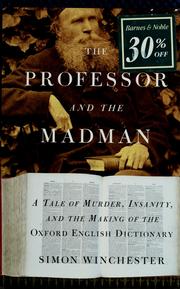
The Surgeon of Crowthorne
2,775-word summary 12 min read
- First published
- 1998
- Publisher
- HarperCollins
- ISBN
- 9780060175962
Reading options
What's inside (8 sections)
I picked up this book because of the title confusion in a secondhand shop. One spine said The Surgeon of Crowthorne, another said The Professor and the Madman, and both named Simon Winchester as the author. The seller told me they were the same 1998 book, published in Britain under the first title and in America as the second by HarperCollins in 1998. That sounded like a marketing trick until I started reading. The UK title is The Surgeon of Crowthorne and the US title is The Professor and the Madman, and they describe the identical 1998 book about the Oxford English Dictionary, a Scottish editor, and an American murderer who became its most devoted helper. I had expected a quiet account of dictionary making. What I found was closer to a Victorian crime story that happens to end in a library.
Winchester builds the book around two men who should never have met. One is James Murray, the self taught Scotsman who took charge of the Oxford English Dictionary and ran the work from a corrugated iron shed he called the Scriptorium. The other is Dr William Chester Minor, an American surgeon, a Union veteran of the Civil War, and by the time Murray knew him, a long term inmate at Broadmoor, the criminal asylum near Crowthorne in Berkshire. Between them they exchanged thousands of paper slips, letters, visits, and finally a friendship that lasted for years. Winchester follows that thread from Murray's sorting tables to Minor's locked cell and back again, and he keeps returning to a simple question: how did the largest record of English words come to depend on a man who was not allowed to leave his room?
The dictionary that refused to end
To feel the scale of Murray's task, it helps to picture Oxford English scholarship in the 1870s. The Philological Society in London had proposed a new dictionary that would list every word in English, trace each meaning, and attach dated quotations showing how each sense had been used in print. Richard Chenevix Trench had given the lectures that set the idea running, and Frederick Furnivall had pushed volunteers to start copying passages. By the time Oxford University Press agreed to publish the work and Murray was hired as editor in 1879, the plan already looked too large for any one office.
Murray answered with method. He issued an appeal for readers. Ordinary people across Britain and America were asked to read books, mark interesting words, and copy the sentence, title, author, and date onto slips of paper about four inches by six. Those slips arrived by post in sacks. Murray and his assistants sorted them in the Scriptorium, first at Mill Hill and later at Oxford, in rows of pigeonholes that lined the walls. Ada Murray, his wife, and their many children helped at times. The children earned pocket money by checking references. Visitors remembered the smell of paper, the cold in winter, and Murray standing at a high desk with a long beard and a frock coat, pulling strings of slips for words like art or fall.
Winchester is good on the grind. He shows Murray writing definitions at night after teaching and correspondence ate the day. He shows the Press in Oxford losing patience as years passed and the alphabet crawled forward. Part of the charm of these early chapters is how physical the work feels. This was not a computer project. It was paper, ink, string, and a man who could keep half the language in his head while his hands moved.
What Murray needed, and what he said plainly in his addresses to readers, was people who would stay with dull books and minor authors, who would chase an odd verb through pamphlets and sermons, and who would do it without pay. He got schoolmasters, clergymen, retired officers, and a few obsessives. The best of them sent work so steady and so clean that Murray came to rely on their handwriting alone. One address, written in a neat American hand from Crowthorne, began to stand out for both volume and care.
The surgeon from New Haven
William Chester Minor was born in Ceylon in 1834 to American missionary parents and raised in a strict household where books mattered. He studied medicine at Yale, served as a surgeon for the Union Army during the Civil War, and stayed in the service afterward in New York. Winchester traces how fear began to settle over him in those years. Minor complained that men followed him in the street. He said strangers broke into his rooms at night. He carried a pistol. Army doctors noted his agitation. He was eventually retired on grounds of mental instability and given a pension that, oddly enough, later paid for books and paint in an asylum.
In 1871 Minor drifted to London, took lodgings in Lambeth, and fell deeper into suspicion and night terrors. In the early hours of 17 February 1872 he followed a man he believed had entered his room and shot him dead on the street. The victim was George Merrett, a father of six who worked at a brewery and had no link to Minor at all. Minor was arrested at the scene, tried, found not guilty by reason of insanity, and sent to Broadmoor at Crowthorne, where dangerous patients were held at the pleasure of the Crown.
Winchester lingers on Broadmoor because Minor's life there breaks the usual image of a Victorian madhouse. Minor, as a private patient with a military pension and no family in England to claim him, was given two adjoining rooms in Block 2. He had a servant among the staff. He bought books with his own money, built a small library of antiquarian volumes, learned to paint in watercolour, played the flute, and read for hours. Superintendent William Orange, and later David Nicolson, allowed him this room to work because he was quiet, polite, and plainly intelligent when his terrors eased. At night the terrors returned. Minor believed men crept through the floor, put chemicals in his food, and forced him into shameful acts while he slept. He barricaded his door. He begged to be moved.
It is a strange portrait. A killer who paid money to the widow of the man he shot. Eliza Merrett, left with children and little income, received funds from Minor for years. She visited Broadmoor at least once. Winchester reports that she even brought him reading matter at his request. Minor never denied the shooting. He said he was sorry. He also said he could not stop seeing enemies in the walls.
Paper slips from a locked room
Murray did not know any of this when the slips began to arrive. The envelopes from Crowthorne contained lists of words with quotations copied in a crisp hand, each with full references. Where other volunteers sent a dozen useful slips in a month, Minor sent hundreds, then thousands. Over about twenty years he would contribute well over ten thousand slips, many for rare or tricky words that other readers skipped. Winchester gives examples of Minor working through 16th and 17th century travel books, sermons, and pamphlets, finding antedatings and fresh senses, noting variant spellings, and adding cross references that saved Murray hours.
Minor had a method that suited the dictionary perfectly. He kept his own word lists, indexed his library, and chased a single term across several books before he wrote to Murray. If Murray asked for quotations for a word beginning with a certain letter, Minor would return a packet arranged in date order, with the earliest use on top. He liked words with color in them. He liked verbs of motion. He was patient with theological prose that bored other readers. Murray, who praised sparingly, called him one of the most valuable helpers on the entire project.
I liked the small scenes Winchester rescues from the correspondence. Minor asking Murray to confirm a date in a 1624 pamphlet. Murray writing back to ask for more on a term that had only one weak quotation. Minor apologizing for a delay caused by illness, then sending three parcels in a week to make up for it. There is a moment when Murray realizes that the man in Crowthorne has a better working library for Elizabethan prose than many Oxford colleges. He begins to lean on him openly. When fascicles of the dictionary appeared with Murray's prefaces, the names of the leading volunteers were printed, and Minor's name sat near the top.
None of this cured Minor. If anything, work structured his days while his nights fell apart. He believed he was carried out of Broadmoor to distant cities and forced into acts he found foul. He accused attendants of poisoning him. He wrote long petitions to the Home Office, to newspapers, to the American legation, asking for release. The petitions were polite, learned, and fixed on plots that did not exist. Murray kept the letters that dealt with words and set the others aside.
The visit to Broadmoor
For years Murray and Minor wrote without meeting. Murray assumed his best American contributor was a retired doctor living quietly in Berkshire. Minor, for his part, knew Murray only as the editor who set tasks and sent thanks. The story that Murray finally traveled to Crowthorne expecting a country house and found an asylum gate instead is the most famous passage in the book, and Winchester tells it with care. He admits the exact details of the first meeting are hazy, because neither man left a full account on the same day. What survives in letters and in Nicolson's notes points to a visit in the early 1890s, a long talk in Minor's rooms, shelves of books on every wall, and Murray leaving shaken by the contrast between the mind on the page and the fear in the man.
After that visit the tone changes. Murray visited again. He brought news of the dictionary. He introduced Minor to visitors he trusted. He asked the Broadmoor staff to allow books through quickly. He also tried, in cautious Victorian language, to help Minor win more freedom within the rules. He never pretended Minor was well. In letters to Nicolson he called Minor's delusions fixed and sad, while praising his scholarship without reserve.
The friendship held because both men needed it for different reasons. Murray, buried under deadlines and criticism from Oxford, found in Minor a reader who never quit and never asked for credit. Minor, locked among men whose illnesses were louder and harder to manage, found in Murray proof that his mind still counted for something outside the walls. Winchester quotes passages where Minor worries about Murray's health, sends good wishes to the Murray children, and apologizes for troubling him with personal matters. It is hard not to be moved by the formality of it. Two Victorians, both overworked in their own way, trading Latin tags and publication dates while one of them could not walk past the gate.
Eliza Merrett remains in the background of these years. Winchester suggests her willingness to accept help from Minor eased his guilt without removing it. Whether she forgave him is beyond the record. What is clear is that Minor kept paying as long as he could, and that Murray knew about the payments and saw them as evidence of character rather than cure.
Decline, self injury, and return
Around 1902 Minor's condition turned sharply worse. His nightly terrors grew more sexual and more punishing. He became convinced that men entered his body at night and forced him into acts he described in frantic letters. In a desperate attempt to stop what he believed was happening, he cut himself with a knife kept for trimming books, inflicting a severe genital wound that nearly killed him. Winchester does not dwell on the medical detail, and that restraint feels right. He focuses instead on what followed: constant watch, loss of his private rooms as a working library, fewer books within reach, and long stretches when he could not write at all.
Murray kept writing. He sent lists. He sent proofs. He asked after Minor through Nicolson when no reply came. The dictionary itself moved on, past C and D, with new editors taking sections under Murray's direction. Henry Bradley, William Craigie, and Charles Onions each carried parts of the alphabet while Murray held the whole design together. Minor's slips still surfaced in the files, marked in his hand, used years after they arrived.
By 1910 it was clear Minor would not recover in England. With support from Murray, from Nicolson, and from American officials, the Home Office allowed his release to the United States on condition that his family and the American authorities take charge of his care. He sailed for America, was admitted first to St Elizabeths Hospital in Washington, and later moved to a private retreat in Hartford, Connecticut, nearer surviving family. He died in 1920 in Hartford. Murray died in 1915 in Oxford, still at work on the dictionary, which would not be finished until 1928, thirteen years after his death.
Winchester closes this arc with the image that gives the book its pull. A murderer and a schoolmaster, divided by walls and by health, helped fix the record of English. The dictionary triumphed. It appeared in massive volumes, then in compact editions, then in digital form. Readers today who look up a rare 17th century verb may still be reading a quotation Minor copied by lamplight in a locked room. That fact does not excuse the shooting in Lambeth. Winchester never claims it does. It sits beside it, uncomfortable and true.
Where the book strains
I admire this book, and I also argued with it as I read. The strengths are plain. Winchester explains lexicography without dumbing it down, keeps Murray and Minor distinct in voice and habit, and never loses the thread of the dictionary itself. The chapters on the Scriptorium, with its pigeonholes and string tied bundles, made me want to see the shed. The Broadmoor chapters, at their best, show how a privileged patient could live a life of reading while poorer patients nearby lived far harder lives. That contrast matters, and Winchester does not hide it.
The strains matter too. First, the sourcing is thin in places where the story most needs weight. The first meeting between Murray and Minor is the hinge of the whole tale, yet the record is patchy. Winchester fills gaps with phrases like must have and surely, which carry the scene forward but leave a careful reader uneasy. A short note on what is documented and what is inferred would have helped more than a smooth reconstruction.
Second, the middle sags. Once Minor settles into Broadmoor and the slips flow, several chapters repeat the same pattern: night terrors, day work, petition, refusal. Repetition is part of chronic illness, and Winchester is honest about that, but as narrative it circles. A tighter cut of fifty pages would have kept the asylum routine vivid without making it feel like a loop. Readers who came for the dictionary may find themselves waiting for Murray to return.
Third, there is hero worship. Murray arrives as tireless, learned, kind, and patient, and he rarely leaves that frame. His quarrels with the Press, his sharp handling of rivals, and his fierce control over assistants get less space than his courtesy to Minor. Minor, too, is softened by emphasis on his generosity to Eliza Merrett and his devotion to books. Those facts are real, and Winchester documents them, but the book leans toward forgiveness in a way that sometimes mutes harder questions about class, money, and who was allowed a library in an asylum.
None of that undid the book for me. If anything, the flaws made the achievement clearer. A short work of popular history, first issued in 1998 and still read through HarperCollins editions in America, took a subject most publishers had called dull and made readers care about quotation slips. The film version that arrived much later, with Mel Gibson as Murray and Sean Penn as Minor, proves the hook was strong. But the book remains the better place to meet both men, because Winchester lets their letters speak and leaves room to doubt him. When I finished, I looked up two words I had always skipped in the dictionary preface. Both had early quotations I now suspect came from Crowthorne. That may be fancy, but it felt like the right way to close a book about words found by a man who could not leave his room.
FAQ
Is The Surgeon of Crowthorne the same book as The Professor and the Madman?
Yes. The UK title is The Surgeon of Crowthorne and the US title is The Professor and the Madman. Both name the same 1998 book by Simon Winchester, issued in America by HarperCollins.
Who were James Murray and William Minor?
Murray edited the Oxford English Dictionary from his Scriptorium. Minor was an American surgeon held at Broadmoor who sent more than ten thousand quotation slips.
Does the book have weaknesses?
Yes. The asylum middle repeats, early sourcing around the first meeting is thin, and Murray is treated with clear affection. The dictionary research still carries the book.
Similar books
The History of the Hobbit, Part One: Mr. Baggins
Rateliff traces every draft of Bilbo from 1930 notes to print.
2,410-word summary · 11 min read

Long Walk to Freedom
Mandela's account of a Thembu childhood, a law practice, a banned movement, twenty-seven years in prison, and the negotiation that ended apartheid.
2,454-word summary · 11 min read
The Wright Brothers
David McCullough tells the story of two self-taught Ohio brothers, working largely alone and out of a bicycle shop, who solved the problem of flight before…
2,027-word summary · 9 min read

The Letters of Vincent van Gogh
Vincent van Gogh's letters to his brother Theo, in a Penguin Classics selection edited by Ronald de Leeuw, trace a decade of work, faith, and obsession.
2,611-word summary · 12 min read
Catherine the Great: Portrait of a Woman
A German princess survives a miserable marriage and a coup to rule Russia for thirty-four years, torn between Enlightenment ideas and absolute power.
2,065-word summary · 9 min read
The Warmth of Other Suns
Three migrants ride north out of Jim Crow toward Chicago and LA.
2,561-word summary · 11 min read
The Emperor of All Maladies
A biography of cancer from Galen to chemo through one doctor cases.
2,255-word summary · 10 min read
Killing Lincoln
Booth plots as Lincoln pushes war end and reunion in 1865.
2,486-word summary · 11 min read
Hidden Figures
Black women computers at Langley launch rockets past Jim Crow.
2,385-word summary · 11 min read
Wild Swans
Three generations of women survive warlords, revolution, and the Cultural Revolution in Jung Chang's family memoir.
2,356-word summary · 10 min read
The Library Book
Susan Orlean investigates the 1986 Los Angeles Central Library fire and suspect Harry Peak while tracing library history, her mother's influence, and the…
2,319-word summary · 10 min read
Cleopatra: A Life
Pulitzer winner Schiff restores Cleopatra as a capable ruler, from Ptolemy debts and Caesar to Antony, Actium, and her death in 30 BC, built from coins and…
3,586-word summary · 16 min read
The Splendid and the Vile
Larson follows Churchill circle through Blitz year with diaries and bombing nights.
2,038-word summary · 9 min read
American Sniper: The Autobiography of the Most Lethal Sniper in U.S. Military History
Navy SEAL sniper Chris Kyle recounts Texas roots, SEAL training, four Iraq tours, and the strain combat placed on his marriage and health.
2,011-word summary · 9 min read
A Beautiful Mind
Mathematician John Nash's brilliant game theory rise, schizophrenia collapse, and Nobel return, with wife Alicia's care.
2,142-word summary · 10 min read

Cosmic Music
The first full biography of Alice Coltrane, from Detroit church piano to ashram guru.
2,048-word summary · 9 min read
Einstein: His Life and Universe
Isaacson traces Einstein from patent clerk to world fame using newly opened papers, through 1905, relativity, exile, and the long unified theory search.
2,773-word summary · 12 min read
In the Garden of Beasts
Ambassador Dodd takes his family to 1933 Berlin and watches charm curdle into terror.
1,927-word summary · 9 min read
1776
Washington's amateur army from Boston siege to Trenton through mud and doubt.
2,139-word summary · 10 min read
John Adams
McCullough follows Adams from Braintree lawyer to second president.
2,515-word summary · 11 min read
Unbroken
Louis Zamperini survives a Pacific crash, sharks and POW camps after running in the Berlin Olympics.
3,263-word summary · 15 min read
The Zookeeper's Wife: A War Story
The directors of the Warsaw Zoo hid roughly three hundred Jews in empty cages and outbuildings after the German invasion, while Jan worked for the resistance.
2,065-word summary · 9 min read
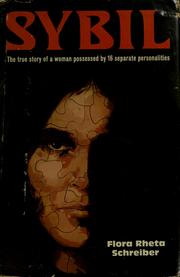
Sybil
A 1973 case study of a woman treated for multiple personalities, and the book that made dissociative identity disorder a household phrase.
2,054-word summary · 9 min read
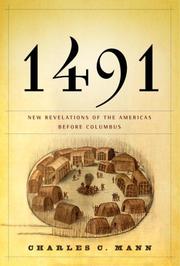
1491: New Revelations of the Americas Before Columbus
Charles C. Mann gathers archaeology, ecology, and demography to argue that the Americas before Columbus were older, fuller, and more deliberately shaped than…
2,712-word summary · 12 min read
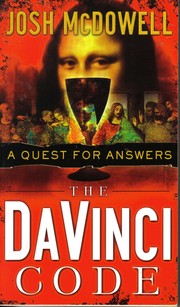
The DaVinci Code: A Quest for Answers
A short 2006 dialogue in which three friends test Dan Brown's claims about Jesus, Mary Magdalene, Nicaea, and the canon.
2,088-word summary · 9 min read
Nothing to Envy
Barbara Demick follows six defectors from Chongjin through the North Korean famine, showing how ordinary people lived, believed, and finally left.
2,068-word summary · 9 min read

Infidel
Ayaan Hirsi Ali's memoir of a Somali childhood, a forced marriage, a Dutch asylum claim, and the political fight that followed the murder of Theo van Gogh.
2,041-word summary · 9 min read

Down and Out in Paris and London
Orwell's account of washing dishes in Paris hotels and tramping through London does not ask for pity, only for a clear look at how poverty actually works.
2,282-word summary · 10 min read

The Girl with Seven Names: A North Korean Defector's Story
Hyeonseo Lee crossed the frozen Yalu River at seventeen, spent years hidden in China, escaped to South Korea, and later returned to rescue her family.
2,404-word summary · 11 min read
Lone Survivor: The Eyewitness Account of Operation Redwing and the Lost Heroes of SEAL Team 10
Marcus Luttrell's account of the 2005 SEAL mission in Afghanistan that killed three of his team and left him alone.
2,144-word summary · 10 min read