
John Adams
2,515-word summary 11 min read 751 pages in the book
- First published
- 2001
- Publisher
- Simon and Schuster
- Pages
- 751
- ISBN
- 9780684824901
Reading options
What's inside (9 sections)
I picked up John Adams because I realized I had a cartoon version of him in my head. Short, cranky, stuck between Washington and Jefferson. The guy from the musical who shouts about independence. McCullough's book, published in 2001 by Simon and Schuster and running 751 pages, replaces that cartoon with a full person, and it does it mostly through letters. Adams wrote constantly, to Abigail, to Jefferson, to friends and enemies, and McCullough lets those letters carry long stretches of the story.
What surprised me was how much I ended up liking Adams while also seeing why his contemporaries often could not stand him. He was honest to a fault, hard working to the point of making himself sick, brave about unpopular causes, and terrible at hiding what he felt. That mix explains almost everything that follows, from Boston courtrooms to Paris salons to a lonely presidency in Philadelphia.
A Braintree boy learns law in Boston
Adams was born in 1735 in Braintree, Massachusetts, the son of a farmer and town officer who valued books and church and hard work. The family was not rich. John went to Harvard, taught school briefly because he needed the money, and then chose law. McCullough spends good time on this choice because it shaped Adams for life. Law gave a poor farm boy a way up that did not depend on family money or London favor.
His early practice took him around Boston and the county courts, riding bad roads in winter, arguing boundary disputes and debt cases. He was awkward in person and often anxious about his future. His diary from these years is full of self scolding. Work harder. Stop wasting time. Rise earlier.
The Boston Massacre trial in 1770 made his name. British soldiers had fired into a crowd on King Street, killing five civilians. No other lawyer in town wanted to defend them. Adams took the case because he believed even unpopular men deserved counsel and because he believed law had to hold when feeling ran hot. He got acquittals for most of the soldiers and a manslaughter verdict for two. It cost him friends in the short run and won him respect that lasted. McCullough uses this episode to set up the theme of the whole book. Adams would rather be right by his own code than liked.
By the early 1770s Adams was writing newspaper essays against Parliament's claims over the colonies, arguing from charters and English rights rather than abstract theory. He was not a street organizer like Samuel Adams, his cousin. He was the man who could turn anger into a legal argument that would stand up in print.
Abigail and a marriage in letters
Adams married Abigail Smith in 1764, and this is the best part of the book. Abigail was sharp, funny, direct, and far better at reading people than her husband. Because public work kept them apart for years at a time, they wrote. More than a thousand of their letters survive, and McCullough quotes them at length.
You see a real partnership. She runs the farm at Braintree, later Quincy, buys supplies during shortages, hires help, deals with tenants, raises four children through illness and war, and tells him bluntly what Congress is getting wrong. He tells her everything too, his fears, his pride, his stomach troubles, his longing to come home. When he is low, she steadies him. When she is low, he is tender in a way that still reads as fresh.
One famous exchange comes from 1776, when she writes to him at Philadelphia to remember the ladies when new laws are made. She meant it. He laughed it off in reply, then kept the letter. McCullough does not pretend they were modern on every question, but he shows Abigail as a political mind in her own right, not just a loyal wife waiting at home.
Their separations were brutal. When Adams went to Europe, Abigail stayed behind for years, then later joined him in Paris and London. Sickness, money worry, long winters without news from across the ocean. The book keeps returning to the cost this work placed on the family. Their daughter Nabby had a hard marriage. Their son Charles struggled with drink and died young. Only John Quincy rose in the way his parents hoped.
Still, the marriage held for 54 years, and McCullough makes a fair case that Abigail was Adams's best adviser. She told him when he sounded vain. She told him when to hold back. She told him when the French were flattering him too much. After she died in 1818, his letters turn quieter, and the book feels the loss.
Congress: the voice for independence
McCullough's account of the Continental Congress is lively, partly because Adams himself described it so well. Sent to Philadelphia in 1774, Adams found a room full of cautious men who talked about reconciliation while British troops held Boston. He hated the delay. In his telling, Congress talked and talked while New England bled.
He pushed for separation early and kept pushing. He served on committees, drafted rules for a navy, argued for Washington as commander, and then took the lead in debating the resolution for independence in the summer of 1776. Jefferson wrote the Declaration, but Adams carried it on the floor. When Jefferson later got most of the credit, it stung, and McCullough traces that sting without excusing the jealousy behind it.
What I liked here is the physical detail. Philadelphia heat. Lodging houses where delegates shared beds and gossip. Adams waking early to write, walking to clear his head. The Congress scenes are not just votes and speeches. They are tired men trying to build a government from nothing while getting letters about smallpox and unpaid soldiers.
McCullough also shows Adams at his most useful and most annoying in the same pages. Useful because he did the committee work no one else wanted. Annoying because he said what he thought about other delegates and the words got back to them. He called John Dickinson weak. He mocked delegates who loved long dinners more than hard choices. He was right about some of them, and he still paid for saying it aloud.
By late 1777 Congress sent him to France to help with the alliance, and he left Abigail and the children behind with a heavy heart. He thought he was going to help Franklin. He found something far more tangled.
France and Holland: a lonely diplomat
The European years take up a large middle of the book, and they changed how I saw Adams. In Paris he was out of place. Franklin was famous, relaxed, loved by French society, happy to play chess and charm ministers. Adams was blunt, moral, suspicious of luxury, bad at French at first, and eager to get credit for work he had done. The two men needed each other and rubbed each other raw.
McCullough is fair to both. Franklin understood that France helped America out of interest against Britain, not love of republics, and that flattery kept money and ships moving. Adams worried, with reason, that America would trade British control for French control. He wanted clear terms, open books, and no secret promises. His directness offended the French foreign minister Vergennes. His letters home complaining about Paris life offended Franklin's friends. Congress at one point cut his commission and left him with no clear job, which humiliated him.
Then came the mission to Holland, which is one of the great comebacks in the book. Sent to get loans and recognition from the Dutch, Adams worked Amsterdam bankers house by house, learned enough Dutch practice to negotiate, suffered through illness and cold rooms, and finally secured loans and a treaty. The money kept the American cause alive when French funds slowed. McCullough argues this was Adams at his best. Alone, stubborn, careful with numbers, unwilling to quit.
He was also part of the team that negotiated peace with Britain in 1783, along with Franklin and John Jay. Adams held firm for fishing rights and the western boundary. The final treaty was generous to the new United States. McCullough gives Adams real credit here without hiding that Jay and Franklin did vital work too.
After the war Adams became the first American minister to Britain. He met George III, who spoke to him civilly, and he tried to settle debts and trade rules while London papers mocked him. Abigail joined him. Adams came back in 1788 with a reputation as a patriot who had served long abroad, but also as a man many insiders found stiff.
Vice president and president
Back home, Adams hoped to lead, and instead got the strange new job of vice president under Washington. He hated it. He called it the most insignificant office ever made, presided over Senate debates where he could not speak freely, broke tie votes, and watched Hamilton shape money policy while Jefferson shaped foreign sympathy. He was loyal to Washington, and Washington trusted his honesty, but the cabinet often looked past him to Hamilton.
Still, these eight years mattered. Adams defended the idea of a strong executive and argued that balance between branches and respect for law were the only guards against both kings and mobs. Readers today may find those writings heavy going, and McCullough admits they hurt Adams politically. They sounded to critics like love of monarchy.
Elected president in 1796 by a narrow margin over Jefferson, Adams took office in Philadelphia in a country splitting into parties. Federalists around Hamilton wanted a strong central state, a bank, a navy, and closeness to Britain. Republicans around Jefferson and Madison wanted states to hold more power, friendship with France, and a smaller federal reach. Adams belonged to neither camp cleanly. He was a Federalist by label, but he distrusted Hamilton and refused to be his tool.
The presidency chapters are tense. France, angry over America's treaty with Britain, began seizing American ships. Adams sent envoys to Paris. French agents known as X, Y, and Z demanded money and a loan before talks could start. That became the XYZ Affair, and the country exploded with anger. Calls for war rose. Hamilton and many Federalists wanted a large army and a fight. Adams built up the navy for defense but refused to ask Congress for a full declaration of war.
He then split his own party by sending a new peace mission to France. It worked. The Convention of 1800 ended the naval war and freed America from the old French alliance, but it ruined Adams with the Hamiltonian wing. McCullough presents this as Adams's bravest act, choosing peace he knew would cost him the election over a popular war that would have united his party.
The low points are real. The Alien and Sedition Acts, signed in 1798, allowed the government to deport foreigners deemed dangerous and to punish writing against the government. Federalist prosecutors used them against Republican editors. Adams did not dream up the laws, and McCullough notes he later regretted the excess, but he signed them and must own that choice. They stand as a stain on his record and a fair warning about fear during a crisis.
He also handled a small armed protest in Pennsylvania, Fries's Rebellion, with restraint, pardoning the leaders rather than making examples of them. And in his last weeks he filled judgeships, the so called midnight appointments. Adams left Washington before dawn on inauguration day in 1801 rather than watch Jefferson sworn in. It looked petty, and in part it was, but McCullough shows a tired man who felt his work was scorned by both sides.
Jefferson, defeat, and long retirement
The Jefferson story runs through the whole book like a second spine. Young allies in Congress, partners in Paris, friends who admired each other's minds. Then rivals as parties formed. Then bitter enemies in the elections of 1796 and 1800, with supporters trading charges of monarchy on one side and godlessness on the other. They did not speak for more than a decade.
What redeems the story is the retirement correspondence. In 1812, urged by mutual friends, Adams wrote to Jefferson. Jefferson wrote back. For the next fourteen years they exchanged letters about books, science, religion, and the meaning of the Revolution. They disagreed to the end, politely now, and clearly loved the exchange.
Retirement at Quincy, in the farmhouse called Peacefield, was not idle. Adams farmed, read widely, answered visitors, and watched John Quincy rise to secretary of state and then president in 1824. That win pleased him deeply, though he worried about the burden it placed on his son.
He died on July 4, 1826, the fiftieth anniversary of independence, hours after Jefferson died the same day. Legend says his last words praised Jefferson, not knowing his friend had already gone. McCullough does not overplay the scene, but he does not need to. The timing still startles.
What drags
For all its strengths, this is a long and admiring book, and readers should know that going in. At 751 pages it repeats some points. Adams is honest. Abigail is wise. Franklin is charming but slippery. Hamilton is brilliant but scheming. Once you learn those themes, you will see them again. Some chapters on diplomacy slow down with loans and protocols and titles. I found the Holland section worth the effort, but I skimmed parts of the London court detail.
The other fair criticism is that McCullough likes Adams too much. He notes the vanity, the temper, the jealousy of Franklin and later of Jefferson's fame, the thin skin with the press, the mistake of the Sedition Act. He does not hide them. Yet the judgments are gentle. Readers who want a harder look at race and slavery will also find less here than they might hope. Adams opposed slavery in words and never owned enslaved people, but McCullough spends more time on that moral credit than on what Adams did or failed to do for Black Americans in law and patronage.
That said, the admiration is earned in the main story. McCullough recovered a founder who had slipped into the background and showed why he mattered. Without Adams, independence comes later or weaker. Without his Dutch loans, the war effort falters. Without his refusal of full war with France in 1799 and 1800, the young republic might have broken on party hate and debt. A shorter, tougher book would still leave those facts standing.
If you read it, give yourself time and keep a map nearby. Boston to Philadelphia to Paris to Amsterdam to London and back to Quincy. That is the shape of an American life when America itself was new. McCullough follows it step by step, and by the end the cranky cartoon is gone. In his place is a tired, funny, stubborn man writing late at night to his wife, asking for news of the farm, and trying, as he always did, to do what he thought was right even when it cost him.
FAQ
What period of Adams's life does McCullough cover?
From his youth in Braintree and early law practice in Boston through his retirement and death at Quincy in 1826, including Congress, diplomacy in Europe, the vice presidency, and the presidency.
Is John Adams a good first biography of the founders to read?
Yes for most readers, because it is clear and story driven. It is long at 751 pages, so those short on time may prefer a shorter life of Adams first.
Does McCullough criticize Adams?
He notes Adams's vanity, temper, and poor party skills, but the overall portrait is warm. Some reviewers called it admiring and longer than it needed to be.
Similar books
More like John Adams →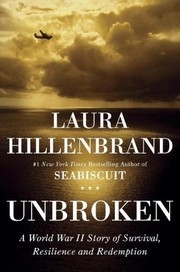
Unbroken
Louis Zamperini survives a Pacific crash, sharks and POW camps after running in the Berlin Olympics.
3,263-word summary · 15 min read

The Prince
Machiavelli advises Lorenzo on rule through fear and love, fortune, cruelty and mercy.
2,204-word summary · 10 min read
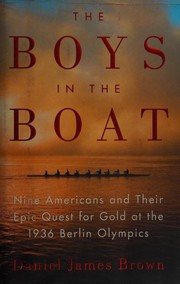
The Boys in the Boat: Nine Americans and Their Epic Quest for Gold at the 1936 Berlin Olympics
Washington rowers led by Joe Rantz chase gold in Hitler's Berlin in 1936.
2,439-word summary · 11 min read

Spare
Prince Harry recalls Diana's death in 1997, two tours in Afghanistan, and stepping back from royal life with Meghan in this frank 2023 memoir of grief, love…
2,586-word summary · 11 min read

Killers of the Flower Moon: The Osage Murders and the Birth of the FBI
In 1920s Oklahoma, Osage oil wealth makes tribal members targets for murder, forcing the young FBI under Tom White to expose the conspiracy behind the Reign of…
2,403-word summary · 11 min read

Between the World and Me
Coates writes to his son about the Black body in America, from Howard to the loss of Prince Jones.
2,234-word summary · 10 min read