
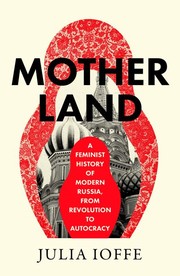
Motherland: A Feminist History of Modern Russia, from Revolution to Autocracy
2,191-word summary 10 min read 512 pages in the book
- First published
- 2025
- Publisher
- Ecco (HarperCollins)
- Pages
- 512
- ISBN
- 9780062879127
Reading options
What's inside (10 sections)
I have always associated Soviet women with a certain grim competence. My mental picture came from photographs of women in headscarves standing at factory gates, or from the formidable grandmothers in novels who had survived things I could not imagine. Julia Ioffe's book took that picture and gave it names, dates and a family tree. It also made me realize how little I knew about what happened to those women after the Soviet Union collapsed. Published by Ecco in October 2025 at just over five hundred pages, this is a history of a century told almost entirely through the lives of Russian women, and it is far more argumentative and far more personal than a standard survey.
Ioffe was born in Russia and left with her family in 1990, when she was seven. Nearly twenty years later she went back to Moscow as a journalist and found a country that did not match her memories. The doctors, engineers and scientists she had known growing up seemed to have been replaced by women whose main ambition was to marry someone rich and stay at home. That shock is the engine of the book. Ioffe wanted to know how a country that had once advertised itself as the vanguard of women's liberation had become, in her account, a stronghold of conservative Christian values.
Her years as a reporter determine the pace here. Rather than begin with a theory, she starts with people she can name and follow. That choice gives the history an unusual texture. You are never far from a kitchen, an office or a camp gate, and the large claims arrive only after you have seen the smaller facts that support them.
A question that starts with a return
The book is built around that puzzle, and Ioffe is honest that it is a puzzle with no single answer. She is a journalist by training, and the habit of following a question wherever it leads shapes the whole narrative. She moves between archival history, interviews, family stories and her own observations from years spent covering Russia. The result is not a neat thesis proved by examples. It is a sustained investigation into how a promise made in 1917 was abandoned, and what that abandonment cost.
The subtitle matters. This is a feminist history of modern Russia, which means it makes a specific claim: that the treatment of women is a reliable way of reading a society's culture. Ioffe is not content to add women to an existing timeline. She argues that you cannot understand the Soviet experiment, or the Russia that followed it, without seeing what happened to half the population. That is a strong claim, and much of the book is taken up with making it stick.
There is a fair criticism waiting here, which I will return to later. A book with an argument this clear can start to bend its evidence toward the conclusion. Ioffe is aware of the risk, and she mostly keeps it in check by staying close to individual lives rather than retreating into abstraction.
The family as evidence
Ioffe begins with her own relatives, and this is the book's best decision. Two of her great-grandmothers were doctors. Another had a doctorate in chemistry and ran her own laboratory. A grandmother oversaw the plant that supplied the Kremlin with its drinking water. In American terms, Ioffe writes, these women might seem exceptional. In Russia they were perfectly average people.
That line does an enormous amount of work. It tells you that the book is not going to treat educated, working women as a novelty, because in the Russia Ioffe grew up in they were ordinary. It also establishes the note that will keep sounding through the book: the gap between what Soviet women were and what post-Soviet women were encouraged to become. The family stories give that gap a human scale before the grand historical narrative begins.
The most striking family memory concerns her grandmother Emma, who pointed out the Moscow house of Lavrentiy Beria to the child Ioffe and taught her to avoid it. Beria was a rapist as well as a powerful police chief, and the fact that a grandmother had to warn a child away from his house says more about the everyday texture of fear than any chapter on purges could. There is a sadder detail near the end of the book: Emma cannot be buried in the country of her birth because it would be unsafe for her family to return with her ashes. Her father's bleak summary, that their homeland is a country without a future, hangs over everything that follows.
The revolutionaries who were written out
Ioffe then moves into the revolutionary generation, and the names arrive quickly. Alexandra Kollontai, the diplomat and Marxist feminist. Inessa Armand, Bolshevik propagandist and Lenin's lover. Nadezhda Krupskaya, Lenin's wife and a champion of co-education. Nadezhda Alliluyeva, Stalin's wife, and Svetlana Alliluyeva, his daughter. These are not obscure figures, but Ioffe's treatment makes them feel newly visible because she is interested in what they wanted rather than in their relationship to famous men.
The revolution promised equality, and for a time it seemed to deliver something close to it. Women made up roughly forty per cent of the workforce by the February Revolution of 1917 and were central to the founding of the Soviet Union. But the movement valued class above gender, and Ioffe traces how the specific demands of women were repeatedly folded into a larger programme and then set aside. This is the central pattern of the book: a promise made, a promise postponed, a promise quietly abandoned.
Kollontai gets particularly warm treatment. Her arguments about sexual freedom and the restructuring of family life were radical in the 1920s and were eventually dismissed as unrealistic. Ioffe makes a persuasive case that the dismissal had less to do with their merits than with the worsening political climate. By the time Stalin had consolidated power, the idea that women might have independent claims on the revolution was intolerable.
The Stalin years and their particular cruelty
The section on the purges is the hardest reading in the book, and it is the part I found most illuminating. Ioffe points out that tens of thousands of women were arrested simply for being the wives of men who had been arrested. Twenty thousand of them passed through a single camp, the Akmolinsk Camp for Wives of Traitors to the Motherland. The phrase itself is grotesque, and Ioffe does not need to underline it.
What interested me most was the mechanism. Under Stalin, the family became a unit of responsibility, which meant that a woman could be condemned by her husband's fate. Ioffe connects this to the broader retreat from the revolutionary promise. The woman who had been hailed as a worker and a comrade was now defined by her relationship to a man, and punished for it. The book's argument about the treatment of women as an index of the culture has rarely felt sharper.
The chapter also shows Ioffe's skill at moving scale. She will set a statistic about camp populations beside a detail about a grandmother's kitchen, and the two illuminate each other. That is the book at its best, and it is the reason it deserves to be read alongside more conventional histories of the period.
War, rebuilding and the long retreat
The middle of the book follows women through the Second World War and its aftermath. Soviet women fought in large numbers, in combat roles as well as in support, and Ioffe gives them proper attention. Then come the years of rebuilding, when single mothers repopulated and reconstructed a devastated country. The image of women holding a broken society together is familiar, but Ioffe resists turning it into easy heroism. She keeps asking what these women were promised in return, and what they actually received.
The answer, in broad terms, is that they received plenty of work and very little power. The Soviet ideal of the working mother was real, but it came with a double burden that the state never addressed. Ioffe is good on the way this ideal persisted long after the political language around it changed. By the time she returned to Moscow as a journalist, the work had remained and the ideals had evaporated. Women were expected to hold jobs and also to perform a new kind of femininity that the market and the media were busy promoting.
This is where the book's journalism comes into its own. Ioffe writes about the women she met in post-Soviet Moscow with a reporter's eye for detail, and the contrast with the earlier chapters is deliberate. The educated average women of her childhood have become women under pressure to marry well and withdraw from public life. She is not nostalgic for the Soviet Union, and she is careful to say so. She is describing a trade that was made, and asking who benefited from it.
Pussy Riot, Navalnaya and the return of autocracy
The final chapters bring the story into the present. Pussy Riot appear here, as do anti-war campaigners and Yulia Navalnaya, the widow of the opposition leader Alexei Navalny. Ioffe treats these women as heirs to a tradition of resistance that runs through the whole book. The connection is not always comfortable, and she does not pretend it is. The feminist movement of the revolution was crushed by Stalin, and its descendants operate in a political culture shaped by that defeat.
Ioffe's larger claim is that the failure of the Soviet promise of liberation helped prepare the ground for Vladimir Putin's revanche. The argument is that a society which never worked out what equality meant was vulnerable to a politics that offered order and traditional roles instead. It is a provocative claim, and the book supplies plenty of evidence for it, especially in its account of how the state began to promote a narrow, religious version of Russian womanhood.
Viv Groskop, writing in The Guardian, called the book a gender-inflected primer on a hundred years of Russian history and praised Ioffe's warmth and exuberance, along with her ability to zoom between personal detail and large insight. The National Book Foundation's judges, in naming it a finalist, wrote that in an America where images of Russian women owe more to John Wick than to Anna Karenina, the book is a gift, and that it holds a mirror to what the terms traditional and wife might mean. Those responses capture how the book works. It is both an account of a distant country and a quiet challenge to assumptions closer to home.
Where the book strains
The caveats are real. A book that covers a century and a large cast of figures can feel breathless, and there are stretches where Ioffe moves from one woman's life to the next so quickly that nobody gets room to breathe. Some reviewers found the memoir strands thinner than the history, and I think that is fair. The family material at the opening is vivid, but it thins out as the book expands, and the closing pages lean more on argument than on the kind of observation that made the beginning so strong.
There is also the question of framing. The Financial Times praised the book for making the refreshing argument that a different Russia is possible, and that generosity is part of its appeal. But at times the argument presses harder than the evidence will easily support. Ioffe is convincing when she shows a mechanism, as she does with the wives of traitors or the double burden of the working mother. She is less convincing when she suggests that the whole of Russian politics can be read through the treatment of women. It is a powerful lens, not a complete one.
It is also worth noting that the book appears in Britain under a slightly different subtitle, A History of Modern Russia, from Revolution to Autocracy. The American subtitle announces the feminist argument; the British one emphasizes the survey. That difference tells you something about how the book has been received on either side of the Atlantic.
The judgment
For all that, I finished this book convinced that it changes the subject. It is possible to know a great deal about the Soviet Union and still never have thought about what happened to its women after the factories changed hands. Ioffe makes that omission look like a failure of imagination. Her best pages combine the patience of a historian with the eye of a reporter and the stakes of someone who has family buried in the ground she is writing about.
The book is not a comfortable read, and it does not want to be. It describes a century in which women were liberated, celebrated, used, discarded and then told that their liberation had been a mistake. Ioffe's achievement is to keep all of those contradictions in view at once, and to insist that the story of Russia cannot be told without them.
FAQ
Is this a work of history or a memoir?
It is both, mixed with reportage. Ioffe uses her family history as a starting point, then moves through a century of Russian history and her own years covering Moscow as a journalist.
What sort of reader is it for?
Anyone interested in Russian history, feminism or modern authoritarianism. It assumes some background knowledge but builds its argument through individual women's lives rather than abstract theory.
Does the book end on a hopeful note about Russia?
Only cautiously. Ioffe argues that the Soviet failure to deliver equality helped enable Putin's return, but the book was praised for insisting that a different Russia remains possible.
Similar books
Careless People
A former New Zealand diplomat recounts seven years at Facebook, from a Myanmar launch to a hospital bed where the job followed her between contractions.
2,413-word summary · 11 min read
107 Days
Kamala Harris's memoir of the 107 days between Biden's withdrawal and Election Day, drawn from a journal kept during a campaign she believes she was best…
2,132-word summary · 9 min read

Long Walk to Freedom
Mandela's account of a Thembu childhood, a law practice, a banned movement, twenty-seven years in prison, and the negotiation that ended apartheid.
2,454-word summary · 11 min read

Infidel
Ayaan Hirsi Ali's memoir of a Somali childhood, a forced marriage, a Dutch asylum claim, and the political fight that followed the murder of Theo van Gogh.
2,041-word summary · 9 min read

Down and Out in Paris and London
Orwell's account of washing dishes in Paris hotels and tramping through London does not ask for pity, only for a clear look at how poverty actually works.
2,282-word summary · 10 min read
Red Notice
An American financier in Moscow exposes a $230 million tax fraud, watches his lawyer die in prison, and turns the case into an international human rights law.
2,008-word summary · 9 min read

A Promised Land
First-volume memoir from Iowa 2008 through the 2011 bin Laden raid, crisis management and doubt.
2,243-word summary · 10 min read
Between the World and Me
Coates writes to his son about the Black body in America, from Howard to the loss of Prince Jones.
2,234-word summary · 10 min read
Survival in Auschwitz
A chemist deported from Turin records ten months in Auschwitz with a restraint that makes the horror impossible to look away from.
2,177-word summary · 10 min read
I Feel Bad About My Neck: and Other Thoughts on Being a Woman
In short, funny essays written just after her sixty-fifth birthday, Nora Ephron takes on aging, vanity, a White House summer, and the daily upkeep of looking…
2,099-word summary · 9 min read
Women Who Run with the Wolves
A Jungian analyst reads fairy tales as maps to a woman's instinctual self, from La Loba to Bluebeard and Vasalisa.
2,331-word summary · 10 min read
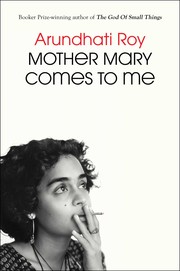
Mother Mary Comes to Me
Arundhati Roy's memoir circles her mother, Mary Roy, a formidable Kerala school founder whose love and cruelty made her the writer she became and then resented…
2,413-word summary · 11 min read
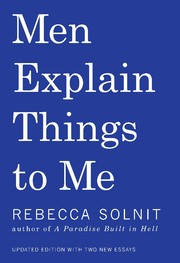
Men Explain Things to Me
A short collection of essays that begins with a man explaining Solnit's own book to her and expands into an argument about who gets believed, who gets heard…
2,019-word summary · 9 min read
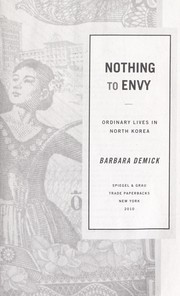
Nothing to Envy
Barbara Demick follows six defectors from Chongjin through the North Korean famine, showing how ordinary people lived, believed, and finally left.
2,068-word summary · 9 min read
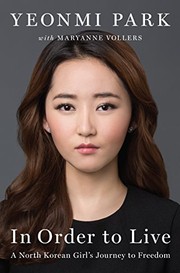
In Order to Live: A North Korean Girl's Journey to Freedom
A young North Korean girl crosses the Yalu, survives trafficking in China, and rebuilds her life in Seoul in this unsparing memoir.
2,027-word summary · 9 min read

Too Much and Never Enough: How My Family Created the World's Most Dangerous Man
Mary L. Trump's 2020 memoir traces how a cold, zero-sum Queens household shaped her uncle, and uses family tax documents to challenge his self-made story.
2,059-word summary · 9 min read
Year of Yes: How to Dance It Out, Stand in the Sun and Be Your Own Person
Shonda Rhimes takes her sister’s accusation seriously and spends a year saying yes to the things that frighten her, from live television to her own reflection.
2,585-word summary · 11 min read

The Girl with Seven Names: A North Korean Defector's Story
Hyeonseo Lee crossed the frozen Yalu River at seventeen, spent years hidden in China, escaped to South Korea, and later returned to rescue her family.
2,404-word summary · 11 min read
Lone Survivor: The Eyewitness Account of Operation Redwing and the Lost Heroes of SEAL Team 10
Marcus Luttrell's account of the 2005 SEAL mission in Afghanistan that killed three of his team and left him alone.
2,144-word summary · 10 min read

Dear Girls: Intimate Tales, Untold Secrets & Advice for Living Your Best Life
Ali Wong's debut collects fourteen letters to her daughters, covering sex, money, work, marriage, Vietnam, and being a working Asian American mother.
2,266-word summary · 10 min read
Why I'm No Longer Talking to White People About Race
Reni Eddo-Lodge traces black British history and shows how institutions, culture, and everyday assumptions keep producing racial inequality.
2,071-word summary · 9 min read
Prisoners of Geography: Ten Maps That Tell You Everything You Need to Know About Global Politics
Tim Marshall explains how mountains, rivers, coasts, and resources shape the choices of nations, from Russia's flat borders to the chokepoints of the South…
2,328-word summary · 10 min read

The Letters of Vincent van Gogh
Vincent van Gogh's letters to his brother Theo, in a Penguin Classics selection edited by Ronald de Leeuw, trace a decade of work, faith, and obsession.
2,611-word summary · 12 min read
Lucky
Alice Sebold's memoir of the 1981 rape she survived as a college freshman, the courtroom that followed, and a conviction later proven to be a case of mistaken…
2,091-word summary · 9 min read
The World Is Flat: A Brief History of the Twenty-first Century
Thomas L. Friedman's 2005 bestseller argues that technology, trade, and open borders leveled the global playing field, and it names the ten forces that did it.
2,369-word summary · 11 min read
Catherine the Great: Portrait of a Woman
A German princess survives a miserable marriage and a coup to rule Russia for thirty-four years, torn between Enlightenment ideas and absolute power.
2,065-word summary · 9 min read
The New Jim Crow: Mass Incarceration in the Age of Colorblindness
How mass incarceration became a racial caste system after civil rights.
2,413-word summary · 11 min read
How to Be a Woman
Moran mixes girlhood and work stories into plain feminist advice.
2,600-word summary · 12 min read
Wild Swans
Three generations of women survive warlords, revolution, and the Cultural Revolution in Jung Chang's family memoir.
2,356-word summary · 10 min read
Hunger
Roxane Gay traces how assault at twelve shaped her body, appetite, and daily life as a fat Black woman refusing shame.
2,583-word summary · 11 min read